How anta drives its "billion dollar empire" with technological innovation
As the Year of the Horse approaches, ANTA is welcoming a "horse" - German sports brand PUMA.
The news immediately sparked heated discussions, with many wondering, "Is Anta trying to acquire all the well-known sports brands?" This perception isn't unfounded. In recent years, with the rise of the outdoor lifestyle, many of the outdoor sports brands that occupy prime locations in shopping malls and are highly sought after on social media, when you inquire about their background, turn out to be associated with Anta.
In terms of revenue, Anta Group and Amer Sports, which it has acquired and holds a controlling stake in, exceeded the 100 billion yuan target for the full year of 2024, ranking among the top globally. Anta Group's market value also ranks third among global sporting goods companies. This sports "empire," known in the industry for its dual-engine strategy, has now added another major player - Puma. By acquiring a 29.06% stake, Anta has become Puma's largest shareholder.
Anta Group Vice President Li Ling told China News Weekly: "Being able to select good brands with excellent vision and form a strong brand matrix of multi-brand, diversification, multi-track, multi-region, and multi-scenario is in itself a success of the group's strategy and a brand competitiveness that many companies hope to build. However, mergers and acquisitions are only the first step. There are many companies globally that engage in mergers and acquisitions, including brands we acquired that were previously under the management of other companies. But the real value lies in awakening the once dormant brand value, reshaping the value of high-potential brands through efficient operation, and regaining growth."
Looking at Anta Group's brands, from Anta and FILA to Descente and Kolon Sport, any action taken by any of these brands can spark heated discussions on social media platforms. For many companies, it's already challenging enough to operate one brand well. However, Anta Group, together with Amer Sports, has over 17 such brands driving its dual-engine growth.
Starting from a shoe factory in Jinjiang in 1991, how has Anta repeatedly broken through industry ceilings to become the world's third-largest sporting goods group? And why is it able to "acquire successfully every time" in its M&A journey?
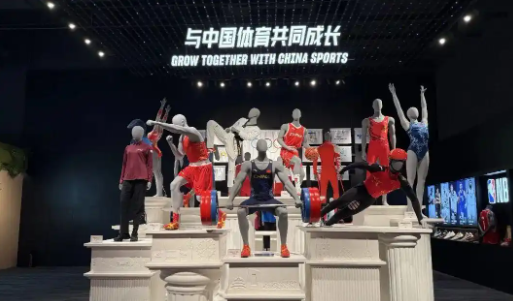
The vitality of sports brands is rooted in sports.
The prerequisite for breakthroughs is a solid foundation. What is the foundation of Anta?
Throughout Anta's thirty-five-year development history, partnering with the Olympics and the Chinese national team has been a constant for almost half that time. This Olympic journey may hold a clue to the answer.
The story begins with the 2008 Beijing Olympics. That year, Adidas secured sponsorship rights for the Beijing Olympics. Watching the opening ceremony in the "Bird's Nest," Anta Group Chairman Ding Shizhong felt a pang of regret. He silently resolved: to have Chinese athletes wear a national brand and stand on the podium of world-class events.
That moment of inspiration quickly turned into action. The following year, Anta signed a contract with the Chinese Olympic Committee, becoming an official partner. And that partnership lasted for 16 years.
Knowing that in 2008, Anta's annual revenue was only 4.627 billion RMB, while Adidas's revenue had already exceeded 10 billion Euros. Faced with such a huge gap, the outside world couldn't help but wonder: How dare Anta take on such a significant event sponsorship as the Olympics?
"Anta's understanding of the Olympics has never been as simple as commercial sponsorship." Li Ling said that the company recognized very early on that sports are the foundation and lifeline of the Anta brand. Because of this, before its connection with the Olympics, Anta had already continuously supported top domestic sports events such as the CBA league and was regarded as the "engine of Chinese sports leagues."
Once the vitality of a sports brand is recognized as being rooted in the sports industry itself, deeply binding with the world's highest-level sporting event - the Olympic Games - becomes Anta's strategic goal. And when supporting the Olympics is elevated to the company's strategic height, its action principle becomes extremely pure: regardless of cost, go all in.
One manifestation of this is that Anta once suspended some production lines to ensure the demands of the Olympics. It was at the end of 2017, just as families were preparing to celebrate the New Year, that a professional team from Anta urgently flew to the headquarters of the International Olympic Committee in Switzerland.
With the Pyeongchang Winter Olympics just around the corner, the International Olympic Committee's existing equipment partnership was abruptly terminated due to special reasons, leaving the official personnel's formal attire facing a supply shortage. Time was of the essence, and after multiple evaluations, the IOC ultimately turned its attention to Anta. According to the Anta team, IOC officials unanimously believed that, globally, "only Anta could complete this task." This was because Anta at the time possessed a full-chain rapid response capability from design and development to production and manufacturing, while many international brands adopted an OEM model for their production====. With less than three months remaining, this task could only be accomplished by Anta.
Despite being at the peak of domestic production, Anta resolutely suspended some production lines and fully mobilized resources to specifically advance the production of this batch of equipment. Furthermore, they dispatched a technical team to Switzerland to conduct on-site measurements and customization for the International Olympic Committee personnel.
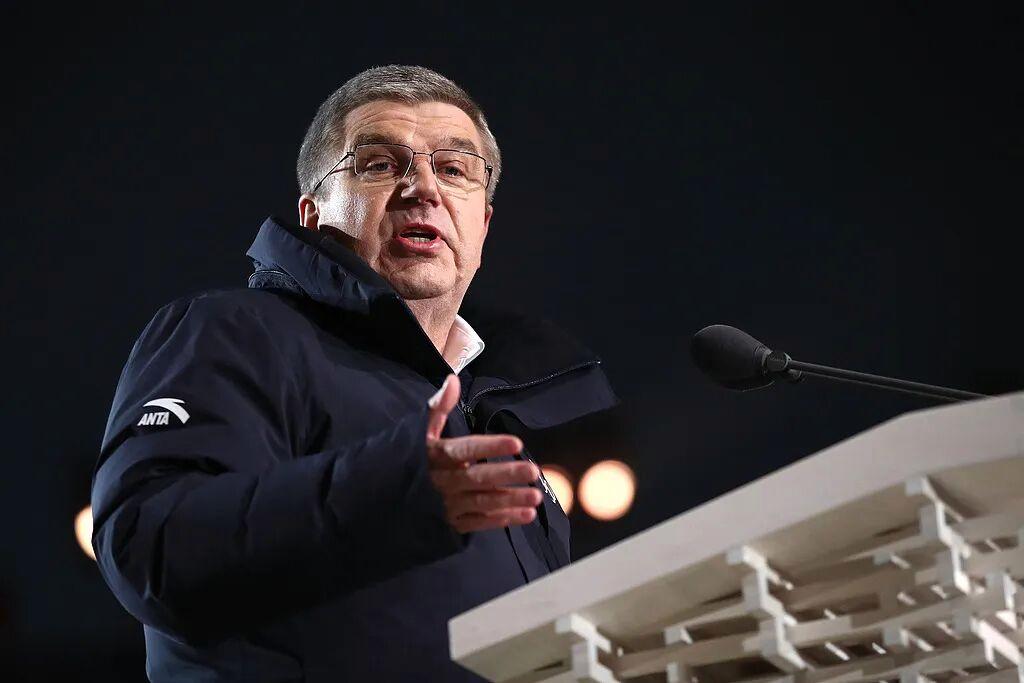
Ultimately, at the opening ceremony of the PyeongChang Winter Olympics, IOC President Thomas Bach broke the tradition of wearing formal attire and appeared in clothing bearing the ANTA logo. He not only publicly expressed his gratitude but also stated frankly that ANTA had "gone all out and delivered on its promises with high quality" at a critical moment. This led to ANTA becoming the official sports apparel supplier of the International Olympic Committee, with the partnership lasting from 2009 to 2027.
Anta's "rescue mission" happened once again just before the 2022 Beijing Winter Olympics. As the Winter Olympics were held "at home" for the first time, the Chinese skeleton team experienced a "thrilling moment"—only a few foreign brands could produce skeleton shoes at the time, but "restrictive procurement" led to Chinese athletes facing the situation of having no shoes to wear.
"We only had a little over four months left, but the development cycle for professional competitive equipment usually takes one to two years." Anta footwear professional equipment department senior designer Lei Yu recalled, his tone tinged with gravity, as if he were pulled back to those days of racing against time.
During that period, the Anta R&D team mobilized all accessible resources, collaborating on design from universities to research institutes, and tackling material challenges from high-speed rail to aerospace... Ultimately, Anta successfully broke the foreign technological monopoly in a short period of time, and these completely independently developed boots were delivered on schedule. It was these shoes that helped Chinese athletes create the fastest start record on the track at the Beijing Winter Olympics, winning a bronze medal in their first participation and achieving a historic breakthrough for the national team in this event.
Anta's support for sports goes far beyond the Olympics. As of 2025, Anta Group's various brands have cumulatively provided professional equipment and support to 36 Chinese national teams, with the Anta main brand covering 31 of these teams, providing solid support for nearly 30,000 athletes and coaches.
"Over the past decade or so, our cumulative investment in innovation and R&D has exceeded 20 billion yuan, a significant portion of which has been dedicated to scientific and technological breakthroughs for national teams and Olympic needs. The technology for national teams represents the highest level of our sports technology R&D, aiming to meet or even surpass international standards. Simultaneously, this national team technology must be translated into mass-market technology. This dual-track technological competition, from professional sports to mass sports, is the core of Anta's technological innovation," said Li Ling.
Conversely, for Anta, the Olympics have become a significant strategic asset. It not only allows Anta to continuously showcase its professional strength on the international stage, but more importantly, this process has also accumulated a deep technical foundation for Anta, becoming its "gene pool" and "incubator" for cutting-edge technological innovation.
Technology drives progress.
Technological prowess has long since moved from the arena to the market, becoming the core of competition among sports brands.
Inside the Anta Group brand center in Jinjiang, a pair of pink and white C10 Pro Nitro Technology running shoes stands out. This series of running shoes was once presented to Hungarian Foreign Minister Péter Szijjártó by Wang Yi, a member of the Political Bureau of the CPC Central Committee and Minister of Foreign Affairs, in 2025, and has now become an important symbol of Anta's technical strength.
Technological breakthroughs require time to accumulate, and Anta is ahead of its domestic counterparts in its long-term strategic layout for technological innovation.
As early as 2005, Anta established China's first sports science laboratory. Equipped with a variety of high-tech analysis equipment, it can accurately capture key data such as cushioning force, grip, flexibility, and suppleness during exercise, and gradually establish a database covering hundreds of thousands of Chinese and Asian foot type samples. "We want to make shoes that are most suitable for Chinese and Asians. Anta brand has been making the right products for the Chinese people for 20 years."
Lei Yu, who has worked at Anta for nearly 20 years, believes that the establishment of this laboratory is of great significance to the industry. It marks a shift in the R&D logic of sports brands, from relying on experience to understanding sports through data, and using this as a basis for scientific product function design.
Relying on this laboratory, technological innovation has gradually become the core engine driving Anta's sustained growth. To date, Anta has filed over 6,800 national innovation patent applications and has incubated a series of groundbreaking technological achievements, including Nitrogen Technology, Wormhole Technology, Shudown Technology, and Smart Molecular Shock Absorption Technology.
Among them, nitrogen technology represents Anta's landmark breakthrough in its "core business" of shoes. The Anta Racing C series products, equipped with nitrogen technology, have helped long-distance legend Kenenisa Bekele and many elite athletes reach the world podium more than 500 times.
In the clothing sector, with the outdoor trend sweeping China, products featuring technical fabrics have become a key focus of Anta's research and development efforts. Stepping into the office of Liu Jun, Senior Director of Technical Engineering at Anta, hundreds of fabric samples and garment prototypes are neatly displayed, resembling a textile archive, silently witnessing the brand's continuous accumulation in fabric innovation.
Each of these fabric swatches potentially leads to a new possibility. One of the most representative breakthroughs is the birth of "ANTA Membrane" in the field of ski jackets.
As outdoor activities surge in popularity across China, functional jackets have become a necessity for many. However, market dominance is firmly held by a handful of international fabric giants. High-end waterproof fabrics, led by GORE-TEX, have constructed a solid technological and price barrier. To enter this market, Anta chose an unconventional path: to manufacture its own.
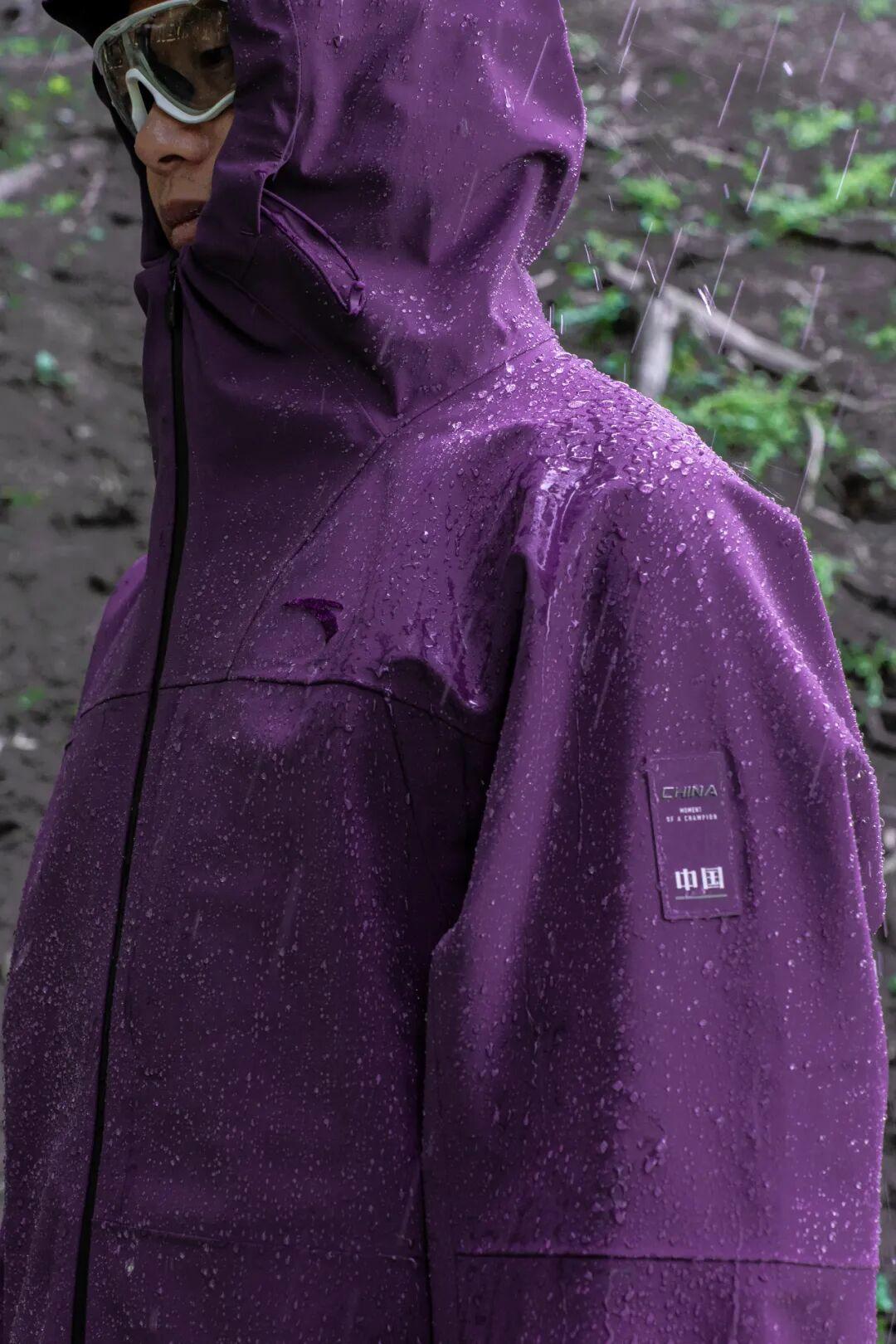
Having walked this road for more than five years, Anta, in collaboration with Donghua University, finally developed the "Anta Membrane" in 2022 with completely independent intellectual property rights, breaking the long-term monopoly of foreign brands in the field of high-end waterproof fabrics. However, before the sense of accomplishment from technological independence could dissipate, a more profound industry revolution swept in – defluorination.
The secret to traditional waterproof technology lies in the fluorine compounds within the membrane, which act like an "invisible raincoat" for the fabric, providing stability, durability, and effectiveness. However, this very chemical stability makes fluorine a potentially persistent burden on the environment. On the other hand, fluorine-free jackets experience a rapid decline in waterproof performance after just a few washes. Anta, in collaboration with Donghua University, has once again delved into this puzzle and is set to launch a fully upgraded, China-developed high-performance fluorine-free waterproof and breathable material – the "Fluorine-Free Anta Membrane" – in 2025.
It is precisely due to long-term investment and systematic planning in R&D that "technology" has become one of Anta's most distinctive brand imprints and a core driving force for its continued progress.
ANTA, to be a world-class enterprise.
Riding the wave of the Olympics, Anta has ascended onto the world stage; thanks to technological breakthroughs, Anta has also become a choice of NBA stars. However, to trace the starting point of Anta's global vision, we must return to 20 years ago.
In 2005, when most domestic sportswear brands aimed to "benchmark Nike," Ding Shizhong, in response to a media question, clearly stated the oft-quoted line: "We are not going to be the Nike of China; we are going to be the Anta of the world."
A crucial step in realizing this vision took place in 2009 when Anta acquired the trademark and operating rights of FILA Greater China, an Italian sports brand with a century-long history.
At that time, FILA was losing over 30 million yuan annually in the Chinese market with a blurred brand positioning. After Anta took over, it decisively shifted FILA to a high-end sports fashion route, targeting high-end consumers aged 25-45. Furthermore, Anta reclaimed FILA stores one by one from distributors, converting them into directly-operated stores.
After transformation, FILA achieved breakeven in 2013 and subsequently entered a phase of rapid growth. In fiscal year 2024, FILA has grown into a key pillar brand with an annual turnover of nearly 30 billion yuan. In 2025, FILA will further promote brand rejuvenation and high-quality growth with a new strategy and mission, establishing a deeper connection with Chinese middle-class consumers.
FILA's successful brand revitalization solidified Anta's multi-brand strategy. In 2016, Anta officially launched its "Single Focus, Multi-Brand, Omni-Channel" strategy, and further established "Single Focus, Multi-Brand, Globalization" in its "New Decade Strategy" in 2021. In 2016 and 2017, Anta introduced Descente and Kolon Sport through joint ventures, and in 2019, it acquired Amer Sports, bringing international brands such as Arc'teryx, Salomon, and Wilson under its umbrella. Last year's acquisition of Jack Wolfskin and the recent investment in Puma further expanded its global brand portfolio.
After acquiring brands with diverse styles one after another, Anta inevitably faces a new challenge: how to ensure that these distinctive brands grow independently without cannibalizing each other.
Anta's solution lies in empowering and authorizing simultaneously. Taking channel expansion as an example, for any high-end sports brand seeking to enter the Chinese market, site selection is often a difficult initial step. Prime locations in premium commercial districts are scarce and highly competitive. Even with excellent products, new brands are frequently blocked from the core customer flow due to weak channel resources.
Anta's solution is to integrate the fragmented into a whole, establishing a highly collaborative "group army" operation model. In many mainstream shopping malls, consumers can often observe multiple Anta-affiliated brands located adjacent to each other on the same floor, creating a so-called "encirclement" effect. Li Ling explained, "The advantage of multi-brand operations lies here. Brands within the group share resources, collaborate on expansion, and naturally reduce operating costs, while also enhancing market influence and bargaining power. When dealing with shopping malls, we can also secure better locations."
Simultaneously, at the management level, Anta has built a refined operational system within the group that is shareable and reusable. This system is not a rigid standard template, but rather extracts hundreds of management models covering key aspects such as inventory-to-sales ratio, profit management, and inventory turnover from the successful operations of multiple brands such as FILA and Descente, forming a flexible "operational toolkit." This enables each international brand joining the Anta family to quickly complete a series of systematic tasks such as market positioning, strategic restructuring, brand revitalization, retail empowerment, and product value enhancement under a mature and replicable management mechanism.
Since its acquisition by ANTA Group in 2019, Amer Sports has also set an example of its fastest global growth in the Greater China market, achieving its "five billion euro" business growth target ahead of schedule. It went public in the United States in 2024, returning to the global capital market, and maintaining double-digit high growth with annual revenue in the tens of billions of RMB.
Of course, it's not enough for Chinese companies to build international brands and operate global brands; the deeper goal is to take China's Anta brand global – to make it the world's Anta.
Therefore, Anta is taking the experience and standards refined from the Chinese market to the world. It's like one wheel finding another, propelling the company to run continuously on the global stage.
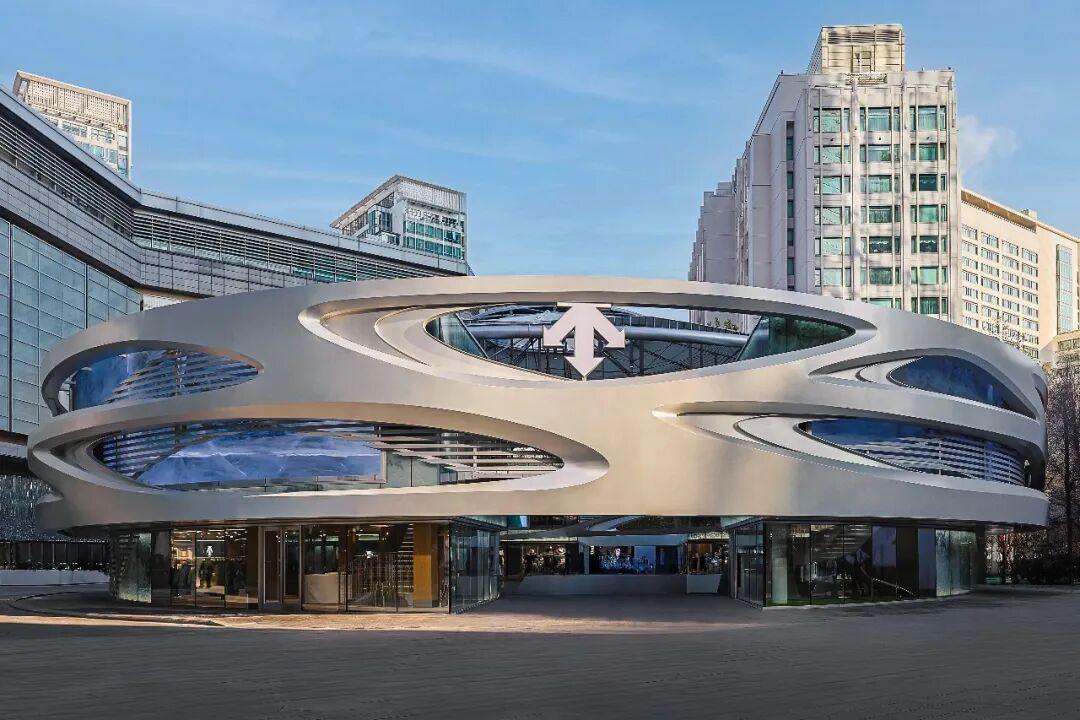
A wheel, "empowering global brands." Take Descente as an example: after being acquired by Anta, it achieved rapid growth in the Chinese market. The "City of the Future," Descente's global flagship store launched in Beijing last year, has become a global benchmark for the brand's operations, achieving the output of "global standards" from "Chinese practice."
Another wheel is "going global with the main brand." In 2025, Anta launched its "Thousand Store Plan" in the rapidly growing Southeast Asian market, and recently established a flagship store in Beverly Hills, a global commercial landmark in the United States. Its products have also entered mainstream European retail channels. In these different markets, Anta adopts differentiated strategies based on market maturity: focusing on channel construction and brand awareness in emerging markets such as Southeast Asia; and deeply integrating into the local sports ecosystem through mainstream channel entry and co-branded collaborations in mature markets such as Europe and the United States. Data shows that in the first half of 2025, Anta's sales revenue in the Southeast Asian market nearly doubled.
ANTA's globalization has long surpassed simple product exports and brand overseas expansion. ANTA is systematically feeding back its proven "independent front-end brands, shared mid- and back-end resources" business model, as well as its efficient and agile retail operations, and rapid-response complete industrial chain collaboration, to the global sports industry. By empowering international brands and partners within its matrix, ANTA is building a more efficient, innovative, and sustainable new ecosystem for the global sports industry.
This globalization strategy has been gradually reflected in the performance. In 2024, the combined revenue of ANTA Group and Amer Sports exceeded RMB 100 billion. In the first half of 2025, ANTA Sports achieved revenue of RMB 38.54 billion, a year-on-year increase of 14.3%. This revenue is equivalent to the total revenue of Nike China and Adidas China during the same period.
Anta's brand elevation story is still unfolding, but its significance already transcends a single company. As Ding Shizhong recalled at Anta's 2025 annual summary meeting on January 28, 2026: "Twenty-five years ago, in the Chinese market, international brands seemed unattainable. Today, Anta and a group of Chinese brands, through their own efforts, have been able to stand shoulder to shoulder with international brands, and even surpass them in many tracks, winning the recognition of Chinese consumers and becoming a new paradigm for the globalization of Chinese enterprises."
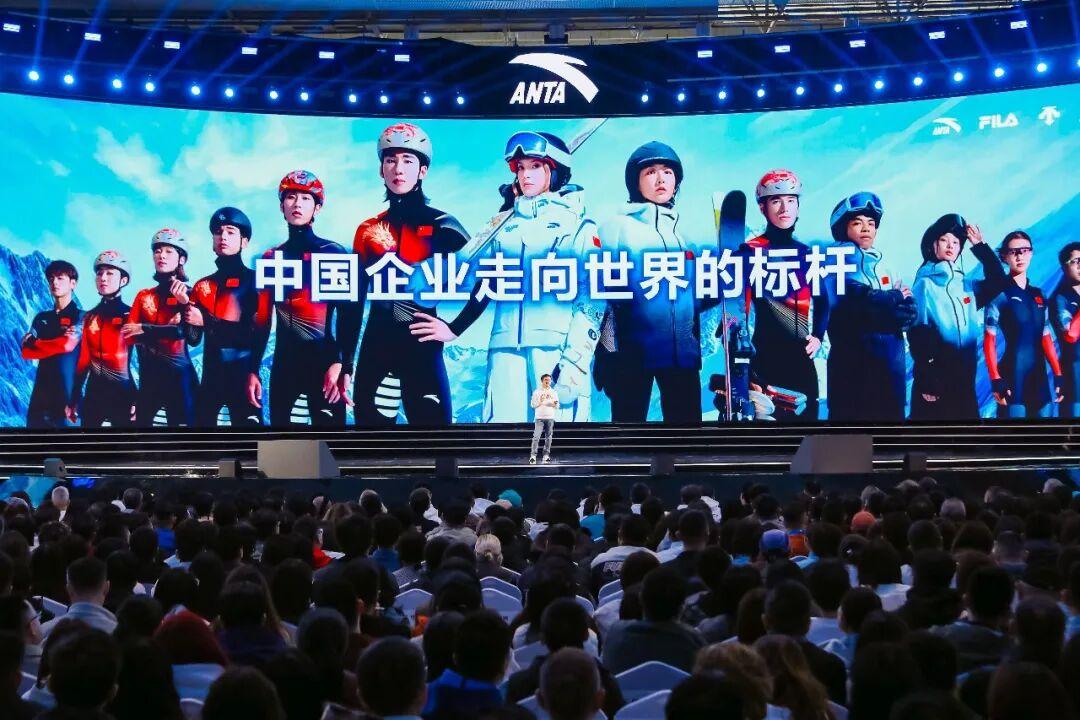
Challenges and uncertainties still lie ahead, but "becoming the Anta of the world" is already the solemn mission of this leading Chinese sports industry enterprise.
【Copyright and Disclaimer】The above information is collected and organized by PlastMatch. The copyright belongs to the original author. This article is reprinted for the purpose of providing more information, and it does not imply that PlastMatch endorses the views expressed in the article or guarantees its accuracy. If there are any errors in the source attribution or if your legitimate rights have been infringed, please contact us, and we will promptly correct or remove the content. If other media, websites, or individuals use the aforementioned content, they must clearly indicate the original source and origin of the work and assume legal responsibility on their own.
Most Popular
-
Supply Extremely Tight! LG Chem Declares Force Majeure on Export Contracts for Di-Octyl Terephthalate (DOTP)
-
Huntsman Introduces “War Surcharge” Amid Shipping Disruption and Soaring Energy Costs, Global MDI Prices Continue to Rise
-
Deadly Impact: Hormuz Strait Blockade Sparks Shortage of Plastic Raw Materials, Threatening Shutdowns at Japanese and Korean Chemical Plants
-

LG Chem Declares Force Majeure on DOTP Exports! SABIC Joins Five Giants to Redefine EV Safety
-
Tao Lin: Tesla’s Supercharger Stations in China Surpass 2,500