



Global Plastic Health Threat Could Surge in Coming Years
According to AFP, as cited by Zhuansu Shijie, researchers issued an urgent warning on Tuesday: unless immediate global action is taken to address this looming global crisis, the threat posed to human health by the production, use, and disposal of plastics will escalate sharply in the coming years.
A joint research team from the UK and France has conducted a comprehensive study on the health impacts of plastics throughout their entire life cycle, from production to final disposal. The scope of the research covers the extraction of oil and gas during production, up to the point where all plastic products are ultimately sent to landfills.
However, the researchers admit that their modeling study still fails to cover the many ways in which plastics could harm health. For example, the potential hazards of microplastics, as well as the impact on humans of chemicals that may leach from food packaging, have not yet been fully taken into account. Megan Dearing, lead author of the study from the London School of Hygiene & Tropical Medicine, told AFP, "This is undoubtedly a serious underestimation of the impact on human health."
This groundbreaking study, published in The Lancet Planetary Health, is the first project to estimate the loss of healthy life years due to the global plastic lifecycle. Researchers used a metric called DALYs, which measures years of life lost due to premature death or disability from illness.
Research predicts that under a business-as-usual scenario, the number of DALYs attributable to plastic will more than double, from 2.1 million in 2016 to 4.5 million in 2040. The most significant health impact comes from global warming caused by greenhouse gas emissions from plastic production, followed by air pollution and toxic chemicals.
Taking the common plastic water bottle as an example, Dinie elaborates on the environmental and health hazards of plastics from production to disposal. Like over 90% of plastics, the production of plastic water bottles begins with the extraction of oil and natural gas. Subsequently, through a series of complex chemical processes, these fossil fuels are converted into polyethylene terephthalate (PET), which is then used to make the bottles.
Diny has pointed out that in Louisiana, USA, there is an area known as "Cancer Alley" with over 200 petrochemical plants involved in plastic production, highlighting the potential threat of plastic production to the health of local residents.
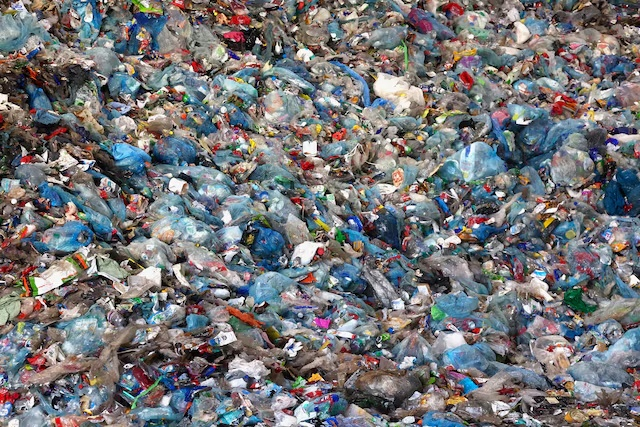
After plastic bottles are manufactured, they are transported to stores worldwide. After consumers use them, most of these bottles are discarded in trash bins or even casually dumped in landfills. Despite global efforts to promote plastic recycling, the reality is that most plastic still ends up in landfills. Dinni stated that plastic can take centuries to decompose in landfills, continuously leaching chemicals during this time, contaminating soil and groundwater.
Researchers also simulated a scenario: what if the world made a greater effort to address the health impacts of plastics? The results showed that plastic recycling had little effect on reducing health threats. Deeney stated that the most effective measure is to reduce the amount of "unnecessary" plastic generated in the first place.
Last August, negotiations aimed at signing the world's first treaty against plastic pollution broke down due to opposition from oil-producing countries, setting back global efforts to combat plastic pollution. However, Dini emphasized that countries can still take action at the national level to actively address this "global public health crisis." She called on governments, businesses, and the public to work together to reduce the use and production of plastic, protecting human health and the planet.
【Copyright and Disclaimer】The above information is collected and organized by PlastMatch. The copyright belongs to the original author. This article is reprinted for the purpose of providing more information, and it does not imply that PlastMatch endorses the views expressed in the article or guarantees its accuracy. If there are any errors in the source attribution or if your legitimate rights have been infringed, please contact us, and we will promptly correct or remove the content. If other media, websites, or individuals use the aforementioned content, they must clearly indicate the original source and origin of the work and assume legal responsibility on their own.
Most Popular
-

Key Players: The 10 Most Critical Publicly Listed Companies in Solid-State Battery Raw Materials
-

Vioneo Abandons €1.5 Billion Antwerp Project, First Commercial Green Polyolefin Plant Relocates to China
-

EU Changes ELV Regulation Again: Recycled Plastic Content Dispute and Exclusion of Bio-Based Plastics
-
Clariant's CATOFIN™ Catalyst and CLARITY™ Platform Drive Dual-Engine Performance
-
List Released! Mexico Announces 50% Tariff On 1,371 China Product Categories

