



Global new energy vehicle sales rankings: Xiaomi YU7 Claims Silver, Geely Surpasses Tesla
Due to adjustments in the domestic new energy vehicle purchase tax exemption policy and the national subsidy policy for automobiles, coupled with the expiration of the U.S. federal electric vehicle tax credit incentive at the end of September last year, both the domestic and U.S. new energy vehicle markets declined at the start of this year.
Since these two markets are currently the first and third largest in the global electric vehicle market, they play a key role in determining the trend of the global new energy market. The global new energy market also fell into negative growth in January.
Taking light vehicles (including passenger cars and light commercial vehicles) as an example, which account for the majority of the new energy vehicle market. According to EV-Volumes data, new energy light vehicle sales worldwide reached 1.183 million units in January this year, a 6% decline compared to the same period last year. This is the first decline in the global new energy light vehicle market since June 2020.
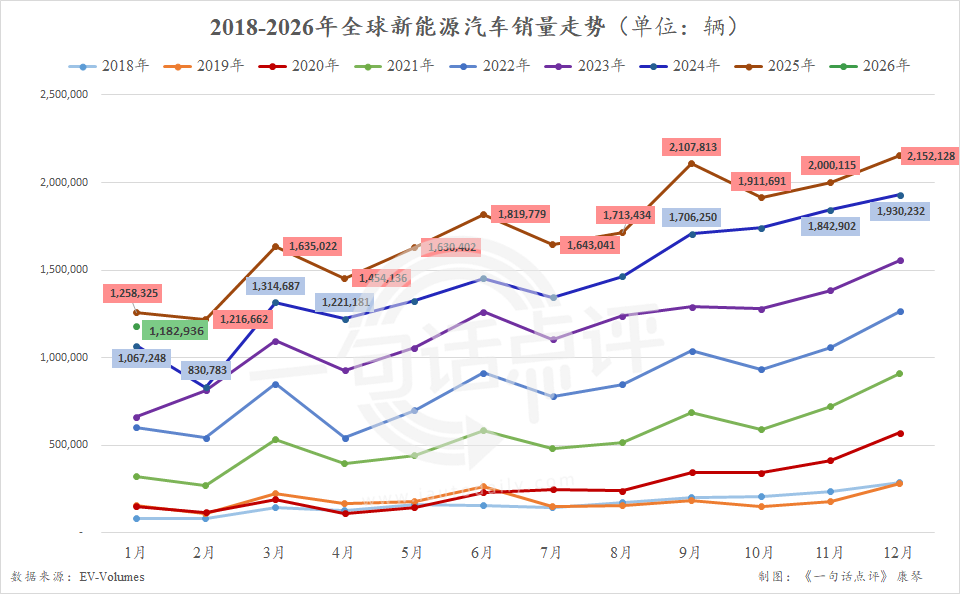
If we set aside China and the US, global new energy light vehicle sales grew by 36% year-on-year in January, with pure electric and plug-in hybrid segments increasing by 37% and 34% respectively.
Such a big contrast is due to the significant increase in new energy vehicle sales in many other countries. For example, India, Indonesia, the Philippines, Singapore, and South Korea, which all had sales exceeding 1,000 units in January, saw growth rates over 100%. Meanwhile, Europe, the second-largest regional market, also saw a 22% increase in new energy vehicle sales in January.
0
1
The Xiaomi YU7 enters the top three for the first time.
It is precisely because of the significant changes in these regional markets that the list of the top 20 best-selling models in January has also undergone considerable changes, with several entirely new "faces" appearing on the list.
● Affected by both the Chinese and American markets, and also due to the delivery lull at the beginning of the quarter, the Tesla Model Y returned to "calm" in January, selling only 53,000 units, a 7% decrease year-over-year. However, with a 15,000 unit advantage, it still firmly holds the top spot.
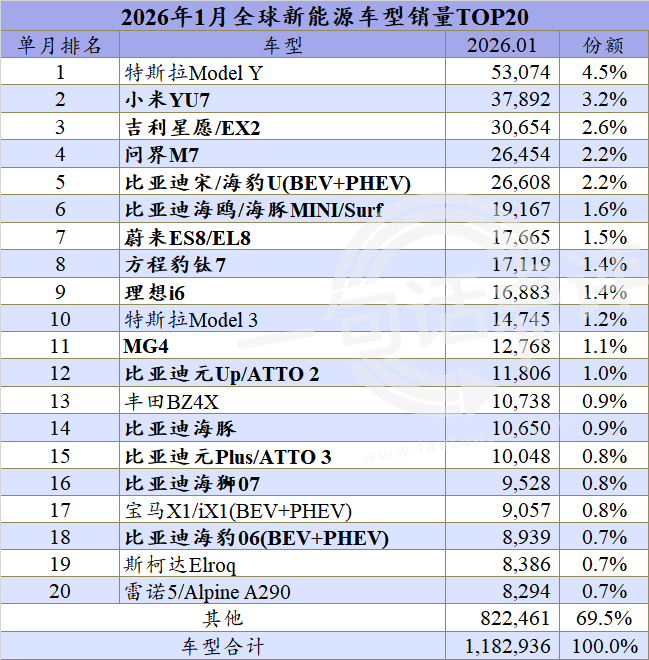
● The Xiaomi YU7 ranked second globally among new energy vehicle models with 38,000 units sold. Due to a large backlog of undelivered orders, its performance was virtually unaffected by domestic policy changes.
Although the sales of Geely Xingyu in the domestic market have declined, the increase in overseas sales has enabled it to maintain a high level of 31,000 units in January, once again entering the top three.
●Sales of BYD Song in January were 27,000 units, a 44% decrease year-on-year.
The reason behind such a significant decline is that, domestically, only the Song PRO is currently the main-selling model, while the Song PLUS has largely been replaced by the Hai Shi 06; the latter, however, continues to be sold in overseas markets.
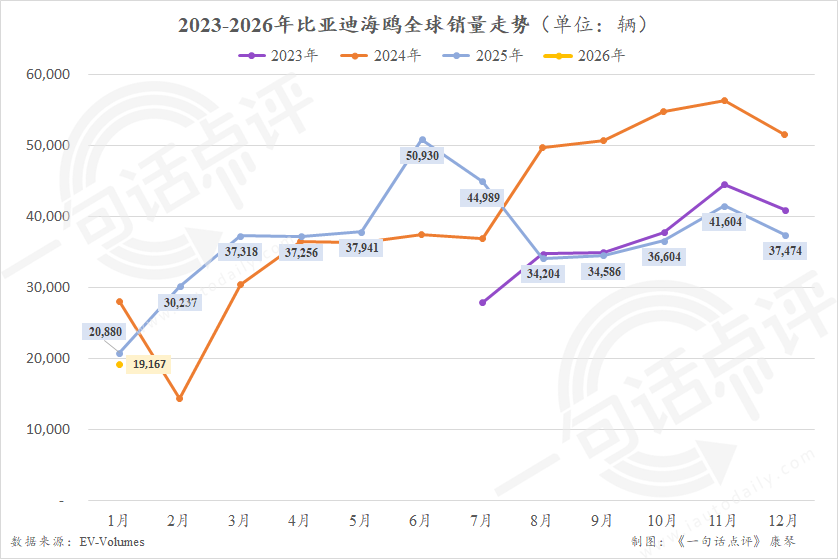
●The 19,000 units of the BYD Seagull in January were roughly on par with the same period last year, thanks to its strong sales in overseas markets.
NIO ES8 failed to set a new high in January, selling 18,000 units, which is the second-highest sales since its launch, behind December's 22,000 units. Its ranking has risen to 7th.
● The Fangcheng Bao Ti7, despite a slight decline, still firmly holds a spot in the top ten with 18,000 units.
● The Li Auto I6 continues to shoulder the responsibility of Li Auto's sales, once again breaking its monthly record in January with 17,000 units sold, thus entering the top ten of the global best-sellingtop ten of the global best-selling New Energy Vehicle (NEV) models list for the first time. ● The Li Auto I6 continues to shoulder the responsibility of Li Auto's sales, once again breaking its monthly record in January with 17,000 units sold, thus entering the top ten of the global best-selling New Energy Vehicle (NEV) models list for the first time.
Tesla Model 3 saw a 47% year-over-year decline to 15,000 units in January, marking its worst performance in four years and its worst ranking since 2018, nearly falling out of the top ten.
The MG4 and BYD Yuan Up sold 13,000 and 12,000 units, respectively.
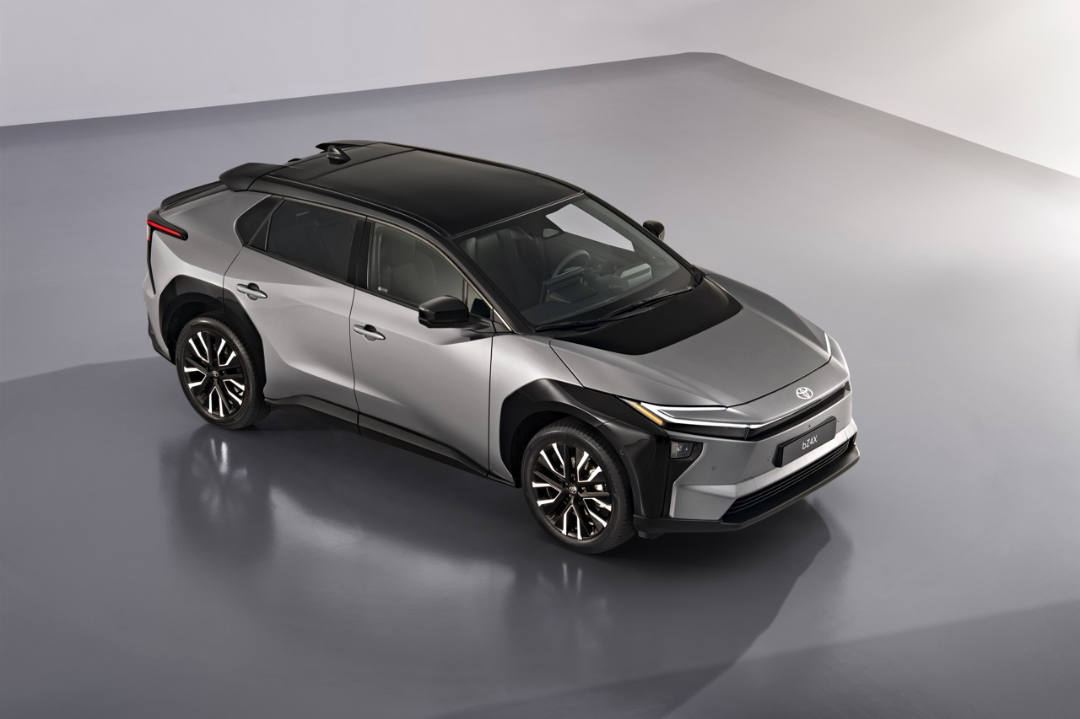
Toyota BZ4X topped the global new energy vehicle bestseller list for the first time with 11,000 units.
It should be noted that the vast majority of its sales come from the Japanese domestic market, rather than China where it was born. This is the first time a Toyota model has made the list since the RAV4 plug-in hybrid appeared in February 2022.
The sales of BYD Dolphin, Yuan PLUS, and Hai Shi 07 were 11,000 units, 10,000 units, and 10,000 units respectively. The sales of Dolphin decreased slightly, but Yuan PLUS and Hai Shi 07 returned again after several months.
● BMW X1/iX1 made its debut on the list with 9,057 units, of which 6,678 came from the European market, marking the first time a BMW model has appeared on the list since 2021.
● The Skoda Elroq and the Renault 5 occupy the last two spots on the January model list, but these are their first appearances on the list in recent years.
Both owe their success to strong sales in the European market, where they ranked first and second among new energy vehicle models in January, with sales of 8,165 and 8,103 units, respectively.
0
2
BYD and Geely once again monopolize the top two positions
Looking at the brand rankings, like the models, there were many changes in January, and nearly half of the brands experienced a year-on-year decline.
BYD received the impact of domestic policies, and sales in January were only 177,000 units.
Geely ranked second again in January with 83,000 units sold, but this was also a 12% year-over-year decline.
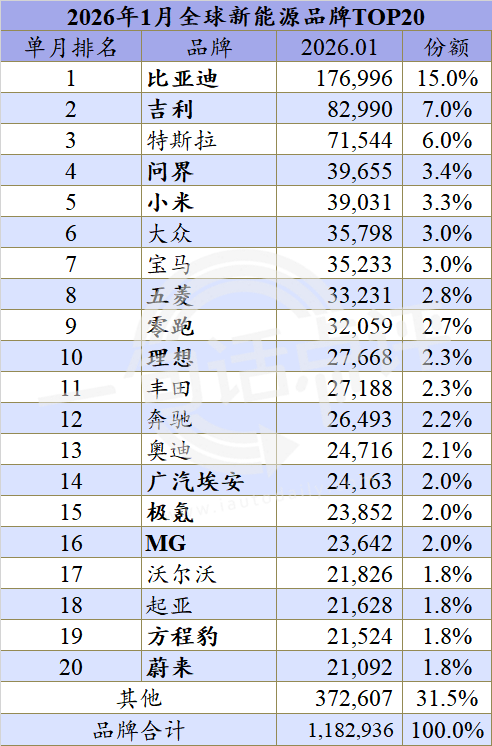
● Tesla sold only 72,000 vehicles in January, marking a drop of more than 20%, its worst performance since July 2022, due to the combined effect of factors including its presence in the US and China, and the off-peak season at the start of the quarter.
Data shows that in January 2025, the sales composition of Tesla in the US, China, and Europe was 49%, 33%, and 11%, respectively, while this year it has evolved to 47%, 26%, and 11%. With changes in policies in the US and domestically, the proportions of the two are likely to continue to decrease.
●With the boost from the new Wenjie M7, Wenjie's sales in January reached 40,000 units, making it one of the few brands with a positive year-on-year growth, increasing by 82%.
● Xiaomi is also one of the lucky ones; the strong sales of the YU7 have brought it substantial growth, with 39,000 units sold in January—70% higher than the same period last year.
Volkswagen's sales fell 14% year-on-year to 36,000 units in January.
● BMW also saw a 13% decline in January, with sales totaling 35,000 units; however, the BMW X1/iX1 did appear on the best-selling models list.
● Wuling, as a beneficiary of the new energy vehicle tax exemption and "national subsidy" policy last year, suffered significant losses in January, with sales dropping 30% year-on-year to 33,000 units.
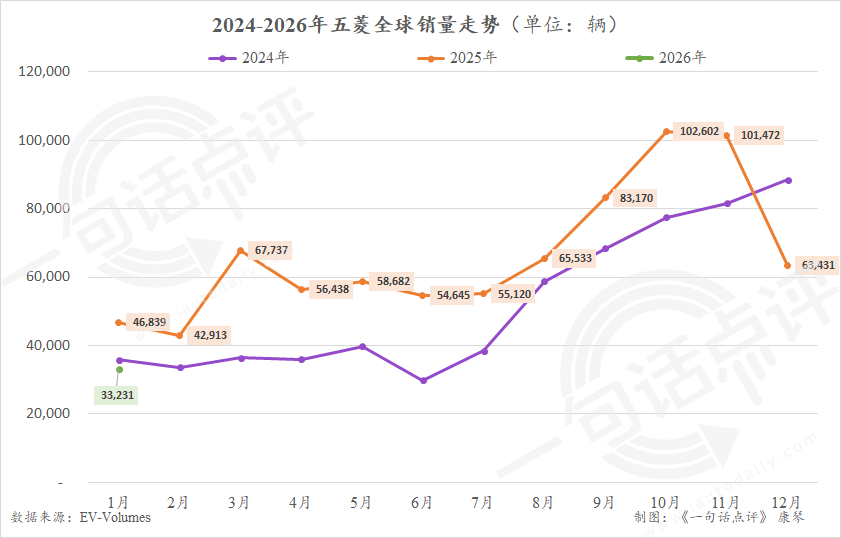
●Leapmotor's ranking declined in January, but sales grew by 27% to 32,000 units.
● Although the Li Auto L6 took the lead, it still failed to fully offset the losses caused by the range-extended vehicle models, with January sales totaling 28,000 units, down 8% year-on-year.
●Toyota's sales also grew by 8% to 27,000 units in January, thanks to the joint efforts of models like the BZ4X, advancing its ranking to 11th.
● Mercedes sold 26,000 units in January, and Audi sold 25,000 units, with growth rates of 9% and 40% respectively.
● Zeekr ranked again with 24,000 units, of which 8,104 were from the Zeekr 7X. This model will start exports this year and may soon appear on the best-selling vehicle charts.
● MG returned to the list thanks to the popularity of MG4, which sold 24,000 units in January.
● Kia, relying on popular models like the EV3 in Europe, reappeared on the list in January with 22,000 units, marking a slight year-on-year increase of 4%.
● In January, Fangchengbao and NIO sold 22,000 and 21,000 vehicles respectively. As both had a base of only several thousand units in the same period last year, their year-over-year growth rates both exceeded 100%.
【Copyright and Disclaimer】The above information is collected and organized by PlastMatch. The copyright belongs to the original author. This article is reprinted for the purpose of providing more information, and it does not imply that PlastMatch endorses the views expressed in the article or guarantees its accuracy. If there are any errors in the source attribution or if your legitimate rights have been infringed, please contact us, and we will promptly correct or remove the content. If other media, websites, or individuals use the aforementioned content, they must clearly indicate the original source and origin of the work and assume legal responsibility on their own.
Most Popular
-
Supply Extremely Tight! LG Chem Declares Force Majeure on Export Contracts for Di-Octyl Terephthalate (DOTP)
-
Huntsman Introduces “War Surcharge” Amid Shipping Disruption and Soaring Energy Costs, Global MDI Prices Continue to Rise
-

Deadly Impact: Hormuz Strait Blockade Sparks Shortage of Plastic Raw Materials, Threatening Shutdowns at Japanese and Korean Chemical Plants
-

LG Chem Declares Force Majeure on DOTP Exports! SABIC Joins Five Giants to Redefine EV Safety
-
Tao Lin: Tesla’s Supercharger Stations in China Surpass 2,500


