



Giant's major sale! world's largest bio-based pdo producer changes hands, in-depth analysis of the bio-based materials industry landscape
According to ESP Vision's observation on January 16th, Covation Biomaterials LLC recently announced the sale of its entire equity stake in Primient Covation LLC. Marks the official change of ownership of the world's largest 100% bio-based 1,3-propanediol (BioPDO) producer. 。
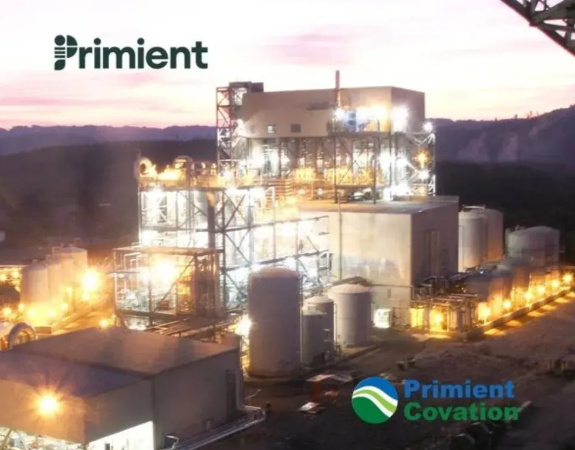
The core asset in this transaction, Primient Covation LLC, owns a 77,000-ton/year bio-based PDO production facility in Tennessee, USA, previously operated by Covation Bio. Upon completion of the transaction, Primient will achieve 100% control, but the two parties will maintain their partnership through a long-term supply agreement—Primient will continue to supply bio-based PDO to Covation Bio for the production of certain bio-based Sorona® polymers. Mertz Group, as the exclusive financial advisor, was involved throughout the transaction design, ensuring regulatory approval is completed in Q1 2026.
From the perspective of industrial impact, this equity transaction is essentially a strategic restructuring of Huafeng Group's bio-based materials segment. By divesting mature assets, the Group can concentrate its resources on advancing the more technologically cutting-edge bioPTMEG project. This capital operation model of "divesting mature assets to focus on frontier technologies" serves as a benchmark in the field of advanced chemical materials. Following the transaction, Primient will gain more comprehensive control over the assets, potentially accelerating the global expansion of its bio-based PDO capacity; meanwhile, Covation Bio will be able to focus on the R&D and commercialization of next-generation bio-based materials, creating a virtuous cycle of "cash flow from mature businesses + investment in frontier technologies."
Source: Institute for Bioplastics and Biocomposites
Evolution of Bio-based PDO Industry Landscape
As the world's largest bio-based PDO producer, Primient Covation's 77,000-ton/year capacity accounts for a significant share of the global bio-based PDO total. This capacity stems from the technological accumulation since the commercialization of Sorona® polymer 25 years ago, and through continuous process optimization, a highly mature production system has been formed. The Tennessee plant utilizes a corn sugar fermentation process, reducing the carbon footprint per unit product by more than 60% compared to traditional petrochemical routes, and maintaining product purity stably above 99.9%, meeting the requirements of high-end polyester, polyurethane, and other downstream applications.
Following this transaction, Primient will gain full control over this strategic asset. Given the critical role of bio-based PDO as the core feedstock for bio-based PTT (polytrimethylene terephthalate), Primient is likely to strengthen its market dominance through capacity expansion, process optimization, or global strategic positioning. Meanwhile, Covation Bio has secured its access to raw materials through a long-term supply agreement, ensuring the continued stability of its Sorona® business and establishing a unique "divestment with business continuity" partnership model.
Covation Bio's strategic transformation hinges on its second-generation bio-based polytetramethylene ether glycol (bioPTMEG). This product utilizes corn cobs as a feedstock and is produced via a bio-fermentation and chemical synthesis coupling process, offering three disruptive advantages: firstly, non-grain feedstock, avoiding competition with food crops for land; secondly, molecular structure identical to petroleum-based PTMEG, enabling "plug-and-play" replacement; and thirdly, over 50% reduction in carbon emissions during production, aligning with the global carbon neutrality trend.
Technological breakthroughs are reflected in three aspects: Firstly, the enzyme-catalyzed process achieves efficient conversion of corn cob hemicellulose, increasing raw material utilization by 30% compared to traditional processes. Secondly, the continuous production process ensures product batch stability, meeting the high-end application requirements of spandex, polyurethane, and other materials. Finally, the tetrahydrofuran byproduct maximizes atom economy. The 500,000-ton/year project in Qidong, Jiangsu, will be constructed in three phases, with the first phase of 50,000 tons/year capacity scheduled to go into production in the first half of 2026, simultaneously producing 20,000 tons of tetrahydrofuran as a byproduct, forming a complete bio-based polyether industrial chain.
Empirical Evidence of Sorona® Polymer Environmental Benefits
Sorona® polymer, as a prime example of bio-based materials, boasts industry-leading lifecycle assessment (LCA) data. Third-party certification shows that compared to Nylon 6 production, Sorona® saves 44% energy and reduces greenhouse gas emissions by 170%; compared to PET production, it reduces greenhouse gas emissions by 41%; and compared to PBT production, it saves 4% energy and reduces emissions by 4%. These figures have been validated according to ISO 14040/44 standards, covering the entire lifecycle from raw material acquisition, production, transportation, use, to disposal.
The realization of environmental benefits stems from two major technological innovations: first, the replacement of petroleum-based 1,3-propanediol (PDO) with bio-based 1,3-propanediol (BioPDO), reducing fossil resource consumption; and second, the optimization of the polymerization process, lowering reaction temperature and pressure, thereby decreasing energy consumption. Sorona®, containing 37% plant-based ingredients, provides sustainable solutions for apparel, home furnishings, and automotive interiors while maintaining excellent performance.
The Qidong project in Jiangsu province, envisioned as the world's largest bio-based PTMEG production base, features a strategically forward-looking Phase III construction plan. Phase I, covering 320 mu, is slated for completion by the end of 2025 and production in the first quarter of 2026. Phase II, occupying 120 mu, will commence production in 2028, adding a capacity of 150,000 tons/year. Phase III, with 210 mu of land, is scheduled for production in 2030, adding a capacity of 300,000 tons/year. Upon full completion, the total capacity will reach 500,000 tons/year, forming a vertically integrated industrial ecosystem encompassing "raw materials - intermediates - end products."
This layout has three major strategic significances: first, leveraging the advantages of the Yangtze River Delta ports to optimize logistics for raw material imports and product exports; second, reducing unit costs through economies of scale to enhance the market competitiveness of bio-based materials; and third, establishing a technology diffusion center to promote the widespread application of bio-based PTMEG in fields such as spandex and polyurethane.
Industry Trends and Corporate Strategy
According to CPRJ, Covation Bio's transformation path reflects three major trends in the global biomaterials industry: first, a shift from single-product competition to platform-based technology competition, building a diverse product matrix through platform compounds such as bioPTMEG; second, a shift from "bio-based substitution" to a three-dimensional balance of "performance-cost-sustainability," achieving both economic efficiency and environmental protection through process innovation; and third, a shift from regional markets to global layouts, addressing trade barriers through cross-border production capacity cooperation.
Hua Feng Group's strategic layout embodies a "dual-wheel drive" characteristic: on the one hand, maintaining global leadership in bio-based PDO through Primient Covation; on the other hand, focusing on cutting-edge technologies through Covation Bio to cultivate the next generation of growth drivers. This combined strategy of "mature business + frontier technology" not only ensures stable cash flow but also guarantees technological leadership, forming a virtuous cycle of sustainable development.
Despite their promising future, the bio-based materials industry still faces three major challenges: First, raw material price volatility, which requires diversified raw material sourcing and long-term agreements to lock in costs; second, technological iteration risks, necessitating continuous R&D investment to maintain technological leadership; and third, market acceptance risks, which demand brand building and downstream collaborations to drive demand growth.
This 25-year biomaterials revolution is transitioning from the mature BioPDO platform to the new era of bioPTMEG. Through precise capital operations and forward-looking technological layout, Huafon Group has not only solidified its leading position in the bio-based materials field but also provided a Chinese solution for the sustainable development of the global chemical industry. With the gradual commissioning of the Qidong project in Jiangsu, a green industrial ecosystem centered on bio-based materials is taking shape. This is not only a victory for technological innovation but also a practical model for the concept of sustainable development.
【Copyright and Disclaimer】This article is the property of PlastMatch. For business cooperation, media interviews, article reprints, or suggestions, please call the PlastMatch customer service hotline at +86-18030158354 or via email at service@zhuansushijie.com. The information and data provided by PlastMatch are for reference only and do not constitute direct advice for client decision-making. Any decisions made by clients based on such information and data, and all resulting direct or indirect losses and legal consequences, shall be borne by the clients themselves and are unrelated to PlastMatch. Unauthorized reprinting is strictly prohibited.
Most Popular
-

Key Players: The 10 Most Critical Publicly Listed Companies in Solid-State Battery Raw Materials
-

Vioneo Abandons €1.5 Billion Antwerp Project, First Commercial Green Polyolefin Plant Relocates to China
-

EU Changes ELV Regulation Again: Recycled Plastic Content Dispute and Exclusion of Bio-Based Plastics
-
Clariant's CATOFIN™ Catalyst and CLARITY™ Platform Drive Dual-Engine Performance
-

List Released! Mexico Announces 50% Tariff On 1,371 China Product Categories

