Five Minutes vs Three Minutes: When Charging Catches Up with Swapping, Which Should Drivers Choose?
Who would have thought that the first viral topic in the automotive world in 2026 wouldn't be "who sells more," but "who recharges faster."
Last week, Wang Chuanfu, chairman of BYD, stood under the spotlight and announced the emergence of the second-generation blade battery and megawatt flash charging technology with a set of nearly "violent" data: 9 minutes to charge at normal temperature, 12 minutes in extreme cold, and just 5 minutes to charge from 10% to 70% SOC.
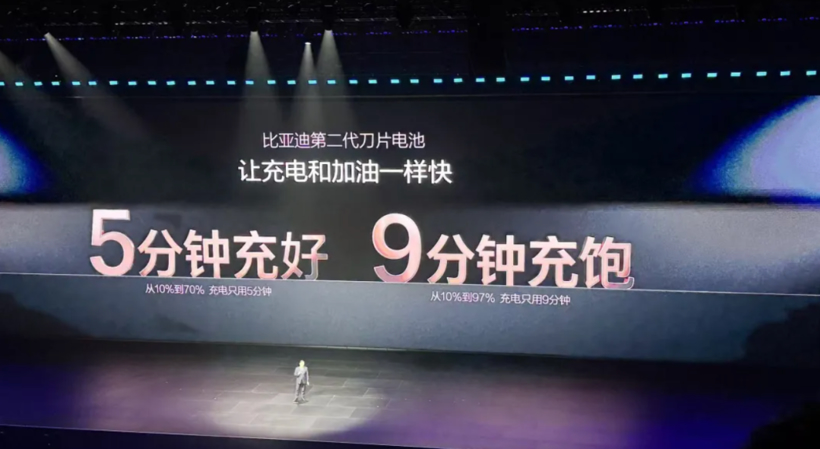
[Launching 11 New Models at Once, BYD Brings "Flash Charging" from 1.3 Million to 150,000]
Wang Chuanfu's intention is clear: to compress the charging and energy replenishment time to the limit of the driver's perception through engineering extremes.
Just like the classic ad "Charge for 5 minutes, talk for 2 hours," use speed to reframe the user's mindset.
In the same week, Li Bin, founder of NIO, appeared on CCTV's "Dialogue" program. When confronted with the host's pointed question—“Will ultra-fast charging spell the end of battery swapping?”—Li Bin gave a clear and unequivocal response: “No matter how fast ultra-fast charging gets, it can never be as fast as battery swapping.”
This debate about "fast and faster" has one side arguing that "as long as there are enough charging piles and the charging speed is fast enough, there's no need for battery swapping," representing the viewpoint of technological superiority; the other side holds that "no matter how fast the charging, it can't be faster than swapping batteries," standing firm on the experience.
So, as a new energy vehicle owner, whose side would you be on?
The core of charging anxiety is not entirely about "speed"
Flash charging has emerged, will the range anxiety of electric vehicles be completely eliminated?
Maybe not necessarily.
Because it is shorter than 5 minutes—specifically 3 minutes—the NIO battery-swap station completes a single battery swap in just 3 minutes.
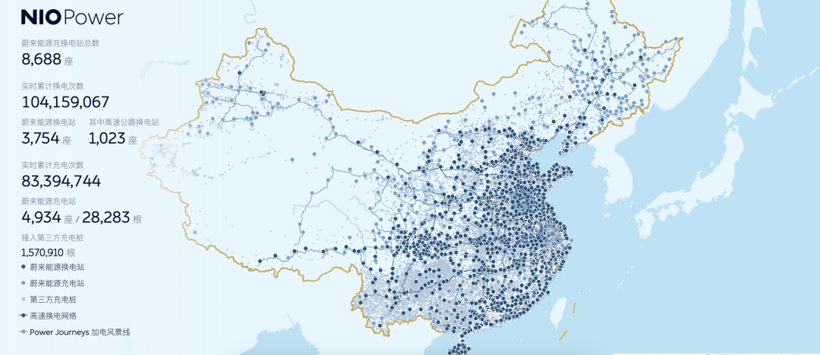
As of now, NIO has built 3,754 battery swap stations. However, even so, the charging anxiety of NIO owners seems to still exist.
This is because the core of charging anxiety is never just about the charging speed of a single instance, but involves a series of systemic issues such as facility density, convenience, and the probability of queuing.
Take a simple example: How many people experience battery anxiety every day?
It should be noted that smartphones, which are used very frequently, charge much more slowly than cars.
People don't feel anxious because phone charging is too convenient - in cars, homes, offices, cafes, even street charging banks are available everywhere.
By contrast, even in first-tier cities, the nearest charging or swapping station on the map may be 3 kilometers away.
Even if the nearest station can recharge in just 3 minutes, you can't guarantee that you won't have to wait in line for more than 3 minutes every time you arrive.
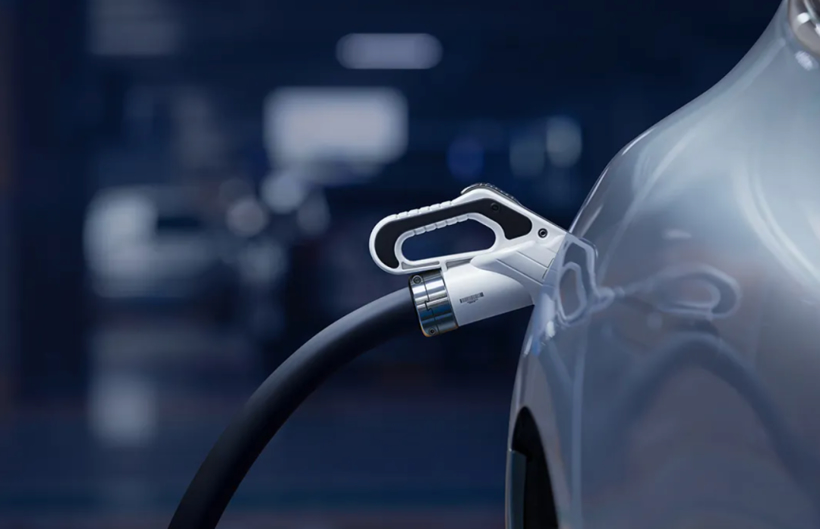
Therefore, whether it’s flash charging or battery swapping, “refueling speed” is not the sole key to resolving range anxiety at this stage.
At a BYD press conference, a set of data was released: there are approximately 322 million conventional fuel-powered vehicles in China, served by over 100,000 gas stations; whereas there are about 45 million new-energy vehicles, supported by more than 300,000 charging stations.
The car-to-charging-station ratio of fuel vehicles and new energy vehicles is extremely unbalanced, improving charging efficiency can reduce a large amount of resource waste.
Although this is true in theory, the refueling efficiency of all gasoline-powered vehicles and fuel nozzles is roughly the same.
However, not all new energy vehicles and charging stations will support “flash charging” in the future.
This inefficient situation caused by the mismatch between vehicle and charging pile charging capabilities will persist over the long term.
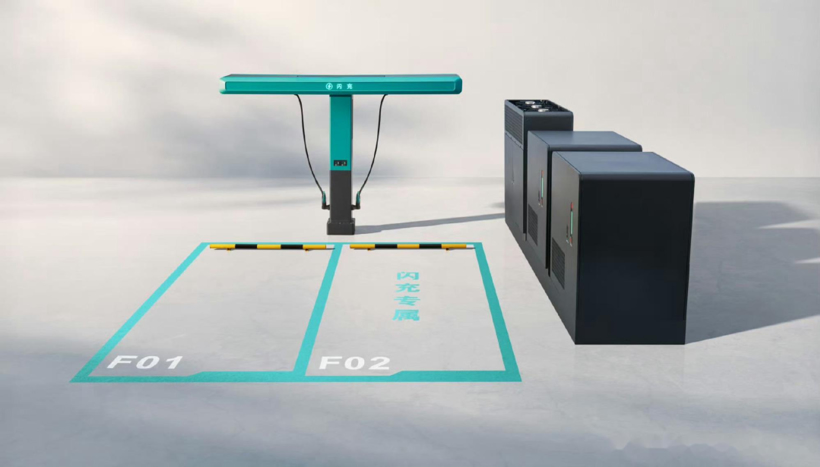
Flash charging and battery swapping, which is better or are they leading to the same destination?
Fast charging is undoubtedly a cutting-edge technology worth recognizing for the development of new energy vehicles.
But when the charging speed approaches the swapping efficiency, debates naturally arise.
The question raised at the beginning—“Which is better: NIO’s battery swapping or BYD’s flash charging?”—has a clear answer: flash charging and battery swapping are not mutually exclusive.
Both Li Bin and BYD's Li Yunfei have mentioned this viewpoint multiple times.
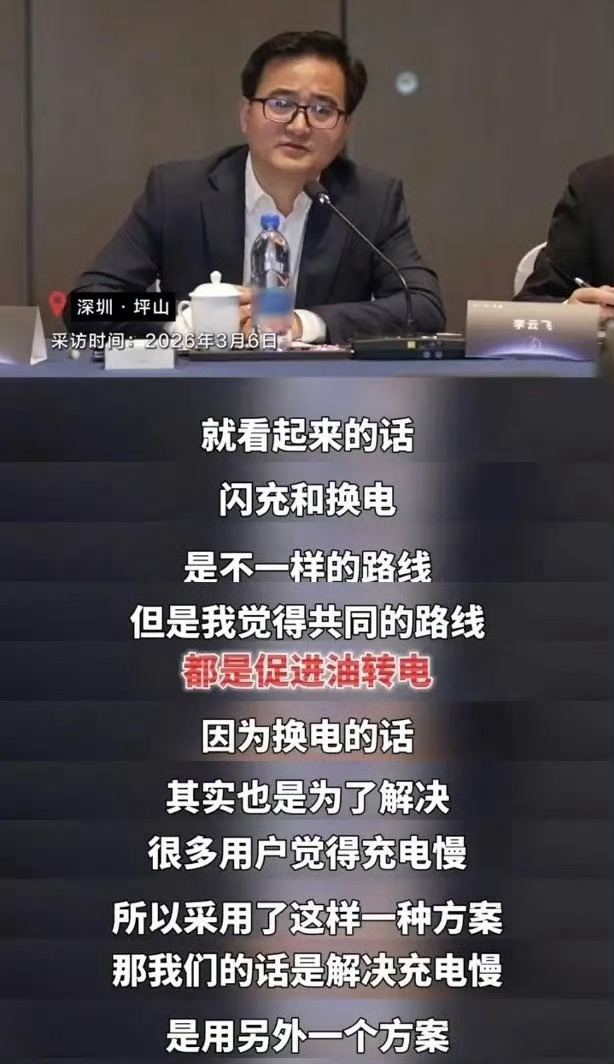
Even when Li Bin of NIO was a guest on CCTV's "Dialogue" program on March 8, he said a hot topic phrase: "Ultra-fast charging is never as fast as battery swapping, and using it too much can damage the battery."

But overall, both approaches ultimately converge, offering different solutions to the same pain point of electric vehicle charging.
The difference lies merely in the fact that one is a straightforward, technology-centric approach, while the other is a systemic solution based on the energy replenishment infrastructure.
First, let’s talk about flash charging.
In the new energy era, we have experienced the evolution from "fast charging," "ultra-fast charging," to "super fast charging," and now "flash charging." The terminology of charging technology keeps updating, and the battery charging rate has risen from 3C, 5C to 10C and even higher.
However, from the perspective of car owners' experience, marginal utility is diminishing.
Charging a battery at 10C versus 5C may seem like doubling the rate, but in terms of actual time, the difference is only about 6 minutes; compared to 6C, the gap narrows further to just 4 minutes.
No matter how high the battery charging rate and how fast the charging speed, the experience will no longer have a generational gap. [LAB Tech Control | 5C, 10C, 15C... Where is the ceiling for charging rates?]
With BYD’s recent launch of Flash Charging, it is evident that this technology represents the ultimate solution for charging electric vehicles—Flash Charging is the definitive answer to EV charging.
Of course, to achieve fast-charging capability, BYD's second-generation Blade Battery has also undergone numerous upgrades, such as introducing the concept of a "Full-Chain Ion Flash Conduction Technology System" by optimizing the battery's internal structure.
In simple terms, it's about making the movement of lithium ions within the battery smoother, reducing internal resistance and lowering heat, thus ensuring safety during high-power charging, and even enabling fast charging capabilities in low-temperature environments.
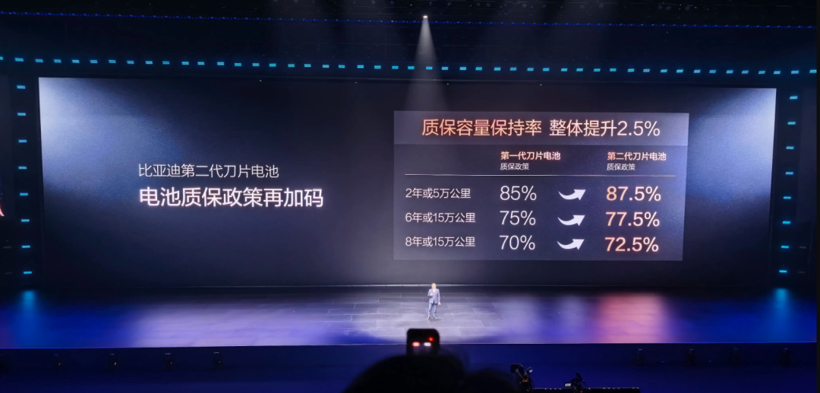
Although there are still concerns in the market about "fast charging damaging the battery," technology is always moving forward. Combined with BYD's "lifetime warranty" policy for battery cells, the current bottleneck restricting the development of flash charging lies more in the speed of setting up flash charging stations.
BYD’s goal is to build 20,000 flash-charging stations by the end of 2026, including 2,000 expressway flash-charging stations.
This number signifies that by early 2026, NIO took 7 years to build approximately 3,754 battery swap stations; BYD plans to lay out a charging network five times the size of NIO's in the remaining 9 months.
However, BYD's flash charging stations adopt a "self-built + co-built" model, which also brings certain concerns. In particular, third-party operator co-built stations account for as many as 15,000, posing a significant challenge to the consistency of user experience.
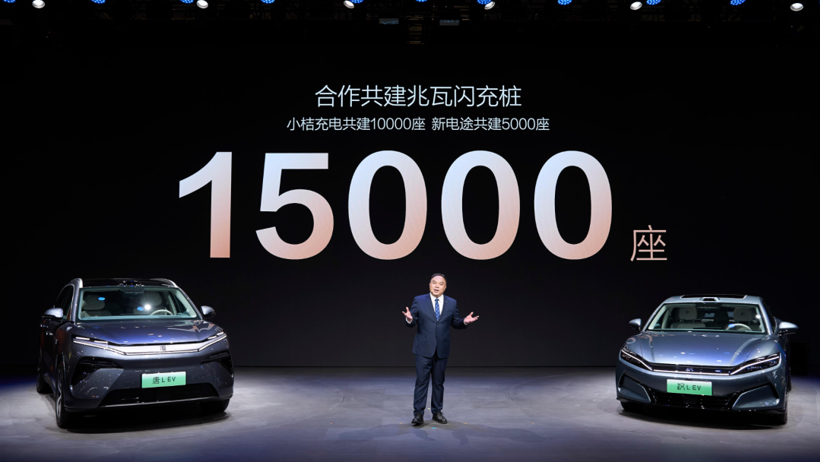
In addition, the 1500kW power demand of a single flash charging pile is equivalent to the power consumption of hundreds of households. Although BYD claims that energy storage buffering and intelligent scheduling can alleviate the impact, it remains unknown whether the flash charging can maintain its designed power continuously during peak electricity usage periods.
Look at battery swapping again.
Compared to the uncertainty of flash charging, NIO’s battery swap stations have two main advantages:
First, the absolute certainty of single refueling time;
Second, Second, translates to: Second, should be correctly translated as: Second, is accurately translated to: Second, properly translates to: Second, can be translated as: Second, is best translated into: Second, is correctly rendered in English as: Second, is translated as: Second, should be rendered in English as: Second, is translated to: Second, translates to: Second, is translated as: Second, is translated to: Second, is correctly translated as: Second, is translated to: Second, is translated as: Second, the refined management of battery health.
Battery swap stations, through the BMS system monitoring in conjunction with intelligent image recognition, conduct a "health check" on the battery every time a swap is performed.
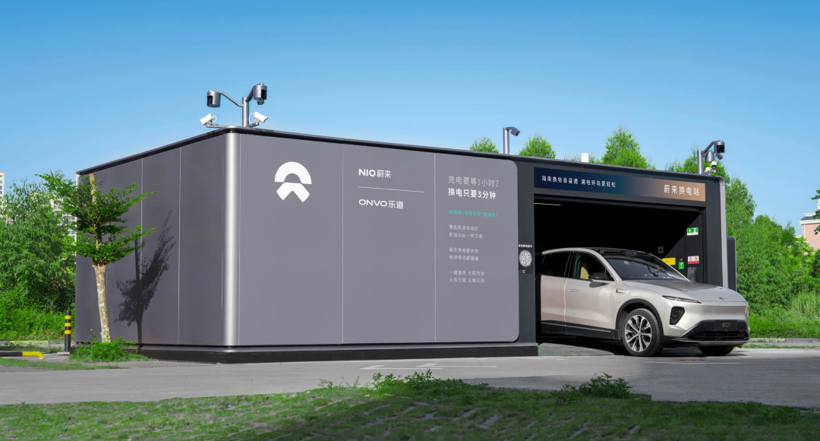
Meanwhile, battery swap stations actively control the frequency of fast charging—for batteries that are frequently fast-charged, a gentler slow-charging strategy is adopted upon entering the swap station for maintenance. According to official NIO data, the battery swap model can slow down battery degradation by approximately 23%.
Compared to BYD's "self-built + co-built" flash charging stations, NIO's battery swap stations may be less convenient in terms of deployment and layout.
Written at the end
Byd tries to prove with the "violent aesthetics" of technology: charging can be as fast as refueling, while NIO insists on the "certainty" of service, telling users: you don't need to own a battery, just use electricity.
Actually, fast charging and battery swapping are not mutually exclusive or entirely opposing approaches; in the future, batteries at swapping stations could also support fast charging, and fast-charging batteries could potentially be integrated into the battery-swapping ecosystem.
After all, the ultimate goal of technology is to serve the right scenarios. When charging catches up with battery swapping, perhaps the question we should ask is not which is superior, but which better fits our own usage scenario.
【Copyright and Disclaimer】The above information is collected and organized by PlastMatch. The copyright belongs to the original author. This article is reprinted for the purpose of providing more information, and it does not imply that PlastMatch endorses the views expressed in the article or guarantees its accuracy. If there are any errors in the source attribution or if your legitimate rights have been infringed, please contact us, and we will promptly correct or remove the content. If other media, websites, or individuals use the aforementioned content, they must clearly indicate the original source and origin of the work and assume legal responsibility on their own.
Most Popular
-

Supply Extremely Tight! LG Chem Declares Force Majeure on Export Contracts for Di-Octyl Terephthalate (DOTP)
-
Huntsman Introduces “War Surcharge” Amid Shipping Disruption and Soaring Energy Costs, Global MDI Prices Continue to Rise
-

Deadly Impact: Hormuz Strait Blockade Sparks Shortage of Plastic Raw Materials, Threatening Shutdowns at Japanese and Korean Chemical Plants
-

LG Chem Declares Force Majeure on DOTP Exports! SABIC Joins Five Giants to Redefine EV Safety
-
Tao Lin: Tesla’s Supercharger Stations in China Surpass 2,500