



Finally, Someone Explains "PVC Flame Retardant"
Friends working on polymer modification, who hasn't stayed up late for flame retardants? When designing wire and cable materials, building panels, and electronic casings, if the flame retardant performance is not up to standard, everything is just empty talk.
What makes that inconspicuous additive the deciding factor between a product being "safe and reliable" or "flammable"? What kind of magic does it perform in the face of a flame? And how does it become the "guardian" of PVC material safety?
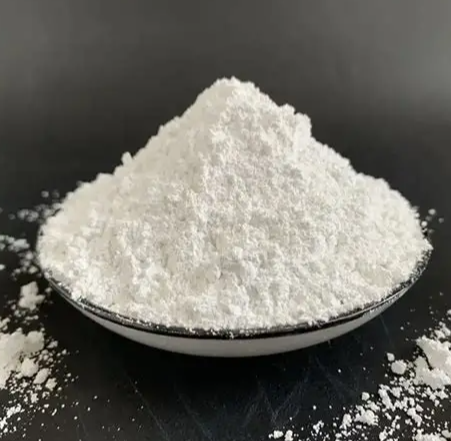
1. Why Must PVC Persistently Engage with Flame Retardants? — The Chemical Nature of Combustion
Consider the products at hand: the cable that goes through the wall; the ceiling panel; the insulation slot in the appliance...
What determines:
Does the material extinguish quickly in the flame or burn vigorously?
When it catches fire, does it only emit white smoke, or does it release toxic gas?
At high temperatures, does it maintain its shape or drip and spread the fire?
Tracing back to the roots, flame retardants are the "firewall" on this safety stage.!
To understand it, you first need to see the enemy clearly—the burning of PVC is an intense chemical warfare.
First Stage: PyrolysisHeating to about 200°C or higher causes the PVC molecular chains to begin to break, releasing HCl gas and forming conjugated polyene structures. HCl itself is corrosive and toxic.
Second Stage: Smoke Generation and CombustionThe conjugated polyene further breaks down to produce aromatic compounds such as benzene, resulting in thick smoke. At the same time, the hydrocarbon fragments released decompose and mix with oxygen, entering the gas phase, where they undergo violent reactions under the influence of an ignition source.Free radical chain reaction (H·, OH·, O·)This releases a large amount of heat and visible light, which is flame.
Phase 3: Flame PropagationThe heat released from combustion is fed back into the material, prompting more PVC to decompose, forming a positive feedback loop, and the fire becomes increasingly intense.
The core mission of flame retardants is to interrupt this "thermal decomposition-combustion-thermal feedback" death cycle.Unable to grasp its mechanism, formula design, safety certification, product application... all may be fraught with anxiety.
2. What Exactly is a PVC Flame Retardant? — A Four-in-One "Firefighting Legion"
Setting aside complex chemical formulas, flame retardants are a synergistic system. They intervene precisely at different stages of combustion through physical and chemical means.
1. Gas-phase Fire Extinguisher (Free Radical Scavenger)
· Representative: Halogenated flame retardants (chlorine, bromine).
· Operational MechanismIn the flame zone, halogen flame retardants decompose upon heating, releasing hydrogen halide (HX). HX can react with high-energy free radicals (H· and OH·) generated during combustion, converting them into much less active halogen atoms (X·).
RH + H· → R· + H₂ changes to H· + Br· → HBr.
This reaction is like "pulling the rug out from under."Cut off the chain reaction that maintains the flame.Suffocate the flame.Antimony trioxide (Sb₂O₃)It is ineffective by itself, but when synergized with halogens, it generates SbCl₃ or SbBr₃ with a lower boiling point, capturing free radicals more efficiently in the gas phase, increasing efficiency several times.
2. Cohesive Phase Wall Builder (Char Protection Layer)
· Representative: Phosphorus-based flame retardants, metal hydroxides.
Combat Mechanism:
· Phosphorus-based:Generate polyphosphate and other strong dehydrating agents in the flame, catalyzing the dehydration crosslinking of PVC and its plasticizers to form a dense, porous expanded carbon layer. This carbon layer acts like an insulating armor, blocking the transfer of heat to the substrate and the diffusion of combustible gases outward.
· Metal hydroxides (ATH, MDH)Decomposition is endothermic (ATH: Al(OH)₃ → Al₂O₃ + 3H₂O - approximately 1050J/g), absorbing a large amount of combustion heat and reducing the surface temperature of the material. The released water vapor can dilute combustible gases and oxygen.
3. Physical Dilution Specialist (Gas Diluter)
· Represents: metal hydroxides, carbonates.
Operational Mechanism:Release during decomposition.CO₂、H₂ONon-combustible gases effectively dilute the concentration of combustible gases and oxygen around the material, making it difficult for flames to sustain.
Cooling Sniper (Heat Absorber)
· Represents: boric acid zinc, metal hydroxides.
· Combat Mechanism:Through self-decomposition or phase transition.Absorb a large amount of heat.Like throwing "dry ice" into a fire scene, forcibly lowering the temperature of the polymer to delay or even prevent it from reaching the critical point of thermal decomposition.
So,An excellent flame retardant system is often a joint combat team composed of multiple "firefighting experts."
3. How to Build an Accurate "Fire Extinguishing System"?
Flame retardants are not simply "added and done"; they are a precise dialogue between molecular structures and combustion chemistry. In the formulation, you need to act like a commander, orchestrating your "firefighting army."
Classic Tactical Combination: Bromine-Antimony Synergistic System
Golden ratioSb₂O₃ : Halogen ≈ 1 : 3 (molar ratio)
· Practical CaseIn soft PVC cable materials, 8-12 PHR of chlorinated paraffin-70 combined with 3-5 PHR of Sb₂O₃ can easily achieve UL94 V-0 rating, with LOI increased to over 30%.
· Intrinsic MechanismBoth reactions produce SbOCl, which further decomposes into SbCl₃ (the main agent for gas-phase fire extinguishing).“1+1 > 2”Flame retardant efficiency.
Modern ChallengesEnvironmental regulations (RoHS, REACH) are becoming increasingly strict regarding halogens, prompting us to seek “halogen-free alternatives.”
2. Halogen-Free Strategy: Metal Hydroxide System
Core ChallengesHigh addition amount. ATH or MDH usually needs to be added.40-60%Effective flame retardancy can only be achieved with the above. This poses a significant challenge to processing fluidity, mechanical properties (increased brittleness!), and cost.
Key to the Breakthrough - Surface ModificationUseSilane or titanate coupling agentSurface treatment of ATH/MDH is a necessary step. This can significantly improve the compatibility between the filler and the PVC matrix, enhance dispersibility, and achieve better toughness and processability with the same amount of additive.
Synergistic effectUsing ATH/MDH alone is like a "human wave tactic," which is inefficient. It is necessary to introduce a synergist.
Zinc borate (2ZnO·3B₂O₃·3.5H₂O)When combined with ATH/MDH, it can promote the formation of a vitreous inorganic protective layer during combustion, enhancing the strength of the char layer while also having smoke suppression capabilities.
Phosphorus-nitrogen expansion systemIntroducing a carbonizing agent (such as pentaerythritol) and a gas source (such as melamine), combined with phosphorus-based flame retardants, to formExpanded graphite layerIt can achieve efficient flame retardancy with a lower addition amount (15-25%), which is the mainstream direction of current halogen-free technology.
3. The Art of Balancing Performance: The Trade-off Between Flame Retardancy and Processing
Linked action of heat stabilizersFlame retardants (especially chlorinated paraffins) may exacerbate the thermal degradation of PVC. Therefore, in flame retardant formulations, it is necessary...Enhanced thermal stability systemTo cope with more demanding thermal histories, it is usually necessary to increase the dosage of calcium-zinc stabilizers or to compound them with a small amount of auxiliary stabilizers such as β-diketones.
Selection of PlasticizersEsters plasticizers (such as DOTP) are flammable themselves. Choose phosphate esters plasticizers (such as).TCP、RDPUsing it is a wise choice as it can both plasticize and participate in the synergistic flame retardant effect. However, for cables requiring high flexibility, DOTP should still be the main component, which necessitates a strong vapor-phase flame retardant system to compensate.
Smoking cessation is a hard indicator.In a fire, most of the victims die from inhaling toxic smoke. Molybdenum compounds (Molybdenum trioxide, ammonium molybdateIt is a top-notch smoke suppressant that can catalyze the formation of a carbon layer, reducing smoke by 30% to 50%. In scenarios with strict requirements for smoke, such as subways and ships, it is the "secret weapon" in the formula.
IV. Classic Formula Design Ideas
Scenario: Low-cost UL94 V-0 grade electrical enclosure material
Core contradictionFlame resistance vs. cost vs. thermal stability
· Recipe Framework:
· PVC (S-1000): 100 PHR
- Chlorinated Paraffin-70: 10 PHR (provides halogen source)
· Sb₂O₃: 4 PHR (synergistic enhancement, precise targeting of free radicals)
Calcium-zinc stabilizer: 4-5 PHR (to address additional thermal stress caused by chlorinated paraffin)
· Processing aids, lubricants: appropriate amount
Design LogicUtilizing the mature halogen-antimony synergistic effect to precisely extinguish gas-phase reactions at the lowest cost, achieving flame self-extinguishment.
Conclusion: Flame retardants are the symphony of chemistry, physics, and engineering.
We painstakingly choose flame retardant systems, optimize formulations, and balance performance, essentially conducting a “fire extinguishing symphony” in the microscopic world. Flame retardants are no longer just simple “additives,” but rather a...Precision systems based on chemical mechanisms, quantitative data, and application scenarios.
The issues on the production line—flame retardant rating stuck at V-1, excessive smoke density, rough extrusion surface, and low-temperature brittleness—are all closely related to the selection, compatibility, dispersion of the flame retardant system, and its interactions with the matrix/additives.
Next time you face a flame-retardant PVC formulation or a fire failure product, don't just ask:
"Has it been adequately dosed with its flame retardant?"”
To ask:
"What is its flame retardant system and combat logic? How efficient is the coordination between different military branches? Does this system perfectly match my processing technology and usage environment?"
Once you have understood the overall picture of this "molecular-level fire suppression system," you truly obtain the key to PVC flame-retardant design.
【Copyright and Disclaimer】The above information is collected and organized by PlastMatch. The copyright belongs to the original author. This article is reprinted for the purpose of providing more information, and it does not imply that PlastMatch endorses the views expressed in the article or guarantees its accuracy. If there are any errors in the source attribution or if your legitimate rights have been infringed, please contact us, and we will promptly correct or remove the content. If other media, websites, or individuals use the aforementioned content, they must clearly indicate the original source and origin of the work and assume legal responsibility on their own.
Most Popular
-
Key Players: The 10 Most Critical Publicly Listed Companies in Solid-State Battery Raw Materials
-
Vioneo Abandons €1.5 Billion Antwerp Project, First Commercial Green Polyolefin Plant Relocates to China
-
EU Changes ELV Regulation Again: Recycled Plastic Content Dispute and Exclusion of Bio-Based Plastics
-
Clariant's CATOFIN™ Catalyst and CLARITY™ Platform Drive Dual-Engine Performance
-

List Released! Mexico Announces 50% Tariff On 1,371 China Product Categories

