Search History
Clear
Trending Searches
Refresh

Countdown! March 12 Vote: Ecological Environment Code Draft Sets New Rules for Recycled Materials
New Observations on Waste Plastics 2026-03-07 10:23:13
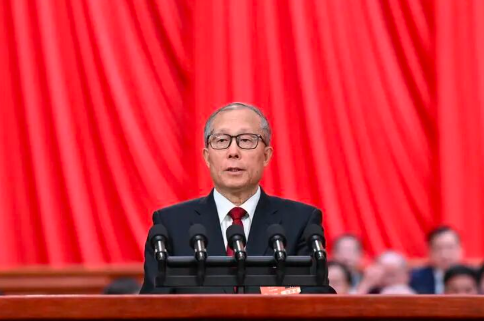
The Fourth Session of the 14th National People's Congress opened at 9:00 am on March 5th in the Great Hall of the People. Li Hongzhong, Vice Chairman of the Standing Committee of the National People's Congress, delivered an explanation on the draft of the Ecological Environment Code on behalf of the Standing Committee of the National People's Congress.

The Fourth Session of the 14th National People's Congress

Draft Ecological and Environmental Code Schedule

1

March 5th,Hear the explanation by Li Hongzhong, Vice Chairman of the Standing Committee of the National People's Congress, on the draft of the Ecological and Environmental Code of the People's Republic of China

2

9:00 a.m. on March 8Representative Group Meeting to Review the Draft of the Ecological Environment Code

3

3:00 PM, March 10, representing the group meeting’s deliberation on the revised draft of the Ecological Environment Code

4

March 12th at 3:00 pmVote on the draft of the Environmental Code of the People's Republic of China

Luo Qinjian, spokesperson for the congress, stated that the Environmental Protection Code is China's second law named as a "code." The codification of this code is neither a simple compilation of existing laws nor entirely new legislation; rather, it systematically integrates, revises, and elevates the existing legal institutions, mechanisms, rules, and norms concerning ecological and environmental protection. Through this codification, the systematicness, coherence, synergy, and timeliness of legislation will be enhanced.
Ten laws, including the Environmental Protection Law, will be incorporated into the Ecological and Environmental Code.
The explanation regarding the draft of the Ecological Environment Code indicates that the compilation of the Ecological Environment Code adopts a moderately codified model, with the compilation work being handled in three categories, specifically considering:
In the first category, the current Environmental Protection Law and nine other laws will be compiled and revised, and all will be incorporated into the Ecological and Environmental Code. After the compilation and promulgation of the code, the aforementioned laws will no longer be retained.
Second, key provisions and principles from existing laws and regulations concerning river basins, regions, natural resources, biodiversity, and other ecological elements and ecosystems—as well as those concerning circular economy and energy conservation—shall be selectively incorporated into or reflected in the Ecological and Environmental Code. These laws and regulations will remain in effect after the promulgation of the Ecological and Environmental Code.
For the third category, considering the legal needs in addressing climate change, peaking carbon emissions and achieving carbon neutrality, and green and low-carbon development, where no specific laws have yet been formulated, the compilation of the Ecological and Environmental Code should include some principled and guiding provisions. This will set principles, lay the groundwork, and leave room for the development of related legal systems and practices in the future, thereby reflecting the contemporaneity and forward-looking nature of the Code.
The draft of the Ecological Environment Code consists of 5 volumes and 1,242 articles.
The explanation of the draft of the Ecological Environment Code shows that the draft consists of 5 volumes and 1,242 articles. The volumes are arranged as follows: General Provisions, Pollution Prevention and Control, Ecological Conservation, Green and Low-Carbon Development, Legal Responsibilities, and Supplementary Provisions. The first volume, "General Provisions," stipulates important legal principles and fundamental, comprehensive, and universal legal systems in the field of ecological environment, overseeing the other volumes.
The Draft Ecological Environment Code addresses pollution prevention and control issues in emerging fields.
Regarding the explanation of the draft Environmental Protection Code, the draft's pollution prevention section integrates, revises, and optimizes the provisions on pollution prevention from existing laws, including the Air Pollution Prevention and Control Law, the Water Pollution Prevention and Control Law, the Soil Pollution Prevention and Control Law, the Law on the Prevention and Control of Environmental Pollution by Solid Wastes, the Law on the Prevention and Control of Environmental Pollution by Noise, the Law on the Prevention and Control of Environmental Pollution by Radioactive Substances, the Environmental Protection Law, and the Law on the Prevention and Control of Environmental Pollution in Marine Areas. First, it summarizes and distills the common institutional provisions on pollution prevention from existing laws into general provisions, and elevates the proven effective and mature pollution prevention experiences to legal institutional provisions. Second, in terms of the structure, it first considers the three major pollution prevention campaigns—clean air, clear water, and clean soil; then addresses the treatment of solid wastes, noise, and radioactive pollution sources; and finally provides targeted institutional provisions for new areas of pollution prevention, such as chemical substances, electromagnetic radiation, and light.
The draft of the Ecological Environment Code establishes and improves the system of green consumption.
The explanatory note on the draft of the Ecological and Environmental Law Code points out that the draft strengthens the system for the recycling and utilization of waste, adding provisions on the recycling of new types of waste, low-value recyclable materials, as well as the processing and utilization of recycled metals and the promotion and application of recycled materials. It also establishes a sound system for green consumption, adding provisions on green consumption incentives, government procurement of green products, and the circulation and trading of second-hand goods, and clarifies the relevant obligations of citizens and enterprises.

【Copyright and Disclaimer】The above information is collected and organized by PlastMatch. The copyright belongs to the original author. This article is reprinted for the purpose of providing more information, and it does not imply that PlastMatch endorses the views expressed in the article or guarantees its accuracy. If there are any errors in the source attribution or if your legitimate rights have been infringed, please contact us, and we will promptly correct or remove the content. If other media, websites, or individuals use the aforementioned content, they must clearly indicate the original source and origin of the work and assume legal responsibility on their own.

1000+  Daily Updated Global Business Leads,2M+ Global Company Database.Click to download the app.

Purchase request Download app