



China's Auto Market Sees Slow Growth as Overseas Markets Become Key Growth Driver
At the beginning of the new year, China's automotive market opened with a smooth transition of the "trade-in" policy, yet January's sales data showed unexpected growth pressures. Meanwhile, the export market saw a year-on-year growth of over 40%, becoming the most certain growth engine at present. After bidding farewell to the high-growth dividend, China's automotive market is standing at the turning point from "quantitative change" to "qualitative transformation".
Sales have been declining for consecutive months, compounded by the withdrawal of subsidies and the early exhaustion of consumer potential.

The Chinese auto market in 2026 failed to usher in the long-anticipated "good start" at the beginning of the year. The latest data from the China Association of Automobile Manufacturers (CAAM) shows that in January, car production and sales were completed at 2.45 million and 2.347 million units, respectively, with sales dropping by 28.3% month-on-month and 3.2% year-on-year. Behind these figures, there are both the dual impacts of the Spring Festival holiday and the policy transition period, as well as the reality of a stage of weaker intrinsic market momentum.
Passenger car sales declined most sharply. In January, passenger vehicle sales totaled 1.988 million units, down 6.8% year-over-year and plunging 30.2% month-over-month. Even domestic brands, which had previously been surging, were not spared—sales fell to 1.329 million units that month, dropping both year-over-year and month-over-month, with their market share declining by nearly 2 percentage points compared to December of the previous year. This is no coincidence: automakers' aggressive year-end sales push in late 2025 exhausted a significant portion of demand in advance, while the adjustment of new energy vehicle purchase tax policies in 2026 and the temporary "policy vacuum" during the transition of local subsidies have left consumers holding back and adopting a wait-and-see attitude.
More notably, structural divergence in the new energy vehicle (NEV) market warrants closer attention. In January, NEV sales reached 945,000 units, up only 0.1% year-on-year, with a market penetration rate of 40.26%. By powertrain type, battery electric vehicle (BEV) sales totaled 597,000 units, rising 4.0% year-on-year and remaining the dominant segment; in contrast, plug-in hybrid electric vehicle (PHEV) sales unexpectedly declined by 5.9% to 348,000 units. This divergence reveals an underlying trend: as charging infrastructure continues to improve, consumer acceptance of the all-electric route is steadily rebounding, while PHEVs have seen their cost-effectiveness weakened following the phase-out of subsidies.
Policy support remains in effect but has clearly weakened. The 2026 “trade-in-for-new” subsidy guidelines are now explicit: scrapping an old vehicle to purchase a new energy passenger vehicle qualifies for a subsidy of 12% of the purchase price (capped at RMB 20,000), while replacement and upgrade subsidies stand at 8% (capped at RMB 15,000). This adjustment marks a stark departure from last year’s virtually unrestricted subsidies. Nevertheless, it will still take time for these policy incentives to translate into tangible benefits for consumers; moreover, the extended Spring Festival holiday in February further compressed the transaction window. The combined impact of these factors was significant: among the five leading domestic automakers, only Geely posted a marginal growth of 0.6% year-on-year, while BYD, Changan, Chery, and Great Wall all recorded year-on-year declines—BYD’s February sales even plunged 35.8% year-on-year. Low growth has thus become a new normal the industry must confront head-on.
Hidden concerns behind overseas growth emerge, technical and product advantages need to be consolidated.

When domestic demand growth hits a bottleneck, the overseas market changes from a "bonus item" to a "must-answer question." At the beginning of 2026, China's auto exports delivered an impressive performance: 681,000 vehicles were exported in January, representing a 44.9% year-on-year increase, and marking 45 consecutive months of positive year-on-year growth. More importantly, the export of 302,000 New Energy Vehicles (NEVs) doubled year on year, with its share rising to 44.3%. This means that more than 4 out of every 10 exported vehicles are NEVs, and China is reshaping the global automotive trade landscape with its electrification advantage.
By powertrain type, battery electric vehicle (BEV) exports reached 202,000 units, up 102.1% year-on-year, while plug-in hybrid electric vehicle (PHEV) exports totaled 99,000 units, up 97.3% year-on-year. The growth rates of both powertrain types are broadly aligned, indicating that overseas markets are increasingly embracing China’s diversified technological approaches. This momentum continued in February: Chery exported 117,000 units, up 41.5% year-on-year; Geely exported 61,000 units, surging 138% year-on-year. Chery also achieved the milestone of cumulative exports reaching 6 million units, becoming the first Chinese brand to accomplish this feat.
However, behind the high growth, undercurrents are stirring. Export in January fell 9.5% month-on-month, indicating that the overseas market is not a smooth path. The shadow of additional tariffs on Chinese electric vehicles by the EU has not yet faded, and foreign exchange controls and trade barriers in some emerging markets are also on the rise. More seriously, the growth rate of traditional fuel vehicle exports (18.8%) is far lower than that of new energy vehicles (100.5%). This means that although the core market for fuel vehicles is being gradually replaced by new energy vehicles overseas, new energy vehicles still face practical challenges such as insufficient charging infrastructure and low consumer awareness in certain markets.
Therefore, maintaining core technological and product competitive advantages and extending the window of opportunity for China’s automotive industry has become more urgent than ever. Chery’s January new energy vehicle (NEV) exports surged by 211% year-on-year, and the Jaecoo 7 accounted for 70% of NEV sales in the UK market, demonstrating that premium, intelligent products are competitive even in mature markets. BAIC Foton echoes this trend: its NEV exports jumped by 87.8% in January–February, its all-electric light-duty trucks launched in Singapore, and its premium pickup trucks have won international awards. These cases send a clear signal: the era of relying solely on cost-performance advantage is coming to an end. Only companies that master core technologies and possess the capability to comply with global regulations can sustainably capture overseas market opportunities.
Continuous Enhancement of Quality and Service: Establishing Three Strategic Centers in the UK, Australia, and Southeast Asia
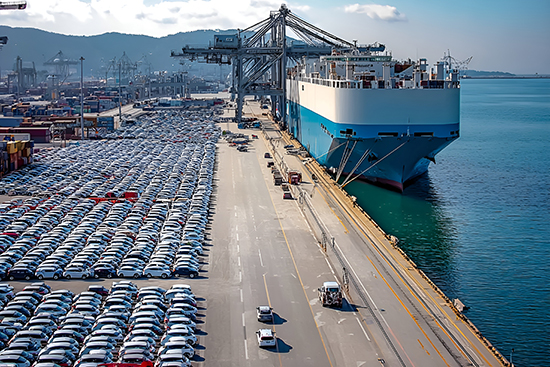
If sales volume and exports represent the visible “tip of the iceberg,” then the development of quality systems and after-sales service capabilities constitutes the “submerged foundation” supporting Chinese automobiles’ genuine global expansion. By 2026, Chinese automakers’ overseas strategies are transitioning from “selling products” to “building ecosystems,” with the United Kingdom, Australia, and Southeast Asia emerging as the three strategic pillars.
In the UK, a global hub of the automotive industry and the gateway to the European premium market, Chinese brands are breaking existing prejudices with their technological strength. Chery has entered 18 European countries, and in January, it sold nearly 20,000 vehicles in the EU and the UK, with a year-on-year increase of 224%. Jaecoo has become the fastest-growing car brand in the UK in the past decade. This is not only a victory of product strength, but also a deep adaptation to Europe's strict regulations, safety standards and consumer preferences - with a total of 62 models winning global five-star safety certifications, which is a testament to the upgrading of Chinese manufacturing quality.
The Australian market serves as a “litmus test” for right-hand-drive markets and a springboard into the South Pacific island nations. Local demand for pickup trucks and SUVs is robust, and Australia maintains close industrial chain links with ASEAN countries. Chinese brands have accumulated valuable experience in Australia—such as achieving ANCAP five-star safety ratings and adapting vehicles to local road conditions and environmental requirements—which can be rapidly replicated in other right-hand-drive markets.
Southeast Asia is becoming a testing ground for Chinese automakers' "ecosystem-driven globalization." Chery has launched a mangrove ecosystem restoration project in Malaysia, demonstrating its ESG commitment, while BAIC Foton has rolled out its 2,000th heavy-duty truck in Thailand and achieved localized production at its South Africa plant. More importantly, service providers like China Automotive Technology & Research Center (CATARC) have established overseas service networks covering key regions including Southeast Asia and Europe, offering one-stop services such as regulatory interpretation, product adaptation development, and overseas road testing. Moving beyond merely exporting vehicles to exporting standards, providing technical services, and integrating corporate social responsibility, this deep-rooted, full-value-chain approach—spanning R&D, manufacturing, sales, supply, and after-sales service—is key to building long-term competitive advantages.
FAW and China Automotive Technology & Research Center (CATARC) also signed an integration agreement in February, focusing on strategic areas such as new energy, intelligent connected vehicles, and overseas certification, jointly building a domestically leading and internationally first-class testing and certification service platform with international service capabilities spanning six continents. This "R&D + testing" closed-loop collaboration will provide stronger foundational support for Chinese automakers' global expansion.
In 2026, the Chinese automotive market is undergoing a profound differentiation and restructuring. The domestic demand market has left behind high growth, forcing companies to pursue quality from within and seek opportunities abroad; although overseas exports are growing rapidly, technological dividends must be transformed into brand premium and service capabilities. When the UK witnesses the design aesthetics of Chinese smart electric vehicles, when Southeast Asia accepts China's comprehensive green energy solutions, and when Australia recognizes the safety quality of Chinese manufacturing — only then can Chinese automobiles truly transition from a "major exporter" to an "industrial power." This transformation has no shortcut; it can only be achieved through solid technological accumulation, precise global positioning, and sustainable local operations, thus navigating toward broader waters amid the tide of slow growth.
【Copyright and Disclaimer】The above information is collected and organized by PlastMatch. The copyright belongs to the original author. This article is reprinted for the purpose of providing more information, and it does not imply that PlastMatch endorses the views expressed in the article or guarantees its accuracy. If there are any errors in the source attribution or if your legitimate rights have been infringed, please contact us, and we will promptly correct or remove the content. If other media, websites, or individuals use the aforementioned content, they must clearly indicate the original source and origin of the work and assume legal responsibility on their own.
Most Popular
-
Supply Extremely Tight! LG Chem Declares Force Majeure on Export Contracts for Di-Octyl Terephthalate (DOTP)
-
Huntsman Introduces “War Surcharge” Amid Shipping Disruption and Soaring Energy Costs, Global MDI Prices Continue to Rise
-
Middle East Tensions Escalate Sharply: How Polyolefins Respond Amid Soaring Risk Premium
-
Deadly Impact: Hormuz Strait Blockade Sparks Shortage of Plastic Raw Materials, Threatening Shutdowns at Japanese and Korean Chemical Plants
-

LG Chem Declares Force Majeure on DOTP Exports! SABIC Joins Five Giants to Redefine EV Safety


