



China’s “Trifurcation” Stent Breaks US Blank—Granted FDA’s Highest Approval
Recently, Shanghai MicroPort Endovascular Co., Ltd.’s self-developed Hector®/Tongtianji™ Thoracic Aortic Multi-Branch Stent-Graft System received the U.S. FDA’s “Breakthrough Device” designation.
As of early 2026, the largest and most strictly regulated US market remains void in the field of standardized "total endovascular three-branched" aortic arch stents.
Why is this blank so difficult to fill? Because the aortic arch is a "cavity" recognized by vascular surgery. The three major branches of the arch directly supply blood to the brain, and any operation is as delicate as walking on thin ice; even a slight mistake may lead to a stroke. The long-standing pain points faced by doctors are clear and sharp: how to control the risk of stroke within an acceptable range? How to achieve "non-clamping deployment" to protect the brain tissue? How to address the risk of endoleak caused by the three-branched interface?
This is not just a product competition, but the ultimate test of systems engineering capabilities.
The "Sky-Piercing Halberd" unveiled by MicroPort Endovascular is precisely aimed at these pain points. It did not emerge out of thin air, but is built upon nearly two decades of technological accumulation from its star product, the Castor® (the world's first approved branched aortic stent graft).
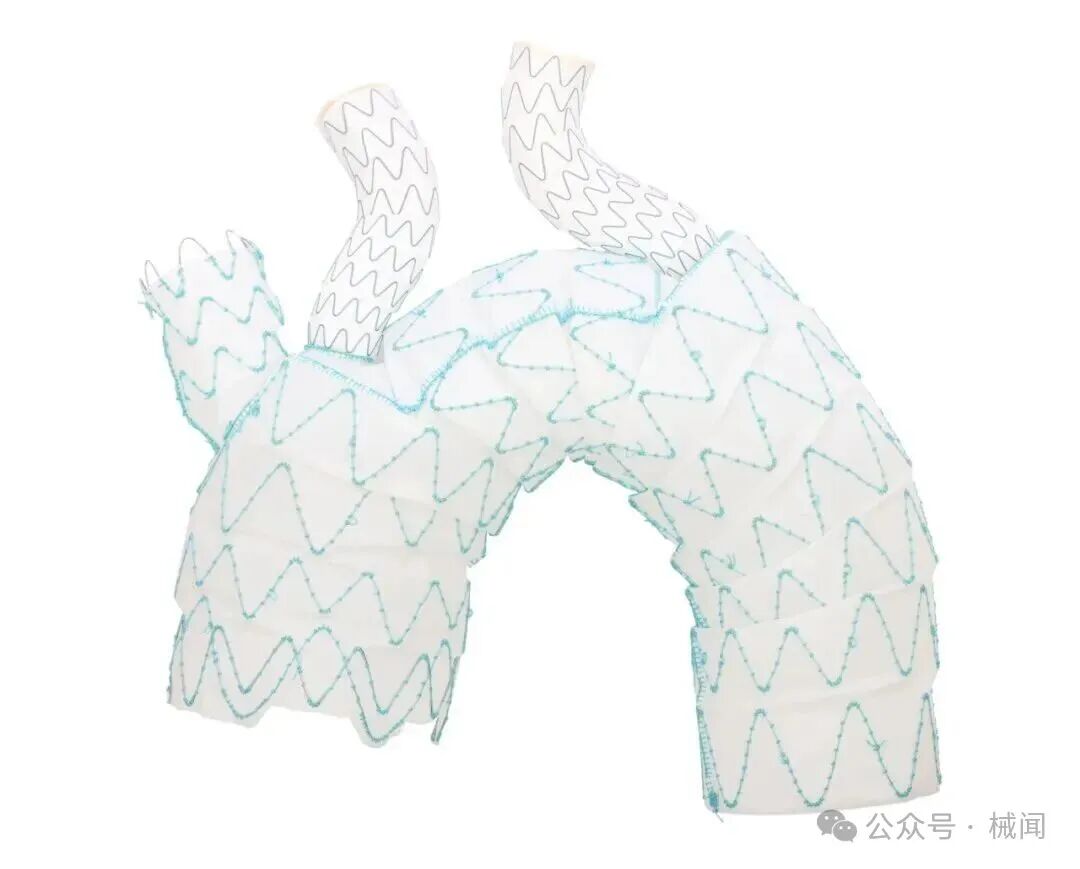
Hector® has achieved a full endovascular upgrade from a single-branch to a triple-branch configuration, centered on an integrated endovascular design, rapid deployment technology without blood flow interruption, and a hybrid rigid-flexible bridging stent system, aiming to reduce cerebral ischemia time and enhance procedural tolerance and sealing stability.
Looking globally, international giants such as Cook Medical and Artivion are still advancing their three-branch solutions, but the absence of standardized products in the U.S. market means that the technological window of opportunity remains open. Whoever can first find the optimal balance between stroke rate, long-term survival rate, and large-scale production may define the future landscape.
“Breakthrough designation” does not equate to marketing approval. It is a “fast-track pass” that entitles the sponsor to FDA support such as priority review, but the ultimate determinant remains the clinical data—can the stroke rate be controlled? What is the incidence of endoleaks? Is long-term survival stable? These hard metrics are the key to whether the product can ultimately conquer this “final frontier.”
This move by Xinmai Medical marks the entry of China's independently developed high-end aortic innovation solutions into the global top-tier competition.
The last piece of the puzzle for endovascular treatment of the aortic arch is being shaken.
【Copyright and Disclaimer】The above information is collected and organized by PlastMatch. The copyright belongs to the original author. This article is reprinted for the purpose of providing more information, and it does not imply that PlastMatch endorses the views expressed in the article or guarantees its accuracy. If there are any errors in the source attribution or if your legitimate rights have been infringed, please contact us, and we will promptly correct or remove the content. If other media, websites, or individuals use the aforementioned content, they must clearly indicate the original source and origin of the work and assume legal responsibility on their own.
Most Popular
-
Supply Extremely Tight! LG Chem Declares Force Majeure on Export Contracts for Di-Octyl Terephthalate (DOTP)
-
Huntsman Introduces “War Surcharge” Amid Shipping Disruption and Soaring Energy Costs, Global MDI Prices Continue to Rise
-
Middle East Tensions Escalate Sharply: How Polyolefins Respond Amid Soaring Risk Premium
-
Deadly Impact: Hormuz Strait Blockade Sparks Shortage of Plastic Raw Materials, Threatening Shutdowns at Japanese and Korean Chemical Plants
-

LG Chem Declares Force Majeure on DOTP Exports! SABIC Joins Five Giants to Redefine EV Safety


