Central Asia Polyolefin Export Market Trends: From Import Dependence to Local Rise
Introduction: Translate the above content into English, output the translation directly, without any explanation.
I. Overview of the Trend of China's Polyolefin Exports to Central Asian Countries
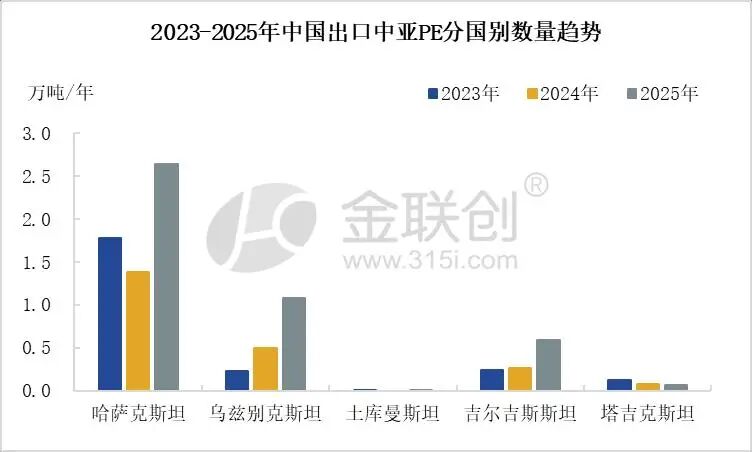
Source: General Administration of Customs
In 2023, China exported a total of 23,800 tons of polyethylene to the five Central Asian countries. In 2024, the export volume was 22,300 tons, and in 2025, it reached 43,800 tons. From 2023 to 2025, Kazakhstan was the largest recipient of these exports, followed by Uzbekistan and Kyrgyzstan, with Tajikistan and Turkmenistan trailing behind.
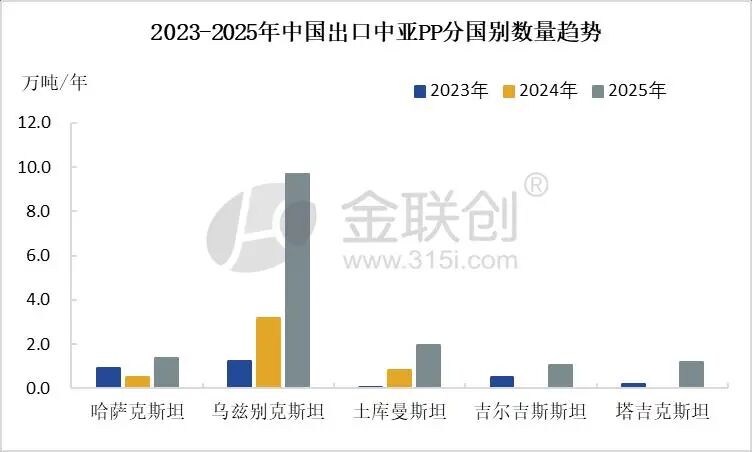
Data Source: General Administration of Customs
In 2023, China exported a total of 28,600 tons of polypropylene to the five Central Asian countries. This increased to 45,300 tons in 2024 and further to 152,200 tons in 2025. Uzbekistan was the largest importer of polypropylene from China among the five Central Asian countries during the period of 2023-2025, followed by Kazakhstan and Turkmenistan, with Kyrgyzstan and Tajikistan following behind.
II. Analysis of the Polyolefin Market in the Five Central Asian Countries
Demand Side: Estimated annual polyethylene demand in the Central Asian region in 2026 is as follows: Kazakhstan 300,000 tons, Uzbekistan 500,000 tons, Kyrgyzstan 100,000 tons, Tajikistan 150,000 tons, and Turkmenistan 100,000 tons. Annual polypropylene demand is as follows: Kazakhstan 500,000 tons, Uzbekistan 700,000 tons, Kyrgyzstan 80,000 tons, Tajikistan 110,000 tons, and Turkmenistan 100,000 tons.
Supply side: In Central Asia, polyethylene capacity is concentrated in Kazakhstan and Uzbekistan. Uzbekistan currently has a capacity of 590,000 tons/year, and Kazakhstan has a polyethylene capacity of 400,000 tons/year. Kazakhstan still has a planned capacity of 1.25 million tons/year expected to come online in 2028-2029. Polypropylene capacity is also concentrated in Kazakhstan and Uzbekistan. Uzbekistan has a planned capacity of 700,000 tons of units to be put into operation in the past two years, and Kazakhstan has a polypropylene capacity of 500,000 tons/year, with an annual output of 400,000-500,000 tons.
Export Side: Although the production capacity of the Central Asian region is limited, demand is also limited. They also export a certain amount each year. The main polyethylene exporting countries are Kazakhstan and Uzbekistan. Kazakhstan exports approximately 0.1 million tons of polyethylene annually, mainly low-density products. Uzbekistan exports approximately 10,000 tons annually, mainly low-density products. The main export destinations are Vietnam, China, and Bangladesh.
The main exporters of polypropylene are also Kazakhstan and Uzbekistan. Kazakhstan exports approximately 1.1 million tons of polypropylene annually, mainly to Turkey, Europe, and Uzbekistan. Uzbekistan exports about 5,000 tons of polypropylene annually, mainly to China, Russia, and Tajikistan.
Imported noodles: Central Asia's overall imports are characterized by small and dispersed volumes, with limited scale. With future production increases, the region's import volume will continue to decline. It is expected that after Kazakhstan's KMG comes online, polyethylene supply in Central Asia will largely achieve self-sufficiency after 2029.
China's polyolefin exports to Central Asia are projected to double year-on-year in 2025, with polypropylene increasing by 236% and polyethylene by 49%. This growth is attributed to Chinese businesses actively expanding export markets and persistently open arbitrage windows, as well as the absence of newly added large-scale polyolefin plants in Central Asia. It is expected that China's polyolefin exports to Central Asia will continue to rise until the KMG plant comes online in 2029, after which the growth trend will slow down slightly.
【Copyright and Disclaimer】The above information is collected and organized by PlastMatch. The copyright belongs to the original author. This article is reprinted for the purpose of providing more information, and it does not imply that PlastMatch endorses the views expressed in the article or guarantees its accuracy. If there are any errors in the source attribution or if your legitimate rights have been infringed, please contact us, and we will promptly correct or remove the content. If other media, websites, or individuals use the aforementioned content, they must clearly indicate the original source and origin of the work and assume legal responsibility on their own.
Most Popular
-
Supply Extremely Tight! LG Chem Declares Force Majeure on Export Contracts for Di-Octyl Terephthalate (DOTP)
-
Huntsman Introduces “War Surcharge” Amid Shipping Disruption and Soaring Energy Costs, Global MDI Prices Continue to Rise
-
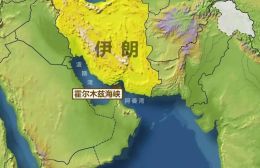
Deadly Impact: Hormuz Strait Blockade Sparks Shortage of Plastic Raw Materials, Threatening Shutdowns at Japanese and Korean Chemical Plants
-

LG Chem Declares Force Majeure on DOTP Exports! SABIC Joins Five Giants to Redefine EV Safety
-
Tao Lin: Tesla’s Supercharger Stations in China Surpass 2,500