



Cancellation of Export Tax Rebates for Polyether: Where Should China Enterprises Go?
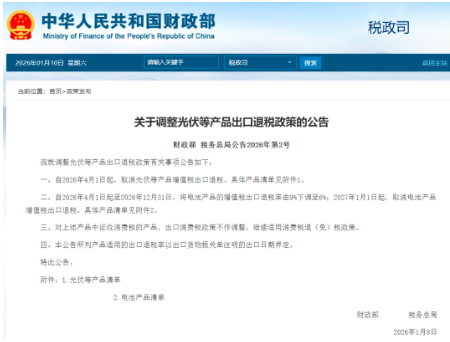
A recent announcement from the Ministry of Finance has brought a direct cost impact to the polyether industry, which relies heavily on exports. Starting from April 1, 2026, the VAT export tax rebate for various products, including polyether, will be canceled. For the polyether industry, where profits are already very slim and efforts to seek overseas markets are actively underway, this is akin to a stress test. Coupled with the complex international situation, it marks the end of an era of relying solely on cost advantages.
The recent policy adjustment has directly removed a significant cost buffer for polyether exports. Meanwhile, the external market environment is becoming increasingly complex. Trade barriers in major global markets are continuously being raised, and rules are becoming more fragmented. For example, the tariff policies of the U.S. market on Chinese products are complex and variable, potentially leading to extremely high tariffs; countries like India and Brazil frequently use anti-dumping measures. This dual internal and external change means that the traditional price competitiveness foundation of Chinese polyether companies has been shaken, and they are facing profound "cost restructuring."
The global polyether supply chain is undergoing a restructuring. High energy costs and competitive pressures are forcing some outdated capacities in Europe to exit the market. This provides an opportunity for Chinese polyether to fill the market gap. However, the way to seize these opportunities has changed. Companies must navigate the "maze of rules" constituted by differential tariffs, anti-dumping investigations, and rules of origin. Simple price wars are no longer sustainable; the resilience of the supply chain, compliance capabilities, and diversified market layouts have become crucial. At the same time, this may also signal another round of industry reshuffling.
Short-term pain is inevitable, but in the long run, this transformation will force the industry to undergo a value reconstruction. The survival logic of enterprises must change.
Layout restructuring to enhance resilience: Consider expanding capacity or downstream cooperation in regions such as Southeast Asia to be closer to the market, optimize the supply chain, and respond to trade barriers.
Competition Upgrade, Value Creation: The focus of competition should shift from price to product differentiation and technical services. Developing specialty polyethers for areas such as new energy vehicles and high-end medical fields is key to enhancing added value.
Management evolution, mastering complexity: It is essential to establish a professional international trade compliance system to address the dynamically changing global rules and transform compliance capabilities into a new competitive threshold.
【Copyright and Disclaimer】The above information is collected and organized by PlastMatch. The copyright belongs to the original author. This article is reprinted for the purpose of providing more information, and it does not imply that PlastMatch endorses the views expressed in the article or guarantees its accuracy. If there are any errors in the source attribution or if your legitimate rights have been infringed, please contact us, and we will promptly correct or remove the content. If other media, websites, or individuals use the aforementioned content, they must clearly indicate the original source and origin of the work and assume legal responsibility on their own.
Most Popular
-

Layoffs, Divestments, Plant Closures While Pouring Billions: BASF Undergoes Major Transformation!
-
Ascend Adipic Acid Hit By Force Majeure, Market Expects Supply Resumption In Mid-September
-

Raw Material Supply Shortage! INEOS Phenol Declares Force Majeure on Phenol and Acetone Businesses
-
South Korea initiates anti-dumping investigation against Chinese PVC suspension resin! The target is Tianjin Bohua and Wanhua Chemical. How to break through?
-

Sixth national procurement set to be implemented: A “Reshuffling” Moment for the $10-Billion Medical Device Market


