



Can a $500 skillful hand hold the lifeline of an industry?
The dexterous hand industry is showing a very intriguing phenomenon.
On one hand, Tesla's mass production plan for its humanoid robot Optimus was forced to hit the "pause button" last October. The production halt was mainly due to core technical difficulties with its hand and forearm, resulting in a large number of robot bodies lacking hand components piling up in Tesla's factories.
On the other hand, in September of last year, Su Yang, the co-founder of Lingxin Qiaoshou (Nimble Heart Clever Hand), stated that he believed the price of the nimble hand could be reduced to 500 yuan or even lower within 3 years. It is reported that the lowest price of Lingxin Qiaoshou's Linker Hand series products is 6666 yuan.
Coincidentally, in November 2025, the Fourier FDH-6 dexterous hand, with its 11 joints and 6 degrees of freedom biomimetic design, achieved a fingertip repeatability of 0.5 mm, yet was priced at only 4999 yuan.
Here are three pieces of information from home and abroad that reflect the story behind the dexterous hand industry: Tesla was forced to halt production due to the technical difficulty of dexterous hand technology, while domestic dexterous hand companies plan to push the price of such "highly technically difficult" core components to 500 yuan or even lower.
So, how technically challenging is the dexterous hand that stumped Tesla? Have the upper and lower price limits of dexterous hands become clear today? What industry stories worth exploring are hidden behind the high technical difficulty and low-price exploration?
"Old Money" and "Nouveau Riche" Flock to Lingqiaoshou (or Agile Hands).
From the fierce competition in consumer electronics to the iterative breakthroughs in new energy vehicles, and now to the sweeping wave of embodied intelligence, the rise of each emerging industry is inseparable from the accumulation of "predecessors" and the impact of "newcomers."
Dexterous hands, as the core carrier for humanoid robots to achieve "hand-brain coordination," are at a critical juncture where old and new intersect and various players compete. The landscape of players in this field clearly outlines the ambitions and uncertainties of the entire industry.
Currently, the participants in the dexterous hand arena form a diverse and complex landscape, clearly reflecting the different perceptions and ambitions within the industry.
The first type of player is the "system definer," represented by Tesla, Unitree Robotics, and Agile Robots.
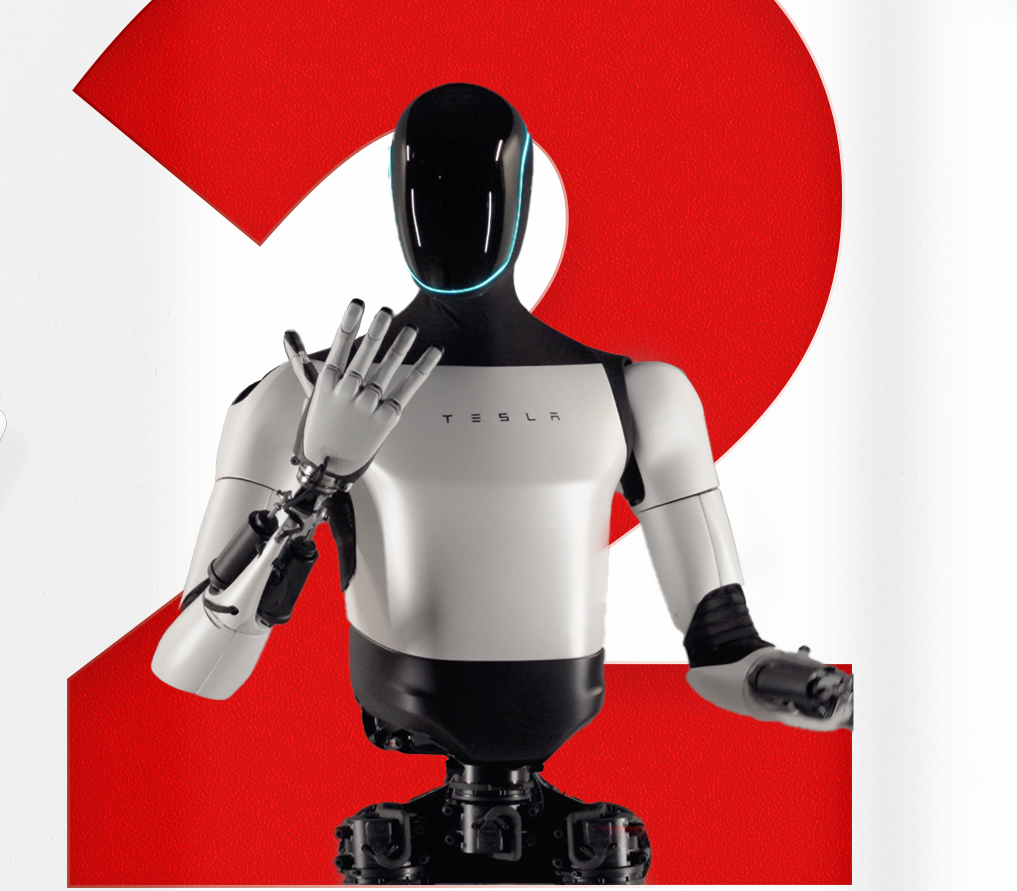
Image source: Tesla's Weibo
These are themselves robot body manufacturing giants or star companies that view dexterous hands as an indispensable part of their grand narrative of "general-purpose robots."
Their logic is top-down: In order for humanoid robots to truly become general-purpose labor in multi-task, unstructured environments, a pair of highly biomimetic, dexterous "five-fingered hands" approaching the dexterity of human hands is an inevitable choice.
Tesla's Optimus demonstration of hand dexterity is not just a tech demo, but a declaration of its system integration capabilities and end-to-end design philosophy. These companies often invest generously, pursuing ultimate performance metrics, because the hand is an important part of their brand and technological moat.
The second category is "deep specialists," companies that have been deeply involved in dexterous hand technology long before the "embodied intelligence" boom. These companies typically originated from earlier research or specialized needs, such as high-end prosthetics or space robots, and have undergone a long climb from laboratory prototypes to commercialized products.
Their core strengths lie in a deep understanding of underlying technologies, the ability to independently develop key core components (such as micro servo cylinders), and accumulated engineering experience in reliability and batch consistency.
These companies have witnessed the transformation of robotic hands from "research luxuries costing millions per unit" to "industrial-grade products priced from tens of thousands to hundreds of thousands," and have firsthand experience with cost structures and technological bottlenecks.
The third type is "jumping on the bandwagon," referring to startups that rapidly emerged after Tesla's Optimus ignited global enthusiasm for humanoid robots in 2022.
"In-time Robotics has been working on dexterous hands for nearly ten years," Fang Hainan, CMO of In-time Robotics, told Gasgoo, "Most companies on the market currently working on dexterous hands have likely entered the industry for no more than two years, and usually enter the dexterous hand industry based on the development trend of humanoid robots."
This is true. However, it must be acknowledged that "new entrants" are still impacting the collaborative robot industry with a force that cannot be ignored.
These "new elites" have a keen sense of smell and capital reacts quickly. They often claim to achieve a price point of around a hundred yuan as a selling point, using disruptive technologies or disruptive costs. They attempt to solve the "slow problems" of high-end manufacturing with the "fast thinking" of the internet era. Their aggressive posture is both a strategy to gain attention and a reflection of their urgency regarding the market window of opportunity.
Beyond these three core player categories, the movements of upstream supply chain giants are also crucial. They are specifically optimizing core components such as micro servo actuators and precision planetary gear reducers, which were originally used in other industries, and actively connecting with dexterous hand manufacturers. Their large-scale production capacity is the foundation for achieving an order-of-magnitude reduction in the cost of dexterous hands in the future. At the same time, internet and AI giants are also entering from the algorithm and control levels through investment or self-research, attempting to redefine the intelligent connotation of "dexterity."
This map is not static; the boundaries between players are blurring.
OEMs may vertically integrate into core components, specialist companies may move up the value chain to offer system solutions, and newcomers are seeking differentiated spaces for survival.
Regardless of their origins, all players entering the game face a common "impossible triangle" between ideals and reality, comprised of technology, cost, and low end-user prices.
"Price wars" exist, but are not "reasonable."
"The cost barrier" is almost always the primary obstacle to the widespread adoption of emerging hardware products.
Behind the nimble hand's "impossible triangle" lies a multi-dimensional balancing act.
According to a research report by Huajin Securities, dexterous hands account for approximately 17% of the entire machine's cost, making them one of the most important components in terms of cost. Taking Tesla's Optimus as an example, cost breakdown of various parts of the whole machine shows that the dexterous hand accounts for about 17.2% of the cost, representing the largest proportion.
The high cost of dexterous hands stems from the integration of numerous miniaturized, high-precision components: multiple micro servo motors, precision reducers, lead screws, encoders, and complex sensing systems. Most of these components require customization, making it difficult to achieve economies of scale through standardization.
Currently, the technological competition in dexterous hand degrees of freedom has advanced from the early 10+ to 20+, as evidenced by Tesla's Optimus Gen 1 dexterous hand having 11 degrees of freedom, while the Gen 3 dexterous hand has increased to 22 degrees of freedom.
In this context, domestic companies are also making increased freedom a key aspect of agile manipulator product iteration.
The dexterity of dexterous hands relies on numerous components and electronic parts. The cost of these components and parts is currently not low.
"We are capable of creating more dexterous hands with higher degrees of freedom, but the trade-offs would be higher costs, higher failure rates, and increased weight. The reason we designed it with this particular degree of freedom is based on user feedback; it can accomplish over 90% of human hand activities, and the cost can be brought down to the 20,000 RMB threshold. We believe this is a high-performance, cost-effective product. In the future, we may make some improvements with more degrees of freedom, but we won't compete with human hands." A source from BrainCo stated in an interview.
Coincidentally, Fang Hainan told Gasgoo, "A dexterous hand needs at least six motors, and the current market price for one motor is as low as several hundred yuan."
Regarding the industry's claim that "dexterous hand prices can be reduced to 500 yuan within three years," Fang Hainan stated bluntly: "Cost discussions must return to value." Fang Hainan calculated a detailed account, "If the price of a dexterous hand reaches 500 yuan, how much would each motor have to cost?" This straightforward cost calculation sharply points out the gap between physical limitations and commercial promises.
The controversy surrounding the declaration of "reducing the price to below 500 yuan" in the industry stems precisely from its detachment from current technology and value anchors.
Cost reduction is a gradual process that accompanies technological advancements, process maturation, and market expansion, rather than a simple price announcement.
Regarding the current discussion on the "price war" in the dexterous hand industry, Fang Hainan stated frankly: "There is a phenomenon of price competition, but at present, the price of dexterous hands cannot yet influence the market; value is what influences the market."
The challenges stemming from a lack of time for refinement are evident. Fang Hainan stated that low-priced Lingqiaoshou products are "seen very little" by customers, and there are even situations where "they are basically returned after purchase, unusable."
Fang Hainan further analyzed that the price war in the current dexterous hand industry stems from the fact that "the product has not yet truly reached more usage scenarios," and a healthy market logic driven by value over price has not yet been formed.
This reveals a fundamental contradiction: in the early stages when technological paths have not yet converged and application scenarios are far from exploding, is it premature to talk about extreme cost reduction?
Of course, the road to cost reduction is full of challenges, but it is not without a trace.
One path involves innovation and simplification of the technical roadmap, such as replacing some rigid joints with flexible drives or reducing the number of motors through innovative structural design. Another, more realistic path is to amortize R&D and manufacturing costs through cross-industry applications.
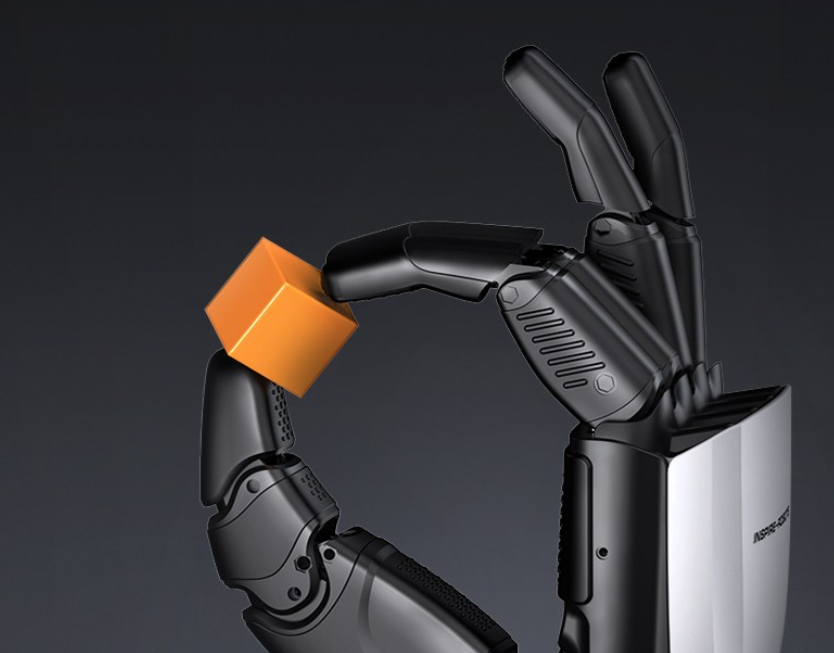
Image source: Screenshot from InTime Robotics official website.
Fang Hainan shared Reasonance Robotics' early cost reduction strategy: "We initially used this technology (miniature servo electric cylinders) in the industrial and medical fields. Replicating its use in other industries at scale allows us to amortize the costs we incurred in the robotics industry."
"Our past experience in industrial and medical applications has validated the reliability and stability of dexterous hands for industrial use. The high batch consistency of our dexterous hands significantly reduces after-sales maintenance costs for our clients," said Fang Hainan.
"In the past, dexterous hands were called the Patek Philippe of robots," Fang Hainan recalled. "Previously, the price of a single hand from overseas companies was hundreds of thousands, even millions of RMB." The reason INNFOS was able to bring the price down to less than 100,000 RMB in 2020 lies in its self-developed miniature servo electric cylinder technology, which is considered key to reducing barriers and costs.
According to Fang Hainan's statement to Gasgoo Auto, regarding the future price trend of dexterous hands, "a price point of thousands of yuan for dexterous hands is reasonable" in the future, but the prerequisites are that performance and reliability must meet basic functional value, the shipment volume must be sufficient to amortize costs, and the dexterous hand industry chain ecosystem must be complete.
What ecological endgame will dexterous hands move towards?
As technological exploration and engineering breakthroughs progress in parallel, several possible paths are emerging regarding the final form of dexterous hands and the landscape of the industry.
The ultimate form of dexterous hands will depend on the system they are placed within and the role we expect robots to play. This is not just a hardware issue, but a top-level design issue concerning human-machine relationships and the industrial ecosystem.
The future of competition will no longer be about comparing the performance of "hands" in isolation, but about the competition of the entire closed-loop system of "perception, decision-making, and execution."
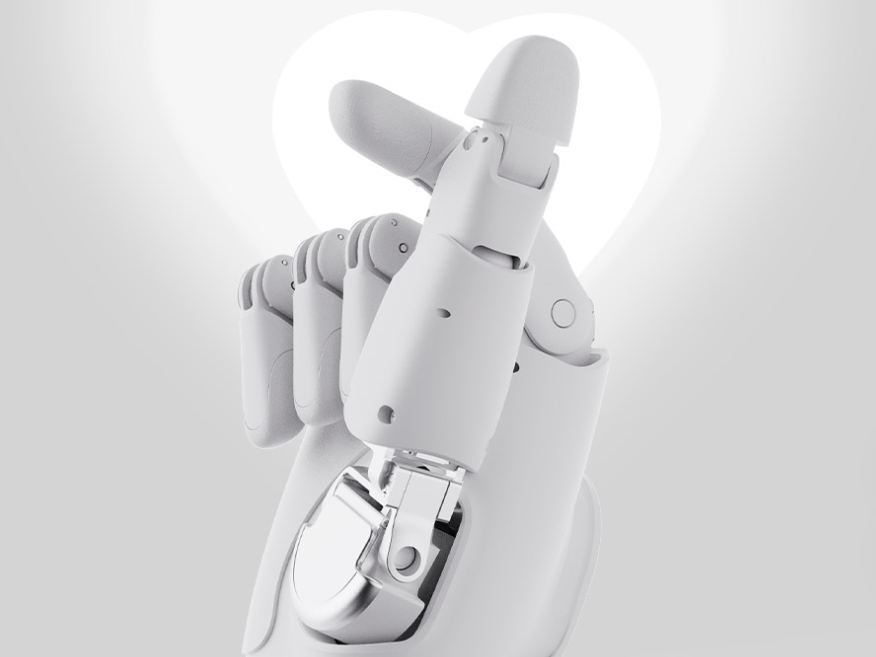
Image source: Screenshot from the official website of ZYuan Robotics.
Drawing on the development logic of the consumer electronics industry, Gasgoo boldly predicts that the dexterous hand industry may evolve into two paradigms: one is an "Android"-like open ecosystem similar to smartphones, with standardized dexterous hand "modules" emerging that any robotics company can purchase and develop based on a unified interface; the other is an "Apple"-like "closed integration" ecosystem, where the dexterous hand serves as a robot's exclusive core component, deeply integrated with proprietary chips and operating systems to pursue ultimate experience and performance.
This touches upon a fundamental choice for the industry ecosystem: will dexterous hands move towards an open, standard component model, or will they become proprietary parts within a closed system?
It is worth noting, however, that in reality, neither purely open nor purely closed systems are likely to emerge; a hybrid ecosystem of "layered coupling" is more probable.
Leading head-mounted robot manufacturers will request in-depth customization (ODM) for dexterous hands to match their unique designs and technology roadmaps, while a large number of small and medium-sized manufacturers or specific scenario developers will rely more on standardized products.
Timekettle's judgment is quite representative: "We have both standardized products and ODM cooperation." The future industrial landscape may see a few leading companies occupying a major share in key areas, but overall it will still retain a certain degree of diversity and openness.
The value of dexterous hands, regardless of which ecosystem prevails, ultimately needs to be defined by the scenario. Going beyond the current imagination of industrial substitution, its long-term potential lies in becoming an extension of human capabilities.
Fang Hainan envisions a possible future where dexterous hands may become replaceable "consumables" on robots, like tires.
Epilogue
The evolution of dexterous hands, like a prism, refracts the arduous journey of the entire robotics industry between grand visions and grounded realities.
On one hand, there's the boundless aspiration for the embodiment of general-purpose AI, while on the other, there are the cold physical laws and engineering constraints of cost, reliability, and control precision.
This "hand" revolution has no predetermined end.
It might not give rise to a "dream hand" that perfectly replicates humans, is inexpensive, and indestructible, but rather, through countless compromises, trade-offs, and innovations, it will evolve into a variety of diverse and specialized "professional hands" that each perform specific tasks.
For the industry, what may be more important than blindly chasing price wars or a race for freedom at this stage is to calm down, delve into specific application scenarios, understand real needs and pain points, and find the most pragmatic and commercially sustainable balance point in the "impossible triangle."
Capital needs more patience to accompany technology through cycles; entrepreneurs need more reverence to respect the objective laws of manufacturing.
Eventually, when robots seamlessly integrate into our lives and production, people may not care whether they have five fingers or three, or whether they cost a hundred thousand or five thousand.
People will only remember that it was this pair of "hands" that truly transformed the machine from a moving sculpture into a partner capable of collaboratively creating value with us.
And the ultimate winner of this "war of hands" will be those pioneers who first understand and realize this.
【Copyright and Disclaimer】The above information is collected and organized by PlastMatch. The copyright belongs to the original author. This article is reprinted for the purpose of providing more information, and it does not imply that PlastMatch endorses the views expressed in the article or guarantees its accuracy. If there are any errors in the source attribution or if your legitimate rights have been infringed, please contact us, and we will promptly correct or remove the content. If other media, websites, or individuals use the aforementioned content, they must clearly indicate the original source and origin of the work and assume legal responsibility on their own.
Most Popular
-
Key Players: The 10 Most Critical Publicly Listed Companies in Solid-State Battery Raw Materials
-

Vioneo Abandons €1.5 Billion Antwerp Project, First Commercial Green Polyolefin Plant Relocates to China
-

EU Changes ELV Regulation Again: Recycled Plastic Content Dispute and Exclusion of Bio-Based Plastics
-

Clariant's CATOFIN™ Catalyst and CLARITY™ Platform Drive Dual-Engine Performance
-
New 3D Printing Extrusion System Arrives, May Replace Traditional Extruders, Already Producing Car Bumpers

