



Australian Eco Company Enters Rare Metal Recycling with Microbial Plastic Regeneration Technology
An Australian startup developing a biodegradable plastic enzyme is planning to raise more than $70 million to expand its recycling technology to critical minerals.
Since 2021, Samsara Eco has leveraged artificial intelligence to design novel enzymes capable of breaking down common plastics, enabling them to be reused in manufacturing new products. The company has received support from Singapore’s sovereign investment firm Temasek and has signed a supply agreement with apparel manufacturer Lululemon.
Today, Samsara Eco plans to engineer custom microbes to recover valuable materials from electronic waste that would otherwise be landfilled.
The company’s enzymes can break down plastics—such as those used in textiles and packaging—into monomers (“blocks”) that are indistinguishable from virgin materials and can be directly used as raw materials to manufacture new products.
If the technology can be applied to the recovery of critical minerals, Samsara Eco believes it has the potential to enhance the supply capacity of key materials in industries such as automobile manufacturing. Additionally, this move could help countries strengthen the resilience of supply chains vulnerable to conflicts and other unexpected events. CEO Paul Riley stated, "In recent years, access to critical minerals has become a major source of geopolitical tension. China, with its dominant position in the critical mineral processing supply chain, has exerted pressure on several core industries in the United States."
To address this challenge, the Trump administration has signed cooperation agreements with key allies and announced last year the establishment of a $12 billion reserve system to mitigate future resource shortage risks.
Samsara Eco will initially focus on rare earth metals such as neodymium and dysprosium—metals widely used in magnet alloys. “Rare earth metals represent one of the greatest geopolitical challenges facing the world today. We believe we can play a role in enhancing supply chain security and mitigating sovereignty-related risks,” said Riley.
The company has already demonstrated the feasibility and scalability of its process in the plastic recycling sector, earning recognition from prominent industry observers. Last year, Lululemon signed a ten-year procurement agreement with the company, under which Samsara Eco is expected to supply approximately 20% of the fiber raw materials for Lululemon’s athletic apparel collection by 2030.
Riley pointed out that, as Europe advances its circular economy policies, original equipment manufacturers (OEMs) are showing increasing interest in this technology. The region is expected to implement new regulations starting in 2036, requiring that at least one-quarter of the plastics used in new vehicles come from recycled materials. “Regulations truly drive positive behavior. But this is not merely a matter of legislation—it is also about controlling the supply chain and securing access to resources,” he said.
Samsara Eco is not the only company integrating machine learning with biotechnology to enhance the supply of critical minerals. Endolith, headquartered in Denver, is exploring the use of microbes to extract copper from low-grade ores; the Swiss startup REEcover is working to scale up an e-waste recycling process that recovers europium from fluorescent powders in discarded energy-saving lamps.
“A significant amount of critical minerals is trapped in these resources, and if extracted, they could become a very important source of economic supply,” said Jun Qu, Investment Manager at Main Sequence and an early investor in Samsara Eco. Main Sequence, a deep-tech venture capital firm established in 2017 by Australia’s national science agency, declined to disclose whether it would participate in this funding round.
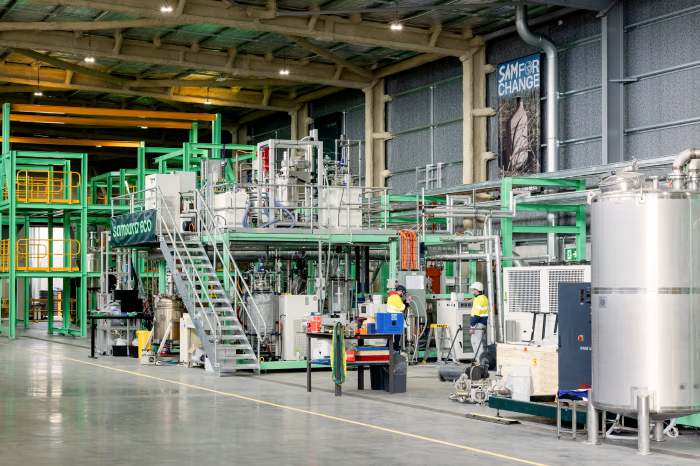
According to Samsara Eco, a major advantage of its process is that it does not require sorting of the recycled materials. The company first cultivates proprietary enzymes in a yeast-based medium, then places the plastic into stainless steel tanks where it comes into contact with the enzymes. The enzymes break the polymer chains linking the monomers, which then solidify in water and settle to the bottom of the tank for collection.
CEO Riley stated that the application process of the technology in mineral recovery is largely the same. "Although there is still a long way to go, we are already able to use specific enzymes to bind ions while avoiding impurities that do not need to be processed."
Samsara Eco plans to launch its Series B funding round within the next month. Riley said the exact amount has not been determined, but this round of financing will exceed the one in 2024—when the company successfully raised 100 million Australian dollars (about 70.8 million US dollars), with investors including Temasek, the venture capital arm of Hitachi, and Lululemon.
This funding previously supported the construction of a production facility near Canberra, the capital of Australia. In addition, Samsara Eco has established an office in Singapore and plans to open a commercial-scale facility in Southeast Asia by 2028, designed by KBR. The company states that this facility will process 20,000 tonnes of textile waste annually.
【Copyright and Disclaimer】The above information is collected and organized by PlastMatch. The copyright belongs to the original author. This article is reprinted for the purpose of providing more information, and it does not imply that PlastMatch endorses the views expressed in the article or guarantees its accuracy. If there are any errors in the source attribution or if your legitimate rights have been infringed, please contact us, and we will promptly correct or remove the content. If other media, websites, or individuals use the aforementioned content, they must clearly indicate the original source and origin of the work and assume legal responsibility on their own.
Most Popular
-
Supply Extremely Tight! LG Chem Declares Force Majeure on Export Contracts for Di-Octyl Terephthalate (DOTP)
-
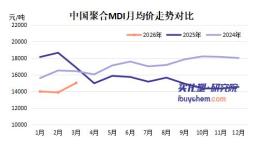
Huntsman Introduces “War Surcharge” Amid Shipping Disruption and Soaring Energy Costs, Global MDI Prices Continue to Rise
-
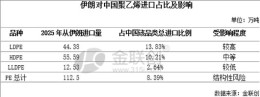
Middle East Tensions Escalate Sharply: How Polyolefins Respond Amid Soaring Risk Premium
-

Deadly Impact: Hormuz Strait Blockade Sparks Shortage of Plastic Raw Materials, Threatening Shutdowns at Japanese and Korean Chemical Plants
-

LG Chem Declares Force Majeure on DOTP Exports! SABIC Joins Five Giants to Redefine EV Safety


