60,000 Tons Annually! Giants Exit, Chinese Enterprises Counterattack, Will SAP's Competitive Landscape Be Rewritten?
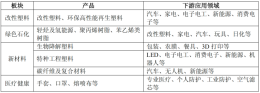
On January 20, 2026, a seemingly routine project investment announcement by Nantong Jiangtian Chemical Co., Ltd. (hereinafter referred to as "Jiangtian Chemical") caused a stir in the chemical industry. The announcement stated that the company plans to invest 49.8 million RMB to construct a 60,000-ton/year refined acrylic acid project within its existing plant area.
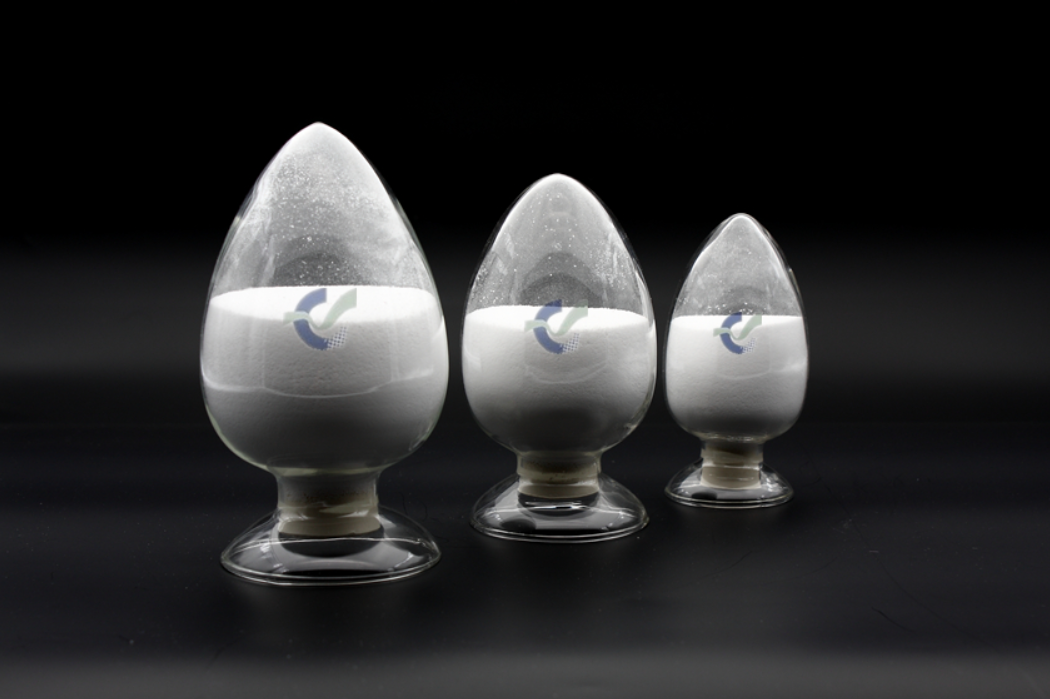
Figure: Polyformaldehyde. Source: Jiangtian Chemical
On the surface, this move appears to be a simple capacity expansion, but in reality, it's a crucial step taken by Jiangtian Chemical to solidify its competitive advantage in a new arena following its acquisition of Japan's Mitsuya Fine Chemicals (Nantong) Co., Ltd. (hereinafter referred to as "Mitsuya") in 2024.
Epi-acrylic acid is the core raw material for the production of superabsorbent polymers (SAP). Jiangtian Chemical's move not only ensures a stable, high-quality, and low-cost supply of its SAP raw materials but also refocuses external attention on the SAP track, a field full of changes and opportunities. This article will delve into the characteristics of SAP materials, review Jiangtian's acquisition of Sanyo Chemical as a landmark event, and address whether SAP is still a worthwhile track to invest in under the current market environment.
SAP The Huge Market Behind Small Molecules
Superabsorbent polymers (SAP) are low cross-linking hydrophilic polymer compounds with a loose network structure. Their most remarkable characteristic is their astonishing water absorption capacity, capable of absorbing hundreds or even thousands of times their own weight in water, and possessing excellent water retention properties, meaning they are not prone to releasing water even under pressure. This makes SAP a crucial material indispensable to modern life.
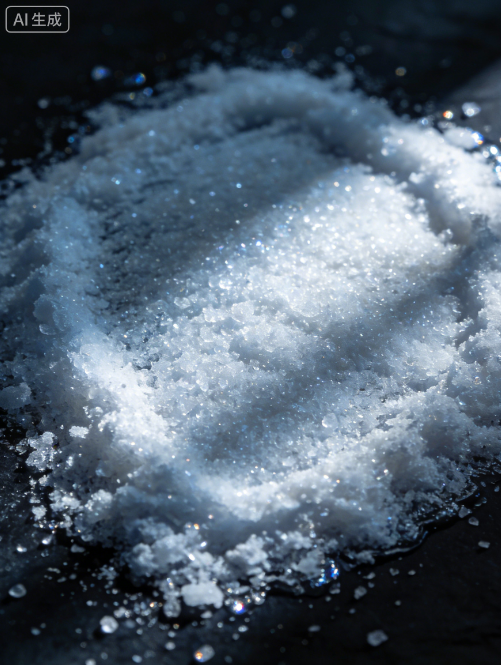
Image: Superabsorbent Polymer (SAP) (Source: AI-generated)
Upstream, the main raw material for SAP is glacial acrylic acid; downstream, its applications are extensive. Initially, it was primarily used in personal hygiene products such as disposable diapers, sanitary napkins, and adult incontinence products, with baby diapers accounting for about 70% of its use. Subsequently, its application scenarios have continuously expanded to include drought-resistant water retention agents in agriculture and forestry, desiccants and deoxidizing preservatives in industrial fields, and engineering materials for sand control and water management. It can be said that SAP serves as a bridge connecting basic chemicals and daily consumer goods, and its market demand is closely related to population structure, hygiene habits, and living standards.
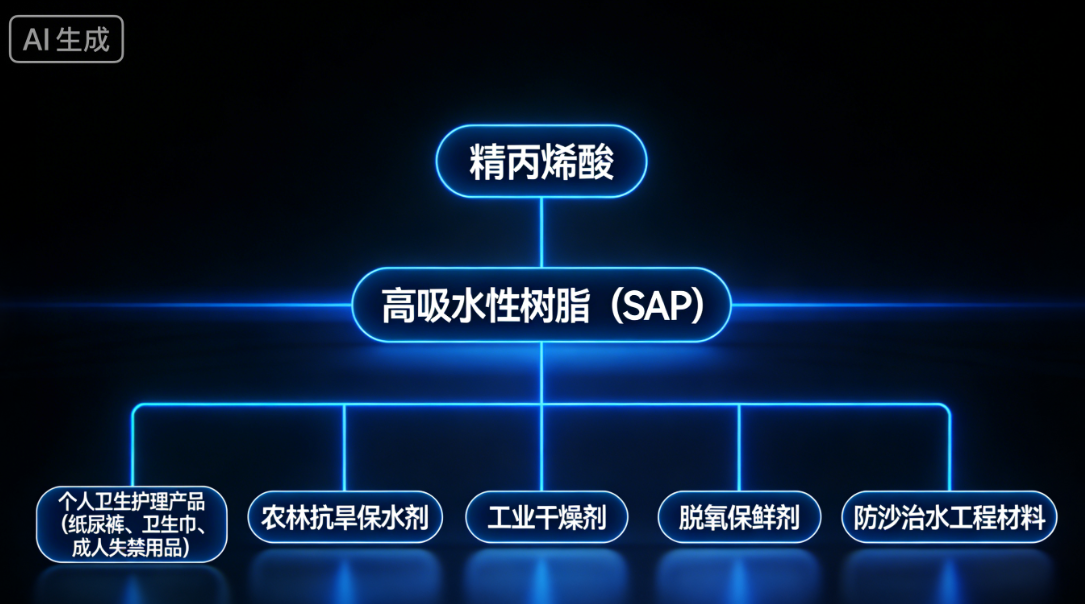
Figure: SAP Upstream and Downstream Industry Chain (Source: AI)
Two, a " A snake swallowing an elephantCross-border M&A
The acquisition of Synalloy by Jiangsu Tianji Chemical is a classic case in the recent wave of domestic substitution in China's chemical industry.
Established in 1999Jiangtian Chemical , a chemical enterprise effectively controlled by the State-owned Assets Supervision and Administration Commission of Nantong City, has traditionally focused on the R&D, production, and sales of high-end specialty fine chemicals based on the methanol downstream deep processing industry chain. It is a technology leader in areas such as granular polyformaldehyde, with a market share exceeding 20%, and is known as the "Formaldehyde King." However, facing growth bottlenecks in its traditional business, seeking transformation and upgrading has become its inevitable choice.
The acquiring party behind Sanda Ya is Sanyo Chemical Industries, JapanThis company was one of the pioneers in the industry, having first industrialized the production of SAP in 1978. In 2003, Sanyo Chemical invested in and established San-Dia Polymers in Nantong, China, making it one of the earliest SAP production enterprises in the country, boasting a production capacity of 230,000 tons/year and deep technological expertise.
In March 2024, Jiangtian Chemical first announced its plan to acquire 100% equity of Sandaya through a cash acquisition. After several months of due diligence and negotiations, a formal agreement was signed in September of the same year, completing the acquisition at a transaction price of RMB 285 million. In December 2024, Sandaya completed its industrial and commercial registration changes and officially became a wholly-owned subsidiary of Jiangtian Chemical.
Evonik and Sanyo sell off, Nippon Shokubai expands production: Is superabsorbent polymer (SAP) still a lucrative business?
https://www.zhuansushijie.com/zixun/detail-24bb00d29e7a47aa8bbd5b3c52ae4073.html
The deal was widely regarded in the industry as a classic "snake swallowing an elephant" scenario, with Jiangtian Chemical leveraging its state-owned background and capital operations to acquire massive SAP production capacity and advanced technology, instantly catapulting itself into the forefront of global SAP production.
III. SAP
With the successive exits of international chemical giants Evonik and Sanyo Chemical, many may question: is SAP still a good track? The answer is nuanced: for participants lacking core competitiveness, the track is becoming crowded; but for companies with technology, cost, and industrial chain advantages, the opportunities far outweigh the challenges.
The challenge lies in the structural overcapacity of SAP production, both globally and within the Chinese market. Domestic production technology still lags behind top-tier companies in Japan and Germany, resulting in significant imports of high-end products. Concurrently, downstream demand is slowing, particularly in the baby diaper market which is facing intense competition and persistent price pressure due to declining birth rates.
Opportunities are also apparent, as Zhuan Su Shi Jie believes.
1Vast space for domestic substitutionForeign brands such as Nippon Shokubai and BASF occupy approximately 80% of the high-end SAP market in China. With breakthroughs in technology and improvements in product quality among domestic companies, there is a huge market space for import substitution, representing a blue ocean market worth over 10 billion yuan.
2Demand structure changes The irreversible trend of population aging is driving rapid growth in the adult incontinence products market, which will effectively offset the sluggishness of the baby diaper market and provide new support for SAP demand.
3Technological Iteration and New ApplicationsBio-based SAP, biodegradable SAP, and other green and environmentally friendly new products have become hot spots for research and development. For example, the 100% bio-based SAP "Bayse" launched by ZymoChem in the United States has brought revolutionary changes to the industry. If Chinese enterprises can achieve breakthroughs in this field, they will be expected to lead the next round of growth. Jiangtian Chemical's acquisition of San Day Ya, which has already entered the top global supply chains of P&G, Kimberly-Clark, and other companies, and its entry into emerging fields such as new energy battery separator coatings, is the best proof.
Therefore, the SAP track is not "unappealing," but rather has entered a new phase of transformation from "quantity" expansion to "quality" leap. The key to competition lies in technological strength, cost control capabilities, and supply chain synergy.
IV. Current Market Landscape and Key Players
After years of development and evolution, the competitive landscape of the global and Chinese SAP market has become clear, characterized by the coexistence of foreign giants, domestic leaders, and specialized enterprises.
From a global perspective, production capacity is highly concentrated. Despite the withdrawal of Evonik and Sanyo Chemical, Nippon Shokubai remains the dominant leader, followed closely by BASF. LG Chem, Sumitomo Seika, and others are also significant players.
In the Chinese market, players can be divided into several tiers.
First Tier (Capacity greater than 10) Ten thousand tons Mainly includesYixing Dansenafter being acquired by Jiangtian Chemical (foreign capital) The Three Elegances、Shandong Nuoer 、Satellite Chemical Etc. They are the dominant force in the market.
Second tier (capacity 3-10) (10,000 tons): Including 、Sirbon Petrochemical 、Wanhua Chemical、Shanghai Huayi These companies are mostly powerful, large-scale petrochemical groups that are actively expanding production with ambitious goals. For example, Wanhua Chemical's SAP planned total capacity reaches 500,000 tons, aiming to become a world-leading supplier. Shanghai Huayi's second phase 100,000-ton project was completed in mid-2025, and the group's future total capacity will reach 260,000 tons.
Potential Entrants:Tianjin Bohai Chemical 、Yulin Chemical The planned SAP capacity also indicates that future competition will be more intense.
Jiangtian Chemical, through its acquisition, has directly leapfrogged from a "novice" to a strong contender in the top tier. However, its challenge lies in effectively integrating Sanlianda and facing direct competition from domestic giants like Wanhua and Huayi.
V. Conclusion
Jiangtian Chemical's investment in the refined acrylic acid project is a strategic continuation of its acquisition of San Daya, aimed at achieving industrial chain synergy and cost reduction and efficiency improvement. This series of operations clearly outlines the proactive stance of Chinese chemical enterprises in the changing global industrial landscape.
The SAP sector is at a critical turning point. The exit of giants is not the end of the industry, but a sign of the shift in industrial focus and market maturation. For Chinese enterprises, this presents both challenges and unprecedented opportunities. Future competition will no longer be a simple battle of production capacity, but a comprehensive contest of technological research and development (especially green, high-end products), industrial chain integration (such as Jiangtian Chemical's supporting facilities for methyl acrylate), and innovation and expansion in downstream applications.
Predictably, with the advancement of the "dual carbon" goals and the deepening of domestic substitution, companies with technological accumulation, capital strength, and strategic vision, such as Jiangtian Chemical, Wanhua Chemical, and Satellite Chemical, are expected to emerge victorious in the reshuffle, not only dominating the Chinese market but also playing an increasingly important role on the global SAP stage.
Editor: Lily
【Copyright and Disclaimer】This article is the property of PlastMatch. For business cooperation, media interviews, article reprints, or suggestions, please call the PlastMatch customer service hotline at +86-18030158354 or via email at service@zhuansushijie.com. The information and data provided by PlastMatch are for reference only and do not constitute direct advice for client decision-making. Any decisions made by clients based on such information and data, and all resulting direct or indirect losses and legal consequences, shall be borne by the clients themselves and are unrelated to PlastMatch. Unauthorized reprinting is strictly prohibited.
Most Popular
-
Continental Plans to Begin Sale of ContiTech in Early 2026
-
$4 Billion! Medtronic Makes Another Acquisition
-
BASF Delivers First Batch of Innovative Cathode Materials for Semi-Solid-State Batteries to Weilan New Energy
-
Profit and Revenue Growth Struggle to Conceal Debt Repayment Pressure; Success of Kingfa Sci & Tech's High-End Strategy Yet to Be Seen
-

Why did a century-old european dental instrument giant relocate its manufacturing hub to china?