



1 Billion Yuan Private Placement Plan! Xinhua New Material Plans to Build 8,100 Tons of Resin, China's PEEK Industry Ushers in a Golden Period of Development
After the market close on February 10th, Xinhann New Materials announced a private placement, aiming to raise no more than 1 billion yuan to strengthen its PEEK (polyether ether ketone) industry chain. The funds will be used for a project with an annual output of 8,100 tons of high-performance resins, composite materials and supporting engineering, a project with an annual output of 5,000 tons of monomers and supporting engineering, and a high-performance composite materials innovation center project.
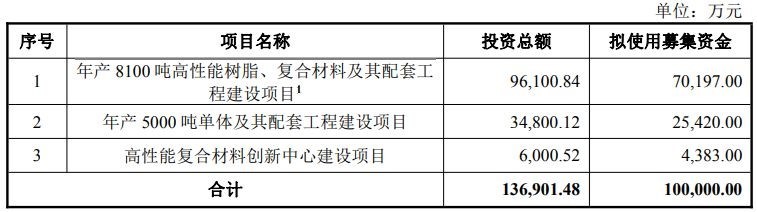
Source: New-Han New Material Announcement
This announcement is not only an industrial upgrade move of one enterprise, but also an epitome of the comprehensive outbreak of China's PEEK industry. From a "niche material" monopolized by foreign capital to a "core necessity" for humanoid robots and the low-altitude economy today, and from upstream raw material suppliers to downstream application companies collectively making cross-border layouts, China's PEEK industry is undergoing a critical transformation from follower to runner-up. A battle for high-end new materials has already begun.
I. The material worldGolden player:PEEKThe Advanced Path and Hardcore Advantages
PEEK, though not a new material, has seen a re-evaluation of its value in recent years.
PEEK was successfully developed by British company ICI in the 1970s and commercialized in 1978. Initially, due to high production costs and significant technical barriers, it was only applied in a few high-end fields such as aerospace and high-end medical care, and the global market was long monopolized by a few foreign enterprises.
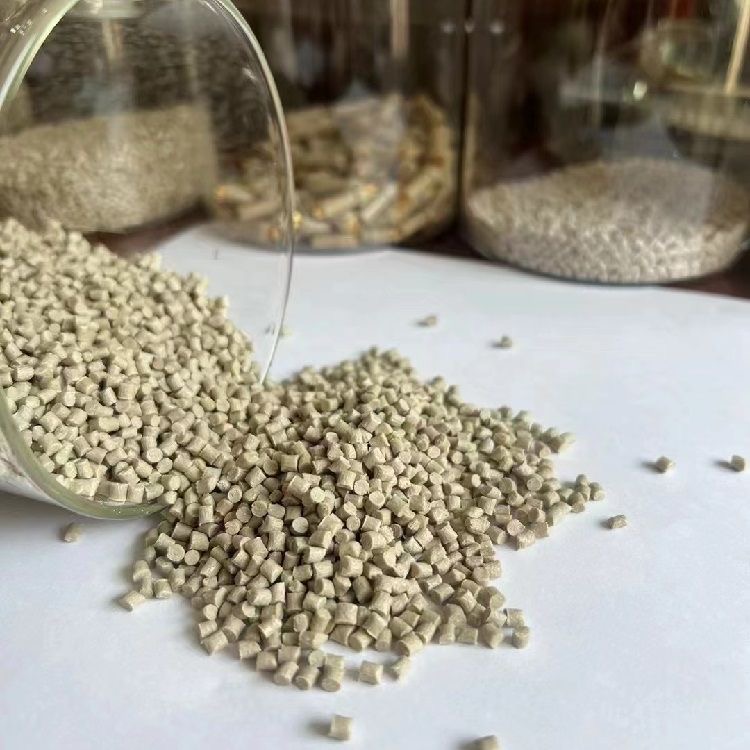
Image of PEEK particles (Source: Victrex)
After entering the Chinese market, the development of PEEK has undergone gradual breakthroughs from technology introduction, laboratory R&D, to industrial production. In the early stages, China's demand for PEEK relied almost entirely on imports. Around 2010, a few domestic chemical enterprises began to venture into PEEK R&D and small-batch trial production, achieving initial technological breakthroughs. After 2020, with the growing demand from sectors like new energy vehicles and aerospace, domestic PEEK enterprises gradually achieved large-scale production, breaking the monopoly of foreign capital. In the past two years, the explosion of emerging sectors such as humanoid robots and the low-altitude economy has led to an exponential expansion of PEEK's application scenarios, truly transforming it from a "niche material" into a "core material" for high-end manufacturing.
PEEK stands out from numerous engineering plastics primarily due to its unique performance advantages, earning it the industry nickname "the ceiling of engineering plastics." Firstly, PEEK possesses excellent physical and chemical properties, with outstanding high-temperature resistance, maintaining stable performance at 260℃. It also boasts high specific strength, self-lubrication, wear resistance, and corrosion resistance. Its mechanical properties are comparable to metals, yet it enables lightweighting. Secondly, it is a recyclable and reusable thermoplastic material, aligning with the trend of green manufacturing and making it an ideal choice for "plastic replacing steel" and "plastic replacing aluminum." Furthermore, PEEK also has good biocompatibility, making it applicable in medical implantation fields, such as bone repair and medical device components, expanding its value in the big health sector.
These advantages have expanded PEEK's application scenarios from its initial use in aerospace and high-end medical fields to electronics, transportation, energy, and 3D printing. In emerging sectors such as humanoid robots and the low-altitude economy, PEEK's lightweight and high-performance characteristics create an irreplaceable advantage, making it one of the preferred materials for core components like gears, bearings, and structural bodies.
II. Multiple Players Enter PEEK
With the continuous release of value in the PEEK industry, since the second half of 2025, many A-share listed companies and enterprises in the chemical and manufacturing fields have entered the market. The players in the track have expanded from the original professional chemical companies to various fields such as traditional manufacturing, pigments, and building materials. The backgrounds of the new entrants vary, and their approaches to entering the track are also different, which can be generally divided into: Cross-border layout, industrial chain extension, mergers and acquisitions and integration. The three major categories have formed a blooming industrial landscape.
The first category is traditional manufacturing enterprises that are expanding into new production capacity, leveraging their existing industrial foundation to venture into PEEK.Whole industry chain or specific segments. Lily Group.As a leading domestic organic pigment manufacturer, the company announced at the beginning of 2026 its plan to invest no more than RMB 100 million to build a PEEK material project with an annual production capacity of 1,000 tons. The project will be constructed in two phases, with the first phase establishing a production capacity of 200 tons. Located in the Linjiang High-tech Park in Qiantang District, Hangzhou, the project will leverage the company's technical expertise and industrial layout in fine chemicals to tap into the rapidly growing market demand for PEEK materials in the aerospace, electronics, automotive, energy, medical, and industrial sectors.
Ocean Biological With inorganic salts and fluorine-containing fine chemicals as its core businesses, the company announced in December 2025 its plan to invest 193.25 million yuan in a new project to build an annual production capacity of 2,000 tons of PEEK and its key intermediate DFBP. This aims to create a closed-loop industrial chain from "intermediate to PEEK finished product," extending from the field of fluorine-containing fine chemicals to special polymer materials.
The second type involves the vertical extension of enterprises up and down the industrial chain, achieving synergistic development of production capacity and business.
For example, upstream raw material companies are extending into downstream resin and composite material sectors, leveraging their production capacity advantages in DFBP (difluorobenzophenone, a key raw material for PEEK).XINHAN NEW MATERIALSAs a leading enterprise in DFBP, the core monomer of PEEK, it announced in January 2026 its acquisition of a 51% stake in Hairuite for 12.8826 million yuan, gaining over 200 tons/year of PEEK resin production capacity. In February 2026, it further proposed a private placement of 1 billion yuan to expand its annual production of 8,100 tons of high-performance resins and 5,000 tons of monomer projects, thereby achieving a transformation from a "raw material supplier" to a "comprehensive service provider."
Zhongxin Fluoride Materials
It has also completed the construction of the entire DFBP industrial chain production line and continues to promote the pilot-scale R&D of downstream PEEK materials to achieve internal digestion of upstream raw materials. Downstream application companies are extending upstream to ensure supply chain security. For example, automotive parts manufacturer Ningbo Huaxiang signed an agreement with Jilin University in September 2025 through a joint venture to establish a PEEK production facility with a planned capacity of 12,000 tons/year. In December, it partnered with a leading robot joint manufacturer, laying the foundation for the development of PEEK core joint components, realizing a shift from application to material production.
The third category is cross-industry enterprises quickly securing a position through acquisition and integration, utilizing the target company's technology and production capacity to achieveOvertaking on a curve。The most representative isHanjianshanIn early 2026, Han Jian He Shan, a company primarily engaged in cement pipes and hydraulic engineering materials, announced its plan to acquire 99.9978% of Xingfu New Material. Xingfu New Material is a global leader in the PEEK intermediate DFBP, possessing a DFBP production capacity of 4,900 tons/year and a global market share of 45%. Through this acquisition, Han Jian He Shan directly secures a position in the core, upstream segment of the PEEK industry chain, quickly entering the high-end new materials sector.
Meihu Intelligent Manufacturing[Company Name] is another typical example. This leading new energy vehicle component manufacturer established Meihu Nuowei New Material Technology in October 2025, focusing on PEEK material R&D and precision component manufacturing. Meanwhile, through its subsidiaries, it acquired robot component enterprises such as Shenzhen Langdao Zhitong and Suzhou Laite, achieving a synergistic layout between PEEK materials and downstream applications.
In addition, some companies are gradually entering the field through technical cooperation and production line preparation, such as:
Carbon fiber leader Guangwei Composite MaterialsIn the second half of 2025, it was revealed that preparations for a PEEK material engineering production line were underway. Leveraging its advantages in carbon fiber, the company is strategically developing CF/PEEK, a composite material of PEEK and carbon fiber, to meet the material demands of the aerospace and low-altitude economy sectors.
Fuchun Dyeing & Weaving Through independent research and development of precision injection molding technology, the equipment debugging for the PEEK material precision injection molding project will be completed in December 2025, and a wholly-owned subsidiary will be established to layout PEEK modification and production, transitioning from the textile dyeing and weaving field to the new materials sector.
Due to space limitations, we have only compiled the most representative cases. Readers are welcome to add more in the comment section.
III. PEEK
Growth Logic and Development Trends of the Industry
Judging from the current trend of industrial development, the PEEK industry is entering a golden age. Future growth will be supported by three core drivers: policy, market, and technology. Industrial development will also show distinct trends toward high-end, collaborative, and large-scale operations. Competition in the industry will shift from a contest in single segments to a comprehensive rivalry across the entire industrial chain.
Strong policy support for PEEKThe industry's development has laid a solid foundation.In recent years, the state has successively issued a number of policies, including the "14th Five-Year Plan" for the Development of the Petroleum and Chemical Industry and the "14th Five-Year Plan" for the Development of the Chemical New Materials Industry, which clearly list PEEK as a key high-performance engineering plastic for development, providing all-round support in terms of independent production, technological breakthroughs, and system improvement. Furthermore, the implementation of supporting policies for industries such as the low-altitude economy, humanoid robots, and new energy vehicles has further opened up the application space for PEEK.
The surge in market demand is the driver for PEEK.The core engine of industry growth.From a global market perspective, global PEEK consumption is approximately 10,000 tons in 2024, a year-on-year increase of 13.8%. It is projected that the global market size will reach US$1.226 billion by 2027. China, as the region with the fastest growth in global PEEK demand, has seen its demand soar from 1,100 tons in 2018 to 3,904 tons in 2024, with its market size reaching RMB 1.455 billion in 2024.
Among them, the demand potential in emerging fields is particularly prominent. According to industry forecasts, the market size of PEEK materials in the humanoid robot sector alone is expected to reach 35 billion yuan by 2035. eVTOL and drones in the low-altitude economy, lightweight components for new energy vehicles, and precision structural components in the semiconductor sector will all become important growth drivers for PEEK demand. Demand in traditional sectors such as aerospace and high-end medical will also steadily increase, forming dual demand support from traditional and emerging fields.
Technological breakthrough lies in PEEK.
Ensured the high-quality development of the industry.
Domestic enterprises have not only achieved technological breakthroughs in core products such as DFBP and PEEK resin, breaking foreign monopolies, but have also continuously innovated in modification technology, composite material research and development, and application scenario development. Examples include the development of CF/PEEK composites, medical implant-grade PEEK, and robot-specific modified PEEK. These advancements are gradually moving domestic PEEK away from low-end homogeneous competition and towards high-end, customized development. Simultaneously, synergistic innovation across the entire industry chain has continuously improved the efficiency of technology transfer, accelerating the widespread application of PEEK in various scenarios.
IV. China PEEKIndustry Disruption and Advancement Directions
Looking ahead at future industry development trends.
Firstly, product premiumization and customization will become key competitive directions.As application scenarios become increasingly segmented, the performance requirements for PEEK vary significantly across different fields. For example, humanoid robots require PEEK modified materials with high wear resistance and high precision, the medical field requires medical-grade PEEK with high biocompatibility, and aerospace requires composite materials with high-temperature resistance and high strength. In the future, companies that can quickly develop customized products for different scenarios and master core modification technologies will occupy the commanding heights of industry competition.
Secondly, the trend of industrial chain collaboration and closed-loop operation will become increasingly apparent.The core raw material DFBP for PEEK has high technical barriers and concentrated production capacity, while downstream application companies have high requirements for supply chain stability, making collaborative development between the upstream and downstream of the industrial chain inevitable. Upstream raw material companies will continue to extend downstream to achieve internal digestion of production capacity; downstream application companies will move upstream to secure raw material supply; and companies with a full industrial chain layout from "intermediates-resins-composite materials-terminal applications" will gain stronger cost advantages and risk resistance. In the future, the industry may see "BYD-style" fully integrated industrial chain enterprises or "Huawei-style" industrial alliances emerge.
Third, large-scale production capacity and industry consolidation coexist.Currently, China's PEEK production capacity is in a period of rapid expansion, with new entrants planning to build new capacity. In the next few years, the industry's capacity will increase significantly, and large-scale production will effectively dilute production costs, promoting PEEK's penetration from high-end niche materials to broader fields. However, at the same time, the industry will also usher in a major reshuffle. Some enterprises lacking technical reserves, with small production scale, and weak cost control capabilities will be eliminated. Leading enterprises with core technologies, full industrial chain layout, and stable customer resources will gradually occupy more market share, and the industry concentration is expected to continue to increase.
Fourthly, the application scenarios are continuously expanding. , becoming a long-term driver of industry growth. In addition to existing application areas, PEEK's applications in energy storage, semiconductors, AI hardware, exoskeleton robots, and other fields are gradually being developed and implemented. With continuous optimization of material properties and reduction in production costs, PEEK's application boundaries will continue to expand, and it is expected to become a "universal material" in high-end manufacturing in the future.
Overall, PEEK material is in a golden age of industrial development, with policy, market, and technology jointly driving the clear growth logic of this track. As more companies enter the field and the industry continues to upgrade, China's PEEK industry will shift from follower to co-runner and even leader, becoming a core force in the global PEEK market. Of course, the industry's development also needs to be wary of problems such as overcapacity of low-end products and homogenization of technological research and development. Only by adhering to technological innovation, focusing on high-end layout, and achieving industrial chain collaboration can we truly seize the development opportunities of the PEEK industry.
Edited by: Lily
Source materials: Shenzhen Economic News, Han Jianheshan Official Website, Guangwei Composites, iBON Polymer, CHINAPLAS 2025 International Exhibition on Plastics and Rubber, etc.
【Copyright and Disclaimer】This article is the property of PlastMatch. For business cooperation, media interviews, article reprints, or suggestions, please call the PlastMatch customer service hotline at +86-18030158354 or via email at service@zhuansushijie.com. The information and data provided by PlastMatch are for reference only and do not constitute direct advice for client decision-making. Any decisions made by clients based on such information and data, and all resulting direct or indirect losses and legal consequences, shall be borne by the clients themselves and are unrelated to PlastMatch. Unauthorized reprinting is strictly prohibited.
Most Popular
-
Supply Extremely Tight! LG Chem Declares Force Majeure on Export Contracts for Di-Octyl Terephthalate (DOTP)
-
Huntsman Introduces “War Surcharge” Amid Shipping Disruption and Soaring Energy Costs, Global MDI Prices Continue to Rise
-

Deadly Impact: Hormuz Strait Blockade Sparks Shortage of Plastic Raw Materials, Threatening Shutdowns at Japanese and Korean Chemical Plants
-

LG Chem Declares Force Majeure on DOTP Exports! SABIC Joins Five Giants to Redefine EV Safety
-

Tao Lin: Tesla’s Supercharger Stations in China Surpass 2,500


