



World's first sodium-ion battery passenger vehicle to enter mass production! exclusive outlook on plastic application opportunities in the year of breakthrough
The year 2026 is considered by the industry as the "year of explosion" for sodium-ion batteries, when they will transition from the laboratory to the mainstream market.
CPSJ View Observation on February 6th. Changan Automobile and CATL jointly announced a deep binding between the two companies. The "sodium-ion battery strategy" is making key progress – the world's first mass-produced sodium-ion battery passenger vehicle is scheduled to officially launch in mid-2026. Changan's sodium-ion battery strategy "As the "sole partner," CATL's involvement not only signifies a consensus between the two giants on the 2026 market inflection point, but also indicates that sodium-ion batteries have ended a decade-long laboratory incubation period and are entering the "deep water" of the market as a mainstream passenger car power source."
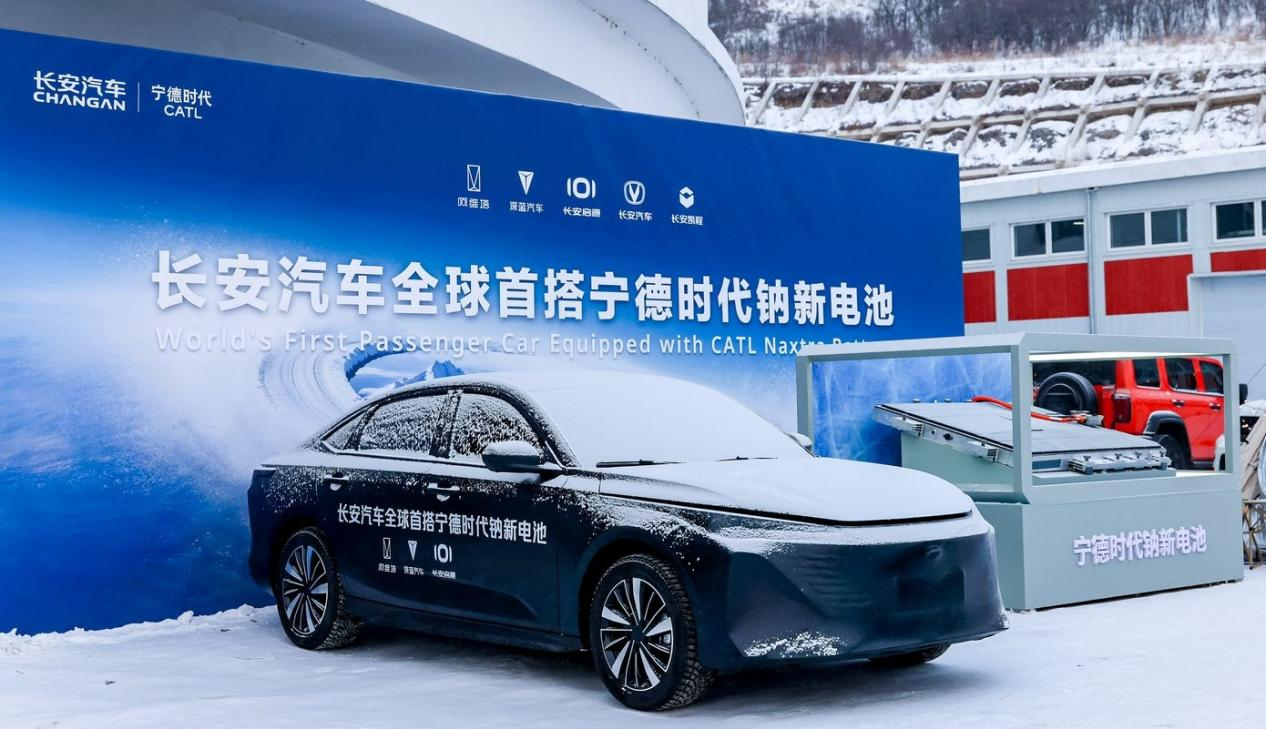
Image source: CATL
Changan Automobile's new energy vehicle sales broke through last year. The "new central enterprise" with 1.1 million vehicles has chosen to fully embrace sodium-ion batteries this time. Multiple brands under its umbrella, including Avatr, Deepal, Qiyuan, and Gravity, will simultaneously adopt CATL's "sodium-ion plus" batteries, rather than engaging in small-scale demonstrations. According to disclosures, the "sodium-ion plus" battery cell energy density reaches 175Wh/kg (currently the highest among mass-produced batteries in the industry), supporting a pure electric range of over 400km. In extremely cold environments, the capacity retention rate at -40℃ is over 90%, it can still discharge stably at -50℃, and the discharge power at -30℃ is nearly 3 times higher than that of conventional LFP batteries. No additional battery heating is required at low temperatures, significantly saving energy consumption. In terms of safety performance, the battery does not catch fire or explode after extreme tests such as acupuncture, extrusion, and sawing in a fully charged state.
CATL CTO Gao Huan further signaled that the future range of sodium-ion battery EVs could be upgraded to: 500-600km range, with extended-range hybrid exceeding 300-400km, covering over 50% of market demand. The company aims to achieve cost parity between sodium-ion and lithium iron phosphate batteries through mass production, and to replace the latter by approximately 50% of the market share. According to plan, in 2026, CATL will apply sodium-ion batteries on a large scale in battery swapping, passenger vehicles, commercial vehicles, and energy storage, deploying over 3,000 Choco-SEB battery swap stations nationwide (with over 600 in the eight northern provinces), to address the issue of increased refueling frequency caused by the slightly lower energy density of sodium-ion batteries.
Sodium-ion battery ecosystem: from "point breakthroughs" to "surface expansion"
The collaboration between Changan and CATL is about the commercialization of sodium-ion batteries. "Point breakthroughs" are made, while the coordinated advancement of the entire industry constitutes "surface expansion." The core driving force lies in the "resource fragility" of lithium resources - China's external dependence on lithium resources is as high as 80%, with 80% of lithium ore relying on imports. This is further exacerbated by the fluctuating and rising prices of battery-grade lithium carbonate since 2025 (rising nearly 20% in one month), and the surging demand for new energy and energy storage has intensified the supply-demand tension.
In comparison, sodium is more abundant in the Earth's crust than lithium. 1200 times more abundant and widely distributed, sodium-ion batteries can effectively mitigate lithium cycle fluctuations, serving as a "dual insurance" for material supply. Industry consensus suggests that sodium-ion batteries are not intended to replace lithium-ion batteries, but rather to complement them: lithium-ion batteries have established their dominance, while sodium-ion batteries focus on specific scenarios (such as A00/A0 grade passenger vehicles, light trucks, etc., targeting price-sensitive markets with lower range requirements).
At the industrial chain level, sodium-ion batteries are transitioning from... From "Small Tests" to "Ten-Thousand-Ton Level": China's total sodium-ion battery cathode production reached only 11,000 tons in 2025, but is projected to exceed 120,000 tons in 2026 (a tenfold increase). Leading companies are making intensive deployments: BYD Fudi Battery is investing billions in a sodium-ion battery project in Xuzhou (annual capacity of 30GWh, targeting microcars/low-speed vehicles); Zhongke Haina has released the world's first sodium-ion battery commercial vehicle solution (cell energy density of 165Wh/kg, already equipped in a 49-ton pure electric tractor truck); second-tier companies such as Guoxuan High-Tech and Weike Technology have launched GWh-level mass production lines.
Source: Battery China Network
Application architecture-wise, In 2025, sodium-ion batteries will primarily be used for energy storage (approximately 55%), with light electric vehicles and start-stop power supplies as secondary applications (totaling 34%). As the adoption of power batteries increases, sodium-ion batteries will gradually penetrate passenger and commercial vehicles from 2026 onwards. In the long term, by 2030, the power battery (410GWh) market size for sodium-ion batteries globally will approach that of energy storage batteries (580GWh), becoming a mainstream option alongside lithium batteries.
Sodium-lithium complementarity: New energy Dual Star Era
Sodium-ion batteries vs. lithium-ion batteries The "dual star pattern" is now a certainty. Although both were born in the 1970s (with similar working principles, differing only in working ions), lithium batteries have dominated the market for the past 50 years due to their high energy density and mature industry chain, while sodium batteries have stagnated for a long time due to their low energy density, immature technology, and weak industry chain. Now, sodium batteries are demonstrating advantages in low-speed, lightweight electric vehicles and energy grids due to their high-temperature resistance and non-flammability, forming a complementary relationship with lithium batteries.
Industry forecast Before 2030, China's power batteries will still be dominated by high-energy-density liquid batteries and lithium iron phosphate (LFP) batteries. Around 2035, the proportion of LFP will decrease, while the proportion of low-cost, high-energy-density batteries such as sodium-lithium ion hybrid batteries will increase, and the application ratio of solid-state batteries and sodium batteries in vehicles may exceed 10%. In the energy storage field, sodium batteries will also occupy a certain share. In terms of technology roadmap, the four mainstream sodium battery technology routes, including transition metal oxides and polyanionic compounds, have achieved breakthroughs to varying degrees.
Scale application: For plastic companies Sodium-ion Battery Opportunity
The boom in sodium-ion batteries is bringing clear incremental space to the plastics industry. Although the raw materials for sodium-ion battery anodes, cathodes, current collectors, and electrolytes differ from those of lithium batteries, their manufacturing processes (batching, coating, calendering, winding, packaging, etc.) are highly consistent with those of lithium batteries. Therefore, the application scenarios of plastic products are highly overlapping, mainly including battery pack housings, top covers, bottom trays, cooling plates, water pipes and connectors, structural adhesives, thermal conductive adhesives, busbars, etc., achieving lightweighting through base materials such as polyurethane and polyamide.
It is worth noting that sodium-ion batteries can operate stably at higher temperatures (e.g.,... Maintaining over 90% capacity even at -40℃) puts higher demands on the heat resistance of engineering plastics: structural components need improved heat resistance, and busbars need to balance temperature resistance with complex structural insulation design. Furthermore, in sodium-ion battery electrolyte formulations, plasticizing polymer electrolytes to form a protective layer on the cathode (such as a dual-salt coupled fluoroethylene carbonate succinonitrile electrolyte) can inhibit electrolyte decomposition, stabilize temperature and capacity, and improve safety (purity 99.95%, reducing oxidation risk).
Image source: CATL
Currently, plastic enterprises are accelerating their layout in the sodium-ion battery field.
DSM introduces succinonitrile compound for sodium-ion batteries, optimizing battery performance.
BASF: Polyurethane used at the ear tab connection Elastane® potting secures insulation, Cellasto® microcellular polyurethane serves as anti-expansion buffer pads between cells, and polyamide (Ultramid®) extrusion replaces metal for water-cooling plates, reducing weight by 55%.
WanHua Chemical: Regarding sodium-ion battery positive and negative electrode materials, electrolytes (such as... Research achievements have been made in areas such as NMP, PAA, and PVDF.
Solvay: Ajedium™ PEEK slot liners for battery housings resulted in a weight reduction of 12 kg, and a motor weight reduction of 4 kg.
Mitsubishi Chemical: Jointly developing all-composite battery case, components from Reduce from 5 to 2, achieving a lighter shell.
Conclusion:
The year 2026, hailed as the inaugural year of sodium-ion battery breakthroughs, not only signifies a diversified advancement in new energy power routes but also unlocks new scenarios for the plastics industry through supply chain collaboration. Driven by both resource security and cost efficiency, the "dual star era" of complementary sodium and lithium batteries is rapidly approaching, and plastics companies have already taken the lead in this transformation.
【Copyright and Disclaimer】This article is the property of PlastMatch. For business cooperation, media interviews, article reprints, or suggestions, please call the PlastMatch customer service hotline at +86-18030158354 or via email at service@zhuansushijie.com. The information and data provided by PlastMatch are for reference only and do not constitute direct advice for client decision-making. Any decisions made by clients based on such information and data, and all resulting direct or indirect losses and legal consequences, shall be borne by the clients themselves and are unrelated to PlastMatch. Unauthorized reprinting is strictly prohibited.
Most Popular
-
Key Players: The 10 Most Critical Publicly Listed Companies in Solid-State Battery Raw Materials
-
Vioneo Abandons €1.5 Billion Antwerp Project, First Commercial Green Polyolefin Plant Relocates to China
-
Clariant's CATOFIN™ Catalyst and CLARITY™ Platform Drive Dual-Engine Performance
-
Multifaceted Collaboration: PA Prices Rebound Against Trend to Break Through
-
Dow suffers poor performance, announces major layoffs of 4,500 employees

