Why Are Chinese Automakers Flocking to Canada Even Without Profits? What Are Their North American Layouts Really Aiming For?
As China’s automotive exports have risen to the top globally and the pace of globalization continues to accelerate, the North American market remains a key barrier for Chinese automakers advancing into the high-end segment.
Restricted by stringent trade policies and technology bans, Chinese automakers have long found it difficult to directly enter the United States, one of the world’s top automotive consumer markets.
Recently, Canada has lifted import quotas on Chinese cars, turning this limited and profit-weak market into a hotspot that leading automakers like BYD, Chery, Chang'an, and Geely are eager to enter.
What appears to be an anomalous trend of clustering in counter-cyclical layouts is not merely a simple effort to expand into overseas markets, but rather a long-term strategic deployment aimed at the U.S. market, steadily and methodically outlining a new chessboard for Chinese automotive companies to break through in North America.
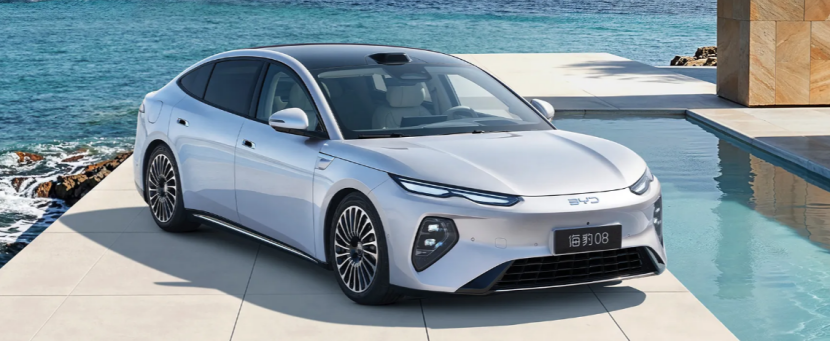
Image source: BYD
The market size is limited and short-term profitability is weak. Why are car manufacturers heavily investing against the trend?
In January 2026, Canadian Prime Minister Mark Carney announced a limited relaxation of Canada’s policy on imports of Chinese electric vehicles, opening a crack in the long-closed core North American market.
Just two weeks after the policy was implemented, China's leading auto export company Chery quickly traveled to Canada to initiate the first round of business discussions with local dealers. Following closely, a number of Chinese car manufacturers, including BYD, Geely, and Changan Automobile, have also entered the market, launching a series of actions such as store site selection, compliance certification, channel building, and road condition testing.
This industry boom, which appears to be a rush to tap a niche incremental market, is not simply an overseas expansion in scale, but a carefully planned, low-cost preparatory strategy by Chinese automakers targeting the U.S. market.
From a short-term commercial perspective, Canada is not an attractive market for profit generation, and the actual returns for automakers entering it are very limited. Under Canadian trade regulations, only 49,000 Chinese-made vehicles are allowed to enter the country each year at a low tariff rate of 6.1%, and the import quota will increase only to 70,000 units within five years. This limited market capacity must be shared among multiple Chinese automakers, greatly constraining the sales potential of any single brand.
The CEO of Lotus Cars, a luxury sports car brand under Geely, Feng Qingfeng, admitted in an interview that they plan to establish six stores in Canada this year, but the initial sales target is only a few hundred units. Changan Automobile's design director, Klaus Zyciora, also revealed that the company has set up a special team to prepare for entering the Canadian market.
The domestic market in Canada is small in scale and has significant exchange rate disadvantages, being regarded by the industry as "one of the markets with the lowest profitability for global car manufacturers." Nevertheless, leading automakers are still increasing their investment against the trend, driven not by short-term revenue, but by irreplaceable long-term strategic value.
In the North American market system, Canada is a highly valuable and ideal proving ground for Chinese automakers entering the U.S. market, offering unparalleled market-fit attributes. Unlike the Mexican market, which is dominated by low-priced models and has consumer tiers that differ significantly from those in the United States, Canada’s automotive consumption preferences, industry regulatory standards, market entry rules, and after-sales service system are almost entirely aligned with those of the U.S. It is the North American market most closely resembling a replica of the American market.
Dan Hearsch, co-head of the global automotive practice at consultancy AlixPartners, stated bluntly that once automakers complete product adaptation, compliance refinement, and localized operations in Canada, they can then enter the U.S. market with highly efficient integration and very low trial-and-error costs.
Robert Kerwal, Head of Automotive Solutions at J.D. Power Canada, has also clearly stated: “Canada is a training ground for automakers entering the U.S. market.” The only core difference between the two markets lies in scale. In recent years, Canada’s annual new car sales have been around 1.9 million, while the U.S. market’s annual sales exceed 16 million, making it the world’s top premium automotive consumption market and a key incremental market for Chinese automakers in their global expansion.
Entering the U.S. market has become a key long-term goal for most major Chinese automakers expanding overseas. Zhang Guibing, President of Chery International, has openly stated that expanding into the United States is a common strategic direction for Chinese carmakers.
In recent years, China’s automotive industry has achieved a leapfrog upgrade. Backed by industrial support and continuous technological innovation, sales of new energy and hybrid vehicles have continued to surge, dramatically reshaping the global automotive trade landscape.
Traditional automotive powerhouses such as Germany, Japan, South Korea, and the United States, which once dominated the global automobile trade landscape, have been surpassed by China in terms of vehicle export volume, enabling China to become the world’s largest automobile exporter.
As China's auto industry rises rapidly, the market share of U.S. domestic automakers in China continues to decline, and overseas industries are becoming increasingly wary of the global expansion of Chinese automakers.
Currently, the United States has significantly raised the entry barriers for Chinese automakers seeking direct access to the U.S. market through high import tariffs and restrictions on connected-vehicle software and hardware.
Moreover, members of the U.S. Congress are actively pushing legislation to institutionalize restrictions on automotive trade with China, thereby narrowing the scope for any future policy relaxation.
Even though Trump once indicated that Chinese automakers could be granted moderately relaxed market access if they set up factories in the United States, stringent localization requirements, shifting trade policies, and a complex public opinion environment have kept Chinese-funded carmakers from investing rashly.
Dan Hearsch analyzed that as large numbers of Chinese automobiles enter Canada, American consumers interested in buying Chinese models will very likely find ways to purchase them across the border and bring them back to the United States for use. “There will definitely be a group of consumers who rush to buy these models first.”
Meanwhile, the Alliance for Automotive Innovation, a U.S. auto industry group, has continued to apply pressure by portraying China-Canada automotive trade cooperation as a “potential backdoor” for Chinese brands to enter the U.S. market. It claims that the entry of Chinese vehicles into the United States would pose both economic and national security risks, and firmly opposes both the import of complete vehicles by Chinese automakers and their establishment of manufacturing plants in the U.S., further raising market access barriers against China. In response to the controversy, the White House has not yet made any public comment.
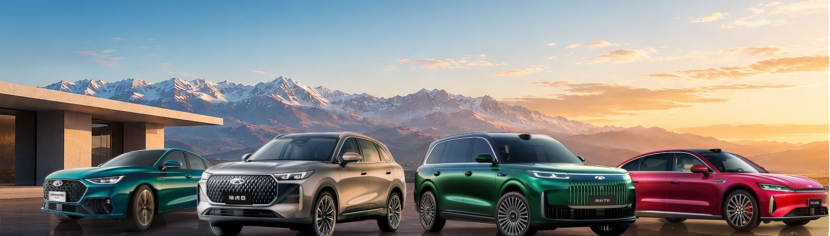
Image source: Chery
Deepening their foothold in Canada and positioning themselves in advance, Chinese automakers are waiting for the opening of the U.S. market window.
The United States’ hardline blockade, coupled with a shift in Canada’s foreign policy, has created this rare strategic window of opportunity.
For a long time, the United States has continued to take tough trade measures against Canada and exert public pressure, with bilateral differences continuously deepening.
To reduce economic dependence on the United States, Canada is gradually distancing itself from the American trade camp, independently adjusting its trade policies towards China, and moderately relaxing import quotas for Chinese automobiles. At the same time, Canada continues to leverage its geographical advantage of being adjacent to the U.S. and its seamless market rules as key leverage to attract global trade partners, which also provides an excellent foundation for Chinese automobile companies to establish a presence in advance.
Daniel Ross, the Director of Strategic Market Insights at Canadian Black Book, stated that Canada is currently only cautiously opening up to small batches of automobile imports from China. If Chinese automakers are unable to ultimately enter the U.S. market, even a complete opening of imports by Canada would significantly diminish their attractiveness.
At the same time, Daniel Ross stated bluntly that if one focuses solely on short-term returns, entering Canada independently without access to the U.S. market does not offer significant commercial value. The limited import quotas would not only have to be divided among numerous Chinese automakers, but also require them to compete against brands such as Tesla and Volvo Cars, which have long been deeply rooted in North America.
Tesla’s Chinese-made Model 3, launched in Canada at roughly half the price of the U.S. version of the same model, has captured a significant share of the local new energy vehicle market thanks to its strong price competitiveness, further squeezing the room for Chinese automakers to survive. It is not hard to see that the core value of automakers’ expansion into Canada lies more in gaining experience and building momentum in advance for a future entry into the U.S. market.
Currently, major automakers’ Canadian training and trial deployment plans have entered a substantive implementation stage. As the global leader in new-energy vehicle sales, BYD has submitted filings to Transport Canada and has initiated import compliance certification for two passenger vehicle models, which are produced at its Shenzhen and Xi’an manufacturing bases.
Farid Ahmad, CEO of the consulting firm DSMA, revealed that BYD plans to open six dealership stores in Canada this year.
BYD Executive Vice President Stella Li said in a recent interview with Reuters at an event in London that the brand is still finalizing the models it will launch in Canada and expects to officially begin sales there next year. At the same time, Li publicly rejected the notion of “using Canada as a testing ground,” saying that BYD is already fully capable of entering the U.S. market directly and has no need to experiment in advance.
However, despite this, the industry generally believes that this systematic buildout of distribution channels, compliance adaptation, and market testing is essentially aimed at accumulating practical experience for breaking through U.S. barriers.
As early as 2022, BYD commissioned a Detroit-based consulting firm to plan its U.S. distribution network. In 2025, BYD’s global vehicle sales reached 4.6 million units, with overseas sales accounting for 23% of the total. The company has now set a global target of raising overseas sales to 50%, and industry experts believe that achieving this goal will be difficult without the support of the U.S. market.
Compared with BYD's cautious stance, Chery's proactive is more pragmatic and straightforward.
In late April this year, Chery, together with its joint venture partner Jaguar Land Rover, held a new model preview event in Wuhu, inviting around 20 Canadian automotive dealers to visit Chery’s Wuhu headquarters for an on-site inspection and discussions on overseas cooperation. At the event, the dealers had a close-up look at the newly debuted Freelander 8 SUV. Prior to this, Chery had organized these overseas dealers to visit the Beijing Auto Show, showcasing its full product lineup and core technological strengths in an all-around manner, which won high recognition from overseas channel partners.
Steve Alizadeh, CEO of Performance Auto Group, a major Canadian dealership group, has explicitly stated that Chery products have clear market opportunities in Canada. At the same time, Chery has been conducting targeted real-world testing under Canada’s extreme cold road conditions to verify vehicle stability in low-temperature environments and assess warranty costs in frigid regions, comprehensively adapting its products to North American driving scenarios, with plans to officially launch sales in Canada in the fourth quarter of this year.
It is worth noting that most of Canada’s leading dealer groups have long been deeply rooted in the U.S. market while also building channel networks across both Canada and the United States. By securing premium Canadian channel resources in advance, Chinese automakers can not only quickly establish local operations, but also, when U.S. market policies ease in the future, rapidly replicate their market entry through the same channel system and seize the first-mover advantage.
From an industry-wide perspective, the clustering of Chinese automakers in Canada represents a typical long-term strategic play. In the short term, automakers use small-batch exports and limited investment to complete regulatory certification for the North American market, adapt to local road conditions, build sales channels, and test their brands, thereby gaining operational experience in mature markets at relatively low cost. In the long term, this is intended to lay a solid foundation for breaking through U.S. trade barriers and establishing a strong foothold in the global high-end market.
North America’s premium market is a crucial springboard for Chinese automotive brands to move from simply “exporting products” to truly “exporting brands.” Although entry into the U.S. market may still require a long wait, Chinese automakers have always excelled at long-term planning and making steady breakthroughs. Amid a harsh overseas trade environment, Canada has clearly become the strategic foothold for Chinese carmakers seeking to break into North America. A low-profile period of overseas preparation is now quietly building momentum for the ultimate breakthrough of China’s automotive globalization.
【Copyright and Disclaimer】The above information is collected and organized by PlastMatch. The copyright belongs to the original author. This article is reprinted for the purpose of providing more information, and it does not imply that PlastMatch endorses the views expressed in the article or guarantees its accuracy. If there are any errors in the source attribution or if your legitimate rights have been infringed, please contact us, and we will promptly correct or remove the content. If other media, websites, or individuals use the aforementioned content, they must clearly indicate the original source and origin of the work and assume legal responsibility on their own.
Most Popular
-
AI Computing Power Demand Ignites Electronic Fabrics! China Jushi Hits Limit Up! Domestic Substitution Welcomes Golden Window
-

Focus on going global! kingfa sci. leads, huitong, preter, and kumho nire follow, china’s modified plastics frenziedly expanding worldwide
-
South Korea Initiates Anti-Dumping Investigation Into China’s PVC Suspension Resin! Triple Tariff Iron Curtain Falls, Who Pays for China’s Chemical Exports?
-

Idemitsu Kosan Plans to Build Second Chemical Recycling Facility in Japan
-

Back-to-back major joker moves! covestro’s 1.32 million ton mdi dual-line expansion and hdi acquisition reshape global polyurethane landscape