



Tool-Free 3D Printing of Silicone Parts
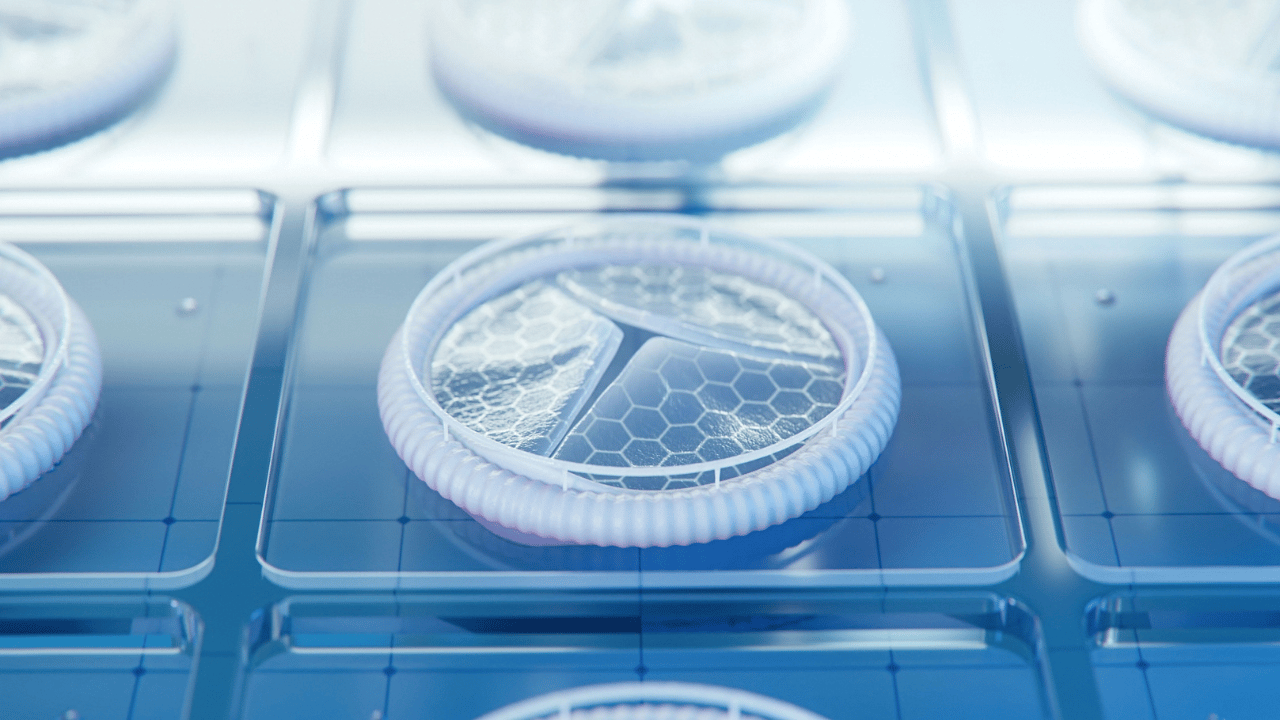
Traditionally, developing custom silicone parts has meant long lead times, limited mold-making capabilities, and constrained design flexibility. Recently, Stratasys engineers have explored how direct 3D printing of silicone can accelerate development, support low-volume production, and enable the creation of patient-specific parts without the need for molds or tooling.
Two Stratasys experts—Ido Bitan, Director of Medical Product Management, and Yaniv Hirschsohn, Manager of Process and Material Development—At the webinarAnswered questions about direct silicone 3D printing.。
For a team that has never operated a 3D printer, what is the learning curve? Do we need dedicated staff or professional training?
Hirschsohn:As I mentioned, silicone is not the easiest material to print. Every material certainly has a learning curve. Even with conventional materials, when you start using different printing technologies—for example, transitioning from FDM to DLP—you also need to learn how to design the models themselves.
Silicone is a high-viscosity material with its own specific printing requirements. At Stratasys, we offer the Stratasys Academy, which provides all the resources you need to learn how to print this material. We provide specialized guidance for elastomeric materials. Additionally, we have a renowned expert, Chris Lyons, who may attend the upcoming conference in Minneapolis. He will conduct a session on printing elastomeric materials, particularly silicone, and share tips and best practices.
In addition, we have application engineers who can support you with professional applications. We can perform testing, printing, and benchmarking for you. If you have any questions, we are always ready to help.
How does the per-part cost of silicone molding compare at different volume levels (e.g., 100, 1,000, or 10,000 parts)?
Bitan:This question cannot be answered with a simple yes or no, or by saying “this part is good, that part is bad,” because it heavily depends on the geometry of the parts. How many parts can fit on one tray? What material is used for each component?
When you consider this option, we will work with you to perform these calculations. We have an ROI calculator, and we know both the market price and the material price. I can tell you that, at present, our material is slightly more expensive than if you were to purchase it by the ton—but you would need to buy it by the ton. So it’s a bit of a chicken-and-egg situation: which do you do first?
In other words, we have demonstrated to many customers that, in certain cases, printing end-use parts is more cost-effective than molding them.
Since 3D printing builds parts layer by layer, does this create any weaknesses in the tensile properties of silicone, or is it truly isotropic?
Hirschsohn:This is a tricky question, clearly asked by someone knowledgeable. When we talk about 3D printing, we are indeed printing layer by layer, and the adhesion between layers is crucial. In developing the printing process, we always focus on optimizing the curing depth to achieve consistent mechanical properties. We know that the Z-axis is always challenging, and we typically see a decrease in mechanical performance along this axis of about 10%.
However, the unique aspect of this material is that it does not rely on conventional acrylic free-radical polymerization. Instead, it employs a combination of free-radical and condensation polymerization. After printing, we clean the parts, perform post-processing, and then place them in an oven at 80°C with 80% humidity for 24 hours. This is when the magic happens—condensation polymerization of the silicone begins. This process enhances interlayer adhesion and significantly improves mechanical properties, particularly in the Z-direction.
How do you ensure part-to-part consistency during production runs? Is this sufficiently repeatable for validated manufacturing?
Hirschsohn:We carefully calibrate our printers, and all of our printers are similar in terms of calibration. We also provide IQ/OQ/PQ protocols. These protocols have been implemented at our SDM facility—SDM is our service workshop.
Bitan:This is our service bureau.
Hirschson:Yes. They follow these procedures to ensure consistency in the parts. Based on our experience, Origin Two is highly repeatable. We have printers on the production lines of several companies, and they continuously test us, requesting additional testing and calibration to ensure uniformity.
Bitan:We would like to add that we have extensive documentation demonstrating our process repeatability. Regardless of where a part is printed on the build tray, you will achieve consistent results. While we cannot disclose the specific methods behind this capability due to proprietary constraints, we are aware that our competitors struggle with variability, as their outcomes often depend on tray position and print parameters.
We have many reports online covering repeatability across printers, within the same tray, at different positions, and with different materials.
Regarding SDM—I’ve seen a question about whether we operate as a CDMO. SDM, or Stratasys Direct Manufacturing, is an internal division of our company that serves customers who want to produce parts without purchasing printers. They offer service bureau capabilities and collaborate with many medical device companies. The facility is ISO 13485 certified, meeting all regulatory requirements for the production of medical device components.
I must verify whether they have already used silicone, as it is a relatively new material and they are required to submit all registrations. However, I am aware that they are currently processing this, so if the documents are not yet ready, they will be available soon.
Do you plan to offer other Shore hardness options for applications requiring harder silicone?
Bitan:We cannot disclose our exact current direction, but we have extensive plans for this material. As previously mentioned, this is the first material we have launched for the healthcare industry. We are observing the response it is generating in the field, and we will certainly continue to develop it—offering different shore values, colors, levels of transparency, and more. We are committed to pushing the boundaries.
【Copyright and Disclaimer】The above information is collected and organized by PlastMatch. The copyright belongs to the original author. This article is reprinted for the purpose of providing more information, and it does not imply that PlastMatch endorses the views expressed in the article or guarantees its accuracy. If there are any errors in the source attribution or if your legitimate rights have been infringed, please contact us, and we will promptly correct or remove the content. If other media, websites, or individuals use the aforementioned content, they must clearly indicate the original source and origin of the work and assume legal responsibility on their own.
Most Popular
-

[overseas news] celanese and toray announce price hikes; basf: European Chemical Industry to Face a Decade of Consolidation
-
Covestro To Cut Antwerp PC Production Capacity, Close Bisphenol A Plant
-

Austrian Injection Molding And Automation Manufacturer Expects 10% Revenue Growth To €330 Million In 2026
-

BASF Considers Raising Offer For Evonik
-
Lithium Carbonate Price Reaches Key Node at 100,000 Yuan/Ton! Listed Companies Rush to Lock Orders!