



The Significance Of Kingfa Sci. & Tech.’s Commissioning Of A Thousand-Ton-Scale Polyetherimide Pilot Line, With A PEI Company Overview
On June 24, Kingfa Sci. & Tech. announced on the interactive platform:The company has established a pilot production line with a capacity of 1,000 tons for polyetherimide (PEI) and has put it into operation, and it is currently in the stage of small-batch sales.The products can be applied in fields such as electronics and electrical engineering, automotive, medical, communications, and aviation.
PEI is a high-end grade of specialty engineering plastic, featuring excellent high-temperature resistance, high strength, and superior electrical insulation. The global market has long been dominated by a few giants such as SABIC. The commissioning of a kiloton-scale pilot production line means that Kingfa is entering this niche market that has long been monopolized by overseas players. Although it is still at the small-batch stage, the breakthrough from zero to one has already been achieved.
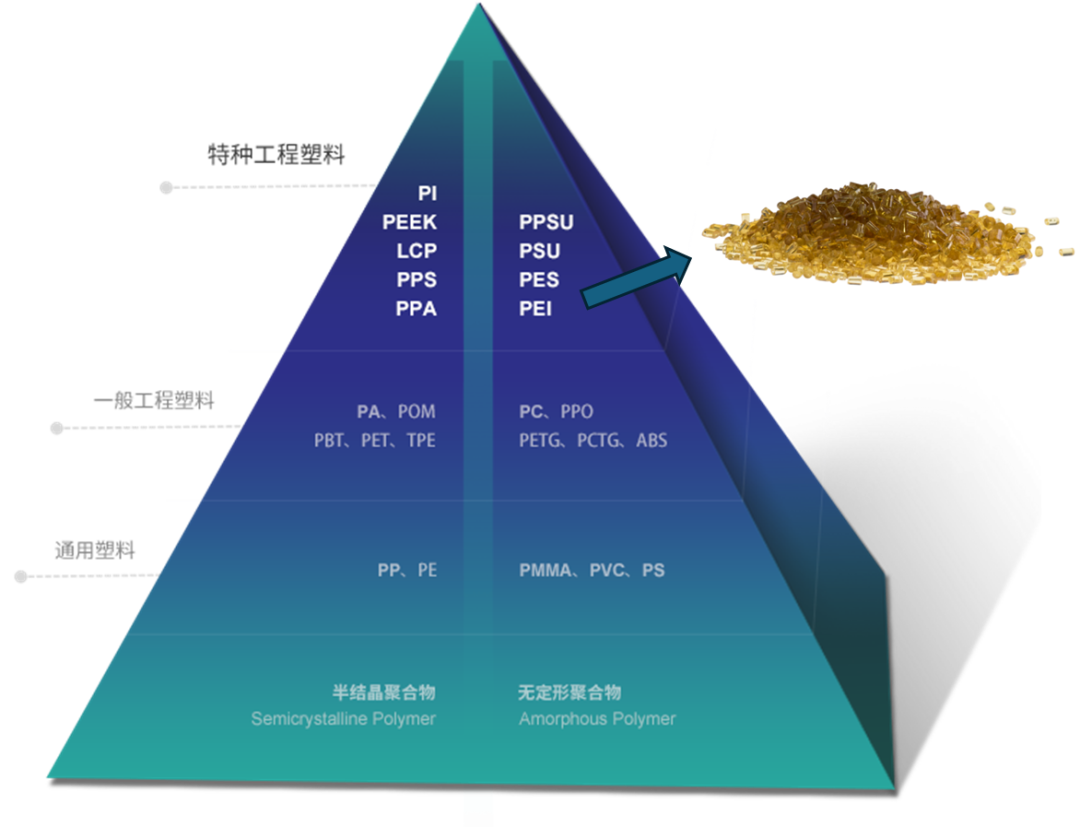
For investors focused on breakthroughs in China’s domestically developed high-end materials, this news is indeed significant. Kingfa Sci. & Tech. has completed a thousand-ton pilot line for polyetherimide (PEI), marking its transition from the laboratory to industrialization and representing a milestone in China’s specialty engineering plastics sector.
Domestic Polyetherimide Layout Enterprises
1. Wanhua?
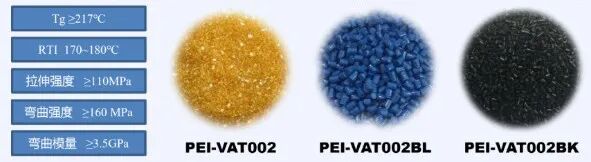
Layout situationThe first company in China to achieve commercial production of PEI materials, and the only company in China to realize commercial production of PEI resin. The company’s PEI products have already reached thousand-ton-scale mass production (a 1,500-ton annual capacity production line has been put into trial production). Product models cover base resin, high-flow resin, color-modified resin, and glass fiber reinforced resin, among others, and are widely used in fiber optic connectors, aerospace composite materials, automotive, semiconductors, and medical devices.
2. UJU New Materials (Guangdong UJU Advanced New Materials Co., Ltd.)
Layout situationA national high-tech enterprise and a national-level specialized, refined, distinctive, and innovative “Little Giant” enterprise, the company has long been deeply engaged in the field of specialty engineering plastics. It has established a 5,000-ton-per-year PEI resin project in Yaojiagang Chemical Industrial Park, Yichang, Hubei Province, using a continuous polymerization process. Its products are mainly used in high-end fields such as aerospace, medical devices, and new energy vehicles.

3. Shanghai Plastic Research Institute Co., Ltd. (Shanghai Plastic Research Institute)
Layout situationShanghai Huayi Holding Group's subsidiary is one of the earliest units in China to focus on the research and development of polyimide (PI). The company is leading the Ministry of Industry and Information Technology's task on "Key Technology Breakthroughs for Polyetherimide (PEI)" and is accelerating the industrialization of high-end materials such as PEI, aiming to streamline the entire chain from "monomer - resin - products - applications" to achieve domestic substitution.
4. Shanghai Synthetic Resin Research Institute
Layout situationOne of the earliest organizations in China to conduct research and development on polyetherimide (starting in the early 1980s), it currently has a 10-ton/year PEI unit, and a 100-ton/year PEI production unit is under construction.
The significance of Kingfa Sci. & Tech.'s move
PEI (polyetherimide) is a pinnacle product among high-performance specialty engineering plastics and has long been heavily monopolized by Saudi Basic Industries Corporation (SABIC) through its “Ultem” series.
The technical barriers are extremely high: the synthesis process is complex, and only a handful of companies worldwide can achieve mass production.
High added value: PEI is typically priced at more than ten times that of ordinary engineering plastics, with gross margins reaching 40%–50%.
Strategic security: In critical fields such as aerospace and medical devices, self-sufficiency and controllability of raw materials are of vital importance. Kingfa Sci. & Tech.’s breakthrough has broken foreign capital’s decades-long monopoly and is in line with the national new materials strategy.
2. Impact on the Company Itself: Expanding the Ceiling for Long-Term Growth
Jinfa Technology has previously focused on the "quantity" logic of modified plastics, while PEI has shifted it towards the "quality" logic of high profit margins and high barriers.
The signal of a kiloton-scale production line is this: it is no longer just an experiment, but a commercialization attempt aimed at profitability. This step carries enormous risk, and the fact that it has reached this stage shows that its process is already relatively mature.
Looking at progress from “small-batch sales”: this is crucial. Downstream customers have very long certification cycles for specialty materials. Being able to make small-batch sales means that the product’s performance has been initially accepted by some customers, completing the hardest step from 0 to 1. The next key question is whether orders can continue to scale up.
3. Downstream applications: Demand in emerging fields is crucial.
The application areas mentioned in the announcement are all very promising, especially several high-growth sectors.
In communications and electronics, PEI is an ideal material for 5G base station antenna elements, fiber optic connectors, and flexible printed circuits (FPCs).
Medical devices: Resistant to repeated steam sterilization, can be used for surgical instrument handles and sterilization trays, with stable demand.
Aerospace: As a lightweight flame-retardant material, it is used in aircraft interiors, aligning with the trend toward weight reduction.
Automobiles: Especially new energy vehicles, used in high-voltage connectors, sensors, and other components with extremely high requirements for heat resistance and insulation.
4. Risks and Challenges Requiring Attention
Although the prospects are promising, there are several practical issues that need to be viewed rationally in the early stage of industrialization.
“Pilot production lines” differ fundamentally from “large-scale mass production”: pilot lines focus on process validation, data accumulation, and supplying samples for customer testing. Product stability and cost control are still being optimized, which is fundamentally different from mature facilities with annual production capacities of tens of thousands of tons.
Key pressure from “capitalization” and depreciation: The kiloton-scale pilot line requires substantial investment. Once construction in progress is transferred to fixed assets, even if product volumes have not yet ramped up, it will generate considerable annual depreciation expenses, potentially weighing on short-term profits.
Customer certification and market promotion are long-term processes: replacing SABIC’s mature products in key components requires rigorous validation by many customers, which can take at least one year and, in many cases, several years. The pace of volume ramp-up may fall short of market expectations.
Global giants may "suppress prices": To maintain their market position, existing giants may adopt price-cutting strategies, which will test Jinfat Technology's cost control capabilities.
Overall, the entry of Jinfat Technology's PEI into small-batch sales is an important trigger for the long-term revaluation of the company's value. The market will pay more attention to its industrialization capabilities in the high-barrier materials sector rather than merely viewing it as a leader in modified plastics.
【Copyright and Disclaimer】The above information is collected and organized by PlastMatch. The copyright belongs to the original author. This article is reprinted for the purpose of providing more information, and it does not imply that PlastMatch endorses the views expressed in the article or guarantees its accuracy. If there are any errors in the source attribution or if your legitimate rights have been infringed, please contact us, and we will promptly correct or remove the content. If other media, websites, or individuals use the aforementioned content, they must clearly indicate the original source and origin of the work and assume legal responsibility on their own.
Most Popular
-

Evonik Parts Ways With The Polyester Business! A Strategic Retreat By A Germany Chemical Giant And The Global Industry Shift
-
Research progress on surface modification of white carbon black and its applications
-
Major Shake-Up! Latest China Auto Export Rankings Released
-

A Look at the Material Suppliers Behind SpaceX
-

Nike mind: Neuroscience and Foam Material Innovation Merge to Lead Low-Carbon Upgrading Technology in the Footwear Industry


