Tensions Over Ceasefire, US and Iran Express Positions; Trump: No Deal with Iran for Now
Summary: ① One of the most pressing concerns in global financial markets right now is: When will the U.S.-Iran conflict end? Both the U.S. and Iran made statements over the weekend regarding a ceasefire. ② On the 14th, U.S. President Trump stated that the United States would not temporarily reach an agreement with Iran to end the war. ③ Iran indicated it would consider ending the war under two conditions.
With the conflict between the United States, Israel, and Iran already having lasted for half a month, one of the biggest concerns for global financial markets right now is: when will this conflict end? Both the U.S. and Iran made statements over the weekend regarding a ceasefire.
According to reports from CCTV News and other media, U.S. President Trump stated on March 14 local time that Iran has indicated its willingness to negotiate a ceasefire, but the conditions it has currently proposed “are not good enough.”The U.S. will not reach an agreement with Iran to end the war for the time being.。
In an interview, Trump stated, "Iran wants to reach a deal, but I don't want to right now because the terms aren't good enough." He did not specify the negotiation conditions but said any agreement must be "very solid" and implied that Iran must completely abandon its nuclear program.
When discussing military operations, Trump said that the strikes by the U.S. and Israel have severely weakened Iran's military capabilities. He stated that the U.S. military has destroyed most of Iran's missiles, drones, and related production facilities, and claimed that these capabilities "will be completely destroyed within two days."
Trump also confirmed that the US military had struck the Khark Island, an Iranian oil export hub. He said the US "almost completely destroyed the island," but intentionally avoided damaging key energy pipelines to avoid the need for reconstruction that would take years.
According to previous reports, on the 14th local time, three informed sources revealed.Trump has already rejected suggestions from some Middle Eastern countries to initiate ceasefire talks with Iran.Oman and Egypt, which had been mediating between the U.S. and Iran prior to the outbreak of hostilities, both attempted to reestablish communication channels, but without progress.
A senior White House official, who requested anonymity, said, "He (Trump) is not interested in this now, and we will continue with the mission. Perhaps there will be talks one day, but not now." The official stated that the U.S. is currently focused on continuing the war to further weaken Iran's military capabilities.
Reportedly, some U.S. officials and Trump’s advisors hold two differing views on this conflict: one advocates ending it as soon as possible to avoid soaring oil prices that could severely damage the Republican Party in the midterm elections; the other advocates maintaining the offensive to destroy Iran’s missile program and ensure it does not acquire nuclear weapons.
The report also noted that Trump often abruptly changes his stance on foreign policy, so it is not ruled out that he might attempt to restart diplomatic negotiations.
Iranian Position
According to reports,Iran also refuses any ceasefire, unless the US and Israel stop their air strikes.Two senior Iranian sources stated that several countries have attempted to mediate the conflict, but none have made progress so far.
There are also reports that Iran has set stringent conditions for ending the war. According to a message from the Iranian side on the 14th, Major General Mohsen Rezaei of the Islamic Revolutionary Guard Corps said,Iran will consider ending the war under two conditions: first, that Iran recovers all its losses, and second, that the United States leaves the Persian Gulf.。
According to sources, both the United States and Iran seem more reluctant to engage than they were at the beginning of the conflict, when high-ranking U.S. officials had reached out to Oman to discuss de-escalation. Iran's Secretary of the Supreme National Security Council, Ali Shamkhani, and Foreign Minister, Mohammad Javad Zarif, also tried to use Oman as a channel to push for ceasefire negotiations. However, these talks ultimately did not make any substantive progress.
The lack of interest from both the United States and Iran in seeking a ceasefire indicates that both sides are preparing for a protracted conflict.
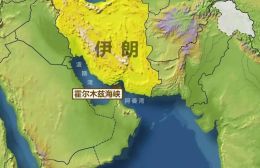
The escalating conflict has severely disrupted financial markets and caused international oil prices to surge, as the critical maritime energy chokepoint—the Strait of Hormuz—remains blocked, resulting in the largest oil supply disruption in history. One-fifth of the world's oil passes through this strait.
Currently, Wall Street investment banks are increasingly concerned about a "long-term energy crisis triggered by an Iran war." Major institutions such as JPMorgan, Goldman Sachs, and RBC Capital Markets have recently issued collective warnings, predicting that the crude oil supply gap will sharply increase in the coming days, with a significant risk of further substantial spikes in oil prices.
【Copyright and Disclaimer】The above information is collected and organized by PlastMatch. The copyright belongs to the original author. This article is reprinted for the purpose of providing more information, and it does not imply that PlastMatch endorses the views expressed in the article or guarantees its accuracy. If there are any errors in the source attribution or if your legitimate rights have been infringed, please contact us, and we will promptly correct or remove the content. If other media, websites, or individuals use the aforementioned content, they must clearly indicate the original source and origin of the work and assume legal responsibility on their own.
Most Popular
-

Supply Extremely Tight! LG Chem Declares Force Majeure on Export Contracts for Di-Octyl Terephthalate (DOTP)
-
Deadly Impact: Hormuz Strait Blockade Sparks Shortage of Plastic Raw Materials, Threatening Shutdowns at Japanese and Korean Chemical Plants
-
Huntsman Introduces “War Surcharge” Amid Shipping Disruption and Soaring Energy Costs, Global MDI Prices Continue to Rise
-
Tao Lin: Tesla’s Supercharger Stations in China Surpass 2,500
-

LG Chem Declares Force Majeure on DOTP Exports! SABIC Joins Five Giants to Redefine EV Safety