Technical Breakthrough Breaks Bottleneck: Dushanzi Petrochemical’s Norbornene Project Launches New Journey of Domestic Substitution
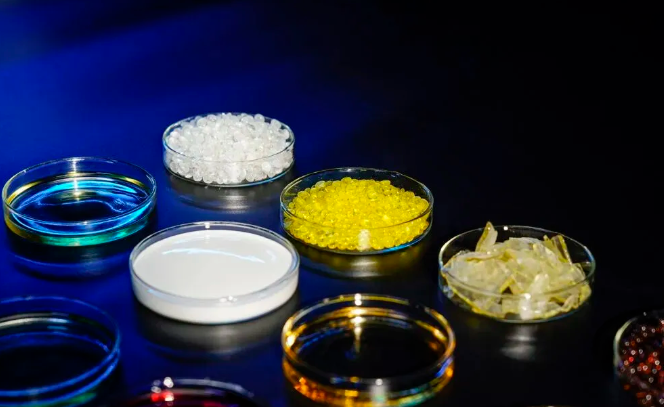
At a critical juncture where traditional petrochemical industries are transitioning toward high-end and differentiated development, norbornene, as the key monomer of cycloolefin copolymers (COC/COP), has become a crucial breakthrough for solving China's reliance on imported high-end optical new materials. In March 2026, the Karamay City Ecological Environment Bureau officially accepted the environmental impact statement for the 500-ton-per-year norbornene pilot project of Dushanzi Petrochemical Company. No objections were received during the public announcement period. This pilot project, based on domestically developed technologies, not only fills the gap in large-scale pilot testing of norbornene in China, but also lays a solid foundation for the domestic raw material supply of the downstream COC/COP industry. It will promote the localization of China's COC/COP industry, helping to break foreign technological and production monopolies in high-end material fields such as electronics, pharmaceuticals, and semiconductors.
Norborene is the core raw material for producing COC/COP, and COC/COP, as high-performance, advanced optical new materials, boast characteristics such as a low dielectric constant, excellent mechanical properties, a low saturated water absorption rate, and strong scratch resistance, and are widely used in high-end fields such as optical lenses, automotive displays, medical packaging, semiconductor encapsulation, and 5G electronics. They are indispensable key materials for the development of strategic emerging industries in China. For a long time, the global norborene and downstream COC/COP industries have been firmly controlled by companies from Japan, Germany, and other countries. Japanese companies such as Zeon, Mitsui Chemicals, and Polyplastics have established an "norborene-COC/COP" integrated layout, occupying over 90% of the global market share, and the domestic market is highly dependent on imports.
From the perspective of production capacity, output, and consumption patterns, the global norbornene industry exhibits a clear feature of overseas monopoly. In 2025, global norbornene consumption reached approximately 80,000 tons, of which China's consumption was 12,000 tons. With the rapid development of industries such as new energy vehicles, semiconductors, and high-end manufacturing, the demand for norbornene is expected to grow at an annual rate of 15% to 20%. However, in stark contrast, China previously had no large-scale norbornene production facilities. Only Shandong Lujing Chemical's 500-ton-per-year facility was put into operation in 2024, becoming the first industrial breakthrough in China. In 2025, the domestic production of norbornene was less than 100 tons, with over 99% of the market demand relying on imports. The "bottleneck" in the raw material supply directly restricts the development of downstream COC/COP industries. Currently, China's annual capacity for COC/COP is only around 3,000 tons, and the market size exceeded 5 billion yuan in 2025, with an import dependency of as high as 95%. The significant supply-demand gap makes the localization of norbornene a crucial key to breaking through the development bottlenecks of downstream industries.
The 500-ton-per-year norbornene pilot plant project at Dushanzi Petrochemical represents a significant milestone in China’s independent development of the norbornene industry. Its core technological support comes from the Sinopec Research Institute of Petroleum Processing. The technology provider has drawn upon national-level research projects, including “Development of Continuous Synthesis Technology for Norbornene” (Project No.: 2022DJ6115) and “Development of Thousand-Ton-Scale Pilot Technology for Cycloolefin Copolymers (COC)/Cycloolefin Polymers (COP)” (Project No.: 22-LH-49-05-01). After years of intensive technological breakthroughs, comprehensive studies on norbornene synthesis kinetics and full-process pilot-scale process development have been successfully completed, culminating in a stable, continuous 500-hour pilot test. Critical process parameters—including reactor configuration, reaction temperature, reaction pressure, feed concentration, and residence time—have been precisely determined. Consequently, a commercially viable process package for the 500-ton-per-year norbornene pilot plant has been established, laying a solid technological foundation for the construction of the pilot-scale facility.
From the project itself, it is invested and constructed by Dushanzi Petrochemical Branch of PetroChina Company Limited, with a total investment of RMB 74.0957 million. The project is located in the central area of the southern zone of Xinjiang Tianli Petrochemical Co., Ltd., covering an area of approximately 3,627 m². It leverages existing resources from Dushanzi Petrochemical, employs 25 staff members, and has an annual operating time of 8,000 hours. The construction period is scheduled for 22 months. This project is not merely a simple capacity expansion but focuses on industrial-scale validation of proprietary technologies, particularly testing the feasibility of core indigenous technologies such as reaction heat removal, reactor scale-up design, and prevention of polymerization-induced blockages. It also aims to verify distillation column control strategies and long-term operational stability, thereby accumulating critical data and optimizing process parameters for subsequent kiloton- and megaton-scale industrial plants, thus advancing continuous-process norbornene synthesis technology toward large-scale commercialization.
In the synthesis of norbornene, China has developed technological pathways aligned with its resource endowments. The current mainstream technologies all use dicyclopentadiene (DCPD) as the feedstock, fully leveraging the abundant C5 fraction byproducts from China's ethylene industry to achieve high-value utilization of resources. Among these, the new batch-reactor synthesis technology co-developed by Professor Jin Haibo’s team at Beijing Institute of Petrochemical Technology and Shandong LuJing Chemical Co., Ltd. has already been industrialized. This technology effectively addresses the drawbacks of conventional processes—such as harsh reaction conditions, excessive side reactions, and equipment clogging—achieving high performance metrics with a cyclopentadiene conversion rate of 96% and norbornene selectivity exceeding 95%. Meanwhile, the continuous-flow synthesis process recently adopted by Dushanzi Petrochemical further optimizes reaction efficiency, product purity control, and operational stability for continuous production, promising to advance China's norbornene manufacturing toward greater efficiency, reliability, and scalability, thereby establishing a diversified and high-value-added technological system.
The advancement of Dushanzi Petrochemical's norbornene pilot project represents a significant breakthrough for China's norbornene industry and will create a full-chain synergy effect spanning "raw material breakthrough – technological iteration – downstream empowerment." Upon commissioning, the project will boost China's annual norbornene production capacity beyond 1,000 metric tons, effectively alleviating reliance on imported high-end raw materials and providing domestic COC/COP manufacturers with a secure, domestically sourced supply. This will drive cost reduction, efficiency gains, and scaled development in the downstream COC/COP sector, gradually breaking the market monopoly held by Japanese enterprises. Additionally, the continuous-process synthesis technology validated by this project will open new pathways for the high-value utilization of coal chemical feedstocks and ethylene-derived C5 fractions, aligning with the transformation and upgrading trend of traditional petrochemical industries and enabling coal and ethylene by-product resources to evolve from basic feedstocks into high-end chemical monomers, thereby enhancing the overall value-added capacity of China's petrochemical sector.
In the context of overcapacity and compressed profit margins in the traditional petrochemical industry, the implementation of the dicyclopentadiene project at Dushanzi Petrochemical marks a typical practice of China's petrochemical companies moving toward high-end and refined development. From technological breakthroughs to pilot-scale verification, from self-reliance in raw materials to downstream empowerment, the project not only demonstrates China's technological innovation capabilities in the petrochemical sector, but also provides a replicable model of "technological R&D - pilot-scale verification - industrialization" for future research and development of high-end chemical new materials. As the domestic production of dicyclopentadiene accelerates, the self-reliance of the downstream COC/COP industry will also encounter new opportunities, thereby promoting the autonomous development of materials in high-end fields such as optical lenses, semiconductors, and medical packaging, and providing solid material support for the development of strategic emerging industries.
Currently, China's petrochemical industry is at a critical stage of transition from "scale expansion" to "quality and efficiency." The domestic production of high-end chemical new materials has become the core theme of industry development. The 500-ton-per-year cyclooctene experimental unit project of Dushanzi Petrochemical not only solves the "bottleneck" issues in the cyclooctene field, but also opens up a new journey for the domestic COC/COP full industrial chain. In the future, with the verification and improvement of pilot-scale technology, and the gradual implementation of industrialized facilities, the domestic cyclooctene and downstream COC/COP industries will gradually form an independent and controllable industrial chain system, breaking overseas monopolies and occupying a place in the global high-end chemical new materials market. This will provide strong momentum for the high-quality development of China's petrochemical industry and the upgrading of strategic emerging industries.
【Copyright and Disclaimer】The above information is collected and organized by PlastMatch. The copyright belongs to the original author. This article is reprinted for the purpose of providing more information, and it does not imply that PlastMatch endorses the views expressed in the article or guarantees its accuracy. If there are any errors in the source attribution or if your legitimate rights have been infringed, please contact us, and we will promptly correct or remove the content. If other media, websites, or individuals use the aforementioned content, they must clearly indicate the original source and origin of the work and assume legal responsibility on their own.
Most Popular
-
Supply Extremely Tight! LG Chem Declares Force Majeure on Export Contracts for Di-Octyl Terephthalate (DOTP)
-
Deadly Impact: Hormuz Strait Blockade Sparks Shortage of Plastic Raw Materials, Threatening Shutdowns at Japanese and Korean Chemical Plants
-
Huntsman Introduces “War Surcharge” Amid Shipping Disruption and Soaring Energy Costs, Global MDI Prices Continue to Rise
-

Tao Lin: Tesla’s Supercharger Stations in China Surpass 2,500
-

LG Chem Declares Force Majeure on DOTP Exports! SABIC Joins Five Giants to Redefine EV Safety