



Strait Reopening Unlikely to Restore Flow! Multinational Chemical Giant Warns of 9-Month Supply Chain Crisis—How Will the Polyolefins Industry Respond?
The Strait of Hormuz—the “world’s chemical chokepoint” handling 20% of global oil trade and nearly 30% of global chemical product seaborne shipments—is now drawing intense global attention from the polyolefin industry. Senior executives of leading global chemical enterprises have issued a fresh warning: even if the Strait reopens and petrochemical product flows from the Persian Gulf return to normal, it will still take as long as nine months (250–275 days) for the global petrochemical supply chain to recover—far more difficult than market expectations.

Global petrochemical supply chain falls into a "long recovery period" dilemma, with Japan and South Korea being the most severely impacted economies.
Affected by the geopolitical conflicts in the Middle East, nearly 20% of the world's petrochemical capacity has been stalled, with core raw materials such as naphtha trapped in the Persian Gulf. Following the outbreak of the conflict, the prices of upstream raw materials for polyolefins have surged, with spot polymer-grade propylene prices climbing nearly 50%, and ethylene prices skyrocketing by over 60%. The pressure on the cost side is rapidly spreading throughout the entire industry chain.
Industry insiders frankly stated that current market attention is largely focused on categories such as oil and gas and fertilizers, while overlooking the supply shock in the petrochemical industry—an impact comparable to the supply chain collapse during the COVID-19 pandemic, whose recovery will certainly not happen overnight.
Even if the Strait reopens, the bottleneck in shipping recovery will be difficult to overcome quickly. Before the conflict, the Strait of Hormuz handled approximately 150 vessels per day, but in the initial phase of reopening, only about 15 escorted vessels per day can pass—reducing capacity by 90%. More critically, in terms of transport priority, petrochemical products rank behind oil, gas, and fertilizers, further squeezing the already limited shipping capacity. Currently, around 430 vessels are stranded in the Persian Gulf, over 300 of which are oil tankers. The standard voyage for petrochemical carriers to Asia already takes four weeks, and when combined with port delays, queuing, and detours, logistics cycles are significantly extended—this underpins the rationale for the nine-month recovery period.
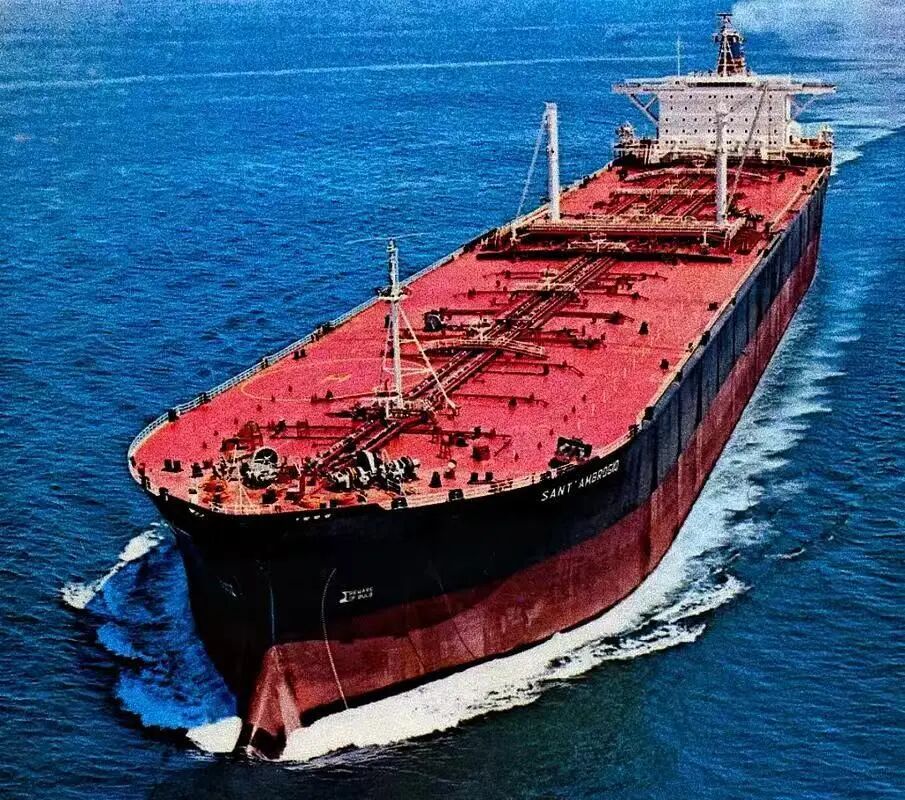
This crisis is intensifying the "K-shaped divergence" in the global petrochemical industry, with Japan and South Korea emerging as the economies hardest hit. In the Western Hemisphere, petrochemical facilities—primarily in North America—rely on ethane derived from natural gas as their core feedstock and have been largely unaffected directly by the conflict. These plants are currently operating at full capacity, and the arbitrage opportunity for basic petrochemical products across regions has surged to over $1,200 per ton, far exceeding the typical level of below $500 per ton.
While Asia and most parts of Europe rely on crude oil-based naphtha routes, Japan and South Korea, as core suppliers of high-end polyolefins globally, depend almost entirely on imported naphtha, with most supplies transported through the Strait of Hormuz. After the outbreak of the conflict, Japan and South Korea have declared force majeure and significantly cut production at their cracking facilities, leading to a contraction in general-purpose material supply and creating a global supply gap in high-end polyolefin products dominated by them.
Domestic polyolefin industry faces structural pressure, with a pronounced supply gap in the high-end market.
As the world’s largest producer and consumer of polyolefins, the Chinese market is likewise unable to remain unaffected, with the impact exhibiting clear structural characteristics.
From the raw material perspective, multiple production routes of polyolefins in China are deeply tied to the Strait of Hormuz. The core source of naphtha for oil-based facilities comes from the Middle East; the raw material methanol for MTO processes is mainly imported from the Middle East, which is China's largest source; nearly 40% of the propane for PDH facilities is imported from the Middle East, and the majority of it is transported through this strait. Affected by the uncertainty in raw material supply and the sharp rise in costs, domestic polyolefin facilities have started to reduce production defensively. By the end of March, the operating rate of PE facilities dropped to around 79%, a decrease of more than 8 percentage points from early March; the operating rate of PP facilities fell to around 72%, a decrease of nearly 4 percentage points from the beginning of the month.
From the import perspective, the supply sensitivity of polyethylene (PE) is significantly higher than that of polypropylene (PP). In 2025, China’s PE import dependency is expected to approach 30%, with nearly half of the imported volume originating from the Middle East; in contrast, PP’s import dependency remains below 10%, rendering it comparatively less vulnerable to direct external shocks. Currently, spot supplies of certain PE grades—such as high-pressure film-grade resins—are already tightening, and with domestic production facilities operating at reduced loads, market expectations of further supply contraction continue to intensify.
Of greatest concern is the supply change in the high-end polyolefin market. The domestic high-end polyolefin market has long been highly dependent on imports, with nearly 60% of high-end material imports originating from Japanese and Korean enterprises. The recent large-scale production cuts and shutdowns by Japanese and Korean producers have directly triggered supply disruption risks for critical raw materials used in China’s new energy, high-end packaging, and specialized manufacturing sectors. To ensure supply chain security, many downstream customers are accelerating the certification and adoption of domestic suppliers.
Market Trend Forecast: Seize the Golden Window for High-End Domestic Substitution
Market Trend Forecast
In the short term (1–3 months), the market will continue to be driven by geopolitical sentiment and cost factors, and polyolefin prices are likely to remain in a high-range consolidation. As long as the strait does not resume normal navigation, strong crude oil and feedstock prices will provide solid support for the market. Key focus areas will be the operating rates of oil-based production units, the pace of port inventory drawdown, and the downstream sector's actual ability to absorb demand during the peak season.
In the medium term (3–9 months), if the conflict persists and cross-strait shipping remains incompletely restored, market dynamics will shift from "cost-driven" to "supply-demand gap-driven." Reduced import arrivals combined with operating rate cuts at domestic facilities will drive rapid drawdown of social inventories. However, it should be noted that China’s domestic polyolefin capacity additions in 2026 will exceed 10 million metric tons, mostly coming online in the second half of the year. This new supply will partially offset the import shortfall, and upward price momentum will be constrained by downstream demand, making unlimited price increases unlikely.
In the long run, this crisis brings not just short-term price volatility, but a historic golden window of opportunity for domestic substitution in high-end polyolefins. For a long time, Japanese and Korean companies have firmly held the core share of the global high-end polyolefin market through their technological expertise and customer certification barriers. Even when domestic products met performance requirements, they struggled to enter the supply chains of leading downstream customers. However, the current widespread shutdown of Japanese and Korean production capacities has placed downstream companies under severe pressure—facing immediate production halts without supply—prompting them to proactively lower their supplier entry barriers and creating an exceptional opportunity for domestic firms to validate their products, onboard new customers, and capture market share.
Industry Response Strategies
In the short term, enterprises must prioritize controlling procurement timing and implementing risk hedging. Factories with low raw material inventories should promptly secure domestic and non-sensitive-region supplies, stabilize supply through long-term contracts, and reduce dependence on a single regional supply channel; they should also use the futures market for long hedging to mitigate price volatility risks. Enterprises with ample inventories, by contrast, should adopt a wait-and-see approach, closely monitoring geopolitical developments and shipping dynamics, while rationally adjusting operating rates and optimizing inventory management.
In the medium-term strategy, it is essential to fully leverage China's diverse process routes by enhancing the capacity utilization of alternative pathways such as coal-to-olefins and ethane cracking to offset the cost pressures associated with oil-based routes. Simultaneously, China should capitalize on the window of opportunity created by reduced operating rates at facilities in Japan and South Korea and emerging supply gaps in Southeast Asia to expand exports, absorb domestic capacity, and increase its global market share.
In the long-term transformation, the core focus is on seizing the critical window of opportunity to accelerate breakthroughs in high-end polyolefin technologies and their market adoption. On one hand, we must expedite the industrialization of bottleneck products such as POE, ultra-high-molecular-weight polyethylene, high-end film resins, and specialty copolymers, ensuring stable product performance and scalable supply capacity. On the other hand, we should proactively engage key downstream customers in sectors like new energy and high-end manufacturing, collaborating on product certification and application testing. By leveraging this ongoing supply chain restructuring, we aim to transition from merely “being able to produce” to “being able to substitute,” thereby fundamentally enhancing the autonomy and controllability of the industrial chain and breaking the long-standing monopoly held by overseas enterprises.
【Copyright and Disclaimer】The above information is collected and organized by PlastMatch. The copyright belongs to the original author. This article is reprinted for the purpose of providing more information, and it does not imply that PlastMatch endorses the views expressed in the article or guarantees its accuracy. If there are any errors in the source attribution or if your legitimate rights have been infringed, please contact us, and we will promptly correct or remove the content. If other media, websites, or individuals use the aforementioned content, they must clearly indicate the original source and origin of the work and assume legal responsibility on their own.
Most Popular
-
Deadly Impact: Hormuz Strait Blockade Sparks Shortage of Plastic Raw Materials, Threatening Shutdowns at Japanese and Korean Chemical Plants
-

BASF Delivers First Batch of Innovative Cathode Materials for Semi-Solid-State Batteries to Weilan New Energy
-

Global Supply Chain Under Pressure! Wacker Increases Prices for Polymers and Silicones
-
SABIC Declares Force Majeure on Styrene Monomer and Methanol Production; Middle East Chemical Operations Halted
-

Middle East Triggers Widespread Force Majeure In Global Chemical Industry


