Saudi Core Petrochemical Zone Hit! Trump Issues "Final Deadline" Threat to Iran! Over 5 Million Tons of Production Capacity Halted in April
According to Zhuan Su Vision, early on April 7, Iran's Fars News Agency cited unnamed sources reporting that an explosion occurred that day at the Jubail Industrial City in northeastern Saudi Arabia, which has U.S. capital involvement, following a "large-scale strike."
The special thing about Jubail Industrial City is that it's not just an industrial park in Saudi Arabia, but also the "heartland" of the global petrochemical industry, according to a report cited by Xinhua.The industrial area produces about 60 to 80 million tons of petrochemical products annually, accounting for 6% to 8% of the global total. It gathers global core production capacities, including Saudi Basic Industries Corporation (SABIC), the Sadara project involving Dow Chemical, and the joint venture project between Saudi Aramco and Total Energies.
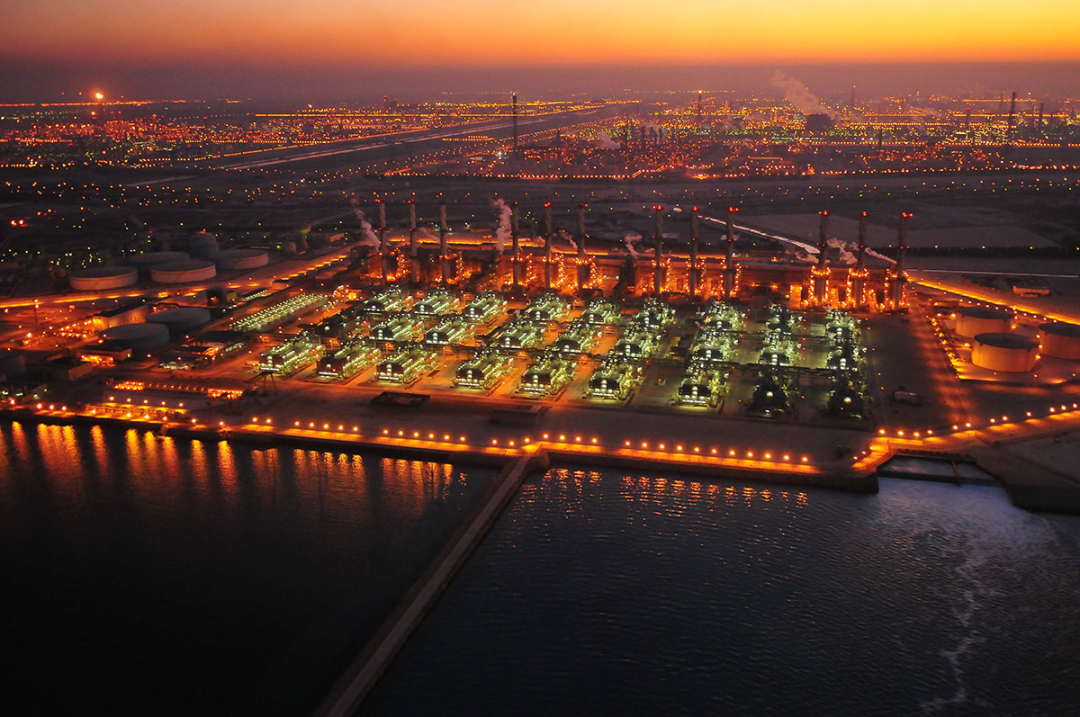
Al-Jubail Industrial City (Source: Middle East Free Zones Official Website)
According to a statement issued by Saudi Arabia's Ministry of Defense on the 7th, the kingdom intercepted and destroyed seven ballistic missiles fired toward its eastern region, with some debris landing near energy facilities; damage assessments are underway. The statement did not specify the origin of the missile launches.
The Israeli Defense Forces stated on the 6th that it carried out an airstrike on a large petrochemical complex in the southern Iranian city of Assaluyeh on that day. The facility is Iran's largest petrochemical complex. The statement said that the Israeli military has struck two major petrochemical complexes in Iran, causing severe damage to more than 85% of Iran's petrochemical product export capacity.
Two military strikes targeting the core production capacity of the petrochemical industry occurred almost simultaneously. This is no coincidence—it marks the direct spillover of the Middle East conflict into the heart of the global chemical supply chain.
I. A “Textbook-Style Stress Test” of the Crude Oil Market
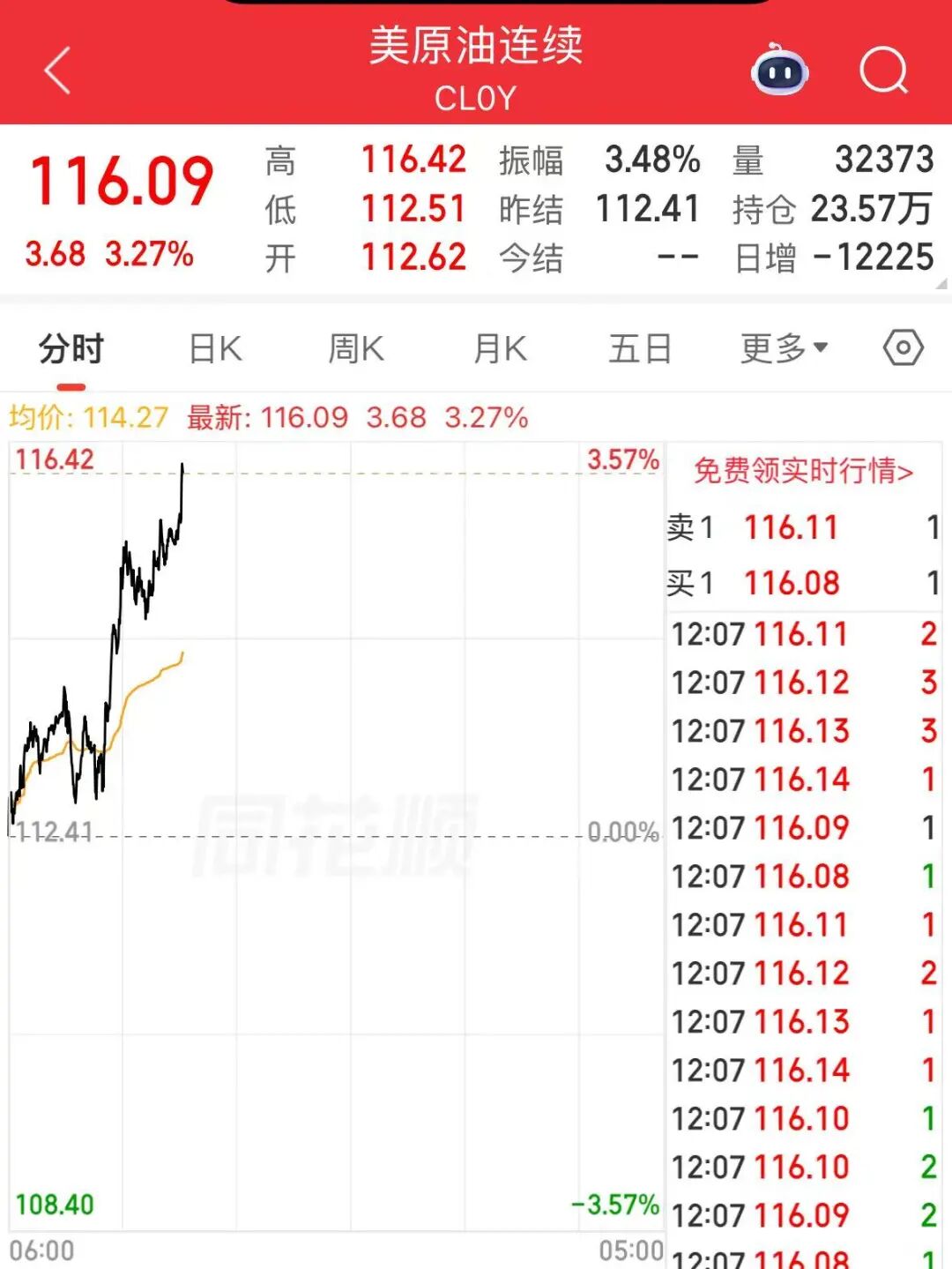
Following news of the attack, the international crude oil market reacted immediately. On April 7, WTI crude oil futures prices continued to rise, with U.S. crude climbing more than 3% to surpass $116 per barrel again. However, more noteworthy than the price itself was the rare anomaly observed in the market structure.
Brent crude oil spot prices surged past $140 per barrel, hitting a new high since 2008, while futures prices rose more modestly, causing the futures-spot price spread to widen to over $30 per barrel—a historical extreme. Sun Fukun, Deputy General Manager of Huayuan Futures, described the current market as “futures-spot dislocation” in an interview: “The futures market is pricing in future easing of geopolitical tensions and weakening demand, whereas the spot market is paying a premium for immediate physical supply shortages.”
Wang Jun, vice president and chief expert of Green Giant Futures, reviewed the transmission path of the recent geopolitical conflict on oil prices: since February 28, the price of Brent crude oil has gone through three stages of evolution, rising from $85 per barrel to $119 per barrel, then further climbing to $111 per barrel, and finally fluctuating at a high level under the expectation of a ceasefire. Looking ahead to April, Wang Jun expects Brent crude oil to remain within the range of $110 to $140 per barrel, while WTI crude oil is expected to be in the range of $100 to $120 per barrel.
In Sun Fukan's view, the global crude oil market supply system is undergoing restructuring. "The conflict between the US, Israel, and Iran, coupled with the situation in Ukraine, has caused simultaneous damage to the Middle East and Russia, two major supply sources. This 'multiple collapse' constitutes a structural disruption of the global energy logistics network, and the trade flow is experiencing irreversible changes."
II. The Shadow of the Deadline
On the same day as the attack in Al-Jubayl, another geopolitical news also stirred market nerves.
At a White House press conference, U.S. President Trump reiterated the “deadline” he set for Iran—8:00 p.m. Eastern Time on April 7—as “non-negotiable.” He claimed, “A plan has been formulated,” and once activated, “every bridge in Iran will be completely destroyed, and every power plant in Iran will be completely crippled.” He even added that, if the United States so chooses, “the entire destruction process would take only four hours.”
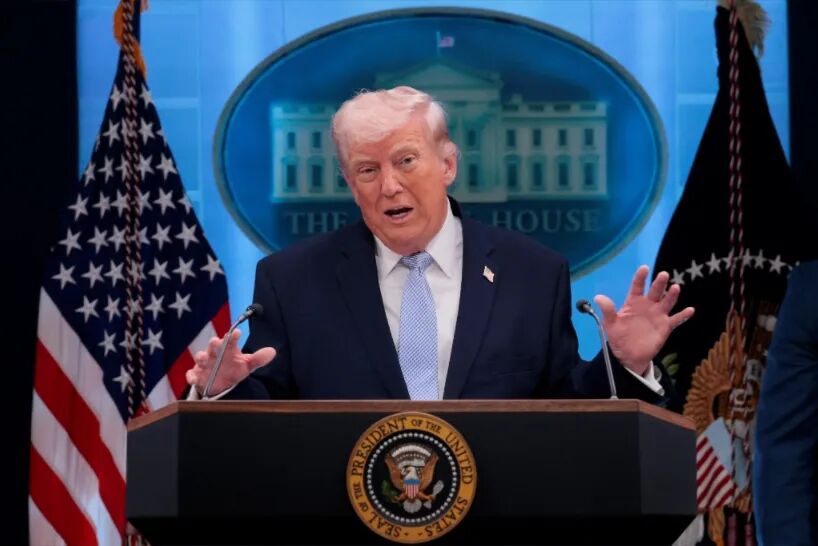
▲April 6, 2026, Washington D.C., USA, President Trump held a press conference at the White House regarding the Iranian conflict. Photo/IC photo
The Iranian side responded with a tough stance. On the same day, a spokesperson for the Iranian Armed Forces' Khatam-ol-Anbia Central Headquarters said that Trump is full of "delusions," and his rude and arrogant remarks cannot make up for the "humiliation" the U.S. has suffered in the West Asian region.
Trump's "deadline" and the explosion in the Jubail Industrial Zone create a dangerous resonance on the timeline. Whether this is a coincidence or a series of moves on the geopolitical chessboard, the impact on the global petrochemical supply chain is already accelerating.
March and April shutdown wave
The surge in crude oil prices is merely the first domino to fall. Naphtha—the lifeblood for producing fundamental chemical feedstocks such as ethylene and propylene—is facing its most severe supply crisis since the Strait of Hormuz blockade.
1. Shutdown of the Middle East's largest integrated facility
According to Saudi media reports, Sadara Chemical Company, a joint venture between Saudi Aramco and U.S. chemical giant Dow Chemical, announced on March 31 that its large-scale petrochemical integrated facility in Jubail has suspended production due to ongoing global supply chain disruptions.
Sadara operates an integrated facility in Jubail that produces over 3 million tons of chemicals and plastics per year, making it one of the largest integrated petrochemical facilities in the Middle East. The company stated in its announcement that it is currently unable to provide an estimate for the resumption of production, which depends on multiple domestic and international factors.
2. South Korean petrochemical companies collectively “shut down”
LG ChemLG Chem, South Korea's largest petrochemical company, has announced an indefinite shutdown of its No. 3 cracker at its Yeosu site, which produces 900,000 tons of ethylene and 450,000 tons of propylene annually. Additionally, its 800,000-ton-per-year naphtha cracker, No. 2 at Yeosu, has also been halted. LG Chem's CEO, Dongchun Kim, stated in an interview that it remains difficult to procure additional naphtha from Russia, and the No. 2 plant in Yeosu cannot yet resume full production.
Lotte Chemical:The Lotte Chemical Dasaeng Plant's 1.1 million ton/year naphtha cracking unit has been permanently shut down, and the maintenance of its Yeosu cracking unit, originally scheduled for April 18, has been moved forward to early April.
YNCC:Both of YNCC's cracking units in Lishui have been reduced to an extremely low operating rate of 68%.
The South Korean government has urgently imported 2.7 tons of naphtha from Russia to ease the shortage pressure. However, this amount is a drop in the bucket compared to South Korea's massive petrochemical production capacity. By mid-April, South Korea's petrochemical industry may face an even larger chain of production halts.
3. India’s emergency tariff exemption + Dipak Phenolics’ core production shutdown
On April 2, the Indian government announced the implementation of zero tariffs on dozens of key petrochemical products, effective until June 30, 2026. This zero-tariff exemption covers a broad range of products, including isopropanol, styrene, phenol, polyurethane, and epoxy resins—basic raw materials for coatings and chemicals—as well as engineering plastics such as ABS, PC, and PU, and upstream textile raw materials like PTA and ethylene glycol, aiming to mitigate domestic disruptions caused by supply chain disruptions.
According to sources close to India's Dicaprol company, the company's factory in Dharwad has officially ceased operations since April 3, due to the interruption of key raw materials such as propylene, under the force majeure clause.
This plant is one of the core production facilities in India’s phenol–acetone sector, with an annual phenol capacity of 330,000 tons and an annual acetone capacity of 220,000 tons. Its shutdown would directly disrupt downstream industries, including polycarbonate (PC), epoxy resins, and pharmaceutical intermediates. Data show that, as of the end of March, India’s phenol CFR price surged by $210 per ton in one week to $1,410 per ton, while acetone prices spiked by $230 per ton to $1,480 per ton.
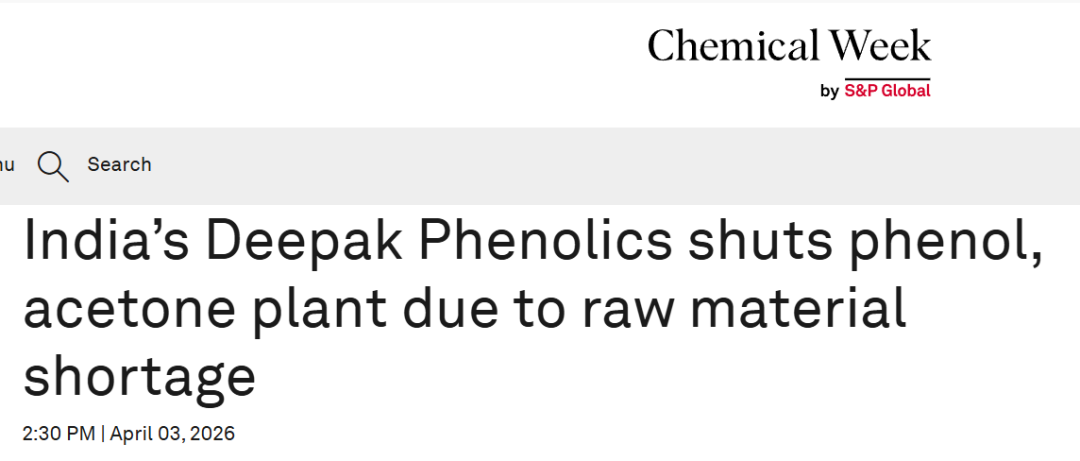
Due to raw material shortages, India's Deepak Phenolics has shut down its phenol and acetone plants. (Source: Chemical Week)
IV. Conclusion: April Is Not the End
Cracks in the global plastics supply chain can no longer be easily mended.Key petrochemical hub attacked, multiple major producers halted operations, crude oil futures-spot spread hits historic extremeThese signals, when combined, point to the same judgment:April is not the end, but the beginning of a broader adjustment.。
OPEC+ decided at its April 5 meeting to continue with a modest production increase.However, in the face of physical supply shortages, this decision has been widely regarded by market analysts as "a drop in the bucket." Sun Fukun believes that the global crude oil market's supply system is undergoing structural damage, and trade flows are undergoing irreversible changes. For downstream industries reliant on petrochemical feedstocks, the real impact may only just be beginning to transmit through the supply chain.
From Jubail to Lishui, and from Dakhla to Assaluyeh, the global plastics supply chain is undergoing an unprecedented stress test. The ultimate outcome of this test does not hinge on the recovery time of any single production line, but rather on when the smoke of war in the Middle East will dissipate—and whether the world can return to the way it was once the smoke clears.
Source: Xinhua News Agency, CCTV News, Jiemian News, Futures Daily, Top Financial Network, China Chemical News, Guangzhou Chemical Trading Center, and other publicly available online information.
【Copyright and Disclaimer】This article is the property of PlastMatch. For business cooperation, media interviews, article reprints, or suggestions, please call the PlastMatch customer service hotline at +86-18030158354 or via email at service@zhuansushijie.com. The information and data provided by PlastMatch are for reference only and do not constitute direct advice for client decision-making. Any decisions made by clients based on such information and data, and all resulting direct or indirect losses and legal consequences, shall be borne by the clients themselves and are unrelated to PlastMatch. Unauthorized reprinting is strictly prohibited.
Most Popular
-
Breakthrough! 13.6-million-ton new giant emerges as world’s fourth-largest polyolefin producer, reshaping industry landscape
-
Domestic PBE Breakthrough, Polyolefin Modification Industry to Break the Impasse
-

BASF Delivers First Batch of Innovative Cathode Materials for Semi-Solid-State Batteries to Weilan New Energy
-
Sadara Chemical Plant in Saudi Arabia Temporarily Halts Production Due to Ongoing Supply Chain Disruptions
-
Auto Market Sees Significant Recovery in March: BYD No Longer Dominant, Changan Chery Geely Strive to Catch Up