



Polycarbonate’s Real Competition Has Just Begun
In recent years, the domestic polycarbonate (PC) industry has undergone a representative expansion cycle.
This round of expansion is not hard to understand.Downstream demand continues to grow, and expectations for domestic substitution are rising.Capital and industrial chain resources rapidly converged, enabling the industry to complete a large-scale capacity expansion in a relatively short period.
Viewed over a longer industrial cycle, this is a process that nearly every new material in its growth phase must go through.First address the question of existence, then tackle the question of quantity, and only then can we proceed to the question of quality.Now, the domestic PC industry has clearly moved past the first two stages and is entering the third stage.
Data shows that China's PC production capacity was only 1.66 million tons in 2019, and by 2024, it had grown to 3.81 million tons, accounting for about 48% of the global total capacity.
At the same time, domestic apparent consumption was 3.6 million tons, accounting for about 50% of the world. According to the year-on-year growth rate of 4.72%, China's PC capacity is expected to reach about 3.99 million tons in 2025, still accounting for nearly 48% of the world.
If we just look at these numbers, a straightforward judgment is that the domestic PC industry has bid farewell to the previous state of tight total supply. Since 2021, China's PC production capacity has already exceeded the apparent consumption volume. The industry's average capacity utilization over the past five years has been about 65%. This means that the most scarce resource in the market is no longer production capacity itself. That's why, today, when discussing the PC industry, the perspective needs to be adjusted a bit.
The issue in the industry is no longer a simple supply-demand gap, nor is it about whether production expansion is fast enough. Rather, it is about what companies rely on to turn their production capacity into effective supply, to transform scale into profit, and to make their products into solutions that customers are willing to continuously purchase.
This is a subtle yet critical shift. In the past, when supply was relatively tight, the market’s primary concern was which players could build production facilities first and steadily manufacture products. As long as overall supply remained insufficient, many structural issues were temporarily masked. However, as overall supply gradually loosens and the industry enters a phase of more intense competition, problems previously concealed by favorable market conditions begin to surface one by one: commodity-grade products have fallen into homogenous competition; high-end grades have yet to achieve genuine breakthroughs; the customer certification system remains incomplete; cost control is inadequate to withstand price fluctuations; and industrial chain collaboration is still insufficient.
From this perspective, the current situation of the PC industry, usingBroad-based easing with structural differentiationIn summary, it is relatively accurate. So-called total easing refers to the fact that the overall supply capacity has significantly increased, and the industry no longer relies on imports to fill the basic supply gap. The so-called structural differentiation means that in the future, the key to determining a company's competitiveness will be high-end brands, special applications, and products deeply tied to customers, rather than general products.
The business pressure in the PC industry in 2025 has become very obvious. Market demand recovery is not up to expectations, and the capacity that was concentratedly deployed in previous years is still being released continuously, making price pressure almost unavoidable.
Public data shows that the average gross profit margin of China’s PC industry for the entire year of 2025 has fallen to -70 RMB per ton, with the industry’s peak loss in April reaching as high as -723 RMB per ton. This is not a profit or loss issue affecting a single enterprise, but rather the industry-wide reality following its transition from an expansion-driven logic to a competition-driven logic. While scale-related issues have been largely resolved, profitability, structural imbalances, and efficiency challenges have instead become more prominent contradictions.
PC is not an industry where the outcome is determined solely by the polycarbonate resin production facility itself. It is underpinned by an integrated system encompassing upstream raw materials (e.g., bisphenol A), coordinated industrial park utilities, energy and logistics infrastructure, and by-product utilization.
When the industry is booming, these disparities may not be fully magnified. However, once prices decline and profit margins narrow, the degree of vertical integration quickly manifests on the cost curve, ultimately translating into survival differences among enterprises.
However, understanding today's divergence in the PC industry solely as a cost competition is still incomplete.A deeper level of differentiation actually occurs in product structure and customer capabilities.
The competition in the general material market is becoming increasingly fierce, and profit margins are getting thinner, which is a high-probability event. In the future, what will truly be more valuable are high-end grades, specialized formulations, application development, joint research and development, and long-term certification systems.
In this sense,High-end breakthrough is not a simple production line upgrade path, but rather a long-term, systematic capability-building process.This is also why, despite the significant decline in China’s reliance on imported PCs in recent years, the industry must maintain a cautious stance when assessing progress in high-end substitution.
From the trade data, the progress of domestic enterprises is clear. In 2025, China's PC imports are approximately 863,600 tons, compared to 1,630,000 tons in 2020, a very significant decrease. In 2025, the export volume is about 584,900 tons, a significant increase from 251,200 tons in 2020. In 2025, the trade deficit narrows to 5.227 billion yuan, and the net import volume drops to 278,600 tons, a year-on-year decrease of 30.35%.
These data changes indicate that domestic enterprises’ competitiveness in general-purpose grades and some mid-range grades is indeed improving, and the localization of imported products is genuinely advancing. However, China’s overall import dependence on polycarbonate (PC) in 2025 remains above 20%, with these imports concentrated almost entirely in high-end products.
In other words, a decline in imports does not mean that breakthroughs in high-end sectors have already been achieved. The industry's real weakness still lies not in overall volume, but in the insufficient effective supply at the high end.
If we broaden our perspective, we will find another more significant change: the domestic PC industry is now not just a story of domestic substitution, but is also increasingly embedded in global competition.
Based on the OEC data from UN Comtrade, the top three global PC exporting countries in 2024 are South Korea, China, and Germany, while the top three importing countries are China, Mexico, and India. It is clear that China has already become one of the key participants in the global PC trade.Simply participating in global trade does not automatically equate to mastering high-end competitiveness.
For many enterprises, exports can certainly alleviate some of the pressure arising from domestic, phase-specific easing policies; however, exports themselves cannot substitute for breakthroughs in high-end technologies, nor can they replace deeper competitive capabilities such as brand strength, certifications, service quality, and consistency in product quality. In the coming years, pressure in this regard will become increasingly evident.
The competitive landscape in the PC industry has already changed; it's absolutely impossible for all players to profit together—instead, companies will continue to diverge across different dimensions.One category of enterprises, leveraging integrated foundations, high-end positioning, and strong global customer loyalty, has gradually broken free from difficulties. Another category remains mired in the quagmire of generic materials and price competition, with profits repeatedly squeezed.
Public research data shows that the capacity expansion of PCs in China has clearly slowed down in 2025. The possibility of new production facilities being put into operation in 2026 is expected to continue to slow down in stages, or even there may be no new capacity added at all. Of course, this is just a trend prediction based on public information, but it at least indicates the reality of the industry.The next phase's real competition will no longer be about production capacity, but about who can adjust faster and more accurately.Among these, product portfolio optimization will be one of the main themes.
The supply of general materials has already become quite abundant, and subsequent price competition will only become more intense. High-end grades, special applications, and product systems deeply integrated with core customers are more likely to become the main sources of profit. At the same time, green, low-carbon, and recyclable materials are evolving from past optional add-ons into increasingly rigid institutional constraints.
With the implementation of the EU's Packaging and Packaging Waste Regulation (EU) 2025/40, for material companies to enter the high-end European and American markets in the future, the competition will not only be about cost and performance, but also about recyclable design, the use of recycled materials, and sustainable certification capabilities.
For China's PC industry, this actually means that the boundaries of competition are being redefined. In the past, companies primarily competed on production capacity, facilities, and investment speed.In the future, competition will center on more complex and longer-term comprehensive capabilities, including cost control, product mix, customer certification, international operations, and the speed of adapting to green regulations.So looking back, what is truly worth paying attention to in the PC industry today may not be whether capacity expansion has ended, but rather, when the industry no longer lacks capacity, how companies will build competitive advantages for the next round.
In times of scarcity, growth often comes from filling gaps. In times of abundance, growth depends more on differentiation. The PC industry has largely moved past the former phase, and the latter has only just begun.
【Copyright and Disclaimer】The above information is collected and organized by PlastMatch. The copyright belongs to the original author. This article is reprinted for the purpose of providing more information, and it does not imply that PlastMatch endorses the views expressed in the article or guarantees its accuracy. If there are any errors in the source attribution or if your legitimate rights have been infringed, please contact us, and we will promptly correct or remove the content. If other media, websites, or individuals use the aforementioned content, they must clearly indicate the original source and origin of the work and assume legal responsibility on their own.
Most Popular
-

Deadly Impact: Hormuz Strait Blockade Sparks Shortage of Plastic Raw Materials, Threatening Shutdowns at Japanese and Korean Chemical Plants
-

BASF Delivers First Batch of Innovative Cathode Materials for Semi-Solid-State Batteries to Weilan New Energy
-

Global Supply Chain Under Pressure! Wacker Increases Prices for Polymers and Silicones
-
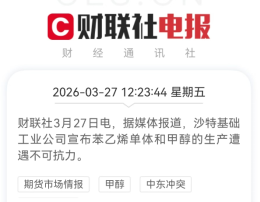
SABIC Declares Force Majeure on Styrene Monomer and Methanol Production; Middle East Chemical Operations Halted
-

Middle East Triggers Widespread Force Majeure In Global Chemical Industry


