



[Overseas News] US Just Relaxed Rebates for Aluminum Can Stock, Saudi Arabia Turns Around and Imposes 38.7% Tax on Aluminum Can Lids
International News Digest:
Raw Material News: Hengyi Petrochemical's profits surge over 100-fold; BASF makes significant concessions in acquisition of Evonik; Celanese raises prices
Packaging News: U.S. Just Eased Tax Rebate Restrictions on Aluminum Can Stock, While Saudi Arabia Imposed a 38.7% Tariff on Aluminum Easy-Open Ends: The "Fire and Ice" 20 Days for Chinese Aluminum Cans
Electronics and Appliances News: In the AI era and amid economic downturn, total home appliance sales have stagnated while their structure has been reshaped.
Auto News: Export Tax Rebate Cut! Chinese Automakers Pivot to New Overseas Markets
Engineering Plastics News: Covestro Slashes PC Production Lines in Antwerp from Four to One! Global PC Focus Shifts Eastward
Mechanical Industry News: Borouge International Expands Polyolefin Mechanical Recycling Capacity in Europe
Macro News:Senior U.S. and South Korean fiscal and monetary policy officials held meetings in Thailand.
Price Information:CFR Southeast Asia USD 1,100/ton
1、Hengyi Petrochemical’s performance surges over 100-fold; BASF makes significant concessions in acquiring Evonik; Celanese raises prices
Rongsheng Petrochemical: Net profit for the first three quarters is expected to increase by 777.93%–822.95% year-on-year
On the evening of October 14, Rongsheng Petrochemical disclosed its earnings forecast for the third quarter of 2026, projecting a net profit attributable to shareholders of the parent company for the first three quarters at RMB 7.8 billion to RMB 8.2 billion, representing a year-on-year increase of 777.93% to 822.95%. The net profit for the third quarter is expected to range from RMB 2.689 billion to RMB 3.089 billion, marking a year-on-year growth of approximately 840% to 980%. With a second-quarter net profit of RMB 2.295 billion, the third-quarter net profit is estimated to rise by about 17% to 34% quarter-on-quarter, indicating sustained improvement in operational quality.
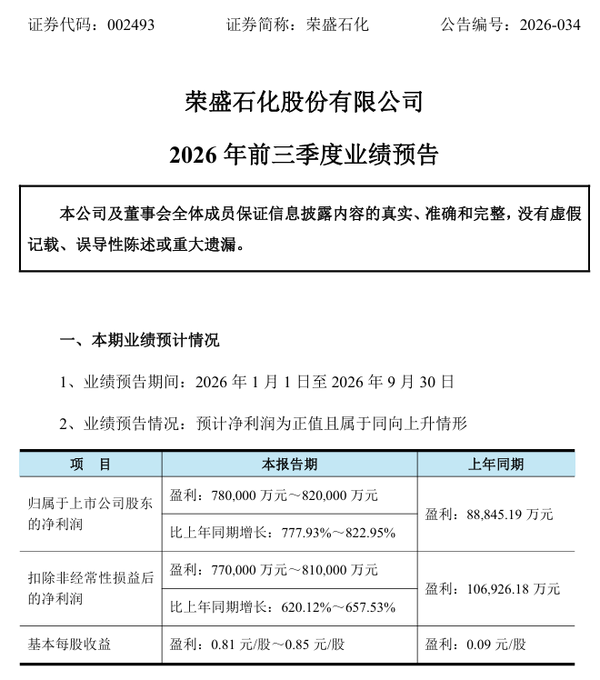
Rongsheng Petrochemical stated in its announcement that the prosperity of the petrochemical industry has rebounded compared to the same period last year, with favorable conditions in overseas refined oil markets. The company has dynamically optimized its production and sales strategies, leading to a significant recovery in processing margins for major products and an improvement in gross profit levels. Leveraging its global-scale integrated refining and chemical complex, the company has continuously carried out technological upgrades and process optimizations to fully tap into existing capacity potential, thereby enhancing operational efficiency and flexible production capabilities. Against the backdrop of a rising crude oil price center, the company’s full-industry-chain advantages have become more pronounced, with stable operations and smooth production and sales across all segments during the first half of the year. By closely monitoring market dynamics and adopting a prudent and diversified procurement strategy, the company has effectively balanced cost management and supply chain resilience while ensuring a stable crude oil supply.
Hengyi Petrochemical’s first-three-quarter performance surges over 100-fold
On the evening of October 15, Hengyi Petrochemical released its earnings forecast, projecting a net profit attributable to shareholders of RMB 7.9 billion to RMB 8.1 billion for the first three quarters of 2026, representing a year-on-year increase of 3,318.59% to 3,405.13%. The net profit after deducting non-recurring items is expected to range from RMB 7.83 billion to RMB 8.03 billion, with a year-on-year growth rate of 9,836.98% to 10,090.80%.
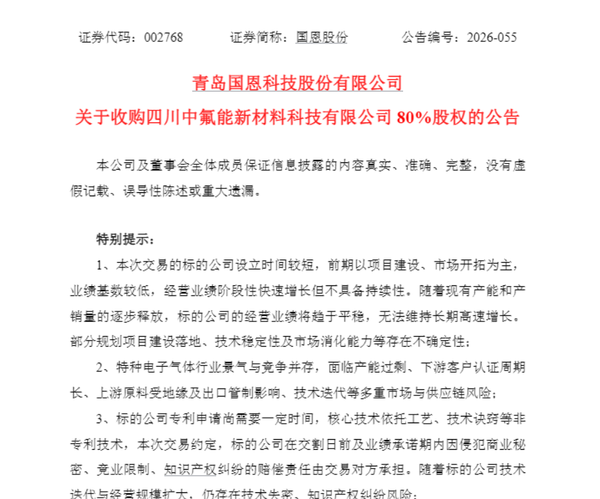
Guoen Shares Acquires Equity Stake in New Materials Company for RMB 1.5 Billion
On October 12, Guoen Shares (002768.SZ) announced that it would acquire an 80% equity stake in Sichuan Zhongfuneng New Material Technology Co., Ltd. for RMB 1.504 billion in cash. Upon completion of the transaction, Zhongfuneng will become a controlling subsidiary included in the consolidated financial statements. The announcement specified that the purpose of the transaction is to advance the company’s “high-end and platform-oriented” development strategy, further solidify its layout in the high-end specialty materials industry, and strengthen the integration of technical resources. The proposal was approved at the Fourth Meeting of the Sixth Board of Directors held on October 10. The transaction does not constitute a major asset restructuring nor a related-party transaction.
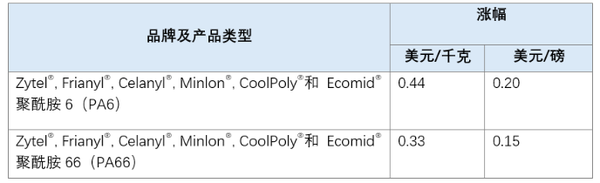
Celanese announces price increase for PA6/PA66 products in the Americas
Celanese has announced a price increase for certain polyamide products sold in the Americas. This adjustment aims to address rising costs and evolving market conditions, while also reflecting Celanese’s commitment to ensuring reliable supply, maintaining product quality, and delivering excellent customer service. The price adjustment will apply to all shipments made on or after October 19, 2026, or as otherwise specified in contractual agreements. Additionally, price increases for specific grades may exceed the standard levels outlined below.
2、Within 20 days, China’s aluminum can industry received two contradictory “notices” from two different markets. A closer look at the official documents reveals that this is not a matter of preference or bias, but rather a reflection of each country’s position in the supply chain: the United States is easing restrictions on upstream raw materials, while Saudi Arabia is erecting barriers around downstream finished products.
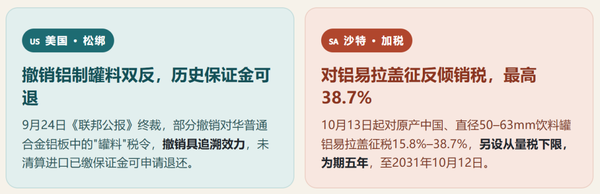
One refunds your taxes in late September, while the other raises them in mid-October—but don’t rush to conclude that “the US is friendly and Saudi Arabia is oppressive.”
Two "notice slips" in opposite directions within 20 days
Friends in the metal packaging industry, it’s worth taking a fresh look at your export orders over the next 20 days.
3、As the industry enters a phase of stock-based development and the AI era dawns, the home appliance market is undergoing a quiet transformation: the logic of aggregate growth has become ineffective, the market has shifted into a channel driven by replacement demand, and the demand structure is being reshaped on three fronts. What underlying forces of change are hidden behind this shift?
 As we enter the AI era, consumers are undergoing a profound transformation. User demand for home appliances is shifting in ways far more dramatic than surface-level figures suggest. In terms of overall volume, the traditional growth logic has largely become ineffective, with the market entering a phase driven by “replacement of existing stock” and “policy support.” Structurally, demand is being reshaped along three dimensions: divergence in category popularity, K-shaped segmentation across price tiers, and a shift in the value anchor from “functionality” to “intelligence and experience.”
For the industry, growth is no longer merely about volume but rather a shift from standalone products to comprehensive solutions. For practitioners, the middle ground is vanishing, leaving only two viable paths: moving upmarket into high-end AI or downmarket into extreme cost-effectiveness. For consumers, rational upgrading—characterized by the mindset of “saving where possible and spending where worthwhile”—has become the norm. This is the true hallmark of our era’s transformation.
4、Recently, the Ministry of Finance and the State Taxation Administration issued an announcement clarifying that, starting from 2027, the VAT rebate rate for new energy vehicle exports will be reduced from 13% to 9%.
The four-percentage-point adjustment is far more than a mere fluctuation in foreign trade figures; it serves as a stress test for the existing business model of China’s automotive exports. With the domestic auto market mired in prolonged price wars and automakers’ profitability under sustained pressure, overseas exports have become a crucial lever for many companies to offset shrinking domestic profit margins.
In recent years, leveraging China’s comprehensive industrial supply chain and export tax rebates, exporting complete vehicles has become the most convenient path for automakers to test overseas markets. Now, as these policy benefits gradually diminish, this trade model—relying on low prices to drive scale—has reached a turning point. China’s automotive global expansion is shifting from simple “vehicle exports” to systematic, localized ecosystem integration.
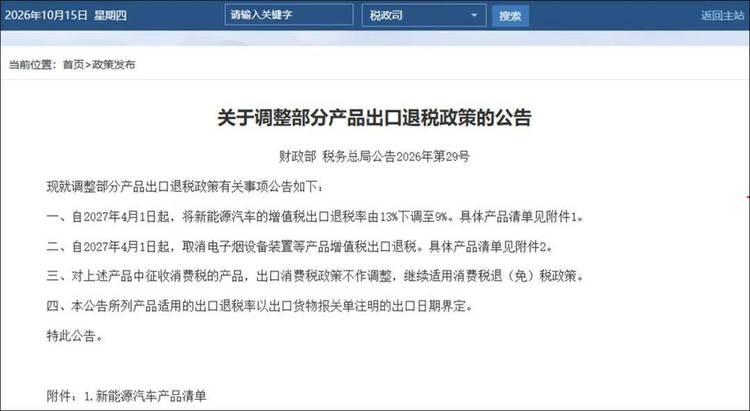
This transformation is fundamentally a shift in the stage of industrial development. Policy orientation is no longer solely focused on encouraging the expansion of export volume, but rather on selecting enterprises with genuine global operational capabilities. The strategy of relying merely on tax rebates to build price advantages is no longer sustainable; only automakers willing to make long-term investments in local production, supply chain establishment, and channel and service network construction can successfully navigate through economic cycles.
5、On October 15, Covestro announced plans to consolidate its polycarbonate (PC) production lines at its Antwerp, Belgium site from four to one, while simultaneously ceasing local production of bisphenol A (BPA) at the facility.
According to ICIS data, the facility has a nominal polycarbonate (PC) production capacity of 240,000 tonnes per year, with individual line capacities ranging from 40,000 to 110,000 tonnes per year, and a combined bisphenol A (BPA) unit capacity of 245,000 tonnes per year. The restructuring may affect 260 of the site’s 970 employees. The company has initiated the consultation process required under Belgian law, and the final decision will be made upon completion of these consultations.
Following Mitsubishi Gas Chemical’s announcement to shut down its 120,000-ton polycarbonate (PC) plant in Kashima by March 2028, and SABIC’s sale of its European and American engineering thermoplastics business for $450 million, another industry giant has signaled its retreat from the general-purpose PC market. The company scaling back production is none other than the world’s largest PC producer.
6、Borouge International is expanding its mechanical recycling capacity for polyolefins in Europe. The company announced investments in its facilities in Niedergebra, Germany, and Wildon, Austria. According to Borouge, this expansion aims to meet growing customer demand for mechanically recycled polyolefins produced in Europe. It also seeks to provide more reliable access to circular materials, which customers require due to brand preferences, evolving regulatory requirements such as the Packaging and Packaging Waste Regulation (PPWR), and the need for supply resilience.
In Niedergebra, rigid applications account for approximately 9 kt of rPO.
At Borouge International Niedergebra (formerly mtm plastics), the annual production capacity of recycled mixed polyolefin (rPO) materials will increase by nearly 9,000 tonnes. The facility converts post-consumer mixed polyolefin waste into valuable recycled materials for a wide range of rigid applications. The additional capacity is expected to become operational in the first quarter of 2027.
In Wildon, the maximum increase in rPE for flexible packaging is 5 kt.
Borouge International Wildon (formerly Ecoplast) will increase its annual production of recycled polyethylene (rPE) by 5,000 tonnes. The additional capacity is expected to come online in the fourth quarter of 2027. It will support the growing demand for recycled materials, particularly for flexible packaging applications.
Over 20,000 metric tons of high-quality rPP from Bulgaria
Borouge International’s facility in Elin Pelin, Bulgaria, produces over 20,000 metric tons per year of high-quality post-consumer recycled polypropylene (rPP) grades. This facility enhances Borouge International’s European mechanical recycling portfolio and complements its capabilities in flexible PE, rigid PP, and mixed polyolefin streams.
[Senior U.S. and South Korean fiscal and monetary policy officials hold talks in Thailand] According to the Ministry of Economy and Finance of South Korea, Deputy Prime Minister and Minister of Economy and Finance Lee Hyung-il held a quadrilateral meeting on Friday in Thailand with Bank of Korea Governor Shin Hyun-song, Federal Reserve Chair Kevin Warsh, and U.S. Deputy Treasury Secretary Francis Brooke. The officials discussed recent economic conditions and ways to strengthen economic and financial cooperation between the two countries. The talks took place during the annual meetings of the International Monetary Fund (IMF) and the World Bank.
[IMF Expects Bank of Japan to Raise Rates Once More, Urges Flexibility in Future Path] The International Monetary Fund (IMF) expects the Bank of Japan to raise interest rates one more time, bringing the policy rate closer to the neutral rate, while emphasizing the need for flexibility in subsequent actions amid rising global uncertainty. Rahul Anand, head of the IMF’s Japan mission, stated in an interview on Friday, “Under our baseline scenario, we expect the Bank of Japan to raise rates once more, bringing the policy rate to a neutral level.”
[Ministry of Foreign Affairs: Hopes the EU Will Work with China to Promote the Development of China-EU Trade] At a regular press conference on the 16th, Ministry of Foreign Affairs Spokesperson Mao Ning responded to questions regarding China-EU economic and trade relations. She stated that the second meeting of the China-EU Trade and Investment Consultation Mechanism had made positive progress, demonstrating that both sides can properly address differences through dialogue. “We hope that the European side will honor its commitments to free and open markets and adhere to World Trade Organization rules, avoid introducing protectionist and discriminatory policy measures, work with China in the same direction, jointly promote upwardly balanced and sustainable development of China-EU trade, and jointly safeguard the stability and smooth operation of global industrial and supply chains.”
[World Bank to Increase Financial Support for Critical Minerals] World Bank President Ajay Banga stated that the Bank plans to quintuple its financing for critical minerals within five years. The World Bank’s goal is to support critical minerals during the 2026–2030 fiscal period. Provide $19 billion in financing. The World Bank has identified 20 countries where cooperation can be carried out on key mineral development projects.
[Siege Threatens Food Security in Taiz, Yemen] October 16 marks World Food Day. Due to prolonged conflict and political instability, Yemen has long faced severe food security challenges. Recently, Houthi forces have taken control of most of Taiz Governorate, leaving the provincial capital, Taiz city, surrounded on all sides. The blockade has sparked panic among residents, driven up food prices, and threatened the city’s food security.
[Trump Claims Zelenskyy Does Not Want to Resolve the Ukraine Crisis] On the 15th, U.S. President Donald Trump stated that Ukrainian President Volodymyr Zelenskyy “does not want to resolve” the Ukraine crisis and is not worth dealing with for the United States, adding that reaching an agreement with Zelenskyy is more difficult than with Russian President Vladimir Putin. Addressing Ukraine’s resumption of strikes on Russian oil refineries, Trump remarked that the United States and the world need diesel fuel, saying, “When you attack those refineries that produce diesel, you are doing something detrimental to the entire world.”
The RMB central parity rate against the US dollar was set at 6.7220, up 33 pips; the previous trading day’s central parity rate was 6.7253, with an official closing rate of 6.6916 and a nighttime session close of 6.6914.
Upstream Raw Material USD Market Price
On October 15, CFR Northeast Asia ethylene was stable at $1,130/mt, while CFR Southeast Asia was at $1,100/mt.
The average FOB Korea price for propylene in Northeast Asia rose by $20 per tonne to $1,320 per tonne, while the average CFR China price increased by $10 per tonne to $1,360 per tonne.
North Asia frozen cargo November CIF prices: propane at USD 975–977 per tonne; butane at USD 1,125–1,127 per tonne.
In November, the CIF prices for frozen cargo in South China were USD 1,066–1,076 per tonne for propane and USD 1,136–1,146 per tonne for butane.
The November CIF prices for refrigerated cargo in the Taiwan region were USD 975–977 per ton for propane and USD 1,125–1,127 per ton for butane.
LLDPE USD Market Price
Film: USD 1,180/ton (CFR Huangpu)
[HDPE USD Market Price]
Film: USD 1,250/ton (CFR Yantian)
Hollow: USD 1,300/ton (CFR Dongguan);
Injection molding: USD 1,085/ton (CFR Huangpu)
LDPE USD Market Price
Film: USD 1,440/ton (CFR Huangpu)
[PP USD Market Price]
Homopolymer: USD 1,420/ton (CFR Huangpu)
Copolymer: USD 1,400/ton (CFR Nansha)
Transparent: USD 1,600/ton (CFR Huangpu)
Pipe material: USD 1,650/ton (CFR Huangpu)
【Copyright and Disclaimer】The above information is collected and organized by PlastMatch. The copyright belongs to the original author. This article is reprinted for the purpose of providing more information, and it does not imply that PlastMatch endorses the views expressed in the article or guarantees its accuracy. If there are any errors in the source attribution or if your legitimate rights have been infringed, please contact us, and we will promptly correct or remove the content. If other media, websites, or individuals use the aforementioned content, they must clearly indicate the original source and origin of the work and assume legal responsibility on their own.
Most Popular
-
BASF Considers Raising Offer For Evonik
-
Lithium Carbonate Price Reaches Key Node at 100,000 Yuan/Ton! Listed Companies Rush to Lock Orders!
-

[Overseas News] Sumitomo Chemical Acquires Solvay's LCP Business! SK Chemicals Builds Circular Economy Model For Waste Banners!
-

Wanhua Chemical's Yantai 1.2 Million Ton Per Year Ethylene Phase II Plant To Halt Production For Maintenance Starting October 10
-
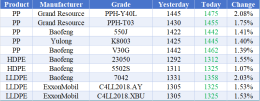
[PLAS FOB Report] Rising Oil Prices Boost Polymer Market – PP and PE Prices Climb