Oil Triggers Chemical Explosion! Hormuz Strait Suddenly Blocked, Polyurethane and Engineering Plastics Industry Faces Cost "Earthquake"
Special Plastics Insight has learned that in the early hours of June 11 local time, the military conflict between the United States and Iran suddenly escalated, and the Strait of Hormuz, the world’s most critical maritime energy chokepoint, was abruptly closed. This geopolitical event not only sent international oil prices soaring, but also instantly rewrote the cost logic of the global chemical industry chain, affecting everything from polyurethane to engineering plastics.
According to a Xinhua News Agency report from Washington on June 10, the U.S. Central Command said in a statement that, under the direction of President Trump, the U.S. military had carried out “defensive strikes” against multiple targets inside Iran. Forces from the U.S. Marine Corps, Air Force, and Navy launched precision-guided munitions at Iranian targets. Russia’s Sputnik news agency further reported that all the targets struck were located in southern Iran, including air defense systems, radar installations, command posts, and drone control stations.
Iran’s response was swift and forceful. According to China News Service, Mehr News Agency, citing a statement from the Khatam al-Anbia Central Headquarters of the Iranian Armed Forces, reported that the Strait of Hormuz is now closed to all vessels, including oil tankers and merchant ships, and any ship attempting to pass through the waterway will be targeted. Shortly afterward, the Islamic Revolutionary Guard Corps Navy announced that it had struck two “violating vessels” attempting to transit the Strait of Hormuz.
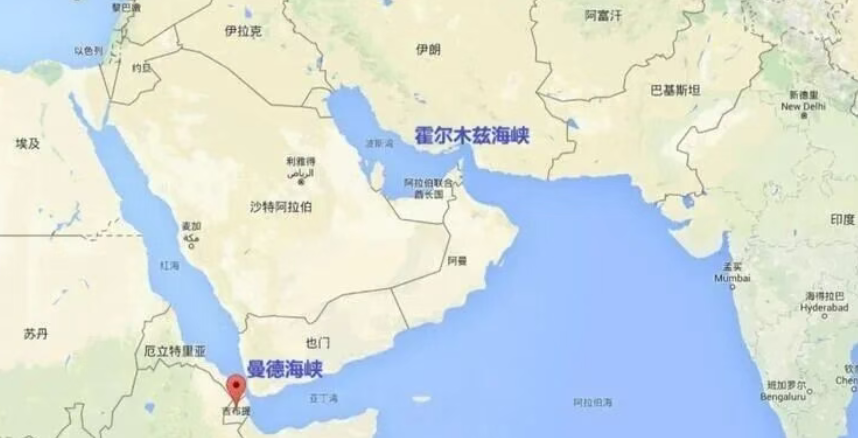
The "artery" of global energy has been cut off.
The Strait of Hormuz connects the Persian Gulf, the world’s most important oil-producing region. It is the world’s busiest channel in terms of daily crude oil transportation and is vital to global crude oil supply. According to expert data cited by *Sanlian Life Weekly*, in 2025 oil exports through the Strait of Hormuz reached 17.121 million barrels per day, accounting for about 25% of global oil trade; of this, crude oil/condensate amounted to 13.62 million barrels per day, accounting for about 32% of global crude oil trade; petroleum products totaled about 3.52 million barrels per day, accounting for about 13% of global oil product trade. Other data show that the strait’s average daily throughput in 2025 exceeded 14 million barrels, accounting for about one-third of global seaborne crude oil exports, with roughly three-quarters of that going to Asian countries.
This crude oil mainly comes from six countries—Saudi Arabia, Iraq, the UAE, Kuwait, Iran, and Qatar—which rely almost entirely on this narrow waterway to transport energy to global markets.
For Gulf states to export their oil, the main alternative routes are Saudi Arabia’s East-West crude oil pipeline, the UAE’s Abu Dhabi crude oil pipeline, and Iraq’s Kirkuk-Ceyhan pipeline. Together, these three pipelines can at most add about 3 million barrels per day in supply, not even a fraction of the daily oil flow through the Strait of Hormuz. This means that if a blockade persists, the global oil supply will face an unbridgeable gap.
More importantly, the Middle East is not only the world’s core oil-producing region but also a key supply base for petrochemical products. A Bank of America report notes that the Middle East is the world’s third-largest ethylene and propylene production hub, behind only China and the United States, and that a large portion of its petrochemical capacity relies on the Strait of Hormuz for outbound shipments. Once the Strait of Hormuz is closed, chemical products cannot be exported, inventories quickly build up, and companies are forced to cut operating rates or even shut down, with the Asian petrochemical market bearing the brunt of the resulting supply-demand shock.
Oil prices surged toward $100, driving up supply chain costs across the board.
Oil prices reacted quickly to the situation. According to Sina Finance, as of 8:19 a.m. Beijing time on June 11, WTI crude was up 2.74% at $92.50 per barrel, after rising as much as 4.01% earlier; Brent crude was up 2.20% at $95.15 per barrel. Brent crude futures climbed above the $95 mark during intraday trading.
The market broadly expects that if the Strait of Hormuz remains blocked for an extended period, oil prices will continue to rise further. In her latest weekly report, Natasha Kaneva, head of commodities research at JPMorgan, provided a pricing matrix: under the base-case scenario in which the Strait of Hormuz reopens in June, the average annual price of Brent crude would remain at about $100 per barrel; but if the blockade is extended by one additional month in the third quarter of this year, the average price would rise by about $5; and for each additional month of blockade in the fourth quarter, the average price would increase by about $15.
The transmission of rising oil prices through the chemical industry chain is sequential, and the impact extends far beyond polyurethane. The upstream segment of polyurethane mainly relies on petroleum-based chemical feedstocks such as pure benzene, aniline, toluene, propylene, and ethylene; engineering plastics likewise are fundamentally based on petrochemical routes, involving adipic acid/adiponitrile for PA66, PTA/ethylene glycol for PET, PTA/BDO for PBT, and the MMA monomer for PMMA. Every fluctuation in crude oil prices ultimately shows up in the cost structures of MDI, TDI, polyether, as well as PA66, PC, PET, POM, PBT, and PMMA.
Industry analysis indicates that the current conflict has exacerbated the sector’s difficulties: surging crude oil and naphtha prices have directly pushed up petrochemical product costs, with polymer prices in Europe and Turkey rising 50%–60% since the beginning of the year, and those in China increasing 35%–40%. As inventories are depleted, the accumulated pressure from upstream costs is being passed progressively downstream.
Polyurethane raw materials: Standing at the starting line of rising costs.
MDI: Cost-side support is strengthening
The polymeric MDI market had just undergone a weak adjustment before the outbreak of the U.S.-Iran conflict. According to data from SunSirs’ commodity market analysis system, from June 1 to June 5, domestic polymeric MDI market prices fell from 16,733 yuan/ton to 16,066 yuan/ton, a weekly decline of 3.98%. However, after the sudden change in the situation, market sentiment quickly reversed. According to Longzhong Information’s daily review on June 10, the quoted price for Wanhua-origin polymeric MDI in Shandong rebounded from 15,600 yuan/ton to 15,700 yuan/ton, while Shanghai-origin material rose from 15,400 yuan/ton to 15,600 yuan/ton.
The core raw materials for MDI are aniline and benzene, both of which are closely tied to crude oil prices. On June 10, the East China benzene price was 7,670 yuan/ton. Although it edged down slightly from the previous day, there is a clear upward expectation on the cost side amid rising international oil prices.
TDI: The expectation of toluene price increase is heating up.
TDI's core raw material, toluene, is also highly dependent on the crude oil and aromatic industry chain. According to data from Longzhong Information on June 8, the domestic toluene market quoted around 6,950 yuan/ton in late June, with spot transactions primarily consisting of small orders. However, toluene prices are highly sensitive to fluctuations in international crude oil and aromatic markets. The blockade of the Strait of Hormuz, which has hindered the transportation of Middle Eastern aromatic raw materials, will quickly transmit to the cost side of toluene. According to relevant market data, the current domestic TDI price in China is approximately 14,300–14,900 yuan/ton.
Meanwhile, the BASF TDI unit in Shanghai is shut down for maintenance, and multiple TDI units are operating at reduced capacity, with supply already expected to shrink. With the dual impact of rising costs and tightening supply, bullish sentiment in the TDI market is rapidly gathering momentum.
Polyether: Can the inverted epoxy propane be broken by cost?
The polyether industry chain is particularly unusual. Recently, the deep price inversion between propylene oxide and flexible foam polyether has drawn significant attention in the industry. According to data from Tiantian Chemical, on May 29, flexible foam polyether was priced 650 yuan/ton lower than propylene oxide. Although the gap narrowed somewhat in early June, on June 3, the mainstream price of flexible foam polyether in Shandong was 8,550 yuan/ton, while propylene oxide was 8,900 yuan/ton, leaving the inversion still as high as 350 yuan/ton.
The core reason for the inversion is that the supply of propylene oxide is more concentrated and its price elasticity is stronger, while the production capacity of polyether is dispersed and downstream demand is weak. However, a sudden change in the situation could alter this pattern: the price of propylene, the upstream raw material for propylene oxide, has transmitted pressure from its high levels, and cost support is strengthening; if oil prices continue to rise, the pressure for downstream polyether to follow suit will also gradually increase. The stability of propylene prices at high levels, the continued shutdown or low-load operation of multiple propylene oxide facilities, and deepening industry losses mean that the contraction of the supply side has become an important support for the bottom of propylene oxide prices. The rising raw material costs may be the biggest variable in the repair effect of the inversion trend in the polyether market over the coming period.
Engineering plastics: Significant differentiation among six major categories, with varying cost transmission paths.
If polyurethane is a product directly and inextricably tied to oil prices, then the transmission along the engineering plastics value chain is far more indirect—raw material pathways, supply structures, and downstream demand intensity all differ. Overall, the cost push triggered by a blockade of the Strait of Hormuz is intertwined with the supply-demand pressures facing China’s engineering plastics market itself, leading to a highly divergent outlook for the six major categories.
PA66: Cost support provides a floor, but supply and demand remain weak; imported cargoes are in short supply.
PA66 is one of the most complex categories among the six major engineering plastics in its association with crude oil and naphtha. Its core raw materials are adipic acid (AA) and hexamethylenediamine (HMD). The former is derived from pure benzene (petroleum-based) and nitric acid, while the latter is based on butadiene (a product of petroleum cracking) and hydrogen cyanide, both of which are closely related to crude oil. From 2025 to early 2026, with the breakthrough in domestic production of adiponitrile, PA66 production capacity will be significantly released, exacerbating the phase-specific supply-demand imbalance in the industry.
According to the monitoring by Business Society, the PA66 market showed a slight upward trend followed by a weak stalemate in early June, with price fluctuations being narrow and overall presenting a game of "cost support, weak supply and demand." As of June 10, the spot price of polyamide (PA66) was reported at 20,866.67 yuan/ton, with no change in the past week.
Regarding the spot market, according to Mysteel data on June 11, mainstream prices for PA66 loose and small-lot engineering-plastics-grade circulating chips in the Yuyao market were referenced at RMB 18,500–20,000/tonne, cash payment and self-pickup. Imported supplies were tight; small-lot prices for Asahi Kasei 1300S were RMB 31,000–31,500/tonne, and small-lot prices for DuPont 101L were RMB 31,000–31,500/tonne, cash payment and self-pickup.
It is worth noting that demand for PA66 is growing steadily in areas such as automotive lightweighting, thermal management components, and electronic connectors. Although downstream demand is being underpinned by policies supporting new energy vehicles and automotive trade-in programs, expectations of rising costs triggered by tensions in the Middle East are reshaping the pricing logic of upstream adipic acid and pure benzene. If the prices of pure benzene and butadiene rise in tandem, the cost side of PA66 will receive stronger support.
PC: Fundamentals are bearish, and cost pass-through will still take time.
PC is a category directly influenced by bisphenol A (BPA) and diphenyl carbonate (DPC) among the six major engineering plastics. The core raw materials for BPA are phenol and acetone, both of which are derived from pure benzene through the benzene-propylene/propylene-isopropylbenzene route, closely related to crude oil and aromatic chemicals.
However, the current domestic PC market is at its most fragile stage in terms of supply-demand structure. According to monitoring by SunSirs, in early June, the domestic PC market fell significantly, with spot prices of various grades seeing relatively large declines. As of June 9, SunSirs’ benchmark mixed PC price was around RMB 14,633.33/tonne, down 8.73% from the beginning of the month; on June 10, the spot price fell further to RMB 14,466.67/tonne, down RMB 166.66/tonne from the previous day.
According to Mysteel’s daily market commentary, the closing price of bisphenol A, a raw material, in the East China market was RMB 8,700/ton, up RMB 100/ton from the previous period. However, the online listing price of a PC producer in Shandong was still reduced by RMB 300/ton. Newly added domestic PC capacity continues to come on stream, leaving supply ample or even excessive. At the same time, demand recovery in downstream consumer electronics and automotive sectors has been slow, and bearish pressure on the overall PC market remains unabated.
Under the current fundamentally bearish supply-demand conditions, it remains highly uncertain whether the rise in bisphenol A can be smoothly passed through to PC prices. However, if crude oil continues to run at elevated levels and drives a system-wide increase in the benzene chain, the PC cost side will be passively lifted from the bottom.
PET: Strong feedstock pressure, continuing weak and volatile trend
PET’s upstream feedstocks are PTA (purified terephthalic acid) and MEG (monoethylene glycol), both of which are centered on para-xylene (PX) and ethylene, deeply tied to the crude oil–naphtha cracking industry chain. After Iran closed the Strait of Hormuz, the export of petrochemical products from the Middle East was impeded, raising expectations of tighter PX supply in Asia, which in turn provided strong support for PTA on the cost side.
However, the supply-side pressure on PET continues to rise. According to monitoring by SunSirs, the PET reference price on June 5 was RMB 8,265.00, down 2.79% from RMB 8,502.50 on June 1. In the spot market, as of June 5, the mainstream negotiated price for semi-dull polyester chips in East China was RMB 7,230–7,350/ton, while the negotiated price for bright chips was RMB 7,300–7,450/ton.
JLC expects that the polyester chip market price may continue to show a weak and fluctuating trend in June. The ongoing maintenance of PTA units, low operating rates of enterprises, and a tight spot market still provide some support for chip prices, but the supply pressure remains. The seasonal demand for PET in areas such as beverage packaging and films provides some cushioning for prices, but the pace and extent of cost transmission still need to be observed based on the actual follow-up situation of PTA.
POM: Domestic prices have fallen to a temporary low, while imported high-end materials remain resilient.
POM (polyoxymethylene) is produced by the polymerization of formaldehyde using methanol as a raw material, and is closely linked to coal chemical and natural gas chemical industries. The indirect transmission of rising crude oil prices to methanol has a lag effect. Currently, prices of domestic POM brands in the Chinese market have fallen to a periodic low. According to Longzhong Information on June 5, the ex-factory tax-inclusive prices of Yankuang Luhua’s POM M90 and MA90 were both quoted at RMB 8,900/ton, delivered on a cash basis.
Price divergence among imported brands is evident: South Korean engineering plastics are priced at RMB 13,200/ton in the market, Celanese M90 has a reference quotation of RMB 16,000/ton, and high-end grades from Asahi Kasei can be quoted as high as RMB 17,800/ton. The price gap between domestic and imported materials continues to widen. POM is widely used in precision components such as gears, bearings, and switches. Demand from downstream automotive and electrical/electronics sectors remains relatively resilient, but the low-price competition landscape for domestic POM is unlikely to change before rising crude oil prices are transmitted to the methanol segment.
It is worth noting that imported POM is still mainly traded through the Middle East and East Asia. If the Strait of Hormuz remains blocked for an extended period, shipments of POM and methanol from the Middle East—especially from Saudi Arabia and the UAE—will be disrupted, further intensifying expectations of tighter imported supply, with prices of high-end POM likely to rise first.
PBT: Geopolitical risks have already been the first to drive up cost expectations.
The upstream raw materials for PBT are PTA and BDO (1,4-butanediol), both of which are derived from petrochemical or coal chemical processes. Unlike PET, BDO is influenced by coal chemical routes such as calcium carbide and methanol. Currently, China's BDO production capacity is concentrated and oversupplied, and the methanol-formaldehyde-BDO industrial chain is relatively indirectly related to crude oil.
More significantly as a signal, according to the latest report from Longzhong Information on June 11, Iran has closed the Strait of Hormuz to all vessels. Geopolitical risks have directly pushed up PTA costs, while PBT market prices have remained stable with transactions concluded at relatively low levels. In terms of plant quotations, Sinopec Yizheng Chemical Fiber’s main PBT grades XW-321 and GX-121 are quoted at around RMB 10,700/mt, Zhejiang Changhong Biotechnology’s PBT is quoted at RMB 9,900/mt, and Chang Chun Chemicals’ 1100-211M is quoted at around RMB 11,400/mt.
PBT downstream applications are mainly electronic and electrical components such as automotive connectors, relays, and coil bobbins. Export orders and the production and sales pace of the automotive industry are direct influencing factors. Expectations of higher PTA prices driven by the Middle East situation are offset by the weak BDO market, and the short-term price trend of PBT depends on the actual efficiency of PTA cost pass-through to PBT and the level of downstream acceptance.
PMMA: The raw material MMA faces uncertain risks, with prices remaining stable but caution warranted regarding pass-through.
The core raw material of PMMA (acrylic) is methyl methacrylate (MMA). Based on production routes, MMA is mainly divided into the ACH process (acetone cyanohydrin process) and the C4 process (isobutylene oxidation process). The former is influenced by the benzene–cumene–phenol/acetone chain, while the latter is closely linked to cracking products such as butadiene and ethylene.
Since June, PMMA market prices have remained generally stable. In East China, mainstream negotiated prices for PMMA granules are referenced at RMB 13,000–16,800/tonne, while in the South China market, Zhenjiang Chimei CM211 is priced at RMB 14,800–16,000/tonne. On June 11, the South China PMMA granule market was quiet and operated steadily.
On the profit side, according to Mysteel monitoring, the average profit of MMA produced via the ACH process was RMB 1,079/ton, and the profit of PMMA pellets was RMB 1,839/ton, down RMB 518/ton from the previous period. If the situation in the Middle East continues to deteriorate, leading to tighter supply of cracked feedstocks such as butadiene and propylene, C4-based MMA will be the first to face cost pressure, which will in turn affect the pricing logic of ACH-based MMA. PMMA has a relatively high import dependence in high-end application areas such as light guide plates, lamp covers, automotive tail lamps, and optical lenses. If shipping of imported MMA is disrupted, coupled with rising upstream costs, the price center of PMMA is likely to be revised upward.
Key Variables for the Future Market and Industry Responses
Industry analysis indicates that in the coming week, the plastic market does not need to focus on sporadic price increases by companies. Three core variables will determine the future market trend: first, whether normal navigation in the Strait of Hormuz can resume; second, whether the military conflict between the U.S. and Iran will escalate further; and third, whether international oil prices can break through $100 per barrel. Additionally, it is important to closely monitor changes in the operating rates and purchasing rhythms of downstream industries such as automotive, electronics, and construction materials.
If the situation in the Middle East continues to deteriorate, MDI, TDI, and polyether, among other mainstream polyurethane raw materials, will gain stronger upward support. Meanwhile, the differentiation among the six major engineering plastics categories will further intensify—PA66 and PBT are the most sensitive to upstream raw material costs, while PC and PET face a dual contradiction of supply-demand pressure and rising costs. POM and PMMA should pay close attention to the impact of import disruptions on high-end materials.
Against this backdrop, manufacturers downstream of polyurethane and engineering plastics—including those producing foam, furniture, automotive components, electronic and electrical appliances, and packaging materials—should closely monitor international developments, flexibly adjust raw material inventory strategies, reasonably plan procurement schedules, and mitigate operational risks arising from sharp fluctuations in raw material prices. At the same time, they should pay close attention to the impact of changes in the Middle East situation on the actual shipment of chemical raw materials in Asia and the Middle East, and prepare supply chain contingency plans in advance.
The cost “earthquake” brought by this U.S.-Iran conflict has only just begun. The duration of the Strait of Hormuz’s closure will become the core pricing factor in the global chemical market over the coming period. As analyzed by *Sanlian Life Weekly*, if the conflict escalates and the blockade persists, oil prices “could soar to $120–150 per barrel or even higher, and remain elevated for a long time, with a global energy crisis possibly recurring.” For the entire chemical industry chain, this is not only a cost issue, but also a systemic stress test of supply-chain resilience.
Reference materials: Xinhua News Agency, China News Service, Russia Today, Sina Finance, Business Society, Longzhong Information, Zhuochuang Information, Tiantian Chemical Network, Mysteel, Jinlianchuan, Huizheng Information, Sanlian Life Weekly, JPMorgan Research, Bank of America Research reports, etc.
Editor: Winnie
【Copyright and Disclaimer】This article is the property of PlastMatch. For business cooperation, media interviews, article reprints, or suggestions, please call the PlastMatch customer service hotline at +86-18030158354 or via email at service@zhuansushijie.com. The information and data provided by PlastMatch are for reference only and do not constitute direct advice for client decision-making. Any decisions made by clients based on such information and data, and all resulting direct or indirect losses and legal consequences, shall be borne by the clients themselves and are unrelated to PlastMatch. Unauthorized reprinting is strictly prohibited.
Most Popular
-

A Look at the Material Suppliers Behind SpaceX
-

Global Chemical Giants Accelerate Production Capacity Restructuring, Dow and Celanese Optimize Global Industry Layout
-
【Overseas Highlights】Celanese Shuts Its Korean Engineering Plastics Plant! BASF to Divest Coatings Business; Six Japanese Corporations Tap Into Plastic Chemical Recycling
-
Name change without tax change: POM Anti-Dumping Duty Rate Inheritance Implemented
-
Gas Explosion Accident at Shanxi Tongzhou Group Liushenyu Coal Mine Results in 82 Deaths