



Niagara Bottling Host Enzyme PET Recycling Test
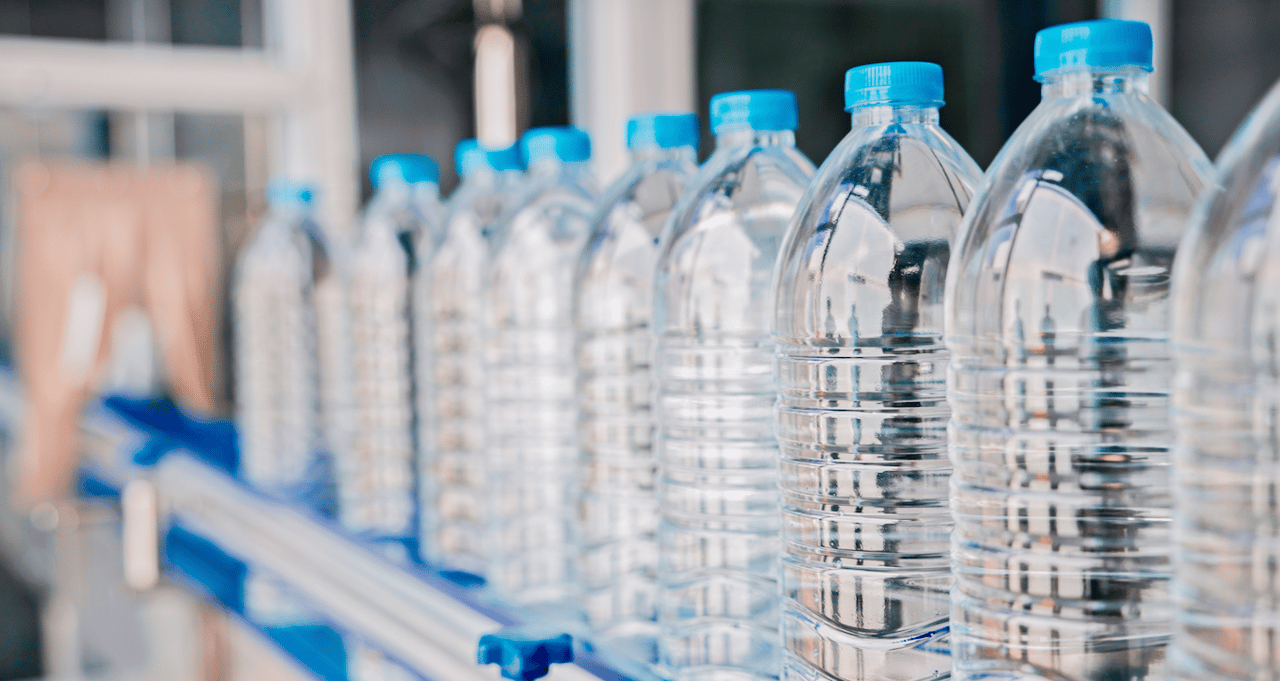
A biotech startup’s enzyme-driven approach to breaking down plastic waste is about to face its toughest test yet—in a factory setting.
Biotechnology companies developing enzymes for PET recyclingRhea's Factory Family-owned American water and beverage manufacturerNiagara Bottling LLCSelected to participate in the U.S. Department of Energy’s Industrial Technology Verification (ITV) program, managed by the Office of Industrial Technologies.
The project will validate Rhea’s enzymatic depolymerization platform, RheaCycle, under industrial operating conditions at the Niagara PET recycling facility in Vernon, California, with performance independently measured and verified by experts from the Lawrence Berkeley National Laboratory of the U.S. Department of Energy.
Nine projects have been selected.
The U.S. Department of Energy’s Industrial Technology Verification (ITV) program has selected nine projects nationwide, with a total funding of $3 million. Each project pairs technology developers with industrial host sites that install and operate the technologies under real-world production conditions.
Audrey Robertson, Assistant Secretary of the Department of Energy, stated that a major barrier to the industrial adoption of many promising technologies is the lack of reliable and impartial information on their performance among end users. “ITV is a cornerstone project that directly addresses this barrier.”
In Vernon, RheaCycle combines AI-designed enzymes with proprietary downstream separation processes to break down PET into two building blocks: purified terephthalic acid (TPA) and ethylene glycol (EG). Due to the enzyme’s selective action on PET, the process accepts a wide range of post-consumer feedstocks, including thermoformed PET, contaminated PET, residual streams from existing recycling lines, and polyester textiles. The recovered monomers are virgin-equivalent and can be repolymerized into new PET without any loss in quality, enabling continuous cycling and allowing these materials to be directly reintroduced into food-grade packaging.
Verify the integrated system
The project will validate an integrated system for processing PET streams at the Vernon plant, including the recycling of residues, off-spec materials, and thermoforming waste under industrial operating conditions. Energy efficiency is a core design metric for RheaCycle: enzymatic depolymerization operates at low temperatures and atmospheric pressure, and the validation will independently measure the energy and water consumption per kilogram of recycled monomers.
“Scaling this technology to commercial levels requires more than just sound science,” said Arzu Sandikci, CEO and co-founder of Rhea’s Factory. “It demands a federal program willing to fund independent verification, a national laboratory prepared to measure it, an industry partner like Niagara ready to host the initiative, and a startup that has already validated the science and developed industrial-scale operational processes. This project brings these four elements together, which is how new industries are built.”
Recent acquisitions
Niagara’s capabilities are built upon recent investments. In May 2026, Niagara acquired the Vernon recycling and packaging facility along with the rPlanet Earth brand, which converts PET into high-quality recycled PET sheets and pellets for Niagara’s packaging. The ITV project will install RheaCycle™ as a parallel line at the site to expand the range of PET that can be restored to food-grade quality, without requiring modifications to Niagara’s existing operations.
According to Rhea's Factory, these two methods are complementary. Mechanical recycling remains the most effective route for clean bottle streams, while enzymatic depolymerization creates additional pathways for streams outside mechanical specifications, increasing the share of collected PET, giving it a second life, and improving the efficiency of each processing pass. Cost was a design requirement for RheaCycle from the outset; the platform is built to make recycled PET competitive in terms of economics, quality, and environmental benefits.
Work begins
The Vernon plant in Niagara is undergoing site preparation, with installation and commissioning expected to take up to six months before the validation phase begins. These developments are poised to accelerate the commercial roadmap for the Rhea plant and strengthen the partnerships that have already formed around it.
Founded in 2024 and headquartered in Berkeley, California, Rhea's Factory develops enzymatic recycling solutions for plastics and synthetic fibers, starting with PET. Its RheaCycle platform leverages artificial intelligence to design enzymes and pair them with proprietary end-to-end processes that break down plastics into their original building blocks. The aim is to transform waste streams currently considered unrecyclable—from mixed and multi-layer packaging to textiles—into the materials of the future.
Founded in 1963 and headquartered in Diamond Bar, California, Niagara Bottling is a family-owned water and beverage manufacturer with over 50 plants operating across the United States, Mexico, Australia, and the United Kingdom, and more than 9,000 team members.
The Department of Energy’s ITV program is managed by its Office of Industrial Technology and supported by the Department of Energy’s national laboratories, with the goal of accelerating the deployment of high-impact technologies, optimizing industrial processes, increasing energy efficiency, and enhancing the competitiveness of U.S. industry in the evolving global market.
【Copyright and Disclaimer】The above information is collected and organized by PlastMatch. The copyright belongs to the original author. This article is reprinted for the purpose of providing more information, and it does not imply that PlastMatch endorses the views expressed in the article or guarantees its accuracy. If there are any errors in the source attribution or if your legitimate rights have been infringed, please contact us, and we will promptly correct or remove the content. If other media, websites, or individuals use the aforementioned content, they must clearly indicate the original source and origin of the work and assume legal responsibility on their own.
Most Popular
-
BASF Considers Raising Offer For Evonik
-
Lithium Carbonate Price Reaches Key Node at 100,000 Yuan/Ton! Listed Companies Rush to Lock Orders!
-

[Overseas News] Sumitomo Chemical Acquires Solvay's LCP Business! SK Chemicals Builds Circular Economy Model For Waste Banners!
-
[PLAS FOB Report] Rising Oil Prices Boost Polymer Market – PP and PE Prices Climb
-

Wanhua Chemical's Yantai 1.2 Million Ton Per Year Ethylene Phase II Plant To Halt Production For Maintenance Starting October 10