



Market share plummets, 3 million units evaporate! joint venture automakers face darkest hour
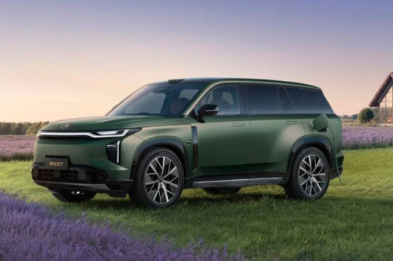
The combined market share of joint venture car companies is only 30%.
In 2025, domestic brands achieved a new high in market share at 69.5%. Conversely, the total market share of all joint venture car companies was reduced to only 30%.
Five years ago, in 2020, the situation was almost completely reversed, with Chinese brands' total market share only accounting for 38.4%.
Back then, the total sales of joint venture car companies in China reached 12.245 million units, but by 2025, they were only 9.167 million units, a loss of 3.078 million units.
In 2025, the multinational automakers capable of achieving growth are few and far between, and some are even succeeding through unconventional means.
FAW-Volkswagen: The Sole Joint Venture in the 1.5 Million Club
Among all joint venture car companies, FAW-Volkswagen is the only one with annual sales exceeding 1.5 million vehicles.
In 2025, FAW-Volkswagen's three brands achieved a total sales volume of 1.58 million vehicles, a year-on-year decrease of 4%, but managed to stabilize its foundation. Notably, FAW-Volkswagen Audi regained the top spot in luxury gasoline vehicle sales after six years. As for the Volkswagen brand, the core product matrix of Magotan, Tayron, and Sagitar continued to hold leading positions in their respective segments.
Having weathered 2025, FAW-Volkswagen finally welcomes reinforcements in 2026. Particularly anticipated are the new energy products equipped with the all-new CEA electronic and electrical architecture; FAW-Volkswagen's independently developed SOA architecture will also empower the Jetta brand's first pure electric vehicle; For the Audi brand, the Q5L and A6L are about to complete their replacements, making FAW-Volkswagen in 2026 worth looking forward to.
SAIC Volkswagen: A decline, but it held its ground.
1.024 million vehicles. Similar to FAW-Volkswagen, SAIC Volkswagen also held its ground despite the decline.
According to previous plans, SAIC Volkswagen must maintain its position in the million-unit club. Only by remaining in the million-unit club can it guarantee the health of its sales channels.
In 2025, SAIC Volkswagen strategically abandoned the ID.3, effectively losing a blockbuster model with annual sales of around 100,000 units, leaving them with almost exclusively gasoline-powered vehicles. However, thanks to the appeal of the Passat, Tiguan, and Lavida families, as well as the new vehicle offensive from the Audi brand with the A5L Sportback and E5, SAIC Volkswagen still maintained sales of over a million units and inadvertently achieved a historical first: after first achieving annual sales of one million in 2010, they remained in the million-unit club for the sixteenth consecutive year, ranking first among passenger car companies.
At the beginning of 2026, SAIC Volkswagen's ID. Era 9X has already been unveiled. SAIC Volkswagen, or rather, Volkswagen's most important reinforcement in China, is finally coming.
FAW Toyota: Third Consecutive Year of Growth
With 805,000 vehicles sold, a year-on-year increase of 0.6%, FAW Toyota experienced slight growth. However, it is still growth, and it is also the only joint venture car company to achieve continuous growth for three consecutive years.
Hybrid vehicles deserve the most credit for this. In this segment, Toyota's joint ventures have virtually no competitors. German and American automakers have no products, Chinese automakers are focusing on pure electric and plug-in hybrid vehicles, and Honda and Nissan models lag behind Toyota's hybrid technology, with brand appeal that cannot compare.
Fueled by Toyota's hybrid technology, FAW-Volkswagen's hybrid dual-engine vehicles achieved annual sales of over 380,000 units in 2025, a 14% year-on-year increase, accounting for 47% of total sales.
However, what's not ideal is that FAW Toyota's performance in the pure electric market is not outstanding. But the good news is that GAC Toyota, another joint venture of the Toyota group, has found a new path.
GAC Toyota: Paved a new path for FAW Toyota
With 756,000 vehicles sold, a year-on-year increase of 2.4%, GAC Toyota may outperform FAW Toyota in 2025.
GAC Toyota has not only maintained its base in gasoline and hybrid vehicles but also carved out new ground in the pure electric vehicle market.
As a brand-new model, GAC Toyota bZ3X has achieved a sales volume of over 70,000 units in ten months, even exceeding 10,000 units in sales for two consecutive months. This not only paved the way for subsequent models such as GAC Toyota bZ7, but also opened up new ideas for FAW Toyota and Toyota China.
GAC Toyota bZ3X proves that if joint ventures can closely integrate with the Chinese intelligent vehicle ecosystem, they can also create competitive new species.
SAIC-GM: Win! Not a small win, but a big win!
Another joint venture car company has achieved growth, and not just a small increase, but a significant jump of 22.9%, with sales reaching 535,000 vehicles—SAIC-GM's 2025 is simply the year of an atypical joint venture car company.
Similar to the aforementioned joint venture car companies, SAIC-GM's recovery is also based on gasoline vehicles, namely the Buick Regal, Envision, and GL8. However, thanks to the outstanding performance of the Chinese team, Buick's Envista's two new models – the L7 and the Century – have achieved a successful start, providing new impetus for the growth of the Buick brand.
It should be noted, however, that in addition to its solid foundation in gasoline vehicles and its new car offensive, SAIC-GM's recovery in 2024 was also due to the management's measures to protect dealers and reduce inventory pressure, which objectively led to a significant decline in wholesale sales and a relatively low sales base. This laid a "foundation" for substantial growth in 2025.
Anyway, SAIC-GM has returned to the 500,000-unit club. In 2026, the all-new Buick Envista SUV will debut, and it seems that SAIC-GM's "Envision" for the intelligent electric vehicle era is on its way.
BMW Brilliance: A Pyrrhic Victory
Before we get to the much-anticipated luxury car segment, a friendly reminder: considering that BMW Brilliance has not released sales figures, the sales figures for BMW China will be used here instead. The same applies to Beijing Benz later.
With 626,000 vehicles sold, a year-on-year decrease of 12.5%, BMW once again topped the German luxury car sales charts among the three major German luxury brands. The 3 Series and 5 Series sedans are definitely the backbone of BMW's success against the competition, with the 3 Series holding the sales crown for 15 consecutive months.
In the SUV segment, the X3 and X5 continue to perform well. Especially the BMW X5, with an official starting price of nearly 600,000 yuan for a gasoline car, maintains monthly sales of over 5,000 units. Sales even exceeded 7,000 units in December last year, demonstrating that BMW's brand appeal remains considerable.
In 2026, BMW's new car offensive is also highly anticipated, especially in the field of new energy vehicles, with the domestically produced long-wheelbase version of the New Generation BMW iX3 scheduled for its global premiere in the first half of 2026.
Additionally, there are reports that the next-generation 3 Series is expected to be released in 2026, and finally it won't have the big kidney grille design! A renaissance!
Beijing "Benz": The more expensive it is, the better I am.
Delivering over 575,000 new vehicles, a 19% decrease, Mercedes-Benz's 2025 performance is indeed less than ideal. However, when looking at the luxury car market of 400,000 RMB and above, even exceeding a million RMB, Mercedes-Benz still maintains its leading position.
For example, deliveries of the Mercedes-Maybach GLS SUV in China increased by nearly 14% year-on-year, despite the suggested retail price reaching 1.498 million yuan. Isn't it amazing? The higher the unit price of a market segment, the better Mercedes-Benz performs and the stronger its dominance. However, outside of the ultra-luxury segment, the rise of Harmony Intelligent Mobility, especially AITO, has indeed impacted Mercedes-Benz in the luxury car segment.
There's a structural problem here: locally-produced Beijing Benz models aren't selling well, while higher-end imported Mercedes-Benz luxury cars are holding strong. Imported cars are becoming increasingly important in Mercedes-Benz China's sales structure.
Of course, it cannot be ignored that some of Beijing Benz's high-volume products are nearing the end of their life cycle. Throughout 2025, the only truly significant new model is the all-electric CLA.
However, before 2026, Mercedes-Benz will usher in a new product offensive. The all-new pure electric GLC is already on the way, and the domestically produced long-wheelbase GLE is also highly anticipated. BMW X5's good days may be numbered.
GAC Honda: Finished pooping
Marking the fifth consecutive year of decline, GAC Honda China experienced a further drop of over 20% in 2025, with sales plummeting to just 351,000 units. Frankly, this volume is becoming precarious for GAC Honda.
More dangerous than the collapse in sales is the complete lack of effect from GAC Honda's new product offensive. After the P7, designed by GAC Honda for the Chinese market, was launched in 2025, market feedback was lackluster, with monthly sales remaining in the three-digit range from March to October.
In contrast, Dongfeng Nissan N7 and GAC Toyota bZ3X have already achieved significant success in terms of market presence and product methodologies.
If GAC Honda still relies on classic models like the Accord and Breeze to maintain its volume, not only will Dongfeng Honda face challenges, but the future of Honda China as a whole may be uncertain.
GAC Honda colleagues, hurry and learn from the Chinese team at GAC Toyota.
Dongfeng Honda: Brothers in Misery
Similar to GAC Honda, 2025 has also been a painful year for Dongfeng Honda: sales were also in the 300,000+ range, with a year-on-year decline of over 20%.
The GAC Honda P7 didn't take off, and the Dongfeng Honda S7, built using the same methodology, is unlikely to fare any better.
However, just as GAC Honda should learn from the GAC Toyota bZ3X team, the Dongfeng Honda team should quickly consult with the Chinese team at Dongfeng Nissan to figure out how to create a blockbuster. While the CR-V can still hold on in the SUV market, now is the time to hurry up and get to work.
Dongfeng Nissan: Dawn is Breaking
Compared to Dongfeng Honda, Dongfeng Nissan is performing significantly better. With 600,000 units sold, although experiencing a year-on-year decline of 4.9%, as mentioned earlier, with the emergence and rapid sales growth of the Dongfeng Nissan N7, this joint venture has found a methodology for creating blockbuster models in China. Relying on the Chinese intelligent vehicle ecosystem to develop products, the Dongfeng Nissan N6 has also achieved a successful start.
In the traditional gasoline vehicle segment, Sylphy continues to lead the gasoline sedan market, Teana's performance remains relatively stable, and even the previously marginalized X-Trail has begun to recover, with monthly sales once exceeding 6,000 units.
In 2026, the NX8, built with a new methodology, is on its way. This all-new pure electric SUV, similar in size to the NIO ES6, is expected to help Dongfeng Nissan fill the gap in the pure electric SUV segment.
Volvo: Sheltered by the shade of Geely.
Strictly speaking, Volvo can't be considered a joint venture brand, but it's not quite a Chinese brand either, so let's just put it here for now.
Volvo in 2025 also experienced a mixed bag, with 149,000 vehicles sold, a 4% year-on-year decrease. However, like GAC Toyota and Dongfeng Nissan, Volvo also saw hope.
In September, Volvo launched its first PHEV model, the XC70, which immediately showed the potential to be a hit. By December, its monthly sales had reached nearly 5,000 units, making it the best-selling model in Volvo's entire lineup. The reason behind this success is undoubtedly Volvo's new SMA Super Hybrid Architecture. However, the SMA architecture is reportedly an evolution of the CMA platform, which has already been used in several Lynk & Co models.
You know, Geely Group has a vast arsenal of equipment, whether it's powertrain units, in-car entertainment systems, or intelligent driving solutions, Geely has it all. See that? That's the importance of having a good Chinese "father" (backer/supporter).
Beijing Hyundai: Not only alive, but also quite wild.
In 2025, the biggest surprise among joint venture car companies came from Beijing Hyundai, with 210,000 vehicles sold, a year-on-year increase of 14.8%, second only to SAIC-GM.
In the past few years, Beijing Hyundai was always in the news for selling factories, but surprisingly, it's doing quite well and being quite aggressive in 2025.
Behind the high sales and high growth, "problems" do exist. Because Beijing Hyundai has already started its export business, only Beijing Hyundai itself knows how much of these sales are consumed in the Chinese market and how much is exported.
It's worth mentioning that Hyundai Motor Group's sales reached 7.27 million units in 2025, continuing to hold the third position globally and further narrowing the gap with Volkswagen Group, which ranks second. However, since 2016, Hyundai Motor Group's performance in China has steadily declined. Despite this, as the world's third-largest automaker, Hyundai Motor Group has consistently been unwilling to abandon the Chinese market.
According to reports, Hyundai Motor Group's current strategy is that even increasing its market share by just 1% in China, the world's largest market, is more effective than increasing investment in a third market.
Yueda Kia: Wild Card Plus
As another joint venture car company of Hyundai Motor Group in China, Yueda Kia achieved a year-on-year growth of 2.3% in 2025, with sales reaching 253,000 units, surpassing Beijing Hyundai.
Unexpectedly, Yueda Kia is doing quite well even after Dongfeng withdrew its investment, achieving growth for two consecutive years. The reason behind this is almost identical to Beijing Hyundai: using export business to drive the company's production and sales growth. Official data shows that since starting its export business in 2018, Yueda Kia has cumulatively exported 537,000 vehicles, with an export value of $5.83 billion, ranking among the top joint venture car companies in China in terms of export sales.
Moreover, Yueda Kia not only exports complete vehicles, but also has cumulatively exported over 478,000 engines, with 122,000 units exported in 2025 alone.
Given Hyundai's strong position in the global market, using exports to drive Yueda Kia's domestic business, Kia executives may not be joking: "I'll wait for the Chinese car companies to burn out first, and then I'll come in to grab the market."
【Copyright and Disclaimer】The above information is collected and organized by PlastMatch. The copyright belongs to the original author. This article is reprinted for the purpose of providing more information, and it does not imply that PlastMatch endorses the views expressed in the article or guarantees its accuracy. If there are any errors in the source attribution or if your legitimate rights have been infringed, please contact us, and we will promptly correct or remove the content. If other media, websites, or individuals use the aforementioned content, they must clearly indicate the original source and origin of the work and assume legal responsibility on their own.
Most Popular
-
Supply Extremely Tight! LG Chem Declares Force Majeure on Export Contracts for Di-Octyl Terephthalate (DOTP)
-
Huntsman Introduces “War Surcharge” Amid Shipping Disruption and Soaring Energy Costs, Global MDI Prices Continue to Rise
-
Deadly Impact: Hormuz Strait Blockade Sparks Shortage of Plastic Raw Materials, Threatening Shutdowns at Japanese and Korean Chemical Plants
-

LG Chem Declares Force Majeure on DOTP Exports! SABIC Joins Five Giants to Redefine EV Safety
-
Tao Lin: Tesla’s Supercharger Stations in China Surpass 2,500


