Major Hot Topic! United States Tariff Refunds Launched; South Korea Limits Raw Material Stockpiling; Iran’s Petrochemical Export Ban Takes Effect!
Major Tariff News! Starting Tomorrow, the U.S. Begins Refunds!
On April 20, the United States will initiate the relevant tariff refund process.
U.S. Customs and Border Protection plans to deploy the tariff refund system using a phased development approach, with additional features for more complex business scenarios to be added in subsequent phases.
The U.S. Supreme Court on February 20 ruled that the International Emergency Economic Powers Act did not authorize the president to impose large-scale tariffs. On March 4, a U.S. International Trade Court judge ruled that U.S. Customs and Border Protection should not rely on the International Emergency Economic Powers Act to collect tariffs. This means that tariffs previously imposed under the law must be refunded.
The U.S. Customs and Border Protection (CBP) has launched an electronic refund system called CAPE. Unlike the traditional model of applying for and reviewing each transaction individually, this system will automatically aggregate eligible tariffs and refund them directly to enterprises via electronic transfer, significantly improving processing efficiency. The target of this tariff refund is the "importer of record," which refers to the business entity responsible for the tariffs in the customs declaration. This means that ordinary consumers will not directly receive this money.
Currently, this sum of money is enormous, and refunding it won't be easy. First, it won't all arrive overnight. According to the plan, the system will process it in stages. On the 14th, U.S. Customs and Border Protection stated that as of April 9, approximately 56,497 importers had completed the process to receive electronic refunds of tariffs affected by the court ruling, totaling $127 billion. Analysts noted that the remaining refunds may take even longer. Moreover, some complex cases—such as tariffs that have already been settled—might require manual intervention or even legal proceedings. In other words, this "refund bonanza" is also a test of endurance.
Moreover, this money is not "automatically credited." Companies need to actively register in the system and submit relevant declarations; otherwise, they might miss out on this "historic red envelope." It is reported that although tens of thousands of companies have applied, compared to the total, many are still observing or hesitating. Particularly, small and medium-sized enterprises, some of which find the process complex and the cost not low, have simply chosen to "adopt a Zen attitude and lie flat."
Finally, regarding refund timelines, authorities have not yet provided a uniform processing period. Available information indicates that some refunds may be completed in approximately 45 days, but the overall timeline still depends on the phased implementation, with some companies potentially requiring longer. Additionally, on the regulatory front, the U.S. Court of International Trade has required the government to continually submit progress reports, such as disclosing implementation status in late April.
Economists say that this tariff refund by the U.S. is both a correction of past policies and a reminder for future policies. For businesses, it is an opportunity to alleviate pressure and improve their financial situation; for the market, it is a source of liquidity that cannot be ignored; and for policymakers, it is a real-life lesson about the boundaries of power and institutional constraints.
South Korea announces: Prohibition of stockpiling 7 types of raw materials including ethylene, propylene, and benzene.
The Middle East conflict has led to a severe raw material shortage crisis in South Korea's petrochemical industry. The Ministry of Industry, Trade and Energy and the Ministry of Finance and Economy announced on the 14th that starting from April 15, the stockpiling of seven basic petrochemical raw materials made from naphtha will be prohibited.
According to regulations set by the South Korean government, seven basic petrochemical feedstocks—ethylene, propylene, butadiene, benzene, toluene, xylene, and other fractions—produced from naphtha are designated as prohibited items for stockpiling. Enterprises manufacturing or importing these seven feedstocks must maintain inventory levels no higher than 80% of their levels from the previous year.
The South Korean government stated that for products produced using basic chemical raw materials, if there is a risk of supply and demand imbalance for any raw materials or products, it will expand the scope of stockpiling bans through inter-departmental consultations to quickly respond to market changes.
Furthermore, if the supply-demand situation remains tight even after implementing measures to ban hoarding, the Korean government will consider imposing emergency controls on the production, release from storage, and sales of the relevant products.
According to data, 77% of South Korea's naphtha supply comes from the Middle East. Since the outbreak of the Middle East conflict on February 28, which led to supply shortages due to the blockade of the Strait of Hormuz, naphtha prices have surged significantly.
Iran suspends exports of petrochemical products to safeguard domestic supply.
On April 16, according to foreign media outlets including The Chosun Ilbo, Iran announced a complete halt to all exports of petrochemical products, citing severe domestic shortages amid the ongoing U.S. naval blockade of the Strait of Hormuz.
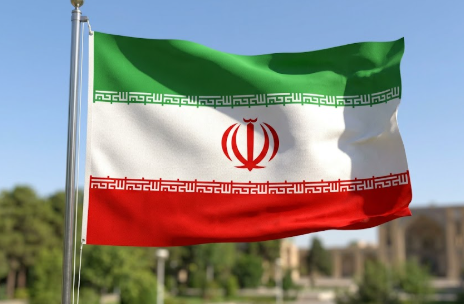
Image source: Internet
On the 15th, overseas media outlets including CNN cited a statement from Iran’s National Petrochemical Company (NPC), reporting that Iran will ban all overseas transportation of petrochemical products until further notice. NPC stated that “protecting the domestic industrial sector and consumers, which have been damaged by war, is the top priority,” and emphasized that it would “completely block the direct or indirect overseas export of products.”
Iran is a key supplier of major petrochemical raw materials such as polyethylene (PE) and polypropylene (PP) globally, and this decision is expected to have a profound impact on the global market. The turmoil in the Middle East has already led to a contraction in the global supply chain, and now, with the added negative factor of Iran's export disruption, there is a widespread concern in the market that the prices of petrochemical products will skyrocket.
【Copyright and Disclaimer】This article is the property of PlastMatch. For business cooperation, media interviews, article reprints, or suggestions, please call the PlastMatch customer service hotline at +86-18030158354 or via email at service@zhuansushijie.com. The information and data provided by PlastMatch are for reference only and do not constitute direct advice for client decision-making. Any decisions made by clients based on such information and data, and all resulting direct or indirect losses and legal consequences, shall be borne by the clients themselves and are unrelated to PlastMatch. Unauthorized reprinting is strictly prohibited.
Most Popular
-
From Compliance to Competitiveness: Alpla’s Circular Design and Recycling Practices Driven by PPWR
-
Deadly Impact: Hormuz Strait Blockade Sparks Shortage of Plastic Raw Materials, Threatening Shutdowns at Japanese and Korean Chemical Plants
-

BASF Delivers First Batch of Innovative Cathode Materials for Semi-Solid-State Batteries to Weilan New Energy
-
Overseas News: PPG Announces Global 20% Price Increase; Sika Launches High-Performance Polyamide (PA) New Product; AIP Announces Nearly $10 Billion Acquisition
-

【Overseas News】Oil prices may surge to $120; Shell plans $83 billion acquisition of bp; Eu proposes cutting energy tax