Lotte Chemical Divests Basic Chemicals to Stem Bleeding Can Four Growth Poles Support New Valuation
On April 16, Lotte Chemical officially disclosed its business restructuring and transformation roadmap at the CEO Investor Conference in Seoul. The company's president clearly stated that it will enhance competitiveness by optimizing its basic chemicals business, while establishing four growth pillars: advanced materials, fine chemicals, battery materials, and hydrogen.
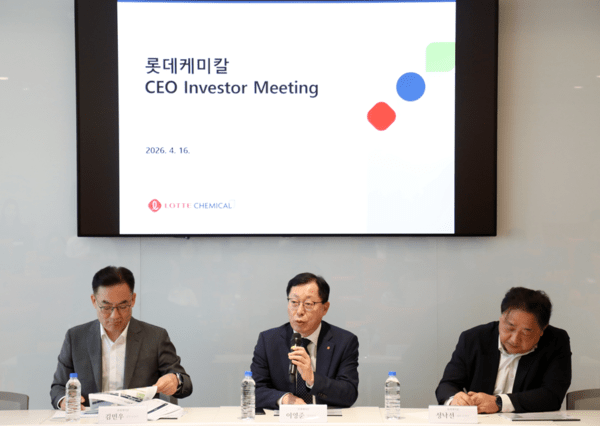
The base chemicals segment has long been plagued by global overcapacity and weak demand, making it the biggest drag on the group's performance. In response, the company will hold an extraordinary general meeting on April 30 to vote on spinning off DaeSan's base chemicals business into a new independent company. The new company is scheduled to be established on June 1 and will officially merge with HD Hyundai Chemical in September. The merged entity will be equally owned, with 50% held by Lotte Chemical and 50% by HD Hyundai Oilbank.
Secondly, regarding the Lishui business, Lotte Chemical has submitted a restructuring plan, proposing to establish a tripartite joint venture with Hanwha Solutions and DL Chemical, each holding 33.3% of the shares, to jointly operate the basic chemical assets at the Lishui base, aiming to share risks and achieve cost reduction through collaboration.
While divesting from traditional businesses, Lotte Chemical is concentrating its resources on four high-value-added areas.
In terms of advanced materials, Lotte Engineering Plastics' factory in Yuchuan will operate at full capacity starting from the second half of this year. The overall capacity utilization rate of the global engineering plastics industry is about 70%. Lotte Chemical, against the trend, is operating at full capacity, either securing orders for differentiated products or leveraging scale effects to reduce costs and compete for market share.
Fine chemicals represent the segment with the greatest "cash cow" potential at present. Lotte Chemical plans to expand the production capacity of its pharmaceutical coating product, AnyCoat®, which is used for coating capsules and tablets—a mature and stable niche market that generates predictable cash flows.
The real growth potential lies in semiconductor chemicals TMAC (tetramethylammonium chloride) and TMAH (tetramethylammonium hydroxide)—the former being a key raw material for developers and the latter a critical material in photolithography processes. The company plans to increase capacity, enhance purity, and develop specialty products. As an indispensable part of South Korea's domestic semiconductor supply chain, this segment stands to deliver substantial profit growth over the next three years if it successfully captures the rising material demand driven by wafer fab expansions.
The battery materials sector encompasses both existing and next-generation technologies. Lotte Chemical will expand its circuit foil business for AI applications and broaden its high-end copper foil product portfolio. As demand for high-performance printed circuit boards (PCBs) surges in AI computing infrastructure, high-end copper foil has emerged as a niche growth segment. In the next-generation materials domain, the company has explicitly targeted the development of solid-state electrolytes and lithium iron phosphate (LFP) cathode materials. Under this combined short- and long-term strategy, high-end copper foil is expected to generate revenue within one to two years, whereas solid-state electrolytes and LFP cathode materials remain in the development phase, with no clear timeline for mass production yet announced.
Hydrogen energy is the sector with the longest growth cycle among the four key growth poles. Lotte Chemical plans to build a full-value chain for hydrogen and ammonia, advancing commercialization in phases. Recently implemented projects include supplying hydrogen from domestic by-product sources to the Dashaan Hydrogen Distribution Center and the Lotte SK ENEROOT fuel cell power plant—both representing executable infrastructure investments.
Medium- and long-term planning involves the transportation and cracking of clean hydrogen and ammonia for ammonia fueling and ammonia-hydrogen blended power generation, which depends on the maturity of South Korea's hydrogen infrastructure and the implementation of relevant policy subsidies. Lotte Chemical can leverage its existing by-product hydrogen resources to gain a strategic advantage in the low-carbon transition, but in the short term, this segment will contribute very little to revenue and profit, serving more as a strategic reserve for 2030.
Lotte Chemical’s transformation indicates that traditional basic chemicals are rapidly being phased out of core asset portfolios. It’s not just Lotte—other Korean chemical companies such as Hanwha and DL Chemical are taking similar steps. Against the backdrop of global overcapacity in basic chemicals, “de-commoditization” has become a shared strategic choice among leading Korean chemical firms. Lotte Chemical is now pursuing a path many traditional chemical companies have attempted but not always successfully navigated: using subtraction to stem losses and addition to boost valuation. Clearly reducing the share of basic chemicals from 62% to below 40% represents the subtraction, while the successful implementation and scaling of its four growth pillars will ultimately determine the success of this transformation.
【Copyright and Disclaimer】The above information is collected and organized by PlastMatch. The copyright belongs to the original author. This article is reprinted for the purpose of providing more information, and it does not imply that PlastMatch endorses the views expressed in the article or guarantees its accuracy. If there are any errors in the source attribution or if your legitimate rights have been infringed, please contact us, and we will promptly correct or remove the content. If other media, websites, or individuals use the aforementioned content, they must clearly indicate the original source and origin of the work and assume legal responsibility on their own.
Most Popular
-
From Compliance to Competitiveness: Alpla’s Circular Design and Recycling Practices Driven by PPWR
-
BASF Delivers First Batch of Innovative Cathode Materials for Semi-Solid-State Batteries to Weilan New Energy
-

Deadly Impact: Hormuz Strait Blockade Sparks Shortage of Plastic Raw Materials, Threatening Shutdowns at Japanese and Korean Chemical Plants
-
Overseas News: PPG Announces Global 20% Price Increase; Sika Launches High-Performance Polyamide (PA) New Product; AIP Announces Nearly $10 Billion Acquisition
-
Driving Intelligent Upgrades In Rubber And Plastics Industry! Preview Of Concurrent Activities At Chinaplas 2026 International Rubber & Plastics Exhibition (Part 2)