



Hormuz Strait Sudden Crisis! Trump: Launch Intense Air Strikes! Global Supply Worse, Oil Prices Go Wild
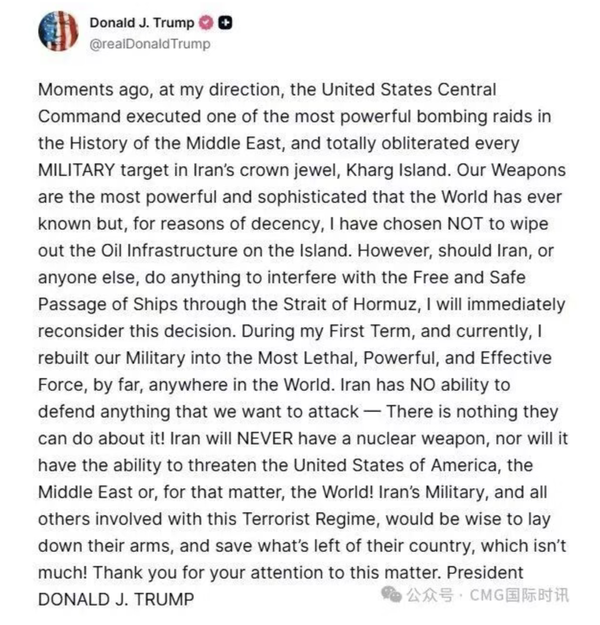
On March 13 local time, US President Trump announced that US forces had launched a "fierce air strike" on military targets at the Khark island, a key oil export hub in Iran, a move that completely shattered the fragile balance in the Middle East and pushed the global energy market into a new period of turmoil.
As the U.S.-Iran conflict enters its fifteenth day, the straits of Hormuz navigation crisis, Iran's retaliatory actions, and the global crude oil supply gap have intertwined, causing international oil prices to remain at high levels, and the global energy landscape is undergoing profound adjustments.
U.S.-Iran military confrontation escalates, with the Strait of Hormuz becoming the focal point of the standoff.
As Iran's largest oil export base, Khark Island bears 90% of Iran's national oil exports. Although the U.S. air strike did not destroy the island's oil infrastructure, Trump's threat has already intensified market concerns about oil supply— he explicitly stated that if Iran or other parties interfere with navigation through the Strait of Hormuz, he would reconsider destroying the island's oil facilities.
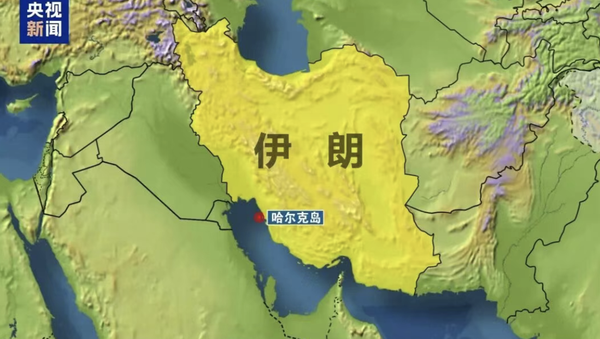
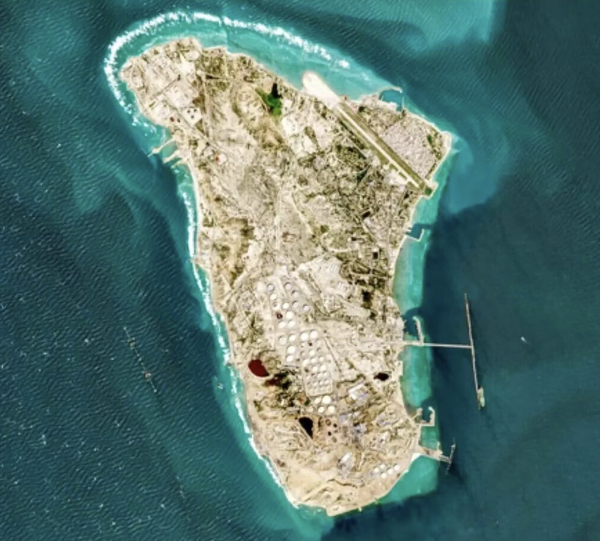
The image shows the Hengam Island, Iran
According to Xinhua News Agency, the Strait of Hormuz, as the only waterway from the Persian Gulf to the open sea, is a must-pass route for crude oil maritime exports from Middle Eastern oil-producing countries, and its navigation safety directly determines the stability of global crude oil supply.
Shortly after the U.S. air strikes, Turkish Minister of Transport and Infrastructure Abdulkadir Uraloğlu confirmed that on March 13, the Turkish vessel “Rozana” had received Iranian approval to transit the Strait of Hormuz. However, 14 Turkish vessels remain stranded on the Persian Gulf side, with 171 crew members aboard. Turkey has issued the highest-level security warning and continues to engage in communication with Iran regarding navigation matters.
Previously, Iran's new Supreme Leader, Mojtaba Khamenei, stated that Iran would not abandon its pursuit of revenge and would continue to use the blockade of the Strait of Hormuz as a countermeasure, while Iran's Deputy Foreign Minister also clearly indicated that only vessels from certain countries would be permitted to pass through the strait.
Iran’s retaliatory operation was swift and intense. According to CCTV News, from March 13 to 14, the Islamic Revolutionary Guard Corps (IRGC) of Iran continuously launched the military operation “True Promise-4.” On March 13 alone, Iran fired 30 ultra-heavy ballistic missiles at specific targets in Israel, destroying Israel’s critical aerospace surveillance system—a strike described as the most intense aerial assault against Israel to date.

On the evening of the 13th, the missile launch footage from the 46th round of the "True Promise-4" operation. Photo source: Islamic Revolutionary Guard Corps
In addition, Iran launched attacks on multiple U.S.-Israeli military targets, including the U.S. airbase in Udeid, Qatar, and the Sultan Abdulaziz airbase in Saudi Arabia, causing five U.S. Air Force refueling aircraft to be damaged at the Saudi base.
Facing Iran's continued retaliation, the United States has further escalated its military deployment. According to reports from CCTV News and Xinhua News Agency, the Pentagon has approved sending an Amphibious Ready Group and its attached 5,000-strong Marine Expeditionary Unit to the Middle East, with the USS Tripoli, an amphibious assault ship based in Japan, currently en route to reinforce the region.
Trump even said, "War will continue as needed," and emphasized that the US military focuses on destroying Iran's missiles and drones and their manufacturing factories.
Geopolitical conflicts dominate oil price trends; the annual high is likely already reached.
The escalation of US-Iran tensions directly pushed international oil prices to surge.
As of the close on March 13, light sweet crude oil futures for April delivery on the New York Mercantile Exchange rose by $2.98, settling at $98.71 per barrel, up 3.11%. Brent crude oil futures for May delivery on the London market increased by $2.68, closing at $103.14 per barrel, up 2.67%. Brent crude has closed above $100 per barrel for two consecutive trading days, with a weekly gain of approximately 11.3%, and briefly surpassed $103 during the session, reaching its highest level since the onset of the current conflict.
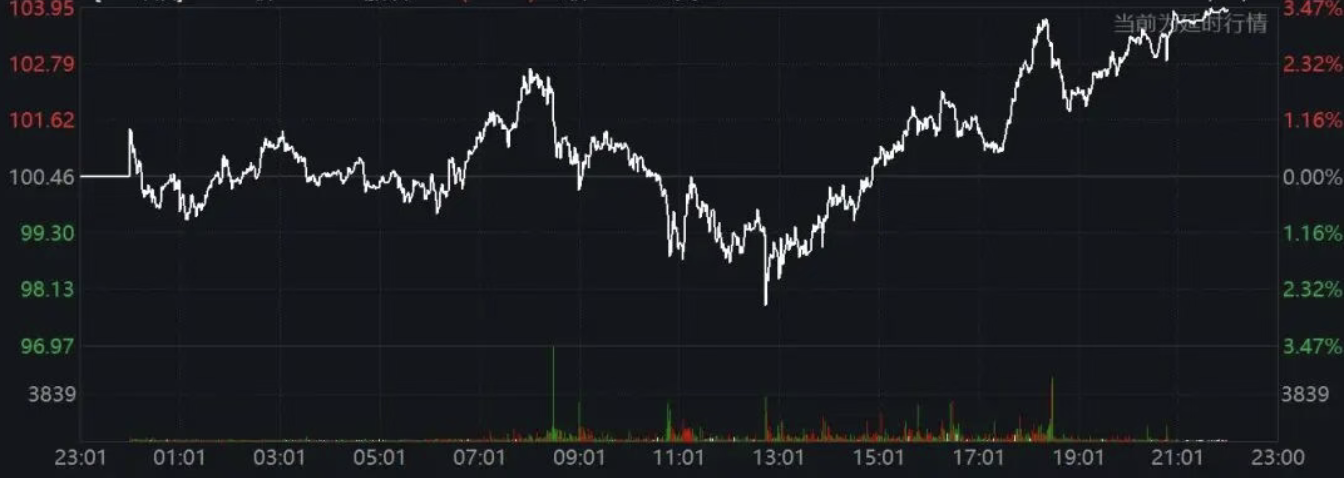
Looking back at this round of oil price movements, geopolitical shocks have completely disrupted the market's previous supply and demand expectations.
In 2025, international oil prices were dominated by fundamental supply and demand factors, with the annual average price of Brent crude at $68.19 per barrel, the lowest in five years. Entering 2026, the market generally expected the oil market to enter a period of deep supply surplus, with Goldman Sachs predicting an annual average price of $56 per barrel for Brent crude. However, since March 1, with the escalation of tensions in the Middle East, Brent crude rose nearly 13%, reaching a high of $119.50 per barrel on March 9, then briefly dropped after Trump's statement that the war might end, and again broke through $100 per barrel on March 13.
From a technical and institutional forecast perspective, oil prices from March to July will exhibit a pattern of "rallying, pulling back, and then rebalancing." Fitch Ratings notes that, under its base case scenario, oil prices in March will remain in the $90–$100 range, gradually declining to the mid-$60s in the second half of the year. Domestic securities firms have raised their 2026 Brent crude average price forecast to $78 per barrel. Although Goldman Sachs maintains its annual average price forecast at $56, it acknowledges that geopolitical risk premiums are providing short-term support to oil prices.
Overall, oil prices are expected to remain in a high range of $95–$105 during mid-to-late March, potentially rising to $105–$115 in April, then gradually declining to $85–$95 in May–June. If the Strait of Hormuz resumes normal passage by the end of April, oil prices could further drop to $75–$85 by July.
Notably, the $119.50 on March 9 is likely to become the annual high for oil prices. This price has reached the highest level since July 2022, fully pricing in the extreme scenario of "Hormuz blockade + four countries' production cuts." Unless the conflict escalates into a full-scale war, oil prices are unlikely to surpass the previous high. It is expected that the average international oil price in 2026 will fall within the range of $75-$80, significantly higher than the pre-war market expectation of around $60.
Currently, global crude oil supply is facing multiple pressures, with disrupted navigation through the Strait of Hormuz becoming the key bottleneck.
According to the latest data from the International Energy Agency, oil-producing countries in the Persian Gulf have been forced to cut production by over 10 million barrels per day due to shipping disruptions. Saudi Arabia, Iraq, the UAE, and Kuwait together have reduced output by more than 6.7 million barrels per day, accounting for approximately 6% of global supply. Iraq has seen the steepest decline, with production plummeting by 70% from a pre-conflict level of 4.3 million barrels per day to 1.3 million barrels per day.
To alleviate supply pressure, countries have adopted various response measures, but with limited effectiveness.
The U.S. Department of Energy has launched its second-largest strategic petroleum reserve (SPR) drawdown program in history. On March 13, it issued its first tender, covering 86 million barrels of crude oil—50% of the total 172-million-barrel release plan—using a “borrow-oil-and-return-oil-plus-premium” swap mechanism. The release is expected to begin entering the market next weekend, at an average rate of approximately 1.43 million barrels per day. Combined with the International Energy Agency’s (IEA) coordinated release of 400 million barrels, this theoretically creates a daily supply increment of roughly 4.76 million barrels. However, against the backdrop of a near-total disruption—nearly 20 million barrels per day—of crude oil shipments through the Strait of Hormuz, this volume remains woefully inadequate. In essence, the SPR drawdown merely “relocates inventory” and does not add new global crude oil production capacity, thus failing to address the core issue: the inability to export crude oil from the Persian Gulf.
The lifting of restrictions on Russian floating storage has become a key factor influencing oil prices. According to CNBC, as of March 12, nearly 124 million barrels of Russian crude oil remained stranded at sea globally. Combined with sanctioned crude from Iran and Venezuela, total offshore inventories have reached 375 million barrels—enough to cover approximately 5–6 days of global supply.
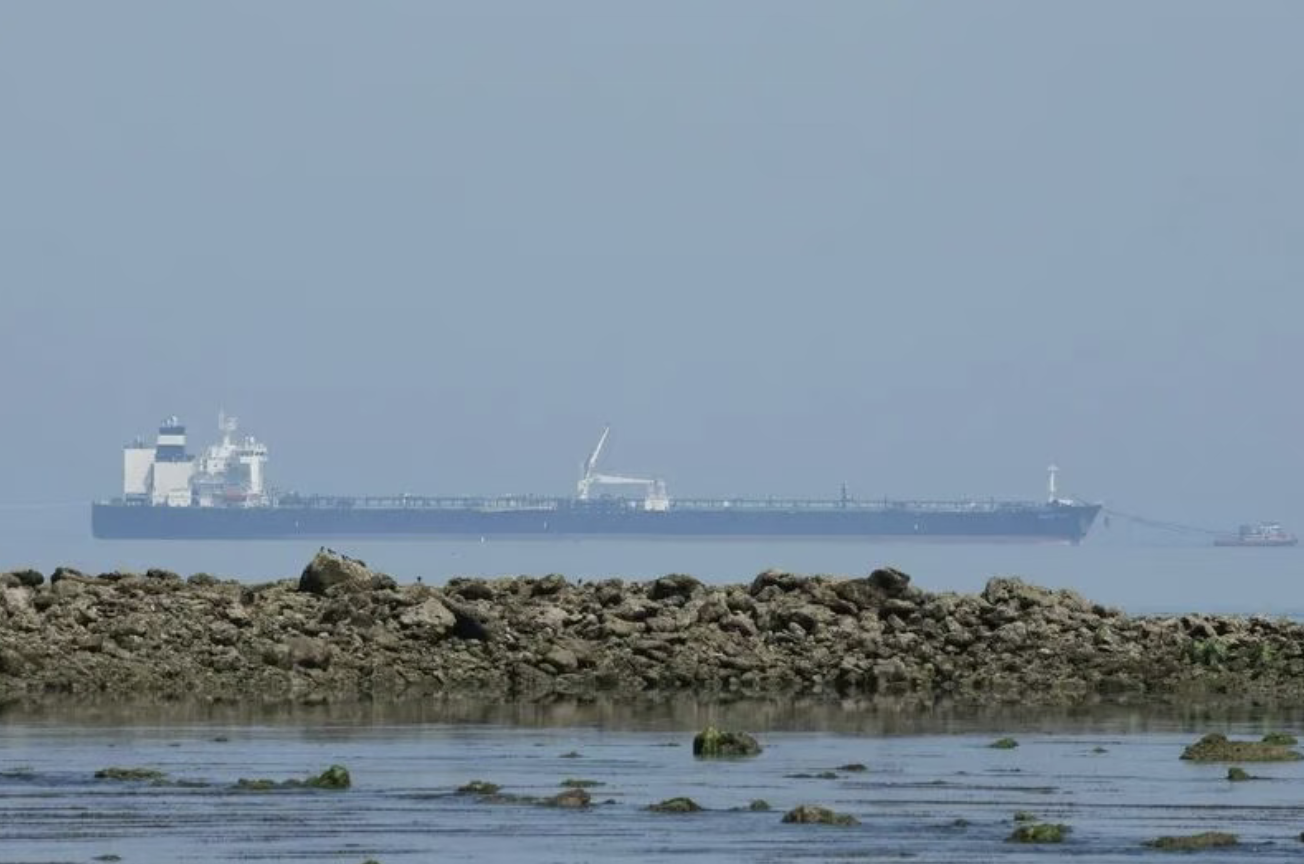
In the Gulf of Arabia, the Russian oil tanker MT Fuji, carrying Russian crude oil, is awaiting unloading off the coast of Gujarat, India. Photo source: IC photo
On March 12, U.S. Treasury Secretary Bessent announced a temporary authorization allowing purchases of Russian crude oil stranded at sea, with the waiver valid until April 11. India quickly emerged as the biggest beneficiary, expected to receive approximately 65 million barrels of Russian crude that it previously could not buy. Goldman Sachs’ commodities research team noted that every 100 million barrel reduction in floating crude inventories would lower Brent crude prices by $3 to $4 per barrel; if this sanctioned crude is widely released, oil prices could face downward pressure of over $10 per barrel.
The capacity bottlenecks of alternative pipelines have further highlighted the tight supply situation. The Saudi East-West pipeline network has a total designed capacity of about 7 million barrels per day, but the loading capacity at the Yanbu port terminal is limited to 4 million barrels per day, far below the pre-war transportation volume of 6 million barrels per day through the Strait of Hormuz. The Abu Dhabi crude oil pipeline in the UAE currently has a capacity of about 1.5 to 1.8 million barrels per day, with an utilization rate of 71%, leaving little spare capacity. Oman, due to the ongoing conflict, has instructed all vessels to evacuate the main oil export port of Fahaheel, posing a risk to its daily crude oil exports of 1 million barrels. Overall, the combined capacity of alternative pipelines is less than 6 million barrels per day, accounting for less than 30% of the pre-war throughput through the Strait of Hormuz.
Compounding the situation, on March 12, the Brazilian government announced a 12% export tax on crude oil, while implementing a zero tax rate on diesel imports and domestic sales and imposing a 50% export tax on diesel exports. According to data from Brazil’s National Agency of Petroleum, Natural Gas and Biofuels (ANP), Brazil exported an average of approximately 1.7 million barrels of crude oil per day in 2024. The new tax policy will raise export costs, dampen export incentives, tighten supply in the Atlantic Basin, and further push up the global crude oil price floor. This measure will also reshape global crude oil price differentials, widening the discount on Brazilian crude and enhancing the relative value of West African and U.S. crude, significantly increasing import costs for China, a major buyer of Brazilian crude.
Escalating conflicts lead to Escalating conflicts lead to ongoing uncertainty in the energy market.
Currently, the US-Iran conflict has entered its second week, and statements from all parties as well as the situation on the ground indicate that the war will continue.
Trump ordered a "fierce airstrike" on Iran's Kharg Island, and the U.S. Defense Secretary issued a hawkish statement saying they plan to destroy all of Iran's threatening military capabilities. Iran has continued its counterattacks, with Jaber, an advisor to the commander of Iran's Islamic Revolutionary Guard Corps, claiming that Iran has destroyed 70% of U.S. military bases and command centers in the Middle East. Israel also stated it is preparing for continued military operations against Iran over the coming weeks.
Three key factors will determine the course of the conflict: First, Iran’s command system remains intact, and its retaliatory capability is still operational; second, the blockade of the Strait of Hormuz possesses “physical rigidity,” making full restoration of maritime traffic difficult in the short term; third, constrained by midterm election pressures, the United States has adopted a strategy of “naval and aerial blockade combined with sustained air strikes,” implying that geopolitical uncertainty may become the norm over the next 3–12 months. Even if the Strait of Hormuz resumes full transit by the end of April, the accumulated export shortfall of approximately 400 million barrels over March and April—including both production losses and inventory buildups—will require an additional 2–3 months to absorb, meaning supply tightness will persist throughout the entire second quarter.
ING previously stated, "The only way to keep oil prices sustainably low is to ensure oil can flow smoothly through the Strait of Hormuz."
Currently, the U.S.-Iran confrontation continues to escalate, and the global crude oil supply shortfall is difficult to fill quickly. The limitations of countries’ response measures are becoming increasingly evident, and the pattern of high and volatile international oil prices is unlikely to reverse in the short term. For the global energy market, addressing supply shocks caused by geopolitical conflicts and ensuring energy security will be a shared challenge facing all countries in the coming period.
【Copyright and Disclaimer】This article is the property of PlastMatch. For business cooperation, media interviews, article reprints, or suggestions, please call the PlastMatch customer service hotline at +86-18030158354 or via email at service@zhuansushijie.com. The information and data provided by PlastMatch are for reference only and do not constitute direct advice for client decision-making. Any decisions made by clients based on such information and data, and all resulting direct or indirect losses and legal consequences, shall be borne by the clients themselves and are unrelated to PlastMatch. Unauthorized reprinting is strictly prohibited.
Most Popular
-

Supply Extremely Tight! LG Chem Declares Force Majeure on Export Contracts for Di-Octyl Terephthalate (DOTP)
-
Huntsman Introduces “War Surcharge” Amid Shipping Disruption and Soaring Energy Costs, Global MDI Prices Continue to Rise
-
Deadly Impact: Hormuz Strait Blockade Sparks Shortage of Plastic Raw Materials, Threatening Shutdowns at Japanese and Korean Chemical Plants
-

LG Chem Declares Force Majeure on DOTP Exports! SABIC Joins Five Giants to Redefine EV Safety
-

Tao Lin: Tesla’s Supercharger Stations in China Surpass 2,500


