



Guofeng New Material's MLCC Release Film Base Film Production Line Completes Equipment Installation, Marking Another Step in Domestic Substitution
Recently, Guofeng New Materials disclosed.The G1 line of the company's project for an annual output of 1 billion square meters of optical-grade polyester film—specifically the production line for optical-grade polyester film used in MLCCs—has officially completed equipment installation.This production line is the core platform for Guofeng New Materials’ strategic upgrade from conventional polyester film to high-end electronic-grade functional film, and also a key move in extending China’s MLCC release film industry chain upstream into the base film segment. The completion of equipment installation means the line has entered the countdown to commissioning and trial production, and the supply landscape for domestically produced MLCC release film base film is set to see a new variable.
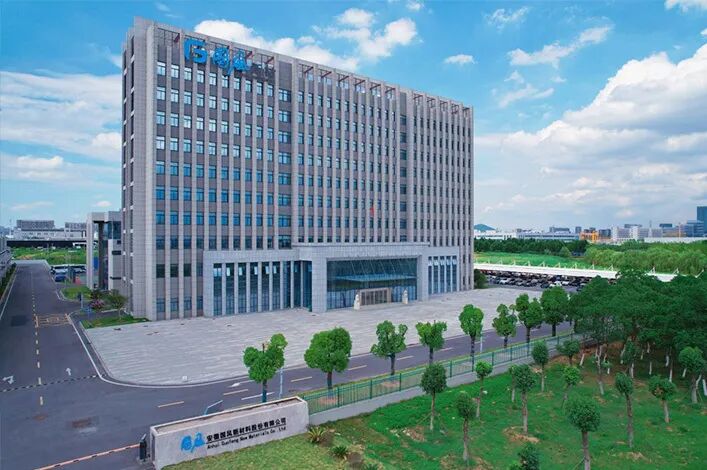
A high-end PET base film that has long been monopolized by Japanese companies such as Toray, Teijin, and Mitsubishi Chemical is now being gradually broken open by a leading domestic polyester film company.
01
MLCC Release Film Base Film: The Most Hidden Chokepoint in the Passive Components Industry Chain
MLCC release film is a core consumable in the MLCC manufacturing process. In the ceramic slurry tape-casting process, the release film serves as the supporting substrate, and its surface roughness, cleanliness, and peel-force uniformity directly determine the thickness consistency of the MLCC ceramic green sheet and the final yield. The performance ceiling of the release film is, in fact, determined by its substrate—the optical-grade PET base film.
The technical barriers of optical-grade PET base films for MLCCs are concentrated in three dimensions:
Surface roughness must be controlled at the nanometer level, and no micron-sized foreign particles are allowed on the film surface.
The tensile strength must be sufficient to support high-speed coating processes in the trend toward ultra-thinness.
The thickness tolerance between batches and the consistency of surface performance must be extremely stable.
For a long time, the global high-end PET base film market for MLCCs has been dominated by a small number of companies such as Toray, Teijin, and Mitsubishi Chemical of Japan. Domestic MLCC manufacturers have relied heavily on imported base film procurement, posing structural risks to supply chain security.
02
Guofeng New Materials’ Strategic Base Film Self-Supply Move: From a BOPET Leader to an Electronic-Grade Functional Film Platform
Guofeng New Materials is one of the leading enterprises in the domestic polyester film industry, with traditional advantages concentrated in packaging and industrial BOPET films. In recent years, the company has been continuously promoting product structure upgrades and extending into the fields of optical-grade and electronic-grade functional films.The annual production project of 1 billion square meters of optical-grade polyester base film is precisely a landmark initiative of this strategic transformation.
Line G1 is dedicated to optical-grade polyester base film for MLCC applications. The completion of equipment installation on this production line signifies that Guofeng New Materials has moved beyond the technology reserve stage and into the phase of production line implementation in the field of electronic-grade functional films. More importantly, Guofeng New Materials had previously entered the polarizer release film and protective film market through the acquisition of Jinzhang Technology. If Line G1 is successfully commissioned and achieves stable supply, Guofeng New Materials will possess in-house supply capabilities in both high-end base film segments—MLCC release films and polarizer release films—thereby establishing an integrated industrial chain closed loop of “base film + coating.” This kind of vertical integration capability constitutes a competitive moat that is difficult for traditional single-segment manufacturers to replicate.
03
After Device Installation: The Real Test from Commissioning to Mass Production
Equipment installation is an important milestone, but there is still a considerable way to go before stable mass production can be achieved. For an optical-grade PET base film production line, it typically takes 6 to 12 months from equipment commissioning to yield ramp-up, during which the consistency of key indicators such as film surface roughness, tensile strength, and thickness tolerance must be repeatedly verified.The greater challenge comes from client validation—MLCC manufacturers typically require a 12- to 18-month validation cycle for domestically produced base films, covering stability tests across dozens of batches and production line adaptation evaluations.From "can do" to "can supply stably" and then to "customers are willing to place bulk orders," each step takes time.
However, a window of opportunity is opening. As domestic MLCC manufacturers expand capacity for high-capacitance MLCCs, their willingness to replace imported high-end base films with domestic alternatives is becoming increasingly urgent. Guofeng New Materials has completed equipment installation at this juncture, precisely aligning with the critical point at which demand for domestic substitution of base films is shifting from “optional” to “necessary.” Once the production line is commissioned and its products pass customer validation, the company is expected to take the lead in achieving large-scale import substitution in the field of base films for MLCCs.
04
The installation of the G1 line at Guofeng New Materials appears to be a progress update for a production line, but fundamentally, it represents another step for Chinese polyester film companies to ascend into the high-end field of electronic-grade functional films. From packaging films to optical base films, Guofeng New Materials is simultaneously building integrated capabilities in the release film sectors of MLCC and polarizers, transitioning from base films to coating. The equipment is in place, and what remains to be seen is the pace of yield improvement on the production line and the rhythm of customer validation. At the table for MLCC release film base films, which has been dominated by Japanese companies for decades, Chinese enterprises are steadily moving closer to a core position.
【Copyright and Disclaimer】The above information is collected and organized by PlastMatch. The copyright belongs to the original author. This article is reprinted for the purpose of providing more information, and it does not imply that PlastMatch endorses the views expressed in the article or guarantees its accuracy. If there are any errors in the source attribution or if your legitimate rights have been infringed, please contact us, and we will promptly correct or remove the content. If other media, websites, or individuals use the aforementioned content, they must clearly indicate the original source and origin of the work and assume legal responsibility on their own.
Most Popular
-
AI Computing Power Demand Ignites Electronic Fabrics! China Jushi Hits Limit Up! Domestic Substitution Welcomes Golden Window
-
South Korea Initiates Anti-Dumping Investigation Into China’s PVC Suspension Resin! Triple Tariff Iron Curtain Falls, Who Pays for China’s Chemical Exports?
-

Focus on going global! kingfa sci. leads, huitong, preter, and kumho nire follow, china’s modified plastics frenziedly expanding worldwide
-
South Korea initiates anti-dumping investigation against Chinese PVC suspension resin! The target is Tianjin Bohua and Wanhua Chemical. How to break through?
-

Idemitsu Kosan Plans to Build Second Chemical Recycling Facility in Japan


