



From Monitoring to Treatment: Challenges Faced by Smart Textiles in Healthcare
"Clinical studies have shown that a heart continuous monitoring system based on intelligent flexible wearable technology can increase the early detection rate of atrial fibrillation by more than 30%." Recently, Professor Wang Lu from Donghua University stated in an exclusive interview with "China Textile News" that after more than a decade of development, intelligent flexible wearable technology has continuously deepened the application of smart textiles in the medical field. It goes beyond disease monitoring, with the core aim of moving towards proactive treatment by building an integrated diagnosis and treatment model to form a closed-loop management system for monitoring and treatment.
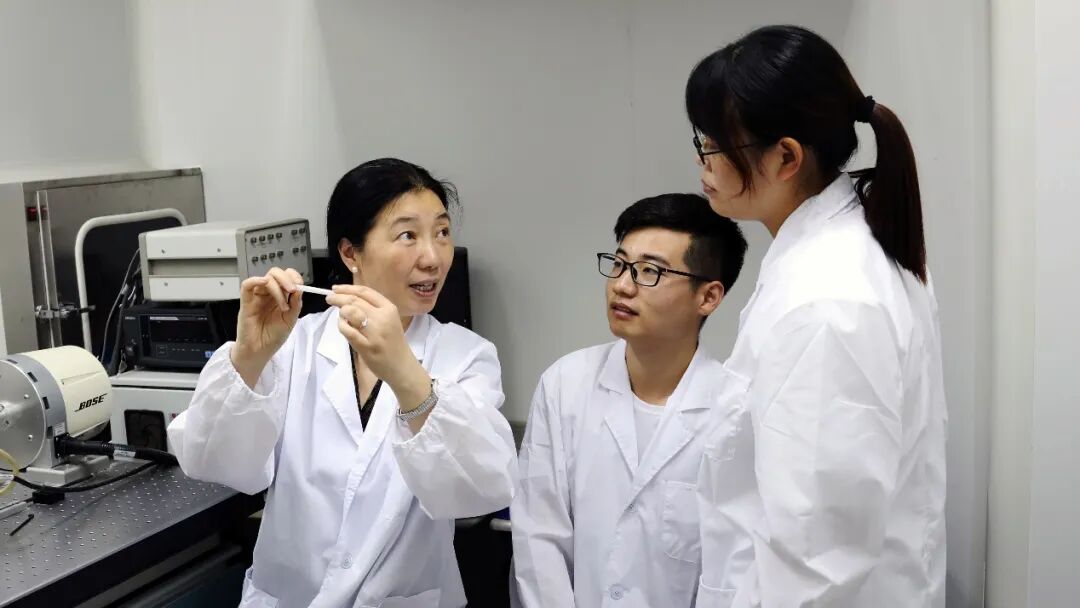
Professor Wang Lu (first from the left) leading students in laboratory work.
"In the traditional medical system, most vital signs can only be intermittently monitored in hospitals. Medical smart textiles can address this pain point by enabling real-time acquisition of continuous monitoring curves for vital signs such as blood pressure, electrocardiogram, and blood sugar, helping doctors seize the best timing for disease treatment and intervention. Therefore, smart textiles have great potential in the medical field." Wang Lu mentioned that in recent years, the development of flexible wearable technology has brought about a transformation in clinical medicine. Medical smart textiles have achieved threefold innovation in clinical monitoring: in terms of scenarios, extending from hospitals to daily life; in terms of models, shifting from diagnosis based on professional medical experience to data-driven intelligent diagnosis; and in terms of form, evolving from large and complex equipment to flexible and portable devices.
"Currently, we are no longer satisfied with simply collecting human physiological signals. The goal of developing flexible wearable technology is to achieve a closed-loop integration of medical-grade monitoring and treatment," Wang Lu further explained its core value by saying that in traditional medicine, data collection and intervention treatment of diseases are often conducted separately. With the gradual integration of sensing algorithms and execution modules in flexible wearable technology, the passive process of receiving treatment for patients is being transformed. Medical smart textiles can perceive changes in the condition, make medical judgments, and actively treat through means such as electrical stimulation, thermotherapy, phototherapy, and drug release, truly forming an adaptive intelligent medical system.
Wang Lu introduced that currently, medical smart textiles are composed of modules such as power supply, sensing, signal acquisition, signal processing and visualization, and information feedback. The power supply module, consisting of flexible fiber batteries and piezoelectric fibers, can continuously provide energy for smart textiles; the sensing module can continuously detect human information such as electrocardiogram, electromyography, sweat, interstitial fluid, and pulse; the signal acquisition module, composed of flexible circuits, can filter out noise and interference, converting sensing signals into physiological and biochemical signals of the human body. The signal processing and visualization module can analyze, compute, store, and upload physiological and biochemical signals to mobile devices. Finally, the information feedback module determines treatment and intervention, forming an intelligent closed-loop medical system of "perception-decision-execution" for medical textiles.

Professor Wang Lu's research team at Donghua University
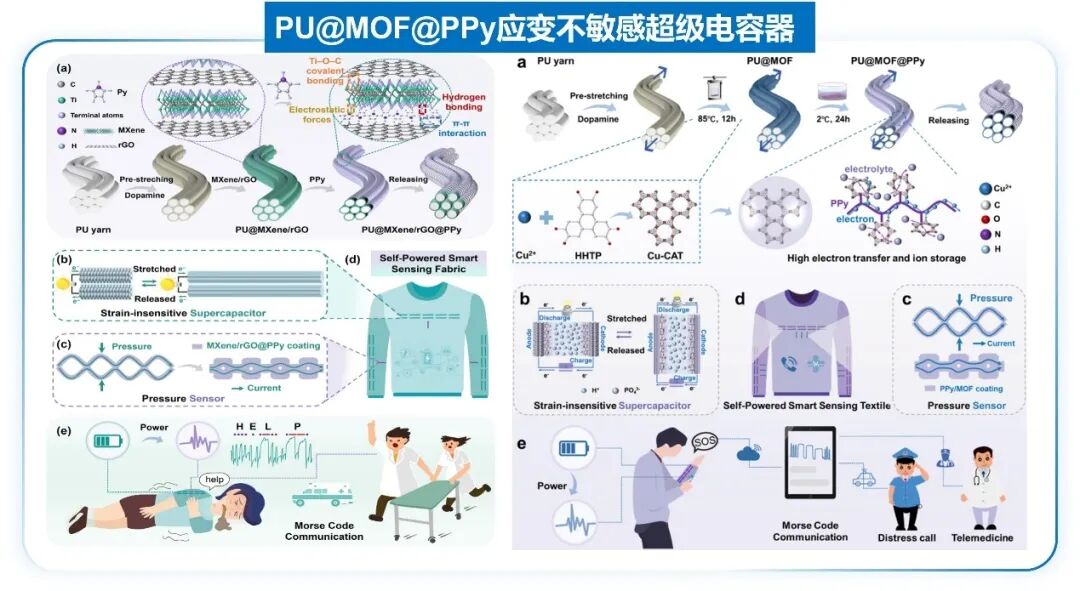
"Our research group has developed capacitor fibers and textiles based on polyurethane and conductive polypyrrole materials, which can maintain a static capacitance retention rate of 95.65% under 200% tensile strain, demonstrating excellent strain-insensitive electrochemical performance and potential for long-term continuous energy supply." When discussing the specific applications of integrating diagnosis and treatment, Wang Lu stated that from preventive diagnosis to auxiliary treatment, from in-body monitoring and sensing to tissue repair and regeneration, medical intelligent textiles are gradually evolving into two major categories: wearable on the body surface and implantable inside the body. Among them, implantable intelligent textiles face challenges such as high complexity of physiological environments, significant signal interference, tissue compatibility, degradability, and high requirements for flexible-miniaturized energy supply integration.
"We apply wearable smart textiles on the body surface, which can manage diseases such as diabetic non-healing wounds." Speaking about the development of wearable smart textiles in integrated diagnosis and treatment, Wang Lu stated that currently, the mainstream body surface wearable smart textiles are based on flexible textiles loaded with rigid electronic components. The application scenarios have expanded from single physiological monitoring like heart rate, pulse, and respiration to clinical rehabilitation management, achieving a transition from single-point treatment to closed-loop diagnosis and treatment, forming a close-fitting micro-medical system with preliminary integrated diagnosis and treatment functions. For example, the "brain-machine interface sleeve for stroke rehabilitation" can sense the brain electrical signals of hemiplegic patients and achieve rehabilitation treatment for patients through electrical stimulation of muscle nerves. However, due to the lack of mechanical adaptability of the rigid electronic components, wearable textiles still cannot fully meet clinical requirements.
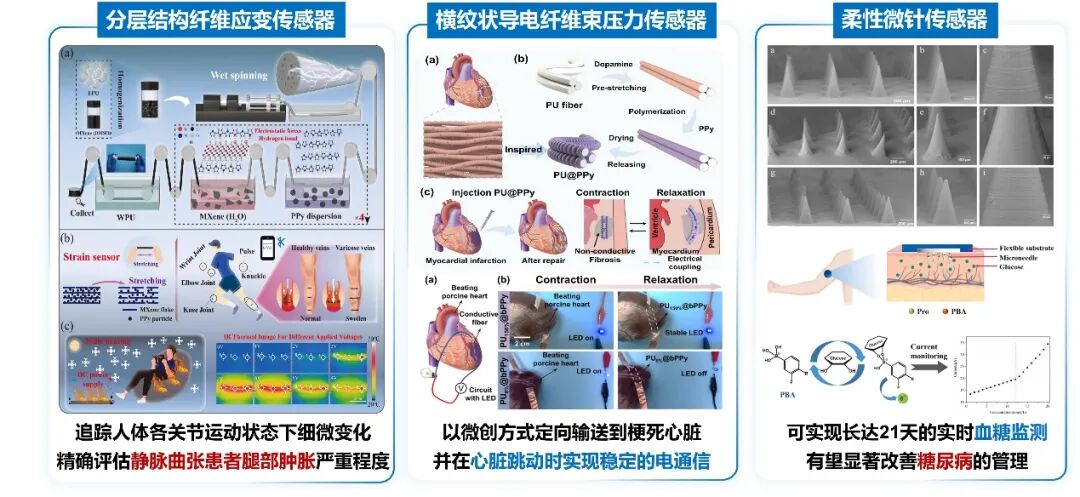
"Fully degradable piezoelectric nanofiber composites can convert the weak strain mechanical energy of soft tissues into electrical energy, enabling real-time, continuous monitoring of various soft tissue strains in the body. Flexible microneedle sensors can achieve real-time blood glucose monitoring for up to 21 days, significantly improving diabetes management... We continuously develop and strive to integrate functions such as energy storage and supply, human biosignal collection, transmission, and conversion into flexible, weavable fiber structures, making textiles themselves a distributed, wearable, and implantable energy system, and developing implantable smart textiles with integrated diagnostic and therapeutic functions." When discussing the role of textiles in aiding intelligent diagnosis and treatment, Wang Lu stated that integrated diagnostic and therapeutic smart textiles are flexible intelligent systems that can be implanted in the body. They can monitor pathological signals in real-time and automatically trigger precise treatments, achieving a "monitoring-treatment" closed-loop management. Among them, degradable fiber batteries, biofuel cells, fiber supercapacitors, and other smart fibers and textiles serve as energy storage modules; sensing fibers and textiles that can convert specific physiological, chemical, or mechanical stimuli into quantifiable electrical signals form the sensing module; piezoelectric fabrics, triboelectric fabrics, thermoelectric fabrics, etc., can capture energy from the environment and directly power electronic devices, forming a self-powered module that ensures the "implantable" becomes a truly "passive, low-intervention, and long-term companion" medical system.
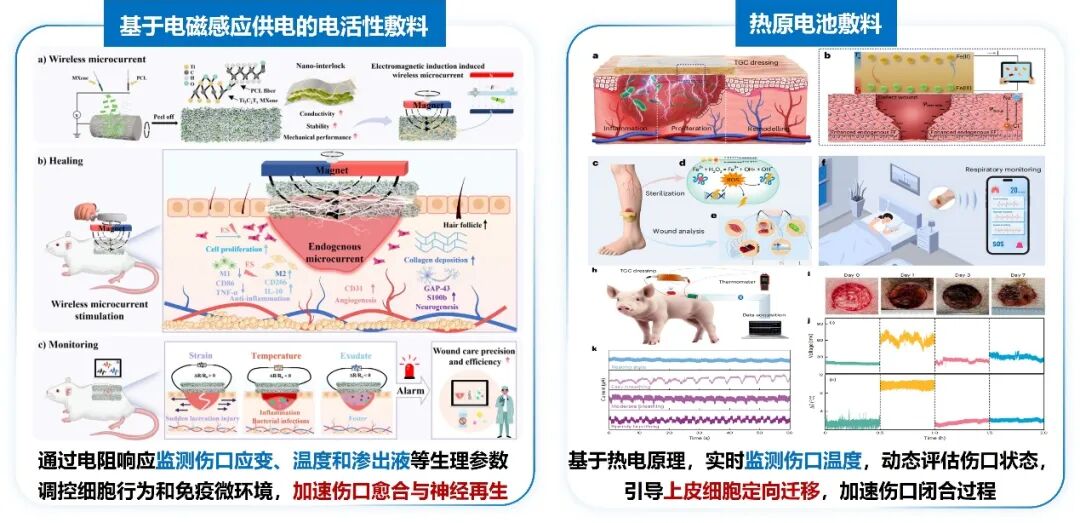
A type of thermoelectric battery dressing based on the thermoelectric principle can monitor wound temperature in real-time, dynamically assess wound status, guide the directional migration of epithelial cells, and accelerate the wound closure process. Another type of electroactive dressing powered by electromagnetic induction can monitor physiological parameters such as wound strain, temperature, and exudate through resistance response, regulating cell behavior and immune microenvironment, thereby promoting wound healing and nerve regeneration. Wang Lu stated that in recent years, with the successive reports of textiles with intelligent diagnostic and therapeutic functions, medical smart textiles are transitioning from traditional textiles with single functions to an intelligent medical system.
"To achieve the transition of medical smart textiles from passive treatment to active disease management within intelligent medical systems, there are still many technical challenges that need to be overcome," said Wang Lu when discussing innovation directions. She stated that medical smart textiles need to innovate in micro-multi-module flexible integration, deeply merging and integrating independent functions such as sensing, energy supply, and treatment into flexible textiles, thereby constructing a highly integrated micro-intelligent system. It is essential to realize multi-modal monitoring of physical and chemical signals, developing sensing systems that can simultaneously monitor mechanical, chemical, and electrical physiological signals without interference, accurately reflecting the complex physiological environment and status within the body. Furthermore, it is crucial to the data-driven intelligent diagnosis and treatment closed loop, utilizing AI models to analyze signals, achieve early warning and prognosis of diseases, actively adjust treatment strategies, and realize personalized and precise interventions in the body.
"From the perspective of basic research on the application of original technology, we need to strengthen research in areas such as the multi-field coupling self-powered drive regulation mechanism, the sensing and early warning mechanism of multimodal data fusion, and the mechanism of electroactive materials mediating electric field to promote tissue regeneration." When discussing the design of implantable smart textiles and the realization of functions in complex environments, Wang Lu stated that from the aspect of generic core technology research and industrial transformation, the development of smart textiles for medical use requires increased investment in application areas such as intelligent functional yarns for precision medicine, smart textiles for the whole life cycle management of chronic diseases, and intelligent diagnostic and therapeutic textiles for human cavity systems.
"To truly integrate smart textiles for medical use into the healthcare system, it is not only necessary to overcome the challenges of technological innovation, but more critically, to simultaneously clear three key hurdles: demonstrating clinical effectiveness and therapeutic efficacy, meeting safety and biocompatibility requirements, and navigating the regulatory pathways that merge the characteristics of textiles, electronics/software, and medical devices." When discussing industrial development, Wang Lu stated that medical textiles have great potential to support the intelligence of healthcare, with innovations in materials and structures serving as the foundation, and policy and project support acting as the engine. The future lies in building a collaborative platform for innovation through multidisciplinary interaction.
【Copyright and Disclaimer】The above information is collected and organized by PlastMatch. The copyright belongs to the original author. This article is reprinted for the purpose of providing more information, and it does not imply that PlastMatch endorses the views expressed in the article or guarantees its accuracy. If there are any errors in the source attribution or if your legitimate rights have been infringed, please contact us, and we will promptly correct or remove the content. If other media, websites, or individuals use the aforementioned content, they must clearly indicate the original source and origin of the work and assume legal responsibility on their own.
Most Popular
-

At Least 44 Dead in Century-Old Fire! Questioning Hong Kong's Hong Fu Garden: Why Has the Path to Fire Resistance Taken 15 Years Without Progress?
-
Satellite chemical's profits surge! can the 26.6 billion yuan high-end new materials project meet expectations? a review of progress on four major projects
-
Key Players: The 10 Most Critical Publicly Listed Companies in Solid-State Battery Raw Materials
-
Estun Turns Profitable in 2025 Half-Year Report, Industrial Robot Shipments Rank First Among Domestic Brands
-
U.S. Appeals Court Officially Rules: Trump Tariff Unlawful and Void!

