



Fifteen-Five Empowerment: Many Regions Incorporate Hydrogen Energy into Core Development Plans
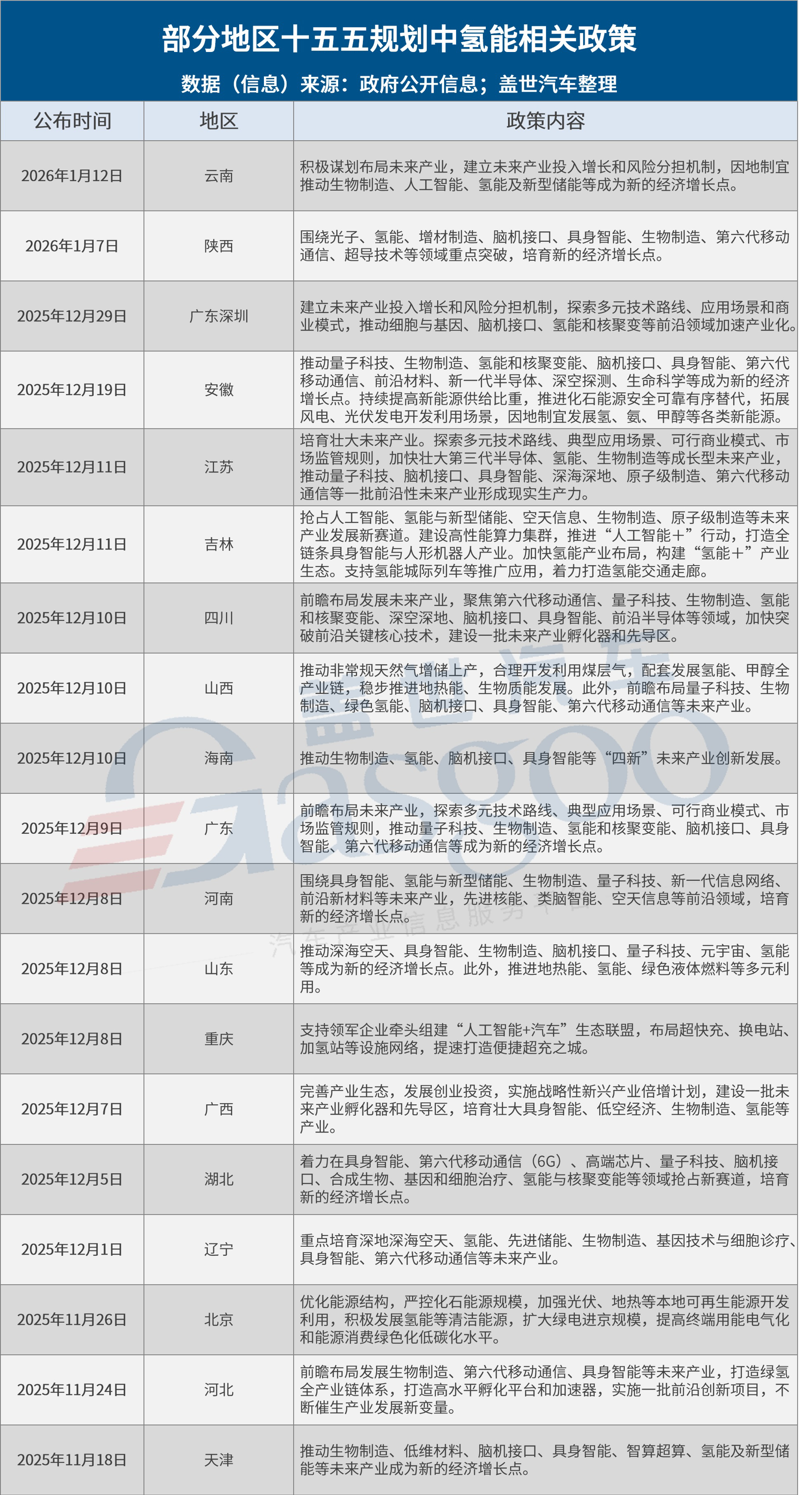
Currently, hydrogen energy, as one of the core tracks in the clean energy sector, is entering a new stage of accelerated development globally. China has explicitly elevated hydrogen energy to a national energy strategy, listing it as a key development direction for strategic emerging industries and future industries. With the intensive implementation of "15th Five-Year" plans across various provinces and cities nationwide, hydrogen energy has been incorporated into the development blueprints of nearly 20 regions, according to incomplete statistics from Gasgoo.
Policy tailwinds are blowing.
Compared to the development model of the "14th Five-Year Plan" period, which focused on pilot exploration and localized breakthroughs, the hydrogen energy layout of various regions during the "15th Five-Year Plan" period is more systematic, forward-looking, and strategic. Examining the recently released policies of various regions, it is clear that several provinces, including Shaanxi, Guangdong, Henan, and Guangxi, have explicitly listed the hydrogen energy industry alongside cutting-edge technology fields such as artificial intelligence, bio-manufacturing, 6G mobile communication, and nuclear fusion energy. They are positioning it as a core engine for promoting regional economic structural optimization and upgrading, cultivating new quality productive forces, and creating new economic growth points, demonstrating the important role of hydrogen energy in the future regional development landscape.
Specifically in terms of development direction, various regions are closely following the development patterns of the hydrogen energy industry, focusing on the layout of the entire industrial chain. From core technology research and development to diverse application scenarios and the construction of industrial ecosystems, they have formed a good trend of all-round and multi-level advancement. For example, Jilin, based on its own industrial characteristics, has explicitly proposed building a "hydrogen energy +" diversified industrial ecosystem, focusing on creating distinctive application scenarios such as hydrogen-powered intercity trains and hydrogen-powered logistics vehicles, and promoting the deep integration of hydrogen energy and the transportation sector. Chongqing, on the other hand, is focusing on the shortcomings of infrastructure construction, accelerating the layout of core facility networks such as hydrogen refueling stations, and striving to accelerate the construction of a "convenient supercharging city," laying a solid foundation for the large-scale application of hydrogen energy. Energy-rich provinces such as Shanxi and Shandong are giving full play to their resource endowment advantages, combining hydrogen energy with diverse energy utilization forms such as geothermal energy and green liquid fuels, and focusing on promoting the diversified transformation of the regional energy structure, helping to achieve the "dual carbon" goals.
Meanwhile, various regions, based on their own industrial foundations, resource endowments, and development orientations, have embarked on differentiated development paths with unique characteristics, effectively avoiding blind imitation and homogeneous competition. Among them, Anhui focuses on the core need for energy substitution, emphasizing the orderly replacement of various new energy sources such as hydrogen, ammonia, and methanol in industry, transportation, and other fields, gradually reducing its dependence on traditional fossil fuels. Beijing, relying on its technological innovation advantages, focuses on the supplementary application of clean energy sources such as hydrogen in the electrification of end-use energy, contributing to the city's green and low-carbon development and continuous improvement of air quality. Hebei, with the green hydrogen industry as its core focus, is committed to building a complete green hydrogen industry system covering hydrogen production, storage, transportation, and utilization, and establishing a high-level industry incubation platform to attract high-quality upstream and downstream enterprises to gather.
From the perspective of spatial layout, the development of the hydrogen energy industry has shown a distinct trend of "a national strategy with regional characteristics." From economically developed coastal provinces such as Shandong, Jiangsu, and Zhejiang in the east, to inland provinces like Sichuan, Chongqing, and Hubei in the central and western regions, and then to old industrial bases like Jilin and Liaoning in the northeast, various localities have successively incorporated the hydrogen energy industry into their key development plans, forming a cross-regional collaborative development pattern. This collaborative layout not only effectively avoids homogeneous competition and resource waste but also breaks down regional barriers across the upstream and downstream of the hydrogen energy industrial chain, promoting the free flow and optimized allocation of elements such as technology, capital, talent, and resources nationwide.
The fact that various regions are intensively increasing their hydrogen energy industry layout is not accidental, but rather a profound consideration based on multiple dimensions such as industrial development, energy transition, and national strategic security. It is an inevitable choice driven by the times and national strategy. Under the guidance of the "dual carbon" goals, hydrogen energy, as a clean, efficient, and zero-carbon secondary energy source, has unique advantages such as high energy density, flexible storage and transportation, and wide application scenarios. It can be widely used in transportation, industry, power generation, construction, and other fields, and is a key path to breaking dependence on fossil fuels and achieving a low-carbon energy structure transformation. Especially in areas where traditional electrification is difficult, such as heavy trucks, ships, and chemicals, the substitution advantage of hydrogen energy is more significant, making it a core solution to promote green and low-carbon transformation in these fields.
Furthermore, the hydrogen energy industry chain is lengthy and extensive, encompassing core segments such as hydrogen production, storage, transport, refueling, and fuel cells. It involves multiple interconnected sectors including materials, equipment, electronics, and chemicals, effectively driving the development of industrial clusters in high-end manufacturing, new materials, and renewable energy to form a new engine for economic growth. More importantly, hydrogen can be produced from renewable sources such as wind, solar, and hydropower, enabling a decoupling from dependence on imported fossil fuels and achieving self-controllable energy supply. Simultaneously, its deep integration with existing energy systems enhances supply stability, providing solid support for the implementation of national energy security strategies.
Automotive industry chain collaboration accelerates
The continuous release of policy dividends has injected strong momentum into automakers' strategic expansion into the hydrogen energy sector. Currently, major domestic car manufacturers have transitioned from the early stage of technical reserves to a phase of comprehensive scenario validation and large-scale promotion. By simultaneously exerting effort and coordinating progress in both the commercial and passenger vehicle sectors, they have established a robust pattern characterized by diversified breakthroughs and in-depth development.
The domestic commercial vehicle sector has become a core area for the application of hydrogen energy technology, with several automakers recently achieving impressive industrialization results. On January 4th, the Hubei Provincial Science and Technology Innovation Conference released the "61020" full-chain key technology breakthrough achievements, with the 400kW hydrogen fuel cell stack independently developed by Dongfeng Motor Corporation listed as one of the province's 20 landmark innovative products. Simultaneously, the hydrogen fuel cell commercial vehicles co-developed by the company and Honda have taken the lead in carrying out relevant demonstration operations on existing logistics and distribution routes in Wuhan, and will be further expanded to Guangzhou, Shanghai, and other regions from this starting point.
On January 6th, Proton Motor Technology GmbH disclosed at its partner conference that its hydrogen vehicle sales reached 760 units in 2025, doubling both sales volume and revenue, demonstrating the significant effectiveness of its "hydrogen + electricity" dual technology route. On January 10th, GAC Hino New Energy Commercial Vehicle Co., Ltd. successfully held a delivery ceremony for 340 hydrogen fuel cell vehicles. This event marks not only an important milestone in the company's efforts to promote the commercialization of hydrogen fuel cell vehicles, but also injects strong momentum into the construction of a green and low-carbon transportation system in the Guangdong-Hong Kong-Macao Greater Bay Area.
Hydrogen energy deployment in the passenger vehicle sector is steadily advancing. On January 16th, GWM launched its all-new generation platform, the "Guiyuan Platform." This platform achieves a flexible architecture of "one vehicle, multiple powertrains, one vehicle, multiple categories, one vehicle, multiple postures, and one vehicle, multiple markets," capable of meeting the diverse needs of global markets and users. This platform is an all-architecture platform that can simultaneously accommodate five powertrain forms: plug-in hybrid, hybrid electric, pure electric, high-efficiency fuel, and hydrogen fuel.
Coincidentally, Haima Automobile, as a leader in hydrogen passenger vehicles in China, continues to delve into technical verification and demonstration operations. The company disclosed on its interactive platform on January 21 that 50 of its hydrogen-powered 7X-H vehicles have been deployed in Hainan for demonstration operations, with a cumulative mileage exceeding 1.5 million kilometers. This achievement not only fully validates the reliability and safety of the product, but also accumulates valuable practical experience for the subsequent large-scale promotion of hydrogen passenger vehicles.
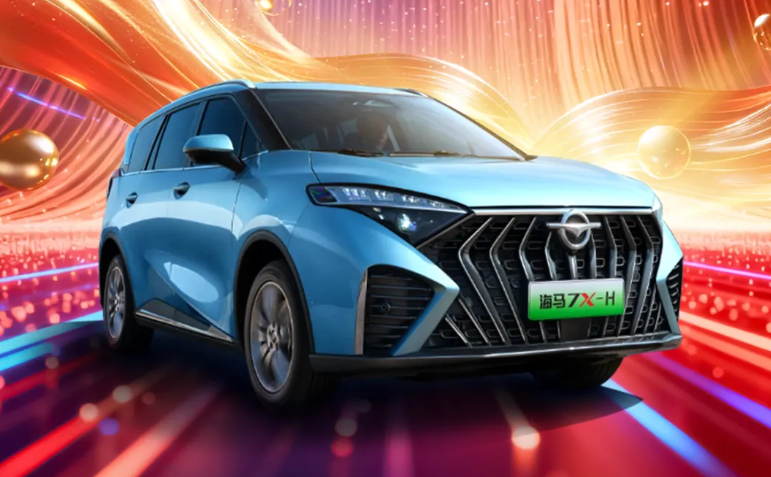
Image source: Haima Automobile
The rapid development of the hydrogen energy industry not only relies on the core of vehicle manufacturers but also on the collaborative efforts of upstream and downstream supporting enterprises. Recently, related companies in the automotive industry chain have also been making frequent moves, continuously increasing their investment in hydrogen energy business layouts, and the hydrogen energy industry ecosystem is constantly improving. On January 9th, FORVIA announced that Sinopec Capital, an industrial capital investment platform under Sinopec, through the Chaoyang Hydrogen Energy New Kinetic Energy Venture Capital Fund managed by its subsidiary Sinopec Private Equity Fund Management Co., Ltd., has made a strategic investment of 300 million RMB (approximately 40 million euros) in Faurecia (Shanghai) Hydrogen Energy Investment Co., Ltd.
On January 16th, according to Schaeffler's official news, Schaeffler Hydrogen Technology (Shanghai) Co., Ltd. has announced good news, having successively signed supply contracts for two core businesses: PEM electrolyzer and fuel cell bipolar plate coatings. This achievement marks its further entry into the water electrolysis sector and a significant breakthrough in the hydrogen fuel cell coating business. The PEM electrolyzer supply contract signed this time will see the products applied to the on-site hydrogen production link of a hydrogen "production, storage, and utilization" integrated project.
As a clean and efficient zero-carbon energy source, hydrogen energy is highly aligned with China's "dual carbon" strategic goals and energy security requirements, currently entering a golden period of development driven by both policy guidance and market demand. At the policy level, during the "15th Five-Year Plan" period, various regions have established a hydrogen industry development system characterized by "unified national layout and distinct regional features." Through top-level planning of the entire industrial chain and the exploration of differentiated development paths, this framework not only solidifies the policy support and industrial ecological foundation for the high-quality development of the hydrogen sector, but also clearly defines hydrogen energy as a core engine for cultivating new quality productive forces and promoting the optimization and upgrading of the economic structure.
At the market level, leading automakers have fully engaged in a hydrogen energy race. China's hydrogen vehicle market has formed a differentiated development pattern, with commercial vehicles leading the breakthrough and passenger vehicles making steady progress, driving the hydrogen vehicle industry to accelerate from the technology verification stage to the stage of large-scale promotion. In the future, with the continuous iteration and maturity of core technologies, the continuous improvement of infrastructure networks, and the steady enhancement of upstream and downstream collaboration efficiency in the industrial chain, hydrogen energy will be deeply integrated into core areas of the national economy such as transportation and industry. It will not only become a key force in breaking the dependence on fossil fuels and promoting the green and low-carbon transformation of the energy system, but also drive the clustered development of hydrogen energy-related industries across the entire industrial chain, continuously injecting strong and lasting new impetus into China's high-quality economic development.
【Copyright and Disclaimer】The above information is collected and organized by PlastMatch. The copyright belongs to the original author. This article is reprinted for the purpose of providing more information, and it does not imply that PlastMatch endorses the views expressed in the article or guarantees its accuracy. If there are any errors in the source attribution or if your legitimate rights have been infringed, please contact us, and we will promptly correct or remove the content. If other media, websites, or individuals use the aforementioned content, they must clearly indicate the original source and origin of the work and assume legal responsibility on their own.
Most Popular
-

List Released! Mexico Announces 50% Tariff On 1,371 China Product Categories
-
RMB Hits 32-Month High! Alpek Shuts Down PET Recycling Plant; Porsche Sales Plummet
-
Vynova's UK Chlor-Alkali Business Enters Bankruptcy Administration!
-

EU Changes ELV Regulation Again: Recycled Plastic Content Dispute and Exclusion of Bio-Based Plastics
-
Continental Plans to Begin Sale of ContiTech in Early 2026

