Epoch Biodesign to Build World's Largest Nylon 6,6 Bio-Recycling Demonstration Plant
Epoch Biodesign, a global enzyme-based recycling technology research and development company, recently announced plans to build Europe's first and the world's largest nylon 6,6 biorecycling demonstration plant at the GraphT Works pilot and demonstration production base of Imperial College London, located in North Acton, London. This project is a significant milestone for the company, marking the transition of Epoch Biodesign's patented enzyme recycling technology from the laboratory stage to an industrial demonstration phase capable of processing hundreds of tons of post-consumer nylon 6,6 waste annually.
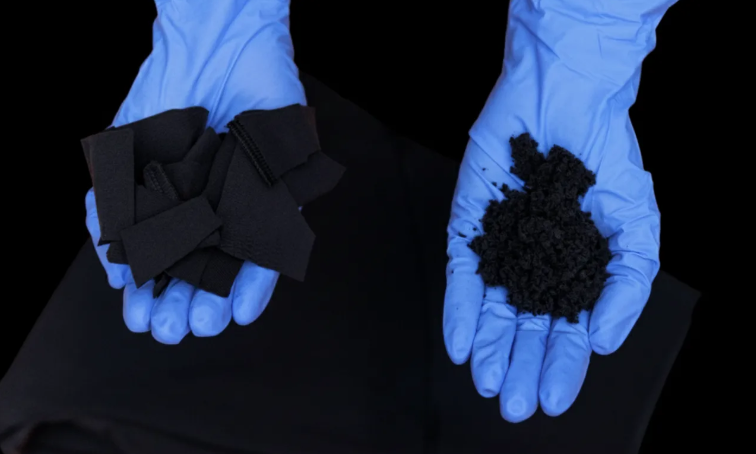
Epoch Biodesign’s innovative recycling process employs AI-engineered enzyme formulations to decompose various waste nylon 6,6 materials—including silicone-coated airbag fabrics, spandex-blended textiles, and discarded garments—materials traditionally considered highly challenging to process. This technology fully breaks down such feedstocks into chemical monomers, yielding products of quality equivalent to virgin materials, directly reintegrable into the nylon 6,6 supply chain without compromising product performance. Unlike conventional chemical recycling methods, this bioprocess offers significant advantages, including high selectivity and energy efficiency, thereby substantially reducing carbon emissions.
Proactively Addressing New EU Regulations, Solving Industry Pain Points
The layout of this demonstration facility is strategically designed to help brands and manufacturers meet the upcoming requirements of the European Union's Ecodesign for Sustainable Products Regulation (ESPR). The European Commission has stated that the regulation will take effect in July 2026, at which point the destruction of unsold clothing will be strictly prohibited, creating an urgent need for scalable and clean recycling infrastructure capable of processing various types of nylon waste.
When the regulation was approved in February 2026, Jessika Roswall, European Commissioner for Environment, Water Resilience and Competitiveness of the Circular Economy, stated in her announcement: “The textile industry is leading the sustainable transition, yet it still faces numerous challenges. Waste-related data clearly indicate that action is urgently needed. This new regulation will drive the textile industry toward a sustainable and circular model, while simultaneously enhancing industrial competitiveness and reducing external dependencies.”
Epoch Biodesign offers a viable solution for the industry. The company's founder and CEO, Jacob Nathan, points out that the core advantages of its biorecycling process lie in its low energy consumption and urban adaptability.
A major advantage of our bioprocess lies in what it does *not* require: high-temperature reaction conditions or conventional heavy-industrial infrastructure—facilities that historically forced production sites to be located far from populated areas.
Jacob Nathan also emphasized the significance of Grapht Works being located in the City of London: "Grapht Works is situated within the London city area, and it is no coincidence that we can build and operate a nylon 6,6 recycling plant in Greater London. This is due to the natural characteristics of the clean, low-energy process developed by our team. This is the true embodiment of a circular industrial biochemistry."
Accelerate the commercialization process
The Grapht Works demonstration project is scheduled to commence operations in Q3 2026, leveraging Epoch Biodesign’s continuously strengthening commercial momentum. Earlier this year, the company signed a memorandum of understanding with INVISTA, a global leader in nylon 6,6 production, to jointly advance the large-scale commercial development of post-consumer recycled nylon 6,6.
According to Luciano Caruso, Chief Business Officer of Epoch Biodesign, the demonstration plant has an annual processing capacity of hundreds of tons of post-consumer nylon 6,6 waste, with raw materials covering the fields of apparel, automotive, and industry. He said, "EU regulations require relevant industries to properly dispose of end-of-life nylon waste, and incineration and landfill are no longer acceptable solutions."
Luciano Caruso also outlined the industry value of the new factory: "The factory has validated the feasibility of our bioprocess from both technological and commercial perspectives, demonstrating to industry partners and policymakers that a truly circular, clean, and economically viable nylon recycling pathway already exists today. This will help build a sustainable and resilient supply chain for key raw materials, reducing the risk of price fluctuations caused by petrochemical-based products."
Gained support from top-tier capital investment
Epoch Biodesign has raised over $50 million in cumulative funding, with investors including lululemon, Lowercarbon Capital, Extantia, KOMPAS VC, Happiness Capital, Leitmotif, and Inditex (via Mundi Ventures). The company is also a member of the T2T Alliance and actively collaborates with EU policymakers to advance regulatory frameworks that establish circular materials as the industry standard.
Introduction of Relevant Parties
Epoch Biodesign
A UK-headquartered biotechnology company and global leader in enzymatic recycling. Its ultra-low-emission process produces virgin-grade recycled materials from mixed waste streams. Leveraging artificial intelligence and advanced synthetic biology, the company develops proprietary enzyme formulations to enable commercial-scale, highly efficient recycling of waste plastics and textiles. Backed by top-tier capital, the company is currently constructing its second bio-recycling facility.
Grapht Works
London's first dedicated pilot and demonstration production base, held and operated by Imperial College London. Located in North Acton, the project is part of the Old Oak Innovation Cluster, providing incubation support for deep tech and scientific enterprises from R&D to scaled commercial production.
Epoch Biodesign, upholding the concepts of innovation and sustainability, has become a core participant in building a global nylon 6,6 circular economy. With the establishment of the world's largest nylon bio-recycling demonstration plant, the company is laying the foundation for a cleaner and more sustainable future.
【Copyright and Disclaimer】This article is the property of PlastMatch. For business cooperation, media interviews, article reprints, or suggestions, please call the PlastMatch customer service hotline at +86-18030158354 or via email at service@zhuansushijie.com. The information and data provided by PlastMatch are for reference only and do not constitute direct advice for client decision-making. Any decisions made by clients based on such information and data, and all resulting direct or indirect losses and legal consequences, shall be borne by the clients themselves and are unrelated to PlastMatch. Unauthorized reprinting is strictly prohibited.
Most Popular
-
From Compliance to Competitiveness: Alpla’s Circular Design and Recycling Practices Driven by PPWR
-
Overseas News: PPG Announces Global 20% Price Increase; Sika Launches High-Performance Polyamide (PA) New Product; AIP Announces Nearly $10 Billion Acquisition
-

Driving Intelligent Upgrades In Rubber And Plastics Industry! Preview Of Concurrent Activities At Chinaplas 2026 International Rubber & Plastics Exhibition (Part 2)
-
BASF Delivers First Batch of Innovative Cathode Materials for Semi-Solid-State Batteries to Weilan New Energy
-

Deadly Impact: Hormuz Strait Blockade Sparks Shortage of Plastic Raw Materials, Threatening Shutdowns at Japanese and Korean Chemical Plants