



Car Loans Extend to Eight Years: Another Automaker Launches Ultra-Long-Term Low-Interest Financial Plan
Car loan terms are "rolling" to 8 years, and another automaker is launching an ultra-long-term, low-interest financing plan.
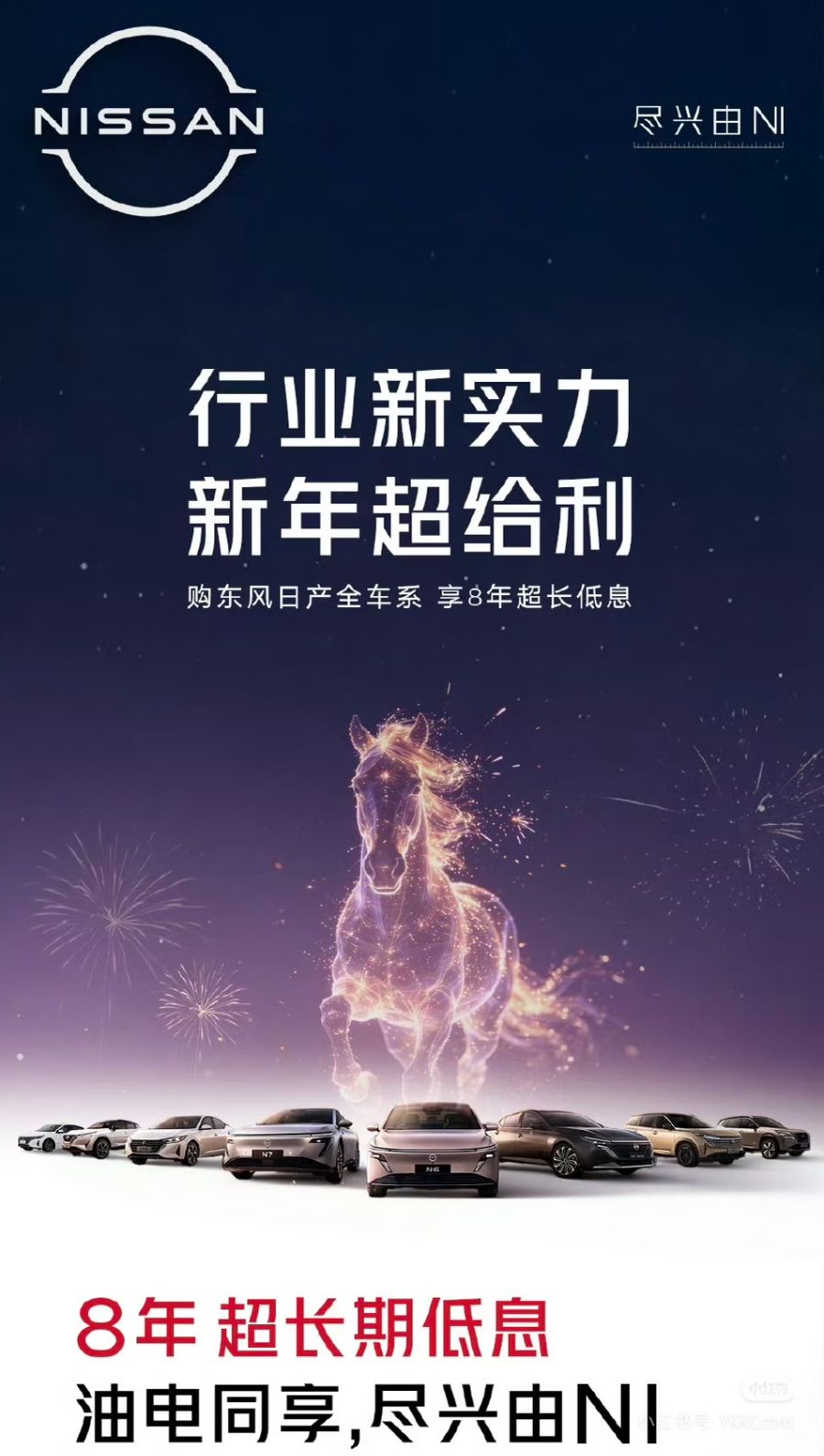
On February 4, 2026, Dongfeng Nissan's official Weibo account announced a car purchase policy: the Teana Harmony OS cabin version is offering a limited-time financing plan: 0 down payment, 8-year ultra-long low-interest loan, with daily payments as low as 55 yuan.
Dongfeng Nissan emphasized that the aforementioned monthly payment is calculated based on the Teana HarmonyOS Smart Cockpit Comfort Edition (vehicle price: 129,900 RMB): 0 down payment, a financing term of 96 months (8 years), and a customer interest rate of 4.88%.
The day before, Dongfeng Nissan had already announced a super-long-term financing plan for its entire lineup, covering mainstream products such as N6, N7, and Sylphy Classic, supporting 96-month installments with 0 down payment. Among them, the Sylphy Classic has a daily payment as low as 27 yuan, with a term from February 3rd to February 28th.
According to sources from Dongfeng Nissan sales personnel, the aforementioned plan is primarily provided by Dongfeng Nissan Auto Finance Co., Ltd., a subsidiary of Dongfeng, and is a licensed auto finance company.
This move pushes the "ultra-long loan term" competition ignited by car companies at the beginning of the year to a "new climax." Since January, car companies such as Tesla, Xiaomi, Li Auto, XPeng, Geely Galaxy, and Voyah have taken the lead in breaking the conventional 1-5 year loan term and have intensively launched "7-year low-interest" plans.
The "long-term low-interest" financing plans offered by various car manufacturers show significant differences: down payment thresholds range widely from 0% to over 25%, with Tesla offering higher down payments for lower interest rates. Annual interest rates vary from 0.98% to 4.69%, with Tesla having the lowest costs. Regarding lending institutions, only Tesla partners with CITIC Bank and Pudong Development Bank, while others largely rely on captive finance companies or financial leasing companies.
Dongfeng Nissan is increasing its ultra-long-term, low-interest financing options, driven by a combination of multiple market pressures and policy environment influences.
According to the Announcement on Continuing and Optimizing the Vehicle Purchase Tax Reduction and Exemption Policy for New Energy Vehicles, the vehicle purchase tax will be halved for new energy vehicles purchased between January 1, 2026, and December 31, 2027. Among them, the tax reduction for each new energy passenger vehicle shall not exceed 15,000 yuan. Automakers are required to boost sales through measures such as financial incentives.
From a market perspective, in 2025, domestic new energy vehicle sales will reach 13.875 million units, a year-on-year increase of 19.8%, with a growth rate significantly exceeding the overall industry. The penetration rate of new energy passenger vehicles will be as high as 54%, meaning that for every two passenger vehicles sold, at least one will be a new energy vehicle. However, Dongfeng Nissan's new energy vehicle sales for the entire year exceeded 50,000 units, with a relatively low market share, relying heavily on its traditional fuel vehicle base. There is an urgent need to stimulate terminal demand.
In addition, in February last year, the "Notice on Developing Consumer Finance to Boost Consumption" proposed that for customers with long-term consumption needs, the maximum loan term for personal consumption loans from commercial banks can be extended from not exceeding 5 years to not exceeding 7 years on a temporary basis. Previously, the traditional new car loan terms were generally between 1 and 5 years.
On the other hand, for consumers, extending the repayment period means increased total interest expenses, and consumers need to spend within their means.
In addition, the risk of vehicle residual value cannot be ignored. According to the China Automobile Dealers Association, in October 2025, the residual value of plug-in hybrid vehicles will be only 43.7%, while that of pure electric vehicles will drop to 42%. In contrast, the residual value of traditional fuel vehicles generally exceeds 50% during the same period.
In this round of market competition, most car manufacturers' financing solutions are provided by financial leasing companies. In financial leasing, the vehicle ownership remains with the financial leasing company until the so-called "installment payments" are completed. If the buyer defaults on payments, the vehicle will be repossessed, and the "installment payments" made earlier will be considered rent. The buyer becomes a "lessee," and the lessee has no right to reclaim the rent paid previously (Note: This needs to be evaluated based on the specific contract to see if there are relevant default clauses in the agreement).
Therefore, Zhang Shuai, a lawyer from Guangdong Yueda Law Firm, reminds consumers to distinguish between "loan contracts," "sales contracts," and "financial leasing contracts" when purchasing a vehicle, as the legal nature of these contracts differs significantly. The core differences are reflected in aspects such as the ownership of the vehicle and the rules governing its transfer.
For consumers, choosing an ultra-long-term car loan requires rational decision-making. Automotive finance industry insiders advise prioritizing the assessment of one's long-term repayment ability, considering such loans only if income is stable and there's a plan to own the vehicle for an extended period. Carefully calculate the total interest and fees, clarify vehicle ownership and default clauses. Understand the financial institution's pre-approval requirements in advance, as some schemes have strict personal qualification checks, to avoid rejection due to unmet criteria.
Whether ultra-long-term auto loans can become an effective tool for automakers to boost sales, and how consumers can strike a balance between low-threshold car purchases and risk avoidance, remains to be tested by the market.
【Copyright and Disclaimer】The above information is collected and organized by PlastMatch. The copyright belongs to the original author. This article is reprinted for the purpose of providing more information, and it does not imply that PlastMatch endorses the views expressed in the article or guarantees its accuracy. If there are any errors in the source attribution or if your legitimate rights have been infringed, please contact us, and we will promptly correct or remove the content. If other media, websites, or individuals use the aforementioned content, they must clearly indicate the original source and origin of the work and assume legal responsibility on their own.
Most Popular
-
Key Players: The 10 Most Critical Publicly Listed Companies in Solid-State Battery Raw Materials
-
Vioneo Abandons €1.5 Billion Antwerp Project, First Commercial Green Polyolefin Plant Relocates to China
-
Clariant's CATOFIN™ Catalyst and CLARITY™ Platform Drive Dual-Engine Performance
-
Multifaceted Collaboration: PA Prices Rebound Against Trend to Break Through
-
Dow suffers poor performance, announces major layoffs of 4,500 employees

