



BYD Leads 2025 Passenger Vehicle Sales Ranking, New Forces Show Remarkable Growth
The competitive landscape of China's passenger vehicle market in 2025 is unfolding against the backdrop of electrification and intelligence, with increasingly profound shifts in its structure. Relevant data indicates that while the top players maintain their positions, undercurrents of change are evident. New forces are emerging with fierce momentum, strongly challenging the established order, and the market is exhibiting a robust trend of new and old kinetic energy conversion.
BYD Auto Group maintained its leading position with 4.558 million units sold, a 6.7% year-on-year increase. However, its market share slightly decreased by 0.3 percentage points to 15.3%, indicating that while it leads the overall market, it faces increasing competitive pressure. SAIC Group secured the second position with 4.507 million units, showing a remarkable 12.3% year-on-year growth among major players. Its market share increased by 0.5% to 15.1%, further narrowing the gap with the top spot and demonstrating profound systemic resilience.
In traditional large automotive groups, FAW Group's sales reached 3.166 million vehicles, maintaining its third position. However, a 4.8% growth rate and a 0.4% loss in market share reflect the difficulty of maintaining its position. Geely Auto Group emerged as one of the biggest highlights of the year, surpassing the 3 million vehicle sales mark to reach 3.024 million units, a soaring 39.0% year-on-year increase. Its market share significantly expanded by 2.2 percentage points to 10.1%, propelling it to fourth place, with its rapid growth momentum not to be underestimated. In contrast, Chery Auto Group's sales stood at 2.631 million vehicles, with a modest 1.0% year-on-year increase and a contraction of 0.7% in market share, causing it to slide one position to fifth. Changan Automobile Group's sales of 2.025 million vehicles maintained a small growth, allowing it to move up one position in the rankings.
Some traditional powerhouses, however, are facing severe challenges. GAC Group's sales reached 1.718 million units, a year-on-year decrease of 14.2%, with its market share shrinking by 1.5 percentage points and its ranking consequently dropping. Dongfeng Group and BAIC Group also experienced slight sales declines, with their market shares both being eroded. Although Great Wall Motor achieved a 7.4% sales growth, its market share slightly decreased amid fierce competition.
However, the true disruptive force in the market comes from the burgeoning new energy sector. Tesla (China) sold 832,000 units, representing a steady growth of 26.6%. The explosion of local Chinese new forces is even more striking: Leapmotor's sales almost doubled to 595,000 units, a year-on-year increase of 102.4%, and its ranking soared by three places; Xpeng Motors sold 429,000 units, achieving leapfrog development with an astonishing growth rate of 125.8%; Xiaomi Auto, as a new entrant, delivered 405,000 units in its first year, with a year-on-year increase of up to 200%, demonstrating that "latecomers can also come out on top." NIO also recorded a respectable growth of 46.8%. In contrast, Li Auto's sales declined by 18.8% year-on-year, and Seres also experienced a decline, indicating the equally fierce competition within specific market segments.
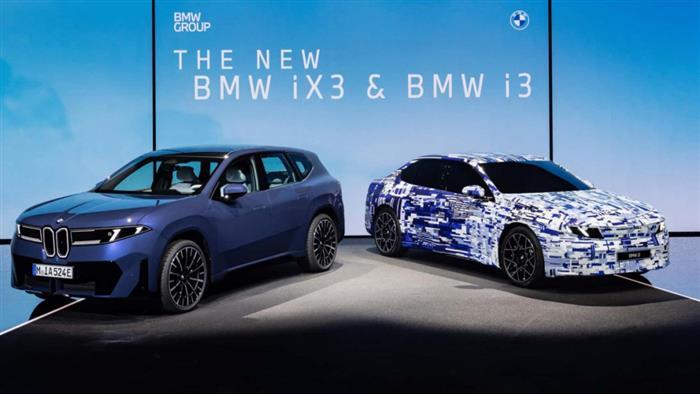
The joint venture and luxury brand sectors are experiencing uneven performance. BMW (China) saw a significant sales decline of 24.9% year-on-year, with a noticeable contraction in market share, totaling 525,000 vehicles. Volvo Asia Pacific achieved a 25% increase, but its sales base is relatively small. Traditional joint venture brands like Yueda Kia are largely stagnant or declining, with a continuously diminishing market presence.
Throughout the year, China's automotive market has entered a new stage of structural differentiation. Indigenous brands, leveraging their forward-looking strategies in the new energy vehicle sector and comprehensive industry chain advantages, continue to expand their leading position and challenge the high-end market. Emerging EV brands, through radical product innovation and user-centric operations, have rapidly reshaped traditional rankings. Meanwhile, some traditional brands that failed to adapt in time face the pressure of declining market share and rankings. Looking ahead, market competition will transcend simple volume battles, deepening into a comprehensive contest of technology roadmaps, ecosystem construction, and globalization capabilities. The pace of industry reshuffling and consolidation is expected to accelerate further.
【Copyright and Disclaimer】The above information is collected and organized by PlastMatch. The copyright belongs to the original author. This article is reprinted for the purpose of providing more information, and it does not imply that PlastMatch endorses the views expressed in the article or guarantees its accuracy. If there are any errors in the source attribution or if your legitimate rights have been infringed, please contact us, and we will promptly correct or remove the content. If other media, websites, or individuals use the aforementioned content, they must clearly indicate the original source and origin of the work and assume legal responsibility on their own.
Most Popular
-

List Released! Mexico Announces 50% Tariff On 1,371 China Product Categories
-
RMB Hits 32-Month High! Alpek Shuts Down PET Recycling Plant; Porsche Sales Plummet
-
Vynova's UK Chlor-Alkali Business Enters Bankruptcy Administration!
-

EU Changes ELV Regulation Again: Recycled Plastic Content Dispute and Exclusion of Bio-Based Plastics
-
Continental Plans to Begin Sale of ContiTech in Early 2026

