



Biodegradable Agricultural Mulch Film
Biodegradable agricultural film
From “White Pollution” to “Resting in Peace in the Soil”
More than 2 million tons of conventional polyethylene mulch film remain in fields every year, causing soil compaction and crop yield reduction, and have become a major hidden threat to agricultural development. Biodegradable mulch film, with the advantages of “naturally decomposing after use and leaving no residue,” has become a key solution to tackling the “white pollution” of farmland. Today, let’s talk about the material selection, modification methods, and practical applications of this “eco-friendly mulch film.”
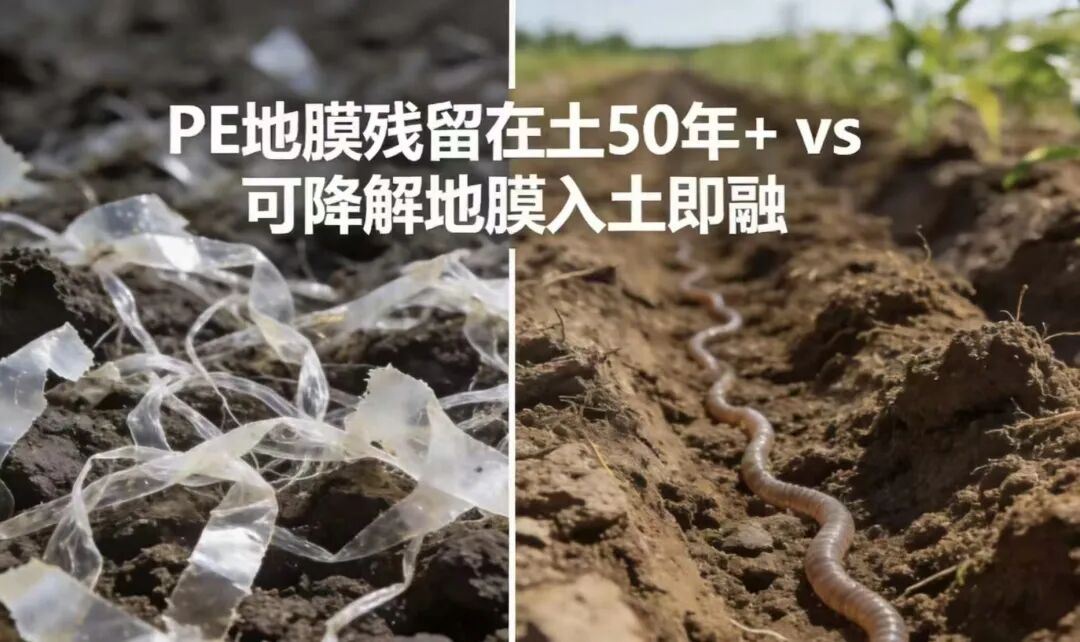
Application Background and Core Pain Points
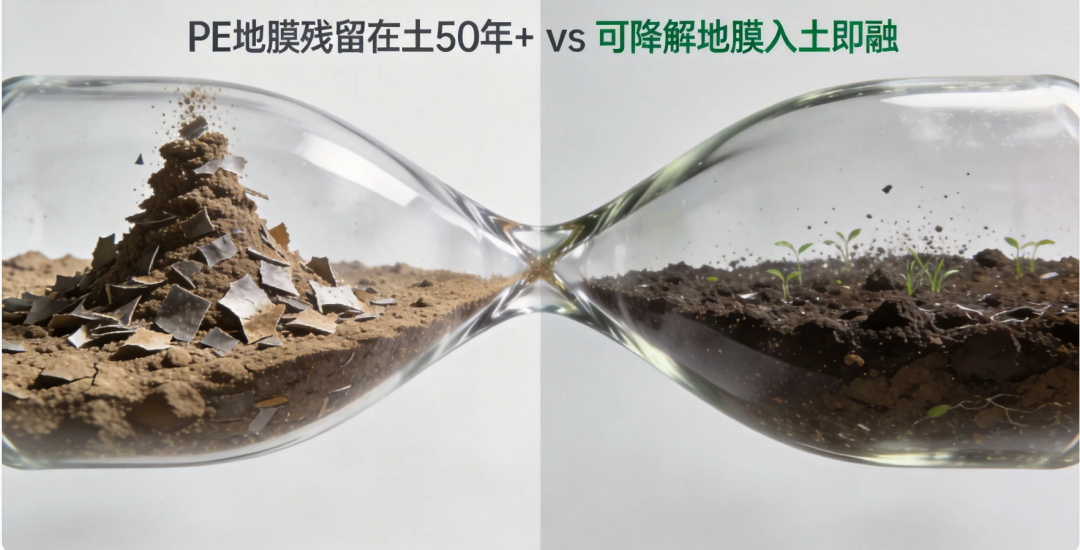
Traditional PE (polyethylene) mulch films have advantages such as low cost and easy processing, making them widely used in agriculture for insulation, moisture retention, and weed prevention. However, they have a fatal flaw—difficulty in degradation. These films can remain in the soil for over 50 years, and their accumulation year by year can damage soil structure, leading to soil compaction, reduced permeability, and adversely affecting crop root growth, ultimately resulting in decreased yields. At the same time, residual films can entangle agricultural machinery, contaminate water sources, and create a closed loop of "white pollution."
The core value of biodegradable mulch film lies in its ability to maintain sufficient strength during the crop growing period (3–6 months) to meet agricultural production needs, and then, after harvest, to decompose in the natural environment under the action of soil and microorganisms into carbon dioxide and water, truly achieving “returning safely to the soil” and fundamentally solving the problem of residual film pollution.
Core requirements for polymer materials
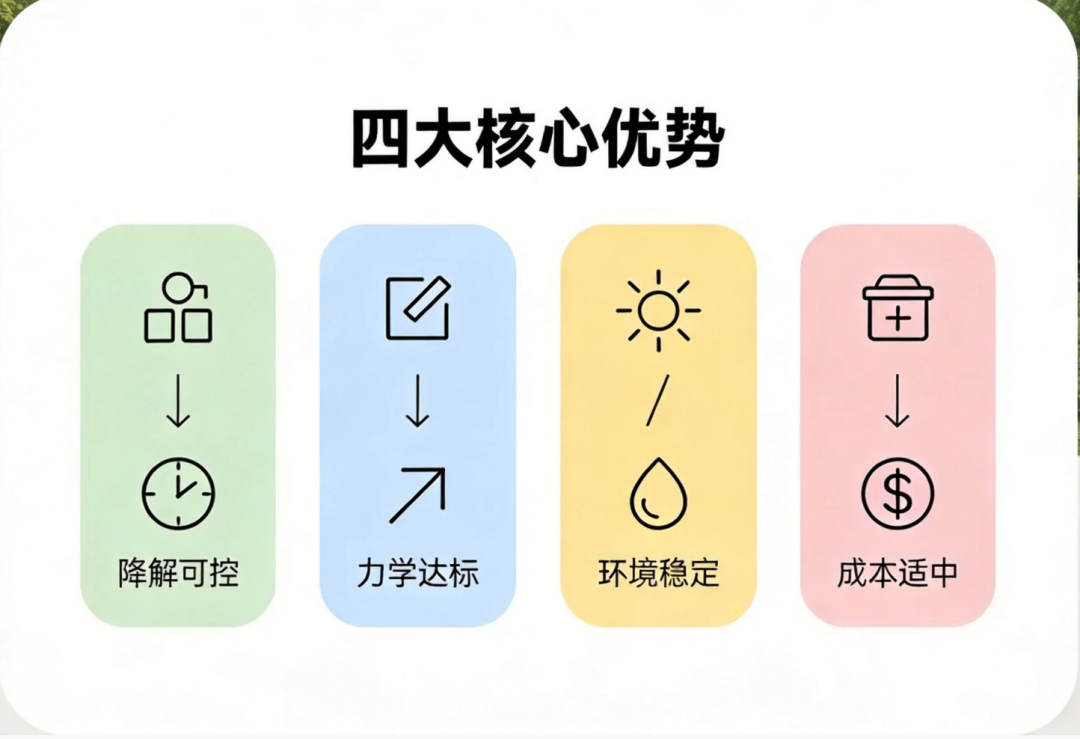
As agricultural mulch film, the material must balance both “practicality” and “environmental friendliness,” with the core requirements divided into four points:
Controlled degradability: strictly aligned with the crop growth period, maintaining intact morphology and mechanical strength for 3–6 months, then fully degrading within 1–2 months after harvest, leaving no residual film fragments and causing no impact on subsequent tillage.
Mechanical performance meets standards: tensile strength ≥15 MPa, elongation at break ≥300%, with good puncture resistance (resistant to puncture by weeds and stones) and abrasion resistance (resistant to wind exposure and friction from agricultural machinery), without becoming brittle at low temperatures or softening at high temperatures.
Strong environmental stability: can adapt to extreme conditions in farmland, resistant to high temperatures (surface temperature of 60°C+ in summer), resistant to ultraviolet radiation (does not age under prolonged exposure), and resistant to rainwater erosion, not easily damaged.
Moderate cost: Its price is close to that of ordinary PE mulch film (about 8,000–12,000 yuan/ton), making it suitable for large-scale agricultural promotion and avoiding difficulty in widespread adoption due to excessive cost.
Material Selection: Comparison of Mainstream Substrates and the Optimal Solution
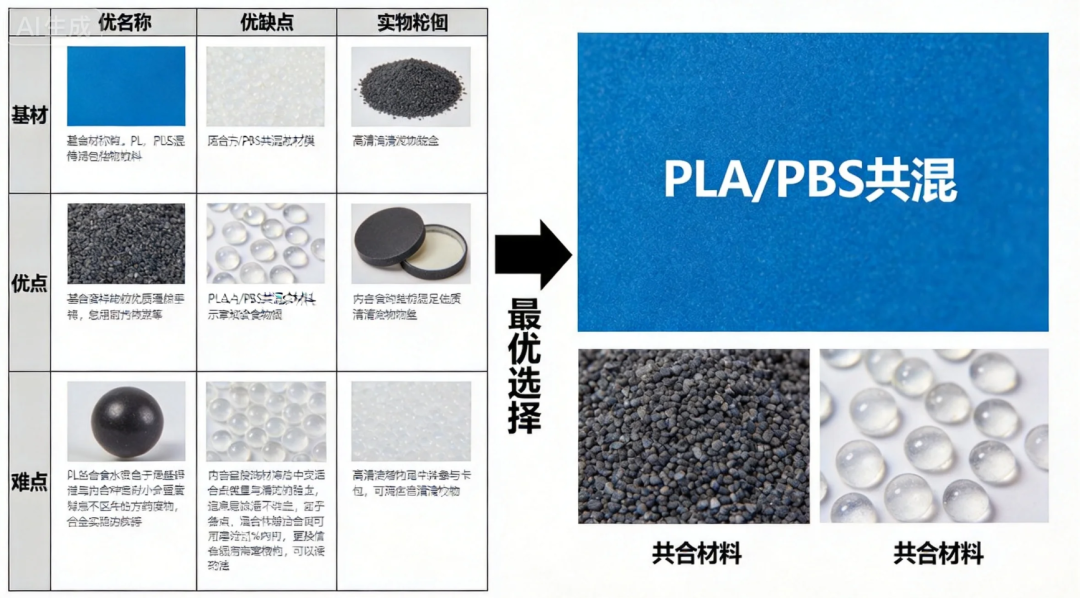
A single polymer material can hardly meet all the above requirements. At present, the mainstream approach is to use polymer blending and compounding. First, let us look at the advantages and disadvantages of commonly used base materials:
Polylactic acid (PLA): Its advantages are high strength, good transparency, and no harmful residues after degradation; its disadvantages are high brittleness and a slow degradation rate (pure PLA mulch film requires more than one year to fully degrade). When used alone, it is prone to cracking and cannot adapt to the complex conditions of the field.
Polybutylene succinate (PBS): Its advantages are good toughness, fast degradation rate (can completely degrade within 3–6 months), and relatively strong water resistance; its disadvantages are low strength, poor heat resistance, and a slightly higher cost than PLA, and it is prone to deformation when used alone.
Starch-based composite materials: their advantages are the lowest cost, complete biodegradability, and abundant raw material sources (corn and sweet potato starch); their disadvantages are poor water resistance and weak mechanical properties, and they easily soften and break when exposed to water, making long-term use impossible.
Optimal formulation: PLA/PBS blend (mass ratio 7:3) — combining PLA’s high strength with PBS’s high toughness and rapid degradability, and then adding a small amount of starch and compatibilizer, which can both control the degradation period and reduce costs, making it the current mainstream solution for agricultural applications.
Modification Methods: Making Mulch Film Not Just Usable, but Easy to Use
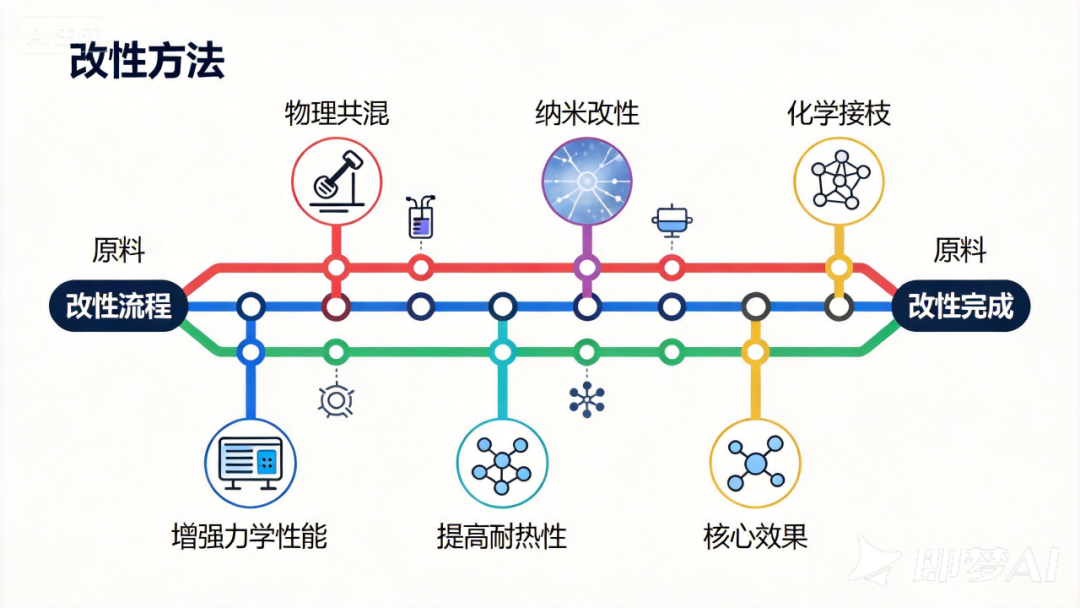
The pure PLA/PBS blend still has shortcomings (such as poor interfacial compatibility and insufficient heat resistance), so it is necessary to optimize performance through modification techniques. Below are three commonly used and effective modification methods:
1. Physical blending modification (most commonly used, lowest cost)
The key is to optimize performance by “blending different components.” A common formulation is: 70% PLA + 25% PBS + 5% starch + 3% compatibilizer (such as EVA).
Modification effects: the elongation at break of PLA increased from 10% to 400%, the impact strength increased fivefold, and the degradation period was precisely controlled at around 4 months, fully matching the growth cycles of most crops (corn, cotton, and vegetables). The process is simple, using twin-screw extrusion pelletizing followed by film blowing, and can be carried out by ordinary mulch film manufacturers.
2. Nanofiller Modification (High-Performance Upgrade)
To address the issue of "insufficient heat resistance and barrier properties," add a small amount of nano filler (1-3% nano montmorillonite or silica).
Modification effects: The heat resistance temperature of the mulch film is increased from 55°C to 75°C, enabling it to withstand high surface temperatures and intense sunlight exposure in summer; its moisture permeability is reduced by 40%, allowing it to better retain soil moisture and improve heat and moisture preservation; meanwhile, the nanoparticles enhance the strength of the film layer and reduce the breakage rate.
3. Chemical grafting modification (interfacial enhancement)
To address the problem of poor interfacial compatibility and easy delamination between PLA and PBS, maleic anhydride (MAH) grafting is applied to PLA/PBS to improve the interfacial adhesion between the two materials.
Modification effect: The tensile strength of the blend is increased by 20%, the film layer is uniform with no delamination, and aging resistance is significantly enhanced. After long-term exposure to sunlight, it is less prone to embrittlement, cracking, or peeling, with a service life extended by more than 30%.
Application Cases: From the Laboratory to the Fields
Modified biodegradable mulch films have been piloted and promoted in many regions across China, with remarkable results. The following are two typical cases:
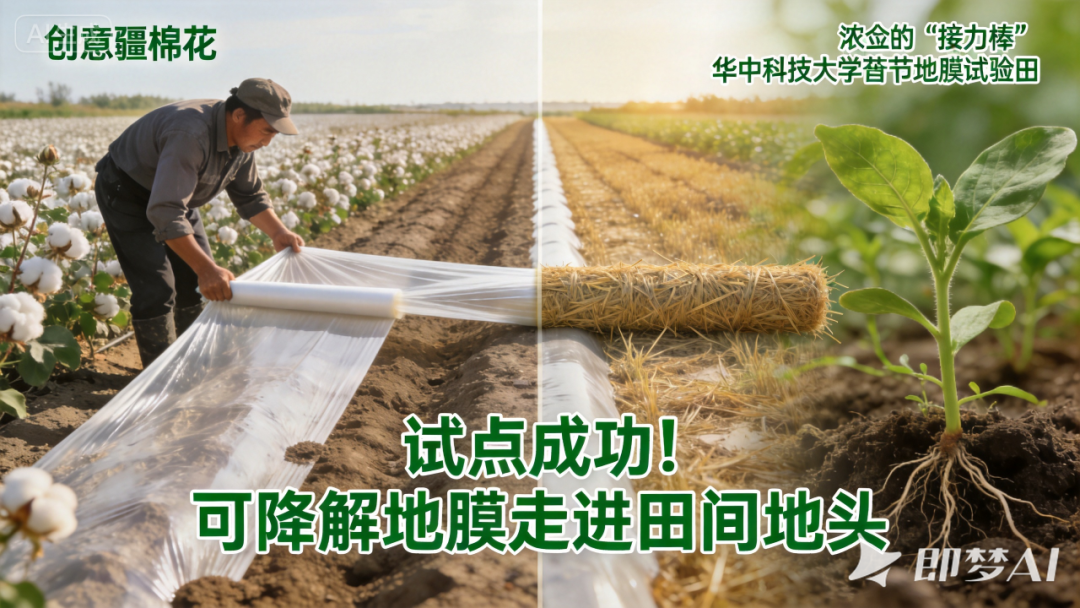
Case 1: Xinjiang Cotton Fields (2024 Pilot)
Materials used: PLA/PBS (7:3) + nano-modified montmorillonite, film thickness 0.015 mm;
Application effects: effectively conserves heat and moisture, increasing cotton yield by 12%; 45 days after cotton harvest, the mulch film is completely degraded with no residual film, avoiding the damage to cotton roots caused by traditional mulch film; it has now been promoted on 500,000 mu and has won wide recognition from cotton growers.
Case 2: Straw and mulch film at Huazhong Agricultural University (2025 innovative achievement)
Innovation: blending straw fibers (40%) with PLA/PBS not only reduces costs but also enables the resourceful utilization of straw.
Application effects: The stretch strength of the mulch film reaches 18 MPa, with a degradation period of 3 months, suitable for short-term crops such as rice and vegetables; the cost is reduced by 50% compared to ordinary biodegradable films, and it has been successfully piloted in Hubei and Hunan provinces, making it suitable for large-scale promotion.
Summary: Can the performance improvement achieve the expected target?
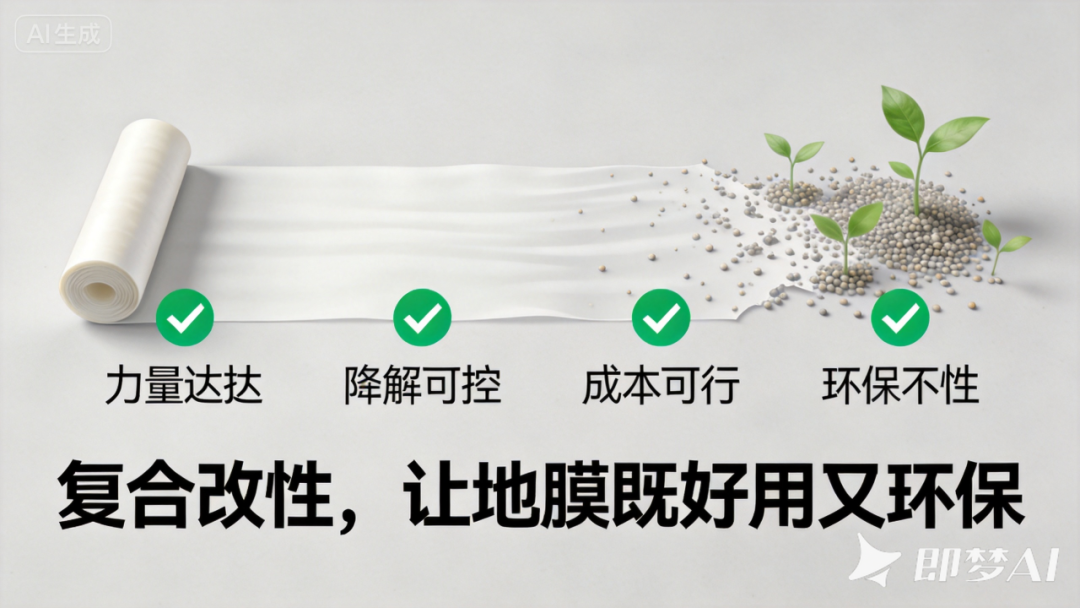
Through the "PLA/PBS blend + nanofiller + compatibilizer" composite modification technology, the performance of biodegradable film meets the requirements for agricultural application.
Mechanical properties: Comply with the national standard (GB 13735), with puncture resistance and wear resistance, suitable for field environments.
Biodegradable and controllable: degradation period of 3-6 months, precisely matches the crop growth cycle, with no residues.
Cost-feasible: after large-scale production, the price will be reduced to 9,000 yuan per ton, approaching that of ordinary PE mulch film;
Environmentally friendly and harmless: It decomposes to produce CO₂ and water, without polluting soil and water sources, aligning with the needs of green agricultural development.
Conclusion: Composite modification technology addresses the shortcomings of single materials. Biodegradable mulch film can fully replace traditional PE mulch film, making it the optimal solution for tackling “white pollution” in farmland and promoting green agricultural development.
【Copyright and Disclaimer】The above information is collected and organized by PlastMatch. The copyright belongs to the original author. This article is reprinted for the purpose of providing more information, and it does not imply that PlastMatch endorses the views expressed in the article or guarantees its accuracy. If there are any errors in the source attribution or if your legitimate rights have been infringed, please contact us, and we will promptly correct or remove the content. If other media, websites, or individuals use the aforementioned content, they must clearly indicate the original source and origin of the work and assume legal responsibility on their own.
Most Popular
-

A Look at the Material Suppliers Behind SpaceX
-
【Overseas Highlights】Celanese Shuts Its Korean Engineering Plastics Plant! BASF to Divest Coatings Business; Six Japanese Corporations Tap Into Plastic Chemical Recycling
-

Global Chemical Giants Accelerate Production Capacity Restructuring, Dow and Celanese Optimize Global Industry Layout
-
Name change without tax change: POM Anti-Dumping Duty Rate Inheritance Implemented
-
Gas Explosion Accident at Shanxi Tongzhou Group Liushenyu Coal Mine Results in 82 Deaths


