Beijing’s “New 32 Measures” Fully Explained: Policy Pushes Innovative Drugs and Medical Devices, Accelerating Adoption of Surgical Robots
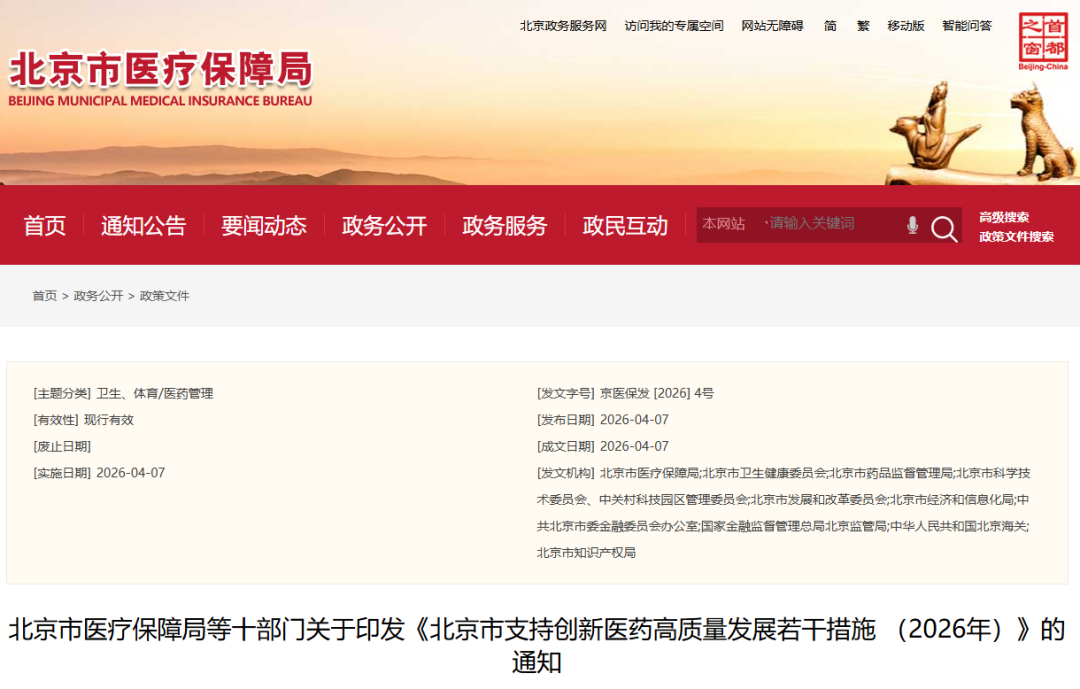
On April 7, 2026, the Beijing Medical Security Bureau, in collaboration with the Municipal Intellectual Property Office and nine other departments, officially released the "Several Measures for Supporting High-Quality Development of Innovative Pharmaceuticals in Beijing (2026)", commonly known as the "New 32 Articles." This marks the third time since 2024 that Beijing has introduced comprehensive support policies for innovative drugs and medical devices under the framework of 32 measures. This article will outline the core contents of the new policy across five major sections.
Policy Coordination Upgraded Again—Intellectual Property Office Joins In to Provide Full-Process Protection
Compared to the 2024 and 2025 versions, the 2026 version of the policy increased the number of co-issuing departments from 9 to 10, adding the Beijing Intellectual Property Office. This change directly addresses the intellectual property pain points in the innovative pharmaceutical and medical device industry during research and development, centralized procurement, and international expansion.
According to the new policy, Beijing will improve the intellectual property (IP) infringement risk screening and early warning mechanism in the field of centralized pharmaceutical procurement, implement joint credit sanctions, and strengthen overseas IP rights protection assistance services for the biopharmaceutical industry. This measure is not arbitrary: by the end of March 2026, the Beijing Municipal Medical Insurance Bureau, the Municipal Intellectual Property Administration, and the Municipal Drug Administration jointly issued the "Several Measures for Strengthening the Protection of Intellectual Property Rights in Innovative Pharmaceuticals in Beijing," establishing a cross-departmental consultation mechanism. The "New 32 Measures" elevate this to a full-process institutional guarantee, addressing key links in industrial development.
R&D Breakthroughs - Focusing on Frontier Technologies such as AI, Brain-Computer Interface, and Cell and Gene Therapy
The new R&D policy prioritizes deep collaboration between medical institutions and pharmaceutical companies and clearly outlines the annual list of key technological breakthroughs.
-
Artificial Intelligence and OrganoidsFocusing on AI drug prediction and organoids and organ-on-chip technologies, develop no less than 15 specialized models to accelerate candidate drug screening.
-
Drug DeliveryFocus on supporting cutting-edge technologies such as brain-penetrating delivery and nucleic acid delivery outside the liver, to solve industry challenges.
-
Brain-Computer Interface: Focus on the development of high-throughput flexible deep electrodes, simultaneously developing a 512-channel invasive product, to seize the high ground in brain science.
-
Cell and Gene TherapyPromote technological breakthroughs in at least eight key areas, including in vivo cellular reprogramming, and support the clinical translation of no fewer than 10 product varieties.
-
Immunotherapy and RadiopharmaceuticalsIdentify novel drug targets and advance the development of two candidate drugs; provide dedicated support for investigator-initiated clinical studies in the field of radiopharmaceuticals.
The new policy also requires expanding the pilot scope of research hospitals, promoting the proportion of self-funded R&D investment of pilot hospitals to be no less than 6% of medical income, and establishing a regular communication mechanism between clinical needs and industrial R&D. It also calls for the periodic compilation of development reports and clinical need lists forspecific sub-sectors in the medical and health field. It seems there was a part of the sentence that was left in Chinese. Here is the complete translation: The new policy also requires expanding the pilot scope of research hospitals, promoting the proportion of self-funded R&D investment of pilot hospitals to be no less than 6% of medical income, and establishing a regular communication mechanism between clinical needs and industrial R&D. It also calls for the periodic compilation of development reports and clinical need lists for specific sub-sectors in the medical and health field.
Production and Distribution End—Upgrading the CDMO Platform to Reduce Costs, Enhance Efficiency, and Expand Overseas
In the production and distribution sectors, the 2026 policy focuses on cultivating indigenous CDMO (Contract Development and Manufacturing Organization) platform capabilities and supporting industrialization collaborations between domestic pharmaceutical companies and multinational pharmaceutical enterprises.
Specific measures include:
-
Plan and construct dark labs and high-level professional incubators, and establish open pilot platforms.
-
Accelerate the construction of CDMO platforms in sub-fields such as small nucleic acids, cell and gene therapy, and drug delivery systems, and promote the international certification of existing antibody drug and high-end medical device CDMO platforms.
-
Allow commercial-scale batches of medicines (including new drugs, medicines for rare diseases, and drugs in short supply) that meet the release requirements to be directly marketed and sold after obtaining the approval, thus shortening the time to market.
-
Support Class I medical device manufacturers in establishing production sites across different regions, and extend the multi-warehouse collaborative logistics model to medical device wholesale enterprises.
In terms of imports and exports, efforts will be made to expand the variety and volume of temporarily imported drugs for rare diseases, broaden the scope of issuing export sales certificates, and encourage enterprises to go global through overseas investment, mergers, and acquisitions.
Clinical Application Side - Removing Evaluation Constraints, Surgical Robots Accelerate Hospital Adoption
Clinical application has been the biggest bottleneck for the implementation of innovative drugs and medical devices in previous years. Although the National Medical Insurance Administration has introduced the "three exclusions" policy (not included in the basic medical insurance self-pay rate index, not included in the monitoring of substitute products in centralized procurement, and related inpatient cases not included in the diagnosis-related group payment scope), hospitals still face constraints in actual management, such as average per-case costs and drug ratio performance evaluations.
The 2026 policy explicitly establishes a dedicated incentive and constraint mechanism: inclusion of the hospital adoption and utilization of nationally negotiated drugs and innovative pharmaceuticals and medical devices in core institutional performance evaluations, while excluding the impact of these products on conventional metrics such as per-visit average costs.
Surgical robots have become the top priority of the year. Four core initiatives include:
-
Include eligible robotic-assisted surgical techniques in clinical research.
-
Carry out clinical effectiveness and health technology assessment, and accelerate the introduction of a full range of surgical robots, including laparoscopic, orthopedic, neurosurgical, and interventional, into hospitals.
-
Promote an innovative surgical robot leasing model through a high-value medical equipment leasing platform.
-
Include indicators such as collaborative development of surgical robots, clinical effectiveness, and full-scenario applications in the performance monitoring of public hospitals.
In addition, the new policy clearly states: Class 1 innovative drugs and medical devices that are directly led by medical institutions through clinical research and successfully converted, will be given priority for inclusion in the hospital's procurement and usage directory after approval for market release.
Financing and Security - A Hundred Billion Yuan Fund, Special Loans, and Reserves for Listing on the Beijing Stock Exchange
Compared with the previous two years, the 2026 policy places greater emphasis on market-oriented approaches to empowerment. Key arrangements include:
-
Leverage the guiding role of municipal government investment funds and collaborate with central and district-level funds to achieve an investment scale exceeding RMB 10 billion.
-
Support leading enterprises, insurance and banking capital, and domestic and overseas private equity institutions in jointly establishing venture capital funds and merger & acquisition funds.
-
Explore and LaunchInnovative Pharmaceutical and Medical Device R&D Special Loan Pharmaceutical and Medical Technology Innovation Insurance ProductsImprove the early-stage R&D risk-sharing mechanism.
-
Establish a reserve pool of key enterprises targeted for listing, with a focus on reserving and supporting no fewer than 10 pharmaceutical companies planning to go public by 2026, and accelerating their listing process on capital markets such as the Beijing Stock Exchange (BSE).
This investment and financing system is integrated with intellectual property protection: patent early-warning, infringement risk screening, and overseas rights enforcement assistance collectively reduce investment risks and enhance investor confidence.
From tackling cutting-edge technology in R&D, to upgrading CDMO in production and circulation, to breaking through evaluation barriers and promoting the adoption of surgical robots in clinical applications, and to protecting intellectual property and providing a solid foundation with billions of dollars in investment and financing, Beijing's "New 32 Measures" have established a policy loop covering the entire life cycle of innovative drugs and medical devices. Whether this combination of measures can continuously drive Beijing to become a global center for medical innovation, the actual results in 2026 will be worth following.
【Copyright and Disclaimer】This article is the property of PlastMatch. For business cooperation, media interviews, article reprints, or suggestions, please call the PlastMatch customer service hotline at +86-18030158354 or via email at service@zhuansushijie.com. The information and data provided by PlastMatch are for reference only and do not constitute direct advice for client decision-making. Any decisions made by clients based on such information and data, and all resulting direct or indirect losses and legal consequences, shall be borne by the clients themselves and are unrelated to PlastMatch. Unauthorized reprinting is strictly prohibited.
Most Popular
-
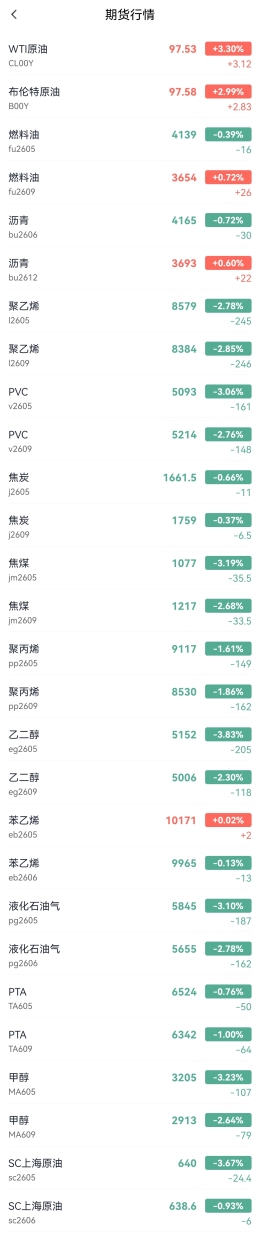
Middle East Tensions Escalate Again? U.S.-Iran Talks Collapse Before Starting, Crude Oil Volatility and Plastic Futures Retreat, Plastics Market Faces New Test
-

Saudi Core Petrochemical Zone Hit! Trump Issues "Final Deadline" Threat to Iran! Over 5 Million Tons of Production Capacity Halted in April
-

Magna Announces Sale Of Lighting And Roof Systems Business
-

Vimar Launches Linea Switch Range Using Envalior Recycled Material, Cutting Carbon Footprint by Over 80%
-

Mdi tariff slashed from 511% to 85%—can wanhua reenter u.s. market?