



Bba's 48% price cut in five years: From Sales Decline to Material "Downgrading," What Impact on Small and Medium Auto Plastic Enterprises?
Special Plastic Vision Observed on February 4th, as the industry price war further escalates, Mercedes-Benz took the lead in announcing adjustments to the manufacturer's suggested retail prices for some models at the beginning of this year, with price reductions of approximately 10%.
In fact, in the past few years The actual transaction prices of BBA (Mercedes-Benz, BMW, Audi) in the Chinese market have already dropped significantly. This adjustment is more about maintaining dealer profits than truly benefiting consumers. As the first luxury brand to publicly cut prices this year, Mercedes-Benz's move is more like a signal: the BBA price cut wave is far from over and has only entered a new stage.
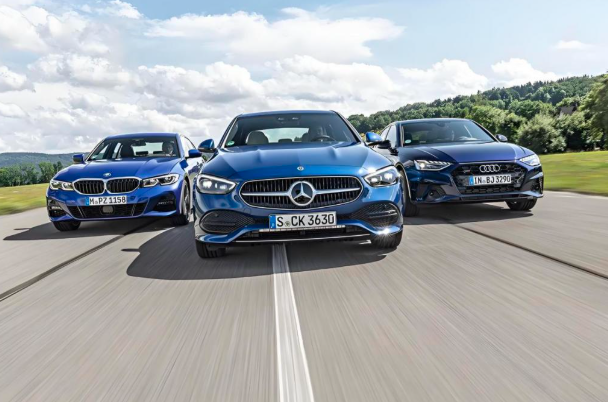
Source: Mercedes-Benz
BBA's Five-Year Drop is Astonishing, Pricing Logic Shifts to a New Stage
In China's luxury car market, Mercedes-Benz, BMW, and Audi have long dominated, with their core volume-driving lineup concentrated in the mid-size sedan segment. These three categories – C-Class/3 Series/A4L (compact executive cars), E-Class/5 Series/A6L (executive cars), and GLC/X3/Q5L (compact SUVs) – account for nearly 60% of BBA's total sales in the Chinese market. Over the past five years, the actual transaction prices of these three types of vehicles have continued to decline, with the decrease far exceeding the slight adjustments to the official MSRP.
Data shows that in the mid-size sedan segment, From 2021 to 2025, the terminal price of a mid-to-high configuration Mercedes-Benz C260 L dropped from 390,000 RMB to 260,000 RMB, a decrease of 30%; the BMW 325Li M Sport Night Edition fell from 340,000-360,000 RMB to 220,000-240,000 RMB, a decrease of 35%; and the Audi A4L 45 TFSI quattro Premium Dynamic fell from 370,000 RMB to less than 240,000 RMB, a decrease of over 35%. In the mid-size SUV segment, the cumulative drop in terminal prices from 2020 to 2025 reached 30%-48%, with the Audi Q5L experiencing the largest decrease (30%-34%), followed by the BMW X3 (26%-30%), and the Mercedes-Benz GLC being relatively more resilient (22%-26%). The mid-to-large size sedan segment was also not spared, with the Mercedes-Benz E300 L Luxury experiencing a cumulative decrease of 23%-27% over five years, the BMW 5 Series 530Li Leading a decrease of 27%-31%, and the Audi A6L 45TFSI Premium a decrease of 31%-35%.
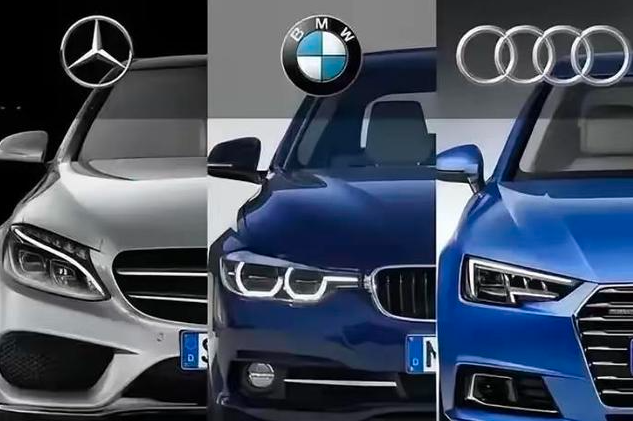
Source: Youjia
Over the past five years. The terminal prices of the three main models of BBA have generally accumulated a decrease of 22%-35%. Audi has the most aggressive price cuts across its entire lineup, followed by BMW. Mercedes-Benz is relatively stable, but its price reductions still exceed [a certain level/expectation]. 20%. The core driver of this round of price cuts is the strong impact of new energy vehicles. In the price range of 250,000 to 500,000 yuan, new energy models such as Li Auto, AITO, Tesla, NIO, Xiaomi, and Zeekr have diverted a large number of potential BBA customers with their advantages in intelligence, power performance, or spatial comfort. Faced with competition, BBA has no better choice than to cut prices, but price cuts can only stabilize sales in the short term and cannot fundamentally solve the gap between brand premium and experience value.
The next two years. BBA's price cuts will narrow, shifting towards indirect price reductions through increased features without price increases, launching limited/commemorative editions (such as the Mercedes-Benz 140th Anniversary Edition in 2026), and optimizing financial policies (zero down payment, low interest rates). This approach maintains brand premium while enhancing cost-effectiveness.
Will material quality be reduced behind the price cuts of BMW, Benz, and Audi (BBA)?
The answer is no, and the application of plastics is a long-term trend.
Current consumer concern is widespread. BBA's significant price cuts don't necessarily mean material downgrades. From an industry logic perspective, BBA's price reductions are more likely a strategic adjustment driven by market competition and cost pressures, rather than cost-cutting through reduced material quality. Conversely, Specialized Plastics World believes that the application of high-performance materials, represented by plastics, is a long-term trend in the automotive industry for lightweighting, cost reduction, and efficiency improvement, and leading automakers have already incorporated it into their core strategies.
First, translate the above content into English and output the translation directly, without any explanation. Plastic replacing metal is an industry consensus. Automotive lightweighting is a response to fuel consumption regulations such as... The "Passenger Car Fuel Consumption Limit" to be implemented in 2026, and the corporate average fuel consumption target of 3.3L/100km by 2030), and improving range (electric vehicles consume more electricity as they get heavier) all hinge on key pathways. Plastics, due to their low density (only 1/4 to 1/7 of steel), ease of molding, corrosion resistance, and high design freedom, have become the core material for "plastic replacing steel."
In the following, taking BMW as an example, BMW's CMF (Color, Material, and Finishing) strategy proactively planned for plastic applications as early as the end of the last century. Around 2010, with the N20 engine era, the BMW 5 Series pioneered the use of plastic oil pans (while the industry generally used metal at the time). In 2020, the BMW 3 Series continued with ABS plastic oil pans and equipped plastic fuel tanks – the plastic oil pans reduced weight while improving impact resistance, and the plastic fuel tanks enhanced corrosion resistance.
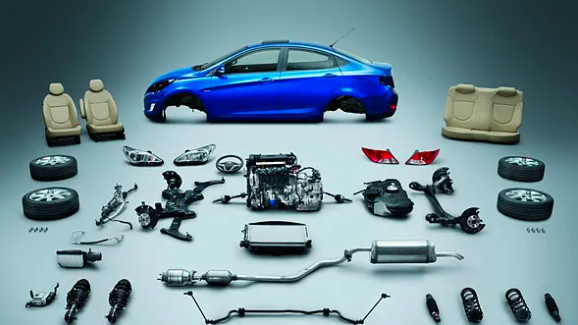
Source: Automotive Materials Network
BMW's use of plastics extends throughout the entire vehicle. The 7 Series boasts a leading 14.5% plastic component ratio in its body, utilizing materials like thermoplastic and thermosetting plastics to achieve lightweighting while ensuring strength and durability. For example, the car's side panels use innovative thermoplastic materials, reducing the weight by approximately 4 kg per vehicle compared to traditional thick steel panels, thus improving dynamic performance. The toughness of plastic components can also absorb more energy in minor collisions, enhancing safety.
Secondly, Recycled plastics and improved recycling systems; material strategies place greater emphasis on sustainability. Environmental policies are becoming stricter (global low-carbon economy, domestic...). Against the backdrop of China's "Dual Carbon" goals and the EU's mandatory requirements for recycled plastics, BMW is further extending its plastic strategy to the circular economy. In new models by 2025, approximately 30% of interior and exterior components will be made from recycled plastics derived from marine waste such as fishing nets and ropes. By 2030, the company plans to increase the proportion of recyclable materials in thermoplastic components to 40%. Specific examples include the i7's interior panel coverings using renewable nylon Econyl (reducing carbon emissions by 80%), and the roof lining and ABC pillar trims using 100% recycled plastic bottle PET fibers. The iX/X1 carpets and floor mats use recycled nylon yarn, and the X3's radiator air intake uses recycled polypropylene. The recycled plastics used include ABS, PA6, and PBT+PET, and their extensive application across various components is among the industry's leading practices.
As can be seen. BBA's price reduction logic is not related to material downgrading. On the contrary, leading automakers are innovating with materials like plastics to balance lightweighting, performance, environmental protection, and cost, which is an inevitable direction for industry upgrades.
How are small and medium-sized plastic enterprises affected by the intense competition and sluggish sales in the automotive industry?
In 2025, new energy vehicle production and sales will exceed 16 million units (accounting for 47.9% of total new car sales). The new fuel consumption regulations, effective January 1, 2026 (with targets 48% stricter than the previous version), will further promote lightweighting. Given the backdrop of intense competition within the automotive industry, slowing sales growth (with new energy vehicle sales increasing by 28.2% year-on-year in 2025, but gasoline vehicles under pressure), will the automotive plastics industry be impacted? As a practitioner in the automotive plastics industry, I will provide a rational analysis from the following perspectives.
Firstly, in the automotive industry chain, OEMs (such as... BBA and new energy vehicle startups face direct market competition, bearing the burden of price cuts, R&D investment (such as in new energy transition), and channel maintenance. Tier-one component suppliers (such as Bosch and Continental) need to cooperate with OEMs to develop customized parts, facing order fluctuations and technological iteration pressure. Automotive plastic companies are often positioned as Tier 4 or Tier 5 suppliers, primarily providing standardized or customized modified plastic granules. Their order volume is directly correlated with OEM sales, but their cost structure is more transparent. ——Plastic raw materials (such as PP, ABS, PA) have transparent pricing, mature processing technology, and relatively stable profit margins. 。
Additionally, despite the pressure on sales of gasoline vehicles, the penetration rate of new energy vehicles continues to increase. reaching 58% by September 2025), and the demand for lightweighting is even more urgent for new energy vehicles due to the weight of the batteries (compact pure electric vehicles are about 311kg heavier than gasoline vehicles). "The trend of 'plastics replacing steel' is deepening." . Currently, the domestic usage of modified plastics for bicycles has reached 200kg, with an estimated market size of 223.3 billion yuan by 2027; the demand for plastics in new energy vehicles is projected to account for over 40% of the entire automotive plastics market by 2026. The demand for high-performance plastics in scenarios such as interiors (tactile feel, antibacterial, paint-free), exteriors (lightweighting, environmental friendliness), and chassis (weight reduction, stable handling) continues to grow, offsetting the impact of declining sales of some gasoline vehicles.
Finally, the increasing demands for intelligence and comfort in automobiles are placing higher requirements on interior materials (such as smart surfaces and antibacterial functions), driving the development of plastics towards high performance (such as low- Upgrades include VOC and high heat resistance, as well as high added value features like paint-free and metallic appearance; exterior plastics are evolving towards biodegradable and composite materials; chassis plastics are expected to see market growth driven by weight reduction and handling performance requirements. Automotive plastics companies that seize opportunities in material upgrades (such as developing recycled plastics and functionalized modified materials) may actually expand into new growth areas. 。
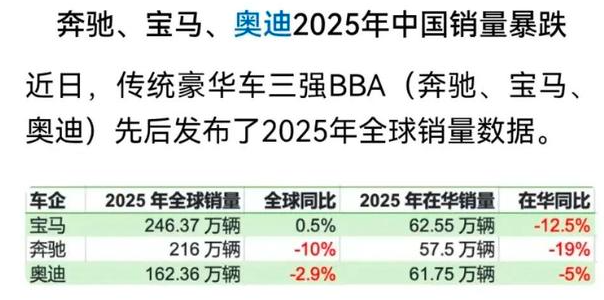
Source: The Paper
Therefore, Special Plastic Vision believes that the automotive industry's intense competition and sluggish sales have a limited direct impact on automotive plastics. The pressure is more concentrated on OEMs and leading suppliers. Plastic companies are at the end of the industrial chain, with transparent costs and demand supported by the lightweighting trend. Furthermore, material upgrades offer room for increased added value, making the industry's prospects still optimistic.
Epilogue
In 2026, Mercedes-Benz took the lead in price reductions, initiating a new round of price adjustments among the BBA (Mercedes-Benz, BMW, and Audi) brands. Behind the 48% drop over five years is the comprehensive impact of new energy vehicles on the fuel vehicle market, as well as the difficult balance traditional luxury brands face between experiential value and brand premium. However, price reductions do not equate to reduced features. The application of high-performance materials, represented by plastics, is actually a core strategy for the industry's lightweighting and sustainable development, as evidenced by BMW's CMF practices and recycled plastic initiatives.
For small and medium-sized plastic enterprises, there's no need to be overly pessimistic about the automotive industry's involution and sales fluctuations. Automotive plastics are at the end of the industrial chain, with transparent costs and demand supported by the lightweighting trend. Furthermore, material upgrades drive increased added value. Under the major trends of "plastics replacing steel" and recycling, automotive plastics have not only avoided marginalization but have become important participants in the automotive industry's transformation. In the future, with the deepening of new energy and intelligence, the application scenarios and innovation space for automotive plastics will continue to expand, making the industry's prospects worth anticipating.
【Copyright and Disclaimer】This article is the property of PlastMatch. For business cooperation, media interviews, article reprints, or suggestions, please call the PlastMatch customer service hotline at +86-18030158354 or via email at service@zhuansushijie.com. The information and data provided by PlastMatch are for reference only and do not constitute direct advice for client decision-making. Any decisions made by clients based on such information and data, and all resulting direct or indirect losses and legal consequences, shall be borne by the clients themselves and are unrelated to PlastMatch. Unauthorized reprinting is strictly prohibited.
Most Popular
-

Key Players: The 10 Most Critical Publicly Listed Companies in Solid-State Battery Raw Materials
-

Vioneo Abandons €1.5 Billion Antwerp Project, First Commercial Green Polyolefin Plant Relocates to China
-
Clariant's CATOFIN™ Catalyst and CLARITY™ Platform Drive Dual-Engine Performance
-
Multifaceted Collaboration: PA Prices Rebound Against Trend to Break Through
-
Dow suffers poor performance, announces major layoffs of 4,500 employees

