As Factory Shutdowns Intensify, Europe’s Chemical Industry Calls for Pro-Industry Carbon Emission Trading System (ETS) Reform
The revision of the EU Emissions Trading System (ETS) in July will determine whether the EU can achieve decarbonization while maintaining industrial competitiveness. In short, it is about whether decarbonization can be achieved without leading to deindustrialization.
On June 30, 2026, Dr. Markus Kamieth, President of the European Chemical Industry Council (Cefic), called on the European Commission not to attach conditions to free emissions allowances in the reform of the EU Emissions Trading System (EPS), warning that such conditions would jeopardize the competitiveness of the chemical industry. Details are as follows:
The revision of the European Emission Trading System (ETS) comes at a critical moment for the European chemical industry. Since 2022, the capacity of the European chemical industry has lost about 10%, and the number of restructurings and bankruptcies is unprecedented. This concerning trend is still ongoing. The loss of industrial production means the loss of jobs, innovation capabilities, value chains, and strategic autonomy.
If Europe weakens the industrial foundation that supports the green transition, it will not be able to successfully achieve the green transition.
This sends a clear signal and urgent call to action for policymakers: the framework of the European Emissions Trading System (ETS) must be established before 2030. Europe can no longer afford a system that tightens faster than the actual pace of industry transformation. From the adjustment path of emission caps to free allocations, key parameters must reflect the actual conditions of the industry, global competition, and the availability of favorable conditions. Otherwise, the consequences are predictable: investments will withdraw before emissions reduction occurs in Europe.
This also applies to the update of the EU Emissions Trading System (ETS) benchmarks for 2026–2030. For the chemical industry, these results are mostly too high and unrealistic, failing to reflect the severe situation our industry is facing. These updates seriously weaken the competitiveness of European industry.
The risk of carbon leakage is exacerbated by the slow progress of related enabling conditions: persistent delays in grid and infrastructure development and access, limited availability of affordable low-carbon energy, and weak market demand for low-carbon products. At the same time, companies are being required to make massive investments in emissions reduction—often without a viable business case.
In the upcoming reforms,Carbon emissionsThe Emissions Trading System (ETS) must support decarbonization, not create a dilemma for companies by attaching additional conditions to their continued access to free allowances. Free allowances are a safeguard against carbon leakage, not an investment subsidy. Companies should not be forced to invest in technologies that have not yet been deployed at scale, are not economically viable, or lack market support, while also facing reduced free allocations and rising carbon costs. This is not a credible transition pathway.
The carbon emissions trading system is a powerful tool. However, in its current design, carbon pricing mechanisms cannot achieve industrial transformation—and by themselves, they cannot do so either. Carbon pricing can only work when the right enabling conditions are in place: access to reasonably priced low-carbon energy, the necessary infrastructure, and a well-functioning low-carbon product market. If these conditions are lacking, tightening the emissions trading system (ETS) may instead become a cost driver rather than a driver of transformation.
Europe’s climate ambition is clear, but ambition must work in the real economy. Businesses will invest only when the framework is predictable, projects are financeable, and global competitiveness is maintained. If these conditions are not met, investment will go elsewhere.
The goal must be clear: to drive Europe’s industrial transformation, not deindustrialization.
The global competitiveness gap of the EU is widening.
Today, Europe’s operating environment is vastly different from when its climate policies were first formulated. According to forecasts by the Organisation for Economic Co-operation and Development (OECD) and the International Monetary Fund (IMF), in the coming years the EU economies are expected to remain among the slowest-growing in the G20, while the gap between Europe and major competitors such as the United States and China continues to widen.
European industry is facing structurally higher energy costs. This is not a short-term fluctuation, but a trend. The International Energy Agency’s (IEA) *Electricity 2026* report underscores the severity of this challenge. The report forecasts that by 2025, electricity prices for energy-intensive industries in the European Union will remain high, averaging more than twice the level in the United States and nearly 50% higher than in China. Wholesale electricity prices show the same trend: among the markets analyzed by the IEA, the EU has the highest electricity prices, with a gap of twice that of the United States, while also being significantly higher than those in India, Australia, and Japan. The report also points out that the price of EU Emissions Trading System (ETS) allowances has played an important role in sustaining upward pressure on electricity costs.
If European industrial companies pay far more for electricity than their global competitors, while also bearing higher climate-related regulatory costs, policymakers cannot take it for granted that companies will remain in the EU and invest and create jobs within the bloc.
EU Emissions Trading System (ETS) Revision: Time to Rebalance
The latest report from the European Chemical Industry Council (CEFIC) states that since 2022, the number of chemical plant closures in Europe has increased sixfold, with capacity losses reaching 37 million tonnes—about 9% of Europe’s total capacity—and resulting in the loss of 20,000 direct jobs. The report also points out that new investment has slowed significantly, and that energy cost competitiveness is the main reason behind corporate bankruptcies.
The key to restoring Europe's industrial competitiveness lies first in obtaining reasonably priced and secure energy. For many industries, energy is the cornerstone of competitiveness.
The EU’s climate policy model is based primarily on the cost pressure created by carbon dioxide emissions quotas, which may have been reasonable when the EU was economically strong and faced no formidable competitors capable of expanding industrial production more cheaply and rapidly. But today’s world is entirely different.
Therefore, the competitiveness of the European Union should not primarily be based on imposing high costs of the EU Emissions Trading System (ETS) on European industries.
【Copyright and Disclaimer】The above information is collected and organized by PlastMatch. The copyright belongs to the original author. This article is reprinted for the purpose of providing more information, and it does not imply that PlastMatch endorses the views expressed in the article or guarantees its accuracy. If there are any errors in the source attribution or if your legitimate rights have been infringed, please contact us, and we will promptly correct or remove the content. If other media, websites, or individuals use the aforementioned content, they must clearly indicate the original source and origin of the work and assume legal responsibility on their own.
Most Popular
-

Kingfa Sci. & Tech., 1,000-Ton Pilot PEI Line Put Into Production! Polyetherimide: Who Is Laying Out the Market, and What Is the Production Capacity?
-
2026 Electronic Components Price Increase Notice
-

A Look at the Material Suppliers Behind SpaceX
-
Research progress on surface modification of white carbon black and its applications
-
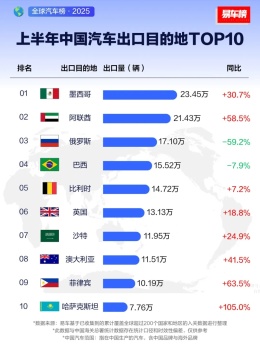
Major Shake-Up! Latest China Auto Export Rankings Released