Search History
Clear
Trending Searches
Refresh

A Month After Germany Launched a €3 Billion EV Subsidy, What Door Has It Opened for Chinese Automakers?

European M&A and Investment 2026-06-27 09:37:41

On May 19, 2026, Germany’s new electric vehicle subsidy application platform officially went online.

The German government plans to allocate 3 billion euros from the Climate and Transformation Fund to support approximately 800,000 electric vehicles from 2026 to 2029. The subsidies apply to new vehicles registered for the first time after January 1, 2026, and both private consumers purchasing and leasing are eligible to apply.

This policy simultaneously aims to achieve three goals: reducing the cost of purchasing electric vehicles for low- to middle-income households, promoting emission reductions in the transportation sector, and increasing orders for the transitioning German automotive industry. One month after the policy's launch, whether Chinese car brands will become the main beneficiaries has quickly become a focus of attention for the German automotive industry.

Current data does not support the claim that “German subsidies mainly flow to Chinese automakers.” As of mid-June, vehicles from Chinese manufacturers accounted for less than 15% of subsidy applications, and their share among battery electric vehicle applications was even lower. In 2025, about 80% of newly registered battery electric vehicles and plug-in hybrid vehicles in Germany were produced in Europe.

Chinese brands have not yet dominated this subsidy, but they have already become a factor that German policymakers must take into account.
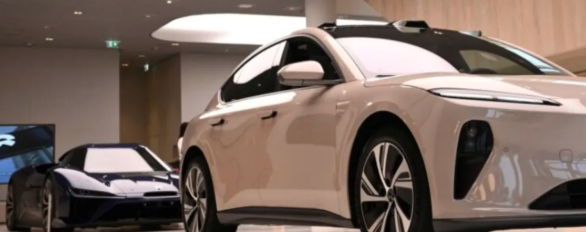
1. Germany’s subsidies support consumers rather than directly protecting German automakers.

The basic subsidy under Germany's new policy is determined by the vehicle's powertrain type.
The basic subsidy for pure electric vehicles is €3,000, while the basic subsidy for plug-in hybrid and range-extended vehicles is €1,500. Households with lower incomes or children may receive additional subsidies. Households that meet all the conditions can receive up to €6,000 for the purchase of a pure electric vehicle and up to €4,500 for the purchase of a plug-in hybrid vehicle.
Applicants' annual taxable household income should generally not exceed 80,000 euros. For families with children, the income limit can be increased to 90,000 euros. This design has a. The German government aims to promote electric vehicles, which were previously mainly purchased by high-income individuals and corporate fleets, to the ordinary family market.
The policy does not stipulate that the subsidy can only be used for German brands, nor does it require the vehicles to be produced in Germany. Consumers who purchase BYD, MG, XPeng, Tesla, Hyundai, Volkswagen, or BMW can apply as long as their personal income and the vehicle meet the specified requirements.
The German government hopes to expand demand for electric vehicles, and it wants the additional demand to be mainly captured by European automakers. However, the policy tools do not directly guarantee this outcome. Fiscal subsidies can expand the market, but they cannot determine which domestic companies receive the orders.
II. The Opportunity for Chinese Brands Comes from Pricing Structure, Not Subsidy Loopholes
The advantages of Chinese brands entering the German market are first reflected in vehicle pricing and financing solutions.
The standard starting price of the BYD Dolphin Surf in Germany is €22,990. In the first half of 2026, BYD introduced a manufacturer purchase incentive. For consumers eligible for the maximum government subsidy, the theoretical purchase cost can be reduced to €12,990 after combining the manufacturer incentive with the subsidy.
This price does not apply to all buyers. The government subsidy of up to €6,000 is only available to applicants with lower incomes who meet the household eligibility requirements, and consumers must apply for and obtain approval for the subsidy themselves.
The monthly rental price also needs to be calculated in the context of the full contract. BYD’s Dolphin Surf leasing plan is advertised at 124 euros per month, but it also requires a 6,000-euro down payment, a 48-month lease term, and an annual mileage limit of 5,000 kilometers. Comparing the monthly rental figure alone can easily underestimate the consumer’s actual total expenditure.
This pricing model remains competitive.
Chinese car manufacturers combine manufacturer discounts, government subsidies, financial leasing, and entry-level models to lower the cash threshold for consumers when using electric vehicles for the first time. German consumers first see not the manufacturing cost of the car, but the down payment, monthly payments, and total cost over four years.
German automakers can also use this approach for promotions. The difference for Chinese companies is that the original pricing of some models has already entered a range acceptable to ordinary European households, while manufacturers still have some room to cut prices. Subsidies have not created a cost advantage for Chinese brands. They have merely amplified the existing cost gap in front of consumers.
III. Chinese Automakers Are Still in the Channel-Building Stage in Germany
Chinese car brands are growing rapidly in Germany, though their market base remains limited.
BYD’s new vehicle registrations in Germany in 2025 were approximately 23,400, about seven times higher than in 2024. During the same period, BYD’s dealership and service network in Germany expanded from 26 locations at the beginning of the year to 150, and the company plans to reach 350 by the end of 2026.
This change is more important than monthly sales.
The German automotive market relies on dealers, service and repair networks, parts supply, insurance, auto financing, and used-car residual value management. When consumers buy a car from an unfamiliar brand, they consider not only its features and price, but also whether there are service centers nearby, whether parts can be obtained promptly after an accident, and whether the car can be resold smoothly a few years later.
In the past, the main weakness of Chinese automakers in Europe was not a lack of cars, but a lack of a complete local operating system.
The rapid expansion of dealer networks shows that Chinese automakers have shifted from import-based sales to local market development. As the number of channels increases, they must also address service quality, technical training, spare parts inventory, after-sales costs, and dealer profitability.
Germany’s €3 billion subsidy can help Chinese brands attract more first-time buyers, but it cannot automatically build brand loyalty. The first purchase may be driven by price, while the second purchase depends on the service experience and the resale value of the vehicle.
Tariffs will not eliminate the market competitiveness of Chinese automobiles.
Starting in 2024, the European Union began imposing additional countervailing duties on pure electric vehicles produced in China. Different companies are subject to different tariff rates, with the overall range being 7.8% to 35.3%. The tariffs have increased the cost of directly exporting complete vehicles from China to Europe and have also prompted Chinese automakers to redesign their European supply chains.
In January 2026, the European Commission released guidelines for price commitment applications. Chinese exporters can submit proposals that include minimum import prices, sales channels, import quantities, cross-compensation, and European investments, which will be reviewed by the EU item by item. The price commitment does not set a uniform requirement for all Chinese electric vehicles to be sold at a specific minimum price, nor is there a universal bottom price of 35,000 euros applicable to all companies.
In February 2026, the EU accepted the price commitment proposal for the Cupra Tavascan produced by Volkswagen Anhui. This model can be exempted from the corresponding anti-subsidy duties upon meeting the conditions of minimum import price, import quantity, and European investment.
This case shows that the EU’s automotive trade policy is shifting from a single-tariff approach to a combined management approach involving tariffs, prices, quantities, and local investment.
Chinese automotive companies will find it difficult to rely solely on production in China, shipping exports, and selling in Europe for long-term expansion. Tariffs, rules of origin, subsidy conditions, and industrial policies will collectively drive Chinese enterprises to establish production, research and development, supply chain, and service capabilities in Europe.
Germany’s subsidy policies address the demand side, while the EU’s trade policies change the mode of supply. Both ultimately point toward localization.
V. The Real Opportunity Lies in the Local Automotive Service Ecosystem
The next phase for Chinese cars in Europe is not just to continue selling more complete vehicles.
Dealer networks, repair centers, parts warehousing, car rental, fleet management, charging infrastructure, battery testing, used car disposal, and residual value management will become the infrastructure that determines market share. These areas also constitute new directions for Chinese companies’ investment and acquisitions in Europe.
Chinese automakers can establish directly operated outlets on their own or partner with German dealership groups. They can build new spare parts warehouses or acquire logistics and after-sales service companies. They can collaborate with European automotive finance institutions or invest in leasing and fleet management platforms.
Germany’s automotive industry restructuring will also release a number of related assets. Some traditional dealers are facing changes in their brand portfolios, parts suppliers need to find new customers, and the fuel vehicle repair system needs to transform into EV service. Chinese companies can shorten the time needed to build local operating capabilities through investment, joint ventures, or acquisitions.
The value of this kind of transaction is not necessarily reflected in patents and factories.
A dealer group covering multiple cities, a mature automotive repair network, and a platform capable of handling leased retired vehicles may be closer to end customers than a single vehicle manufacturing plant. For Chinese enterprises preparing to enter Europe, the goal of acquiring local assets should not merely be to obtain a European address, but to complete the operational chain needed for consumers' long-term use of vehicles.
Conclusion: Subsidies are merely an amplifier; localization is the decisive factor.
Germany's 3 billion euro electric vehicle subsidy is currently primarily supporting cars produced in Europe, with Chinese brands accounting for less than 15% of the applications. The German automotive industry has not immediately lost its domestic market due to this policy. The growth pressure on Chinese brands has already emerged.
The German government cannot, on the one hand, offer consumers brand-neutral subsidies and, on the other hand, require them to buy only German cars. As long as Chinese models remain attractive in terms of price, features, and financing terms, part of the fiscal subsidies will be converted into orders for Chinese brands.
Germany may in future place greater emphasis in its industrial policy on European production, the share of European-made components, recycling, and local investment requirements. Chinese companies also need to upgrade their European strategy from simply exporting whole vehicles to building a localized business presence. Tariffs determine the cost at which a car enters Europe. Subsidies affect when consumers place their orders. Distribution channels, after-sales service, financing, and used-car systems determine whether a brand can truly establish a lasting presence in Europe.
The 3 billion euro subsidy from Germany has not become an unexpected windfall for Chinese car companies. It has revealed in advance the rules of the next round of competition: only those enterprises that can transform manufacturing cost advantages into local operational capabilities in Europe are likely to become long-term beneficiaries.

【Copyright and Disclaimer】The above information is collected and organized by PlastMatch. The copyright belongs to the original author. This article is reprinted for the purpose of providing more information, and it does not imply that PlastMatch endorses the views expressed in the article or guarantees its accuracy. If there are any errors in the source attribution or if your legitimate rights have been infringed, please contact us, and we will promptly correct or remove the content. If other media, websites, or individuals use the aforementioned content, they must clearly indicate the original source and origin of the work and assume legal responsibility on their own.

1000+  Daily Updated Global Business Leads,2M+ Global Company Database.Click to download the app.

Purchase request Download app