



A “Illogical” Comeback: The Price Knife of Centralized Procurement Has Instead Carved Out PEEK’s Golden Age
In conventional industry wisdom, centralized procurement acts like a benchmark: the lower the price, the larger the allocated share and the greater the usage. Yet in the field of neurosurgical cranioplasty, a counterintuitive scenario has unfolded: the higher-priced PEEK material has not been squeezed out by cheaper titanium materials; instead, it is accelerating its replacement of them at a remarkable pace.
This is not an anomaly; it is the triumph of value over price.
01. The Unexpected Effect of Centralized Procurement: Titanium Materials Were Cut More Aggressively, While PEEK Received “Preferential Treatment”
In 2023, Henan Province led an interprovincial procurement alliance comprising 23 provinces, autonomous regions, and the Xinjiang Production and Construction Corps to carry out volume-based procurement of neurosurgical medical consumables. Of the 67 participating companies, 60 were selected, with 3,894 products winning bids. The overall average price reduction reached 68.55%. After the centralized procurement, the price of PEEK materials fell to RMB 10,000–50,000, while titanium materials dropped to around RMB 5,000.
Logically, titanium, with its greater price advantage, should have become the mainstream choice in the market. Yet the reality has moved in the opposite direction—PEEK materials are rapidly replacing titanium materials.
The deeper reason lies in the starkly different treatment of the two types of materials in the centralized procurement process. In the 2024 Henan neurosurgery consumables centralized procurement, the price of traditional titanium alloy cranioplasty products dropped by as much as 60%, while the price of Kangtuo Medical's PEEK cranioplasty system only decreased by 15% to 30%. This gap is not accidental—titanium alloy products have mature technology and a high degree of standardization, allowing for a foundation for large-scale mass production and significant price competition; on the other hand, PEEK products rely on 3D printing for personalized customization, requiring individual modeling and precise manufacturing based on patients' CT/MRI imaging data, which makes their non-standardized characteristics evident and naturally limits their price reduction potential.
In other words, PEEK was not "cut down to the bone" in the centralized procurement process; rather, it was precisely because of its high technical threshold and rigid customization costs. When the "price knife" was wielded, the real casualties were titanium materials, while PEEK was only lightly brushed.
02. Real Data: PEEK Continues to Rise Year by Year, While Titanium Materials Gradually Decline
Kangtuo Medical is a leading company in the field of PEEK materials for neurosurgery in China, and its performance data best reflects the trends.
From 2019 to 2021, the revenue growth rates of Kontour Medical’s PEEK material repair products reached 61.61%, 18.87%, and 59.86%, respectively, maintaining rapid growth overall. Following the implementation of centralized procurement, this growth momentum became even more pronounced.
In 2024, Kontour Medical’s PEEK material product revenue exceeded RMB 200 million, up 23.33% year-on-year. In 2025, revenue from PEEK material products further increased to RMB 226 million, representing a year-on-year growth of 10.01%, and its share of total revenue rose to 66.23%. In contrast, revenue from traditional titanium material products declined to RMB 72.1814 million, and their share of main business revenue decreased by 6.08 percentage points from the previous year.
Changes in sales volume better reveal the underlying logic. From 2023 to 2025, Kontour Medical’s sales volume of PEEK neurosurgical products surged from 148,000 units to 310,000 units, doubling over the two-year period. Although affected by volume-based procurement, the gross margin declined slightly from 87.11% to 82.18%, it remained at a high level above 80%.
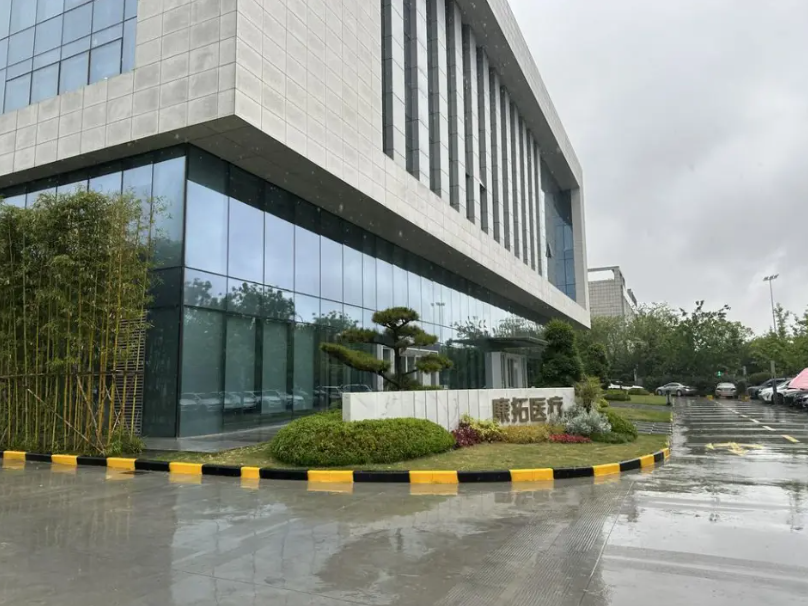
Image source: Chuangke Edition Daily
In contrast to titanium material products, although sales increased from 802,000 units to 1.16 million units, revenue has been declining year by year. The reason is that the penetration rate of PEEK material repair products has increased, replacing some titanium material repair products, leading to a decline in the latter's revenue. Furthermore, the growth in titanium material sales mainly comes from lower-priced titanium material fixation products, rather than the core repair products.
Kangtuo Medical Chairman Hu Liren put it bluntly: “Centralized procurement has accelerated the replacement of titanium with PEEK, bringing the company greater value growth.”
Maple Medical’s data further confirms the industry trend. In 2024, revenue from Maple Medical’s cranio-maxillofacial repair and fixation system reached RMB 79.8963 million, up 31.05% year on year; in 2025, revenue from this segment was approximately RMB 94.6085 million, representing a year-on-year increase of 18.41%, while gross margin rose significantly to 68.89%. The annual report explicitly states that this growth was driven by the accelerated substitution of titanium materials by PEEK materials under the volume-based procurement policy.
03. Performance Advantages Triumph Over Price Advantages: Centralized Procurement Has Only Pushed Open the Final Door
The reversal of PEEK materials is essentially the triumph of "clinical value" over "price advantage."
Although titanium materials are widely used, they have drawbacks such as non-physiological thermal conductivity, artifacts in radiographic examinations, difficulties in shaping during surgery, and susceptibility to deformation from external impacts. Additionally, there is a certain risk of rejection and infection associated with them.
The *Expert Consensus on Cranioplasty for Skull Defects (2025 Edition)* provides a clear conclusion: PEEK has mechanical properties similar to those of the natural skull, along with excellent stability and bioinertness. Its greatest advantage lies in its support for personalized 3D printing, enabling precise modeling based on patient imaging. This results in a natural postoperative appearance and a high degree of fit, without interfering with CT or MRI examinations. The consensus explicitly recommends PEEK as an ideal material for cranioplasty, particularly for complex cranial reconstruction and orbital-maxillofacial reconstruction.
In the past, although PEEK offered multiple clinical advantages, its high cost limited its wider adoption. The implementation of centralized procurement has significantly reduced prices, breaking the “high performance = high price” barrier.
Another easily overlooked dimension is that growing market demand provides solid support for PEEK substitution. In 2024, the number of craniotomy procedures nationwide was approximately 983,500. With the intensification of population aging, trauma cases, and declining mortality rates in decompressive craniectomy, the total number of neurosurgical procedures is expected to reach 4.66 million by 2029, representing a compound annual growth rate of 10.67%. Against the backdrop of continuously rising surgical volumes, there is enormous room for improvement in PEEK penetration—within the Henan Alliance region in 2022, the penetration rate of PEEK cranial repair products was only 13.59%.
04. From Skull to Whole Body: PEEK Is Breaking the Boundaries of Medical Materials
The story of PEEK alternatives does not end with cranial repair.
In the field of cardiothoracic surgery, Kontour Medical has leveraged the excellent mechanical properties and biocompatibility of PEEK to develop PEEK-related products for sternal fixation, addressing issues associated with traditional metal fixation materials such as corrosion, allergies, and imaging interference. These products have gradually entered clinical application and become a new driver of business growth.
In the field of orthopedic trauma, in 2025, the foot and ankle surgery team at Shanghai Sixth People’s Hospital successfully used the first domestically developed carbon fiber reinforced polyetheretherketone (CFR-PEEK) bone plate to treat distal fibular fractures, achieving true “visualized fixation.” Compared with traditional metal plates, CFR-PEEK bone plates offer advantages such as radiolucency without artifact, an elastic modulus close to that of cortical bone, and high fatigue resistance. Literature shows that CFR-PEEK bone plates demonstrate clinical outcomes similar to or better than titanium plates in upper limb fractures, with fewer complications and better radiographic visibility.
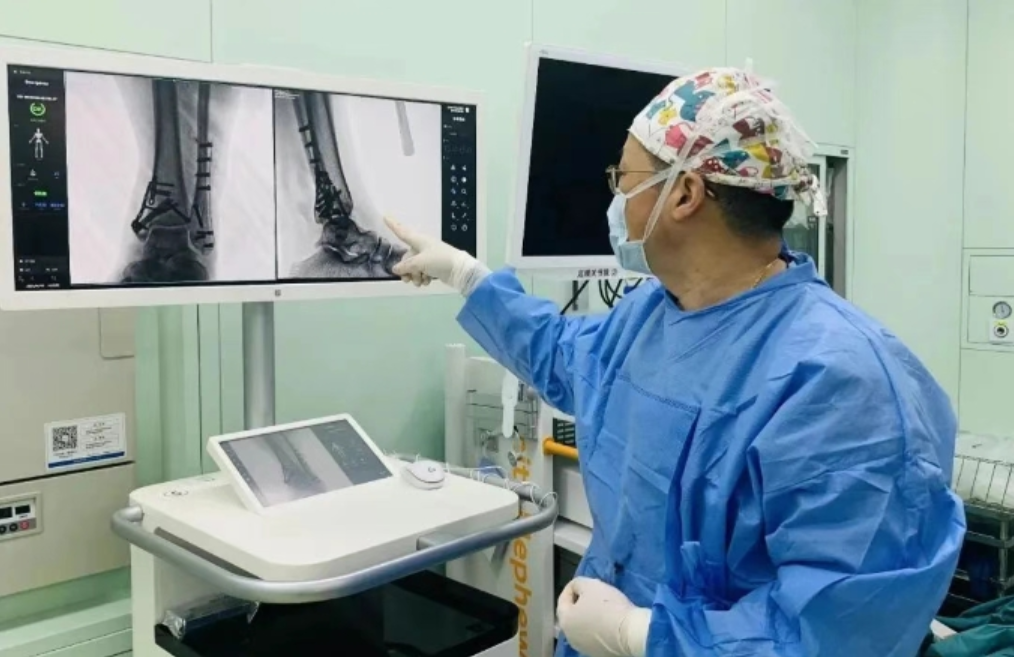
Image source: Eastday.com
In the field of stomatology, the excellent properties of PEEK make it a promising alternative to traditional metal materials in areas such as maxillofacial surgery, implantology, orthodontics, and prosthodontics.
In addition, Dimension Biotechnology’s self-developed 3D-printed PEEK patient-specific sternocostal prosthesis has entered the National Medical Products Administration’s special review procedure for innovative medical devices. It is the world’s first innovative product for sternocostal reconstruction based on additive manufacturing technology. In China alone, more than 400,000 patients each year require chest wall reconstruction due to chest wall tumors or severe thoracic trauma, while the incidence of implant-related complications within one year after surgery with traditional repair methods is as high as 44%.
PEEK’s application boundaries are expanding comprehensively from cranial repair to multiple fields, including cardiothoracic surgery, orthopedic trauma, and oral and maxillofacial surgery.
05. From Passive Choice to Active Demand: Patient Preferences Are Reshaping the Market Landscape
After centralized procurement, PEEK has gone from being “passively accepted by patients” to being “actively chosen.”
In past clinical decisions, doctors often faced patients' hesitation when recommending PEEK due to the significant price difference. Now that the price of PEEK has dropped to 10,000 to 50,000 yuan, the economic burden on patients has greatly reduced. In key indicators such as repair effectiveness, imaging compatibility, and long-term comfort, PEEK is superior to titanium materials, leading patients to actively inquire about and request the use of PEEK materials.
This shift in demand is reshaping the competitive landscape of the entire neurosurgical consumables market. The centralized procurement rules themselves are also evolving—becoming more moderate and refined, no longer focusing solely on low prices but placing greater emphasis on clinical value. This means that future competition among companies will no longer be driven simply by price, but by technological innovation, product quality, and the ability to meet clinical needs.
Kangtuo Medical's PEEK products cover the entire process of cranial repair and fixation surgeries, including PEEK bone plates, PEEK 4D bioactive plates, PEEK connectors, and PEEK screws. The company is also the only enterprise in the world to have obtained registration for PEEK material cranial fixation connectors and holds the largest market share in China.
Medprin Medical is currently the only domestic company in the field of neurosurgery with a portfolio of implant products including artificial dura mater patches, cranio-maxillofacial repair and fixation systems, absorbable regenerated oxidized cellulose, and medical dural sealants. Its full product-line positioning has become a core competitive moat under the new normal of centralized volume-based procurement.
In 2026, Stryker launched the “Wukong Conformable Patient-Matched PEEK Cranial Plate” in the domestic market. With its precise personalized adaptation capability, it can achieve a perfect fit based on the patient’s cranial defect. The accelerated expansion of this international giant further demonstrates the immense appeal of the PEEK market.
06. The Road Ahead: PEEK Enters a New Stage of “Bioactivation, Personalization, and Multifunctionalization”
PEEK’s comeback is not the end, but a new beginning.
Traditional PEEK materials still suffer from low surface bioactivity, often forming a “mechanical fit” rather than “biological integration” with human tissues. To address this issue, companies in China and abroad are actively pursuing the modification and innovation of PEEK materials.
In December 2025, Tianjin Kang’er Medical launched the 4D pro PEEK composite prosthesis, incorporating biphasic calcium phosphate and PEEK materials and using 3D printing to achieve fully personalized customization, marking a qualitative leap in tissue compatibility, osseointegration efficiency, and fitting accuracy.
Kelyniam Global’s Fusion cranial and craniofacial implants are made from an enhanced material combining biphasic calcium phosphate and polyether ether ketone, offering exceptional durability, personalized fit, and bone integration-promoting capabilities. They have received U.S. FDA 510(k) clearance, making them a breakthrough product in the field of regenerative implants.
In April 2026, the National Medical Products Administration issued the Technical Review Guidelines for Additively Manufactured Polyetheretherketone/Bioceramic Composite Cranial Repair Prosthesis Systems (Draft for Comments), which specify that the product consists of a cranial repair prosthesis, fixation plates, and screws, with the prosthesis and fixation plates made of polyetheretherketone/bioceramic composite materials. This marks the formal entry of PEEK composite materials into the regulatory landscape and lays the foundation for the standardized development of the industry.
A price adjustment in a centralized procurement program unexpectedly became the catalyst for PEEK materials to break through and come into their own. The significance of centralized procurement has never been simply about “driving prices to the bottom,” but rather about bringing the market back to clinical value itself. When price barriers are broken down, truly high-quality products naturally rise to the surface. The rise of PEEK materials is a microcosm of China’s medical device industry shifting from a “price-oriented” model to a “value-oriented” one.
For industries, future competition will no longer be about who has the lower price, but rather about whose technology is superior, whose products are safer, and whose clinical efficacy is better. This is the true essence of the upgrade from "Made in China" to "Intelligent Manufacturing in China."
【Copyright and Disclaimer】This article is the property of PlastMatch. For business cooperation, media interviews, article reprints, or suggestions, please call the PlastMatch customer service hotline at +86-18030158354 or via email at service@zhuansushijie.com. The information and data provided by PlastMatch are for reference only and do not constitute direct advice for client decision-making. Any decisions made by clients based on such information and data, and all resulting direct or indirect losses and legal consequences, shall be borne by the clients themselves and are unrelated to PlastMatch. Unauthorized reprinting is strictly prohibited.
Most Popular
-

A Look at the Material Suppliers Behind SpaceX
-

Eastman France PET Depolymerization Plant: Project "Alive," But Construction Paused
-

Mitsubishi Chemical Plans To Split Petrochemical Business By 2028
-

Bola Carbon Black Announces Global Restructuring of Specialty Carbon Black and Multi-Walled Carbon Nanotube Business
-

900,000-Ton-Per-Year Ethylene Plant Shut Down! ExxonMobil Reshapes Asia-Pacific Petrochemical Landscape


