500 Million Expansion! Daon Shares Increases Investment In EPDM!
After the project is completed, Ningbo SK’s total EPDM production capacity will increase from 65,000 tons per year to 90,000 tons per year, mainly to alleviate the domestic shortage of high-end EPDM supply and meet the rapidly growing demand from downstream sectors such as new energy vehicles, photovoltaics, building waterproofing, and wires and cables.
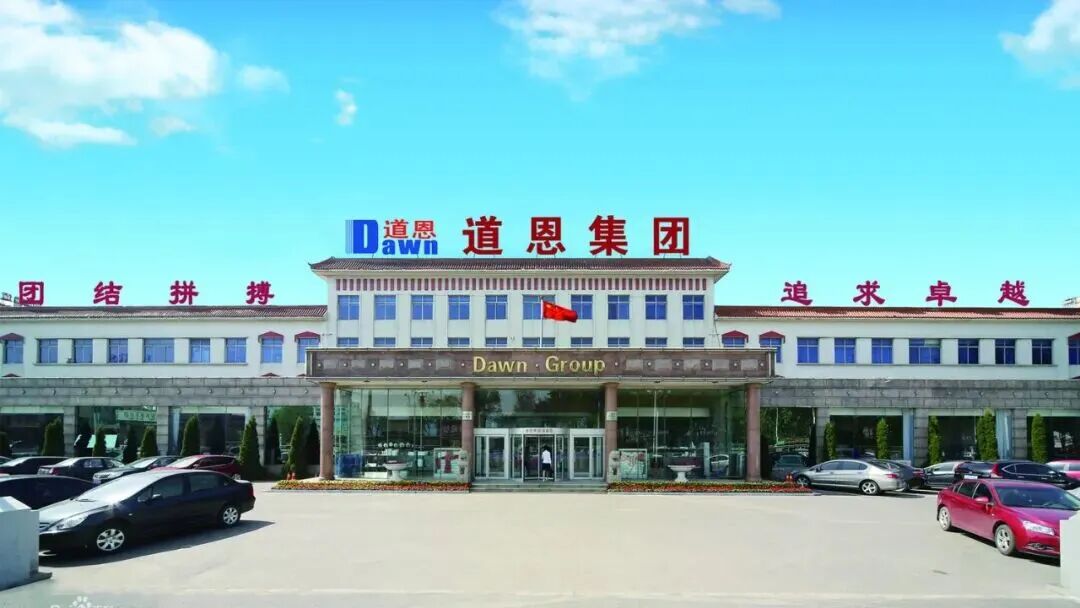
Shandong Dawn Polymer Material Co., Ltd. was established in 2002 and was listed on the Shenzhen Stock Exchange in 2017. It is a National High-Tech Enterprise and a National Specialized, Refined, Distinctive and Innovative “Little Giant” Enterprise. Its business covers five major areas: modified plastics, thermoplastic elastomers, masterbatches, biodegradable materials, and ethylene propylene diene monomer (EPDM) rubber.
Current core production capacity: 500,000 tons/year of modified plastics, 40,000 tons/year of thermoplastic elastomers, 27,000 tons/year of color masterbatch, 60,000 tons/year of PBAT biodegradable materials, and 65,000 tons/year of EPDM (currently).
It is understood that its rigid TPV for new energy vehicle coolant pipelines has overcome technical bottlenecks in low-temperature toughness and high-temperature creep resistance, and has already been mass-produced and supplied to several major new energy vehicle manufacturers for their best-selling models; lightweight LFT materials, high-gloss paint-free ASA, and other products have successfully entered the supply chains of OEMs such as Leapmotor, Chery, and Great Wall.
The high-performance DVA material, hailed as the "third-generation tire gas barrier material globally," has made significant breakthroughs. By 2025, it will complete road testing with a well-known tire company, meeting the required data standards, with plans for commercialization in the second half of 2026. Compared to traditional butyl rubber gas-tight layers, DVA's gas impermeability is improved by 7-10 times, and its weight is reduced by 80%, with the potential for comprehensive replacement.
At the same time, the company is strategically positioning itself in the humanoid robotics sector and has made phased progress in ultra-soft artificial muscle TPE, artificial skin SiTPV, conductive TPE, and 3D-printable elastomer materials.
Performance:
In 2025, the company achieved operating revenue of RMB 6.056 billion, up 14.25% year on year; net profit attributable to shareholders reached RMB 189 million, up 34.03% year on year; and net profit excluding non-recurring items surged 46.82% year on year, reflecting a significant improvement in earnings quality.
The two core businesses advanced in tandem: the elastomer business achieved revenue of RMB 832 million, up 8.33% year on year, with thermoplastic vulcanizates (TPV) growing by 16.26%; the modified plastics business achieved revenue of RMB 4.399 billion, up 15.60% year on year.
In the first quarter of 2026, revenue reached RMB 1.716 billion, up 33.44% year-on-year; net profit attributable to shareholders was RMB 119 million, surging 168.92% year-on-year, with growth mainly driven by the consolidation of Ningbo SK and the expansion of core businesses.
Subsidiary aspect:
Ningbo Aisikai Synthetic Rubber Co., Ltd. was established on December 17, 2012, with a registered capital of 630 million yuan, and the legal representative is Tian Hongchi. The company was originally controlled by South Korea's SK Group. Daon Co., Ltd. completed the acquisition of 80% of its shares in February 2026, while Ningbo Zhentai Puxing Urban Construction Investment Co., Ltd. holds a 20% stake.
It is understood that the Ningbo Petrochemical Economic and Technological Development Zone, where the company is located, is one of China’s seven major petrochemical industry bases. Located in Zhenhai District, Ningbo City, it has a planned area of 42.25 square kilometers and offers well-developed petrochemical industrial support facilities and convenient logistics conditions.
The company specializes in the R&D and production of ethylene propylene diene monomer (EPDM) rubber. It is the first private enterprise in China to produce EPDM using vanadium-based solution polymerization technology. Adopting Sumitomo’s patented technology from Japan, the company operates a mature and reliable process, offers a wide range of product grades, and enables flexible grade switching, with an existing production capacity of 65,000 tons per year. Its products are widely used in automotive sealing strips, building waterproofing membranes, wire and cable, new energy vehicles, photovoltaics, and other fields. With an approximately 12% share of the domestic market, the company is one of the core suppliers in China’s mid- to high-end EPDM market.
Ethylene Propylene Diene Monomer (EPDM) Rubber
Chemically, EPDM is classified into binary EPM and ternary EPDM. The mainstream product is EPDM, which is a copolymer of ethylene, propylene, and a small amount of non-conjugated diene (ENB/DCPD). Its main chain is fully saturated, with only a small number of double bonds on the side chains. It exhibits outstanding physicochemical properties, including excellent ozone resistance, weather resistance, heat resistance, good electrical insulation, low density, high filler loading capacity, strong resistance to acids and alkalis, and good low-temperature elasticity, and it can be processed and molded by sulfur vulcanization. The mainstream production process is vanadium-based or titanium-based solution polymerization, with suspension polymerization as a supplement. Applications cover automotive sealing strips and hoses, building waterproof membranes, wires and cables, photovoltaics and wind power, modified plastics, and more.
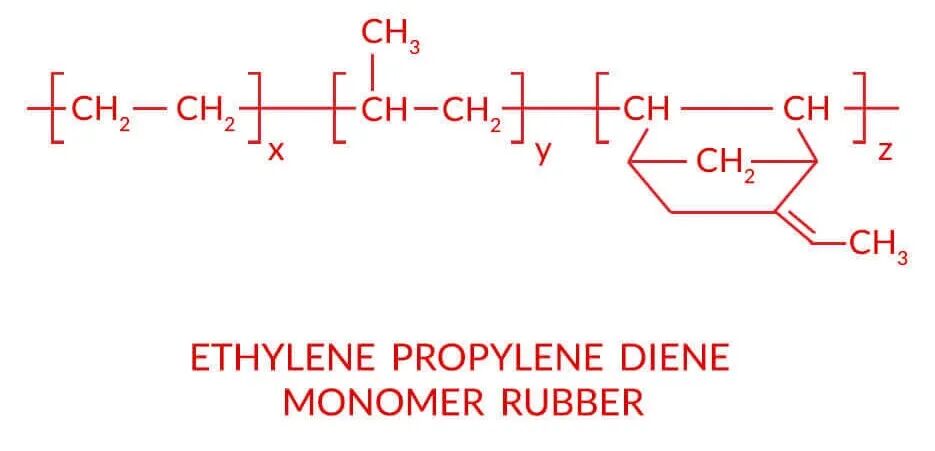
In 2026, the global EPDM production capacity is approximately 2.3 million tons per year, while the domestic production capacity is 1.02 million tons per year.
Overseas leading companies: ExxonMobil 420,000 tons, Lanxess 330,000 tons, SK 300,000 tons, Dow 250,000 tons; domestic companies: Dawn Ningbo SK 65,000 tons, ARLANXEO 170,000 tons, Jihua 160,000 tons, Yangzi BASF 120,000 tons, Wanhua 100,000 tons, TSRC 80,000 tons.
As of June 10, the average price in China’s mainstream EPDM market was RMB 27,250/mt, showing a slight weak downward trend. General-purpose domestic products were priced at RMB 23,000–25,000/mt, while high-end imported products were around RMB 34,000/mt.
Is the supply crisis for new energy vehicles here?
Notably, according to Reuters:
On June 9, Markus Kamieth, CEO of global chemical giant BASF, issued a warning at a media conference in Frankfurt: the ongoing rise in inflation, coupled with the supply chain disruption risks triggered by the conflict in Iran, is placing significant downward pressure on the automotive industry and the global macroeconomic outlook.
Kamit pointed out that the probability of supply disruptions in upstream industrial raw materials is continuing to rise, posing a fatal threat to highly intricate supply chain systems such as automobile manufacturing, which rely on thousands of components and multiple nested tiers, and could very likely trigger a complete shutdown of vehicle assembly lines. He stated clearly that the war in the Middle East has already caused regional shortages of key chemical raw materials such as sulfur and helium.
As one of the largest chemical suppliers to the global automotive industry, BASF provides core products such as coatings, engineering plastics, catalysts, and battery materials to automakers and their suppliers. Camit emphasized that this is his main risk assessment for the global manufacturing industry in the second half of 2026: shortages of upstream basic raw materials are often hidden, and once they emerge, the transmission speed is extremely rapid.
【Copyright and Disclaimer】The above information is collected and organized by PlastMatch. The copyright belongs to the original author. This article is reprinted for the purpose of providing more information, and it does not imply that PlastMatch endorses the views expressed in the article or guarantees its accuracy. If there are any errors in the source attribution or if your legitimate rights have been infringed, please contact us, and we will promptly correct or remove the content. If other media, websites, or individuals use the aforementioned content, they must clearly indicate the original source and origin of the work and assume legal responsibility on their own.
Most Popular
-

A Look at the Material Suppliers Behind SpaceX
-
【Overseas Highlights】Celanese Shuts Its Korean Engineering Plastics Plant! BASF to Divest Coatings Business; Six Japanese Corporations Tap Into Plastic Chemical Recycling
-

Global Chemical Giants Accelerate Production Capacity Restructuring, Dow and Celanese Optimize Global Industry Layout
-
Name change without tax change: POM Anti-Dumping Duty Rate Inheritance Implemented
-
Gas Explosion Accident at Shanxi Tongzhou Group Liushenyu Coal Mine Results in 82 Deaths