



11 Operators Team Up on Packaging Reuse
The European initiative aims to establish a common infrastructure and digital identification standards for reusable e-commerce packaging.

Reusable E-commerce Packaging – Photo: A New Era
The goal of the New European Reuse Alliance (New ERA), a European initiative, is to enable the return of reusable packaging from online purchases through a shared network of collection points, regardless of the provider. The project, which brings together 11 reusable packaging operators, was showcased on October 8 at the European Packaging Sustainability Exhibition in Barcelona.
According to New ERA, the fragmentation of existing return systems is a barrier to the wider adoption of reusable packaging. Each operator currently uses its own solution to identify, collect, and retrieve packaging after delivery, which increases logistics costs and operational complexity as volumes grow or when cross-border transportation is involved.
Coordinated by New ERA, the initiative involves Capsa, Circl'it, KIUD, Loopipak, MOBIUSpack, Movopack, Opack, Opoppop, Ravioli, RE-ZIP, and Reutec.
Partners will establish common principles to gradually achieve interoperability of collection and return infrastructure, while respecting competition law and the commercial independence of participating companies.
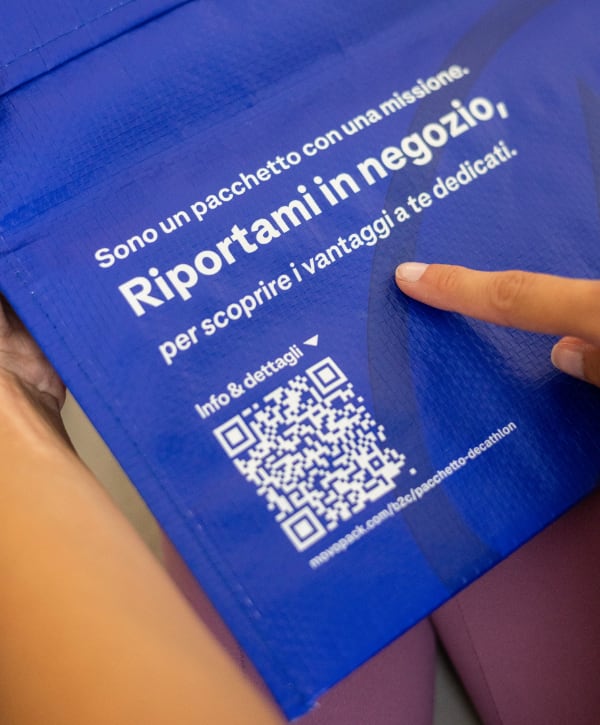
The partners aim to share certain logistics infrastructure while allowing each company to retain control over its technology, brand, customer relationships, and business strategy.
Interoperability requires more than just shared collection points. It also needs compatible programs to identify packaging, direct it to the relevant operators, and arrange for its subsequent reuse.
The project also includes a common European labeling framework based on interoperable digital identifiers, supported by shared technical specifications for packaging identification and classification.
Reusable e-commerce packaging requires cross-company and cross-border infrastructure. Fernando Rodríguez-Mata, General Manager of New ERA, stated, “No single company can build an ecosystem on its own.” He also emphasized the importance of developing universal solutions to enable operators to increase their handling volumes.
This initiative is framed within the EU Packaging and Packaging Waste Regulation (PPWR, Regulation (EU) 2025/40), which sets requirements for reusable packaging and reuse targets for certain categories of transport and distribution packaging, including e-commerce. The alliance intends to develop a Europe-wide deployment roadmap based on the implementation of this regulation.
Currently, this is a collaboration and standardization initiative rather than a pan-European operational return network. The association is inviting other participants across the value chain—including online retailers, marketplaces, parcel carriers, logistics providers, and packaging technology suppliers—to join the initiative.
【Copyright and Disclaimer】The above information is collected and organized by PlastMatch. The copyright belongs to the original author. This article is reprinted for the purpose of providing more information, and it does not imply that PlastMatch endorses the views expressed in the article or guarantees its accuracy. If there are any errors in the source attribution or if your legitimate rights have been infringed, please contact us, and we will promptly correct or remove the content. If other media, websites, or individuals use the aforementioned content, they must clearly indicate the original source and origin of the work and assume legal responsibility on their own.
Most Popular
-

[overseas news] celanese and toray announce price hikes; basf: European Chemical Industry to Face a Decade of Consolidation
-

Covestro To Cut Antwerp PC Production Capacity, Close Bisphenol A Plant
-

[Overseas News] US Just Relaxed Rebates for Aluminum Can Stock, Saudi Arabia Turns Around and Imposes 38.7% Tax on Aluminum Can Lids
-

Differences Between Pc, As, Pp, And Tritan Four Common Water Bottle Materials
-
China’s First Domestic COP Project in Zhejiang Breaks a 30-Year Japanese Technology Stranglehold