



What is the impact of Trump's 25% auto tariffs? Japan, Mexico, and Canada have all made statements.
President Trump is putting the brakes on the profit engine for global automakers. On Wednesday, Trump announced that the U.S. would impose a 25% tariff on imported cars and parts, a move set to take effect April 3 and apply to finished vehicles including cars and trucks. Speaking at the White House about the new tariff, Trump said, "This continues the unprecedented economic growth." However, judging by the reaction in U.S. stocks on Thursday and analyst interpretations, investors and Wall Street don't seem to agree.
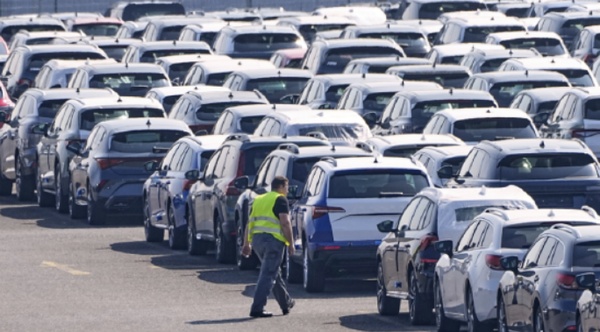
Numerous analysts quickly warned that the latest move could have a significant impact on the automotive industry. Daniel Roeska, an analyst at Bernstein, noted that this action "would cause profound disruption to the global automotive industry model," estimating that each vehicle would face a comprehensive tariff impact of approximately $6,700. Ronald Jewsikow, an analyst at Guggenheim, projected that the per-vehicle cost would increase by $6,000 to $7,000, emphasizing that "the actual price increase passed on to consumers could be even higher to offset the tariff impact."
Goldman Sachs analyst Mark Delaney believes that a 25% tariff on imported cars could lead to price increases of $5,000 to $15,000 per vehicle. He also noted that due to tariffs on auto parts, the production costs of domestically manufactured cars could rise by up to $8,000, driving up their selling prices as well. Bank of America predicts that the price of each car will increase by at least $4,500.
Analysts point out that different car manufacturers are affected to varying degrees. Bernstein's Ross Ka and Barclays' Dan Levy both believe that due to the advantages of localized production, Elon Musk's Tesla is least impacted by potential tariff shocks. Notably, Musk, who was the largest campaign donor to Trump, is currently serving in a key position in the Trump administration as the head of the "Government Efficiency Office," a government agency streamlining plan. As Tesla's stock price has fallen by double digits this year, Trump and his cabinet members have repeatedly publicly praised the company.
Interpretation of Tariff Details
The new regulations will take effect at midnight on April 3, adding a 25% punitive tariff on top of the existing 2.5% tariff. It is particularly noteworthy that even Canada, Mexico, and South Korea, which have free trade agreements with the United States, will not be spared. Traditional automobile powerhouses such as Japan and Germany will face direct impact as well.
Although engine, transmission, and other core components are also subject to a 25% tariff, the implementation will be delayed until May 3rd. This "step-by-step" strategy reveals the intention of the Trump administration to预留缓冲期 for supply chain adjustments. It appears there might be a repetition or an incomplete sentence at the end. The intended complete translation should be: "Although engine, transmission, and other core components are also subject to a 25% tariff, the implementation will be delayed until May 3rd. This 'step-by-step' strategy reveals the intention of the Trump administration to预留缓冲期 for supply chain adjustments." If "预留缓冲期" refers to "reserve a buffer period," the full translation would be: "Although engine, transmission, and other core components are also subject to a 25% tariff, the implementation will be delayed until May 3rd. This 'step-by-step' strategy reveals the intention of the Trump administration to reserve a buffer period for supply chain adjustments."
On the surface, vehicles that comply with the USMCA rules of origin can be exempted, but in reality, only the "U.S. content value" portion is exempt. For example, if a truck assembled in Mexico contains 45% U.S. components, the remaining 55% of the value is still subject to full tariffs — this "partial exemption" design essentially forces automakers to shift their production capacity.
How will the new tariffs impact the automotive industries of Mexico, Japan, Canada, and other countries?
On March 27, local time, in response to US President Donald Trump's announcement of a 25% tariff on imported cars,MexicoThe American Automobile Industry Association (AMIA), the Mexican National Auto Parts Industry Association (INA), and the Mexican Automobile Dealers Association (AMDA) jointly issued a statement saying that the U.S. imposition of tariffs seriously harms the North American auto industry and impacts consumers in the United States as well as investment and employment in the U.S., Canada, and Mexico. The statement noted that the competitiveness of the North American auto industry has benefited from thirty years of regional integration, and the imposition of tariffs poses a threat to the automotive sector. During this special period of global uncertainty, North America should strengthen rather than weaken its integration. The statement indicated that the industry associations will maintain close communication with their American and Canadian counterparts to jointly work on preserving the industry's competitiveness and integration in the region.
The new tariffs inevitably impact the automotive industry, which accounts for nearly 30% of Japan's total exports to the United States. Along with the decrease in automobile exports,JapanDomestic production will also decline, potentially impacting the economic value by up to 13 trillion yen. Although it is difficult to make a direct comparison, this is equivalent to 1.6 times the foreign tourist consumption in Japan in 2024, accounting for more than 2% of Japan's nominal GDP. According to the calculations, if Japan's automobile exports to the United States and production decrease by 10%, it will result in an impact of 1.3 trillion yen.
Canadian Prime Minister Mark Carney also said on Wednesday that U.S. President Trump's imposition of a 25% "unreasonable" tariff on imported cars would harm the Canadian economy. He said that these tariffs were a "direct hit" on Canadian workers and businesses, and that Trump had "betrayed" the North American trade agreement renegotiated during his first presidential term, the United States-Mexico-Canada Agreement (USMCA). It was reported that Mark Carney would meet with ministers of the U.S.-Canada Cabinet Committee on Thursday to discuss trade options, including imposing retaliatory tariffs on U.S. products.
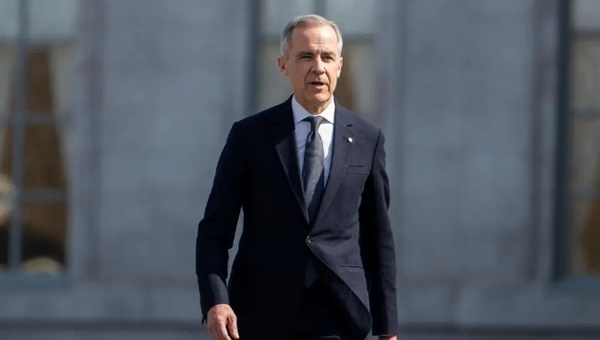
Canadian Prime Minister Mark Carney
【Copyright and Disclaimer】This article is the property of PlastMatch. For business cooperation, media interviews, article reprints, or suggestions, please call the PlastMatch customer service hotline at +86-18030158354 or via email at service@zhuansushijie.com. The information and data provided by PlastMatch are for reference only and do not constitute direct advice for client decision-making. Any decisions made by clients based on such information and data, and all resulting direct or indirect losses and legal consequences, shall be borne by the clients themselves and are unrelated to PlastMatch. Unauthorized reprinting is strictly prohibited.
Most Popular
-

Mexico Imposes Tariff Up to 36% on Cross-Border E-Commerce Products, Effective January 1, 2026; Plastic Shows Partial Fluctuation Today
-
4.5 Million Tons! Wanhua Chemical Dominates Globally in MDI, Heavy Investment in Battery Materials Spurs New Storm
-
Trump Delays Tariff Increase on Furniture, Cabinets, and Vanities
-
Wanhua Chemical Invests $27.3 Billion, 2026 Investment Map Revealed, $1.1 Billion Bet on Battery Materials
-
Back-to-back major joker moves! covestro’s 1.32 million ton mdi dual-line expansion and hdi acquisition reshape global polyurethane landscape


