What is pfas and why is the engineering plastics industry paying attention to it?
What are PFAS?
Why is the engineering plastics industry paying so much attention to it?
Recently, many friends in the engineering plastics business have found that customers now have one more “hard requirement” before placing orders: please provide a PFAS test report. Some people are puzzled: “What is PFAS? How could my plastic parts possibly contain it? Why do customers insist on this report?”
Today, let’s explain this clearly in plain language.
01
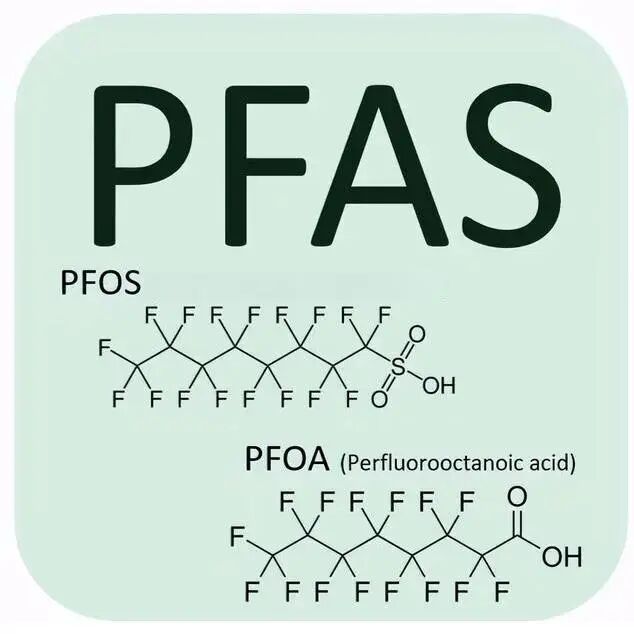
PFAS, nicknamed “forever chemicals”
PFAS is a collective term for a large class of chemicals, with tens of thousands currently known. Their most notable feature is that they are “tough”: the chemical bonds formed between carbon and fluorine atoms are extremely stable and hardly break down in nature. That is why they have earned the nickname “forever chemicals.” As a result, PFAS can accumulate in the environment and in the human body. Studies have found that long-term exposure to certain PFAS may increase the risk of cancer and affect the immune and endocrine systems.
Due to its waterproof, oil-resistant, high-temperature resistant, and corrosion-resistant properties, PFAS is widely used in everyday products such as non-stick pan coatings, waterproof jackets, food packaging paper, and firefighting foam. However, as its hazards have gradually been confirmed, countries around the world have begun to take action against PFAS, with the EU, the United States, and China implementing increasingly stringent regulatory limitations.
02
PFAS in engineering plastics
You may be wondering: I produce plastic parts, so what do these chemicals have to do with me? The connection lies in a class of materials called “fluoropolymers.”
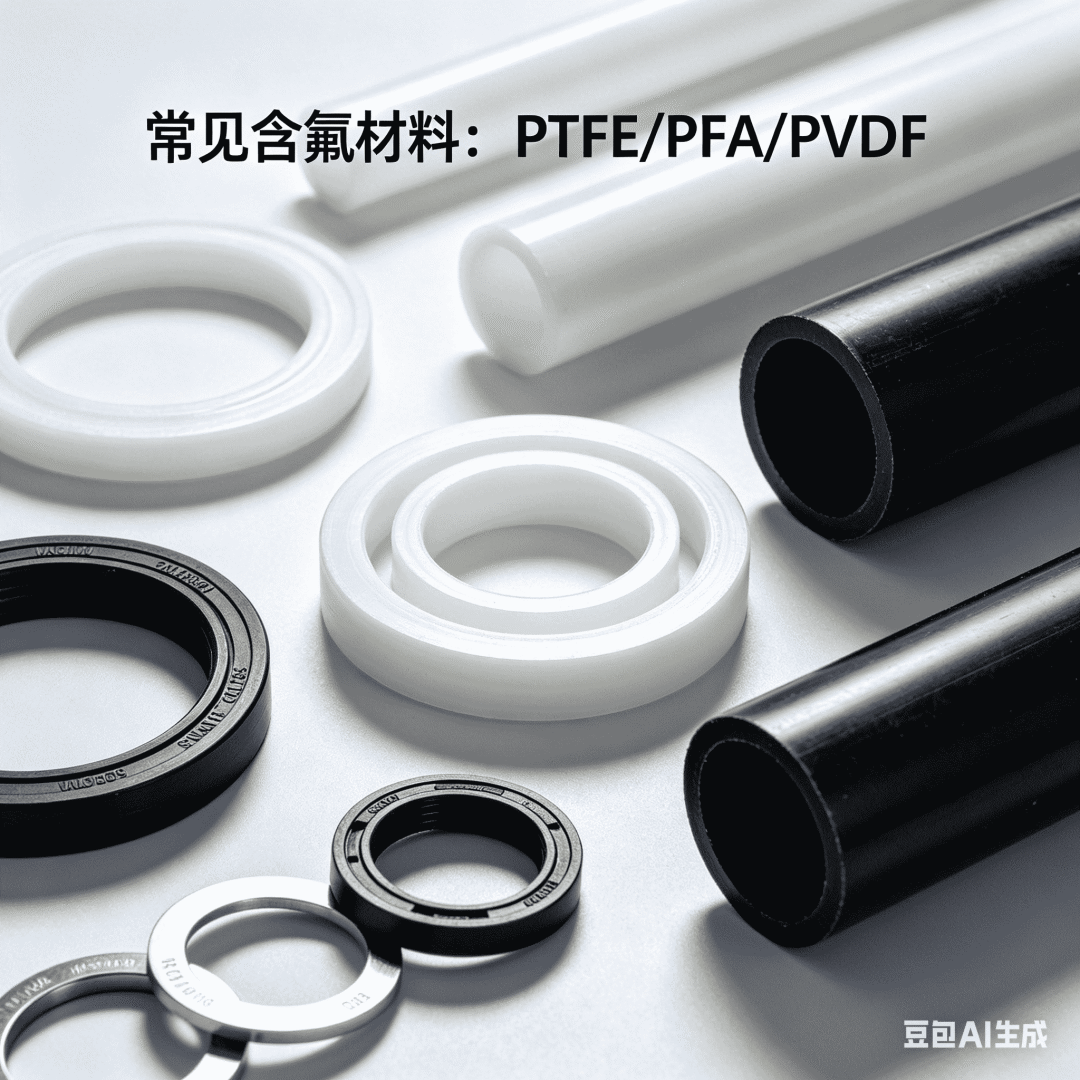
Common engineering plastics such as PTFE (polytetrafluoroethylene, commonly known as Teflon), PFA, FEP, and PVDF all belong to the PFAS family. When they are used in plastics, there are usually two main purposes:
As a basic raw material: directly manufactured into high-performance parts such as sealing rings, valve linings, and corrosion-resistant pipes.
As a processing aid: Adding a small amount to ordinary plastics can improve flowability, make extrusion molding smoother, and give the plastic surface a smoother, more wear-resistant finish.
You can think of fluorinated materials as the “special forces” of the plastics world—they may not be used in large quantities, but in certain harsh operating conditions, they are truly indispensable.
03
Why is a PFAS report required?
The "hard threshold" of export trade
The EU has proposed comprehensive restrictions on more than 10,000 PFAS substances, with plans to essentially phase them out by 2030. The United States has set PFAS limits in drinking water at a level close to zero tolerance. China has also included PFAS in the List of Key Controlled New Pollutants. If your products are to be exported smoothly, you may very likely be required to prove that they do not contain prohibited PFAS during customs clearance. Without a test report, the goods may be detained, returned, or even destroyed.
2. The "compliance chain" of downstream major customers
Your customers—for example, companies making automotive components, medical consumables, or food packaging—are themselves supplying even larger brand owners. These end brands, such as Tesla, Siemens, or McDonald’s packaging suppliers, impose extremely strict environmental compliance requirements and trace them down through every tier of the supply chain. When your customers ask you for reports, they are really passing that pressure on to you, and you in turn pass it upstream to your raw material suppliers. Whoever cannot provide the required reports gets removed from the supply chain.
3. What are the detection methods and future trends?
Currently, the commonly used testing methods in the industry include the EU EN 17681-1 standard (which requires total organic fluorine to be no more than 50 ppm), as well as ISO 23702 and other methods for plastics. Formal third-party testing institutions are all able to issue reports.
More importantly, the entire engineering plastics industry is accelerating its “PFAS-free” transition. Giants such as BASF, Asahi Kasei, and SABIC have already launched fluorine-free low-friction materials and medical-grade modified resins. It can be said that whoever completes the fluorine-free transformation first will gain the upper hand in the next round of competition.
【Copyright and Disclaimer】The above information is collected and organized by PlastMatch. The copyright belongs to the original author. This article is reprinted for the purpose of providing more information, and it does not imply that PlastMatch endorses the views expressed in the article or guarantees its accuracy. If there are any errors in the source attribution or if your legitimate rights have been infringed, please contact us, and we will promptly correct or remove the content. If other media, websites, or individuals use the aforementioned content, they must clearly indicate the original source and origin of the work and assume legal responsibility on their own.
Most Popular
-

Raw Material Supply Shortage! INEOS Phenol Declares Force Majeure on Phenol and Acetone Businesses
-

Lantiche Group To Shut Down Italian Adipic Acid Production Plant
-
AI Computing Power Demand Ignites Electronic Fabrics! China Jushi Hits Limit Up! Domestic Substitution Welcomes Golden Window
-

Coca-Cola Accelerates Reusable Bottle Initiative
-

Resin Market Trends Diverge: Buyers' Bargaining Advantage Hit by Geopolitical Uncertainty