United States (US) Officially Seeks Public Comments on China Tariff Reduction List! 30 Billion Dollar Goods List Nears Finalization, Yarn and Textiles May Benefit
A major signal has landed!
On May 26, U.S. Trade Representative Jamieson Greer publicly stated that the U.S. government will solicit public comments on which Chinese products should qualify for lower tariffs, targeting tariff reductions on at least $30 billion worth of “non-sensitive goods,” with detailed rules expected to be released as soon as in the coming days through the USTR website or the Federal Register. This marks the first time the U.S. side has proactively sought public input on large-scale tariff reductions on Chinese goods. The products most likely to see lower tariffs are non-strategic, non-sensitive goods, with the most likely categories including textiles and apparel, home goods, toys, and similar products. The “high-tariff shackles” that have plagued textile enterprises for years are about to loosen, ushering in a golden window for the industry to recover both orders and profits.

Policy Confirmation: $30 Billion Tax Reduction on Non-Sensitive Goods, Textiles Become the Top Beneficiary Sector.
This tariff reduction is not a blanket elimination of tariffs, but is precisely targeted at “non-strategic, non-sensitive, mutually beneficial” goods. It is consistent with the consensus reached in previous China-U.S. consultations on a “trade committee” — both sides agreed to each identify US$30 billion worth of goods for reciprocal tariff reductions, with textiles and apparel, cotton, and home textile products likely to be listed as core categories for priority inclusion.

1. Textile-related categories most likely to see tariff reductions
U.S. cotton and fabrics: knitwear, woven fabrics, home textile products, and others. Previously, the combined tariff on exports to the U.S. was as high as 55%; after the tariff reduction, it is expected to fall below 20%. At the same time, imported U.S. cotton will also likely be included in China’s list of tariff-reduced goods from the United States.
Low-end textile products: household goods, toys, clothing and footwear, decorations, etc., are complementary goods that are difficult to produce on a large scale in the United States.
Textile components and accessories: consumer electronics accessories, non-sensitive components for industrial equipment, etc., indirectly boosting demand for yarn-related supporting products.

2. The process for tariff reduction is clear, with implementation entering the final countdown. The US will replicate the mature process of the Section 301 tariff exclusion list.
Previously, on May 16, a spokesperson for the Ministry of Commerce announced the initial outcomes of the China-U.S. economic and trade consultations. The two sides reached consensus and formed a written memorandum for implementation. Relevant policies will be announced and take effect gradually from late May to early June, marking the entry of the two countries’ economic and trade frictions into a substantive cooling period. As a core category in China-U.S. trade, the textile and apparel industry is now ushering in a golden window of development.
Industry costs drop significantly
As the core of the textile industry chain, the cotton textile industry will directly benefit from tax cuts; as long-standing pain points come to a head, it is set to reach an inflection point marked by rising volume and prices.
1. Raw material costs have dropped “off a cliff,” and high-end yarn profitability is recovering.
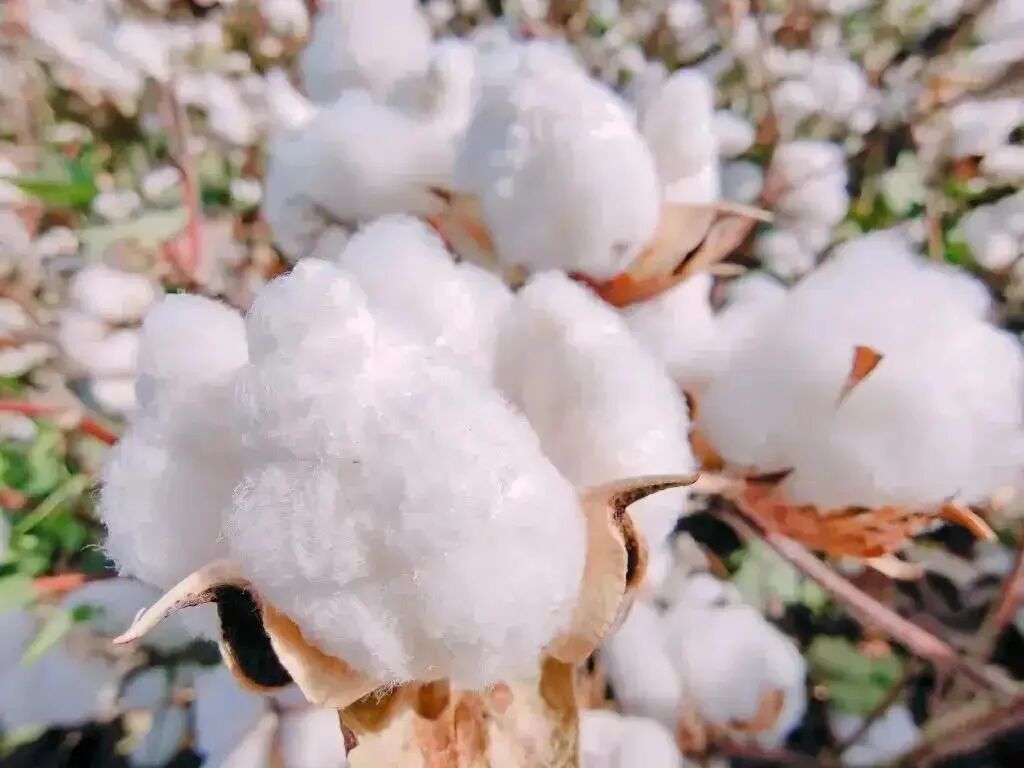
China’s annual cotton demand is about 8 million tons, while domestic output is only around 6 million tons, leaving a 2 million-ton gap that depends heavily on imports; high-end cotton products rely almost entirely on U.S. cotton. This mutual tariff reduction between China and the U.S. will also remove barriers to importing U.S. cotton, with U.S. cotton tariffs falling from 25% to 10%, bringing the price gap between domestic and imported cotton back to a reasonable level. High-end pure cotton yarn and combed yarn companies will see an immediate reduction in costs, ushering in a golden period for cost control; Xinjiang cotton, U.S. cotton, and Brazilian cotton will form a diversified supply mix, greatly reducing the risk of raw material price volatility.
2. Export costs have dropped significantly, accelerating the return of lost orders.
Over the past three years, China's cotton apparel and chemical fiber products faced combined tariffs on exports to the US as high as 45%–55%, causing orders to continuously shift to Southeast Asian countries such as Vietnam and Bangladesh. After the tariff reductions, tariffs on core categories like fabrics and garments have fallen below 20%, and China's overall manufacturing advantage is set to overwhelmingly outcompete Southeast Asia. Profit margins for textile exporters to the US are expected to expand directly; mid-to-high-end brand orders and functional home-textile orders are likely to accelerate their return, and spinning mills' operating rates are expected to recover. According to China Yarn Net, some Foshan weaving companies reported that export orders have noticeably returned recently, with the increase in orders from the US market being particularly prominent.
Domestic yarn prevails over imported yarn, with a strong rebound in market share.
After the cotton price gap between domestic and international markets returns to a reasonable range, the price advantage of imported yarn (especially from Southeast Asia and India) will disappear. Domestic cotton yarn and chemical fiber yarn, with their stable quality, short delivery cycles, and comprehensive supporting services, will quickly seize the domestic mid-to-high-end market. Orders for small and medium-sized yarn factories are expected to increase, ushering in a new round of development dividends for the industry.
Ministry of Commerce Responds to Progress in China-U.S. Tariff Talks: Economic and trade teams from both sides will finalize specific arrangements and work to advance implementation as soon as possible.
On May 28, when responding to a question about progress in the China-U.S. tariff negotiations, Ministry of Commerce spokesperson He Yadong said that China and the United States had in principle agreed to discuss a framework arrangement for equivalent tariff reductions on products of equal scale under the Trade Council, with each side covering products worth $30 billion or more. The two countries’ economic and trade teams will maintain close communication, work out specific arrangements, and move to implement them as soon as possible.
Seize the future dividend period and capture market opportunities.
This tariff reduction is the largest and most definitive policy boost for the textile industry since the onset of China-U.S. trade frictions, stimulating order releases in the short term while reshaping the global textile supply chain landscape in the long term.

First, export-oriented textile enterprises will benefit preferentially. It is recommended that companies focus on the U.S. market, reconnect with long-term European and American customers for repeat orders, and continue developing differentiated products for the European and American markets. High-end yarn manufacturers will also see clear gains. As the cost of imported U.S. cotton declines, high-end pure cotton yarn and functional yarns will become more price-competitive, helping them expand their market share in the premium segment. For full-industry-chain enterprises, the “cotton–yarn–fabric–garment” linkage will become smoother, allowing the entire chain to benefit from tariff reductions and further enhance overall competitiveness.
【Copyright and Disclaimer】The above information is collected and organized by PlastMatch. The copyright belongs to the original author. This article is reprinted for the purpose of providing more information, and it does not imply that PlastMatch endorses the views expressed in the article or guarantees its accuracy. If there are any errors in the source attribution or if your legitimate rights have been infringed, please contact us, and we will promptly correct or remove the content. If other media, websites, or individuals use the aforementioned content, they must clearly indicate the original source and origin of the work and assume legal responsibility on their own.
Most Popular
-

Layoffs, Divestments, Plant Closures While Pouring Billions: BASF Undergoes Major Transformation!
-

Ascend Adipic Acid Hit By Force Majeure, Market Expects Supply Resumption In Mid-September
-

Raw Material Supply Shortage! INEOS Phenol Declares Force Majeure on Phenol and Acetone Businesses
-
South Korea initiates anti-dumping investigation against Chinese PVC suspension resin! The target is Tianjin Bohua and Wanhua Chemical. How to break through?
-

Sixth national procurement set to be implemented: A “Reshuffling” Moment for the $10-Billion Medical Device Market