Toyota's Global Production and Sales Hit Record Highs in First Half
Toyota Motor Corporation stated on July 30 that, thanks to strong demand in markets such as North America, Japan, and China, the company’s global production and sales in the first half of this year both reached record highs.
From January to June, Toyota's global sales increased by 5.5% year-on-year, exceeding 5.1 million units, with strong demand for hybrid vehicles accounting for approximately 43% of the total global sales during the same period. During the same period, Toyota's global vehicle production increased by 5.8% year-on-year, reaching 4.9 million units.
In June, Toyota's global sales increased by 1.7% to 867,906 vehicles; production rose by 7.4% to 854,565 vehicles.

Image source: Toyota Motor Corporation
The above production and sales data include its luxury brand Lexus.
Including Toyota subsidiaries Daihatsu Motor and Hino Motors, in June, Toyota's global sales increased by 2.7% year-on-year to 937,246 units, and production rose by 7.7% year-on-year to 963,455 units. In the first half of the year, Toyota's global sales grew by 7.4% year-on-year, exceeding 5.5 million units; global production increased by 8.8% to 5.5 million units, with domestic production in Japan rising nearly 20%.
At the beginning of this year, consumers rushed to buy cars before Trump imposed a 25% tariff on imported automobiles, which boosted Toyota's sales.
Despite the uncertainty brought by the US tariff policy to the global automobile industry, a trade agreement reached between Japan and the United States this month stipulates that the US will impose only a 15% tariff on Japanese imported cars, which may give Japanese automakers an advantage over other competitors.
The United States is the largest export market for Japanese automakers. Last year, the sales of automobiles imported from Japan to the U.S. reached $40.8 billion. In addition, some Japanese models are also exported to the U.S. from factories in Canada or Mexico.
Among major Japanese automakers, Toyota is expected to be the most impacted by the tariff policy. Following the recent tariff agreement between the United States and Japan, Toyota stated that it looks forward to continued improvement in relations between the two countries and called for further reductions in automobile import tariffs.
Despite a market rebound for hybrid vehicles bringing Toyota considerable sales growth, the Japanese automotive giant, along with other traditional car brands, is facing fierce competition from electric vehicle manufacturers led by Tesla and BYD. Since the beginning of this year, Toyota has sold only about 82,000 pure electric vehicles, most of which were delivered overseas, with its electrification transformation in the domestic Japanese market noticeably lagging behind.
【Copyright and Disclaimer】The above information is collected and organized by PlastMatch. The copyright belongs to the original author. This article is reprinted for the purpose of providing more information, and it does not imply that PlastMatch endorses the views expressed in the article or guarantees its accuracy. If there are any errors in the source attribution or if your legitimate rights have been infringed, please contact us, and we will promptly correct or remove the content. If other media, websites, or individuals use the aforementioned content, they must clearly indicate the original source and origin of the work and assume legal responsibility on their own.
Most Popular
-

Mexico Imposes Tariff Up to 36% on Cross-Border E-Commerce Products, Effective January 1, 2026; Plastic Shows Partial Fluctuation Today
-
4.5 Million Tons! Wanhua Chemical Dominates Globally in MDI, Heavy Investment in Battery Materials Spurs New Storm
-

Trump Delays Tariff Increase on Furniture, Cabinets, and Vanities
-
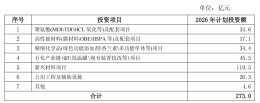
Wanhua Chemical Invests $27.3 Billion, 2026 Investment Map Revealed, $1.1 Billion Bet on Battery Materials
-
Back-to-back major joker moves! covestro’s 1.32 million ton mdi dual-line expansion and hdi acquisition reshape global polyurethane landscape