



The next round of reciprocal tariffs is approaching, and carmakers are rushing to ship vehicles and parts to the United States.
Kuai Technology reported on March 26 that...International manufacturers are recently exporting cars and core components to the United States at a rapid pace to enter the U.S. market before the next round of reciprocal tariffs takes effect on April 2.
Insiders reveal that to meet the demands of car manufacturers, multiple car carriers have been dispatched to Asia and Europe, with plans to ship thousands more vehicles to the US than usual.
Data shows that in February,The number of cars exported from Europe to the United States increased by 22%, Japanese exports rose by 14%, and South Korean exports grew by 15%.
In addition, these international car companies are preparing for the potential additional tariffs on their production bases in Canada and Mexico.
Honda is attempting to ship goods from Canada and Mexico to the United States ahead of schedule, while Stellantis, the parent company of Chrysler and Jeep, has stated that it is transferring inventory across the border to its U.S. factories and increasing car production during this one-month tariff suspension period.
However, some car companies have not taken much action in response to the potential upcoming tariff policies. Toyota recently stated, "We have not increased the number of cars exported from Japan (or other countries) to the United States due to anticipated future tariffs."
According to reports, U.S. President Trump stated that "reciprocal" tariffs on U.S. trading partners will take effect on April 2.At that time, the 30-day grace period previously announced by Trump for imposing a 25% tariff on goods imported from Mexico and Canada will also come to an end.
The core of the reciprocal tariffs actively implemented by the United States has two aspects:
1. Reciprocal Tariffs:Based on the tariffs and non-tariff barriers imposed by various countries on American goods, calculate the comprehensive tax rate for each country and implement equivalent retaliatory measures. For example, if a country imposes a 10% tariff on American goods, the United States will also impose a 10% tariff on goods imported from that country.
II. Industry-Specific Tariffs:In key industries such as automotive, steel, and aluminum, the United States will impose additional tariffs. For example, a 25% tariff has already been levied on global steel and aluminum, and the new policy will further expand to include areas like chip manufacturing and the pharmaceutical industry.
The impact of the new tariff regulations on global automakers is also significant. At that time, vehicles exported to the United States from countries and regions including Japan and the EU will be affected by tariffs, causing prices to rise substantially.
【Copyright and Disclaimer】The above information is collected and organized by PlastMatch. The copyright belongs to the original author. This article is reprinted for the purpose of providing more information, and it does not imply that PlastMatch endorses the views expressed in the article or guarantees its accuracy. If there are any errors in the source attribution or if your legitimate rights have been infringed, please contact us, and we will promptly correct or remove the content. If other media, websites, or individuals use the aforementioned content, they must clearly indicate the original source and origin of the work and assume legal responsibility on their own.
Most Popular
-

Mexico Imposes Tariff Up to 36% on Cross-Border E-Commerce Products, Effective January 1, 2026; Plastic Shows Partial Fluctuation Today
-
4.5 Million Tons! Wanhua Chemical Dominates Globally in MDI, Heavy Investment in Battery Materials Spurs New Storm
-
Trump Delays Tariff Increase on Furniture, Cabinets, and Vanities
-
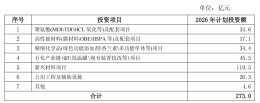
Wanhua Chemical Invests $27.3 Billion, 2026 Investment Map Revealed, $1.1 Billion Bet on Battery Materials
-

Back-to-back major joker moves! covestro’s 1.32 million ton mdi dual-line expansion and hdi acquisition reshape global polyurethane landscape


